
By Randy Malmstrom
Since his childhood, Randy Malmstrom has had a passion for aviation history and historic military aircraft in particular. He has a particular penchant for documenting specific airframes with a highly detailed series of walk-around images and an in-depth exploration of their history, which have proved to be popular with many of those who have seen them, and we thought our readers would be equally fascinated too. This installment of Randy’s Warbird Profiles takes a look at the Flying Heritage & Combat Armor Museum‘s Focke-Wulf Fw 190A-5, currently the only airworthy example of the legendary Luftwaffe fighter.
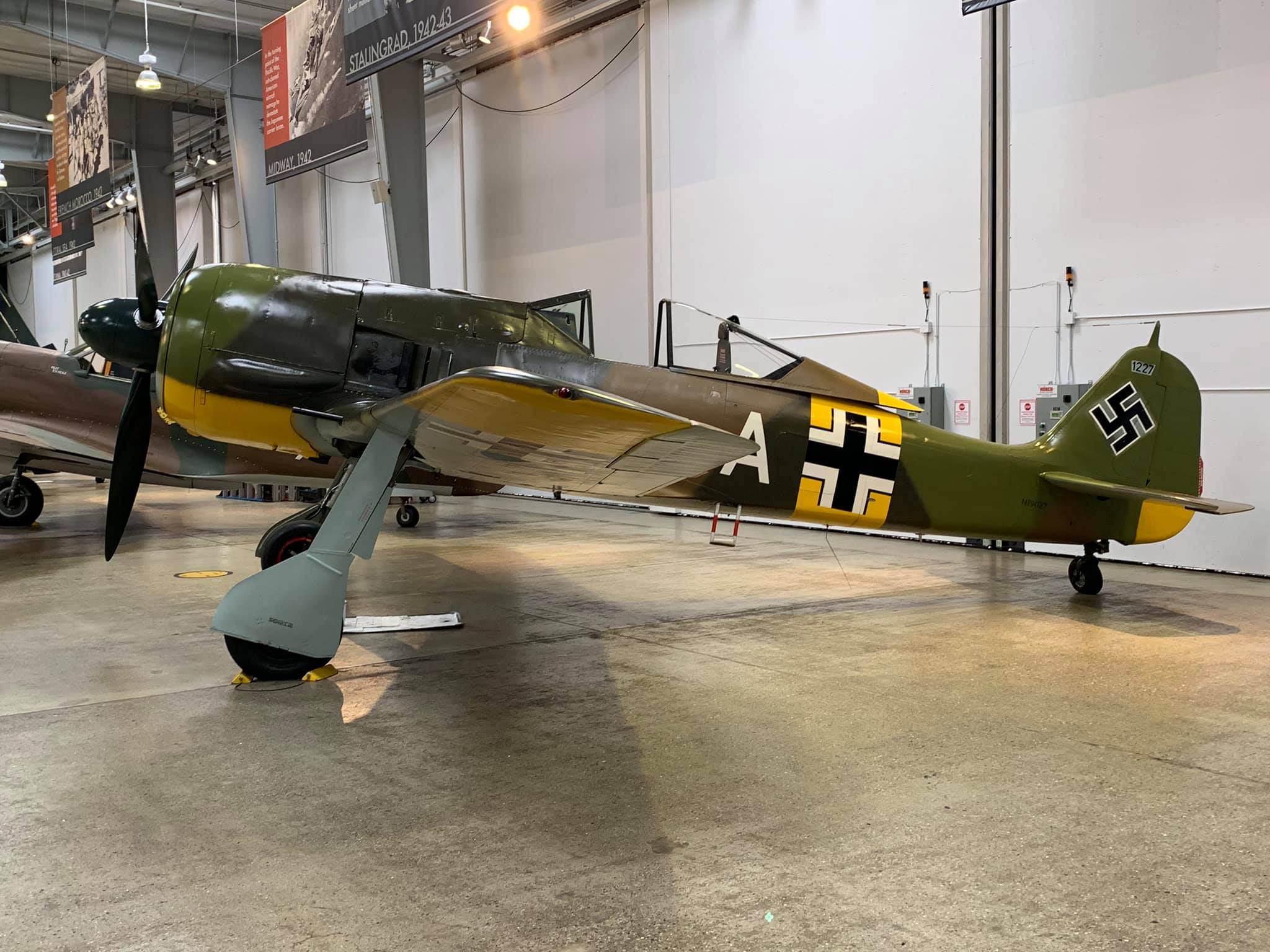
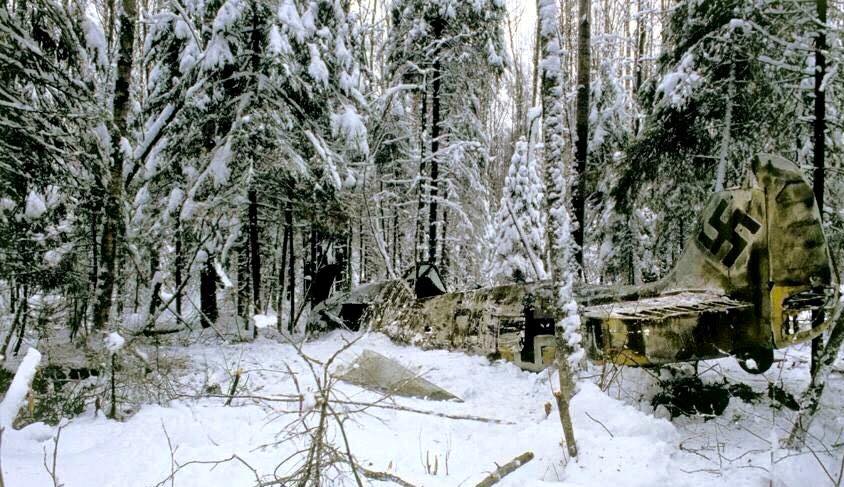
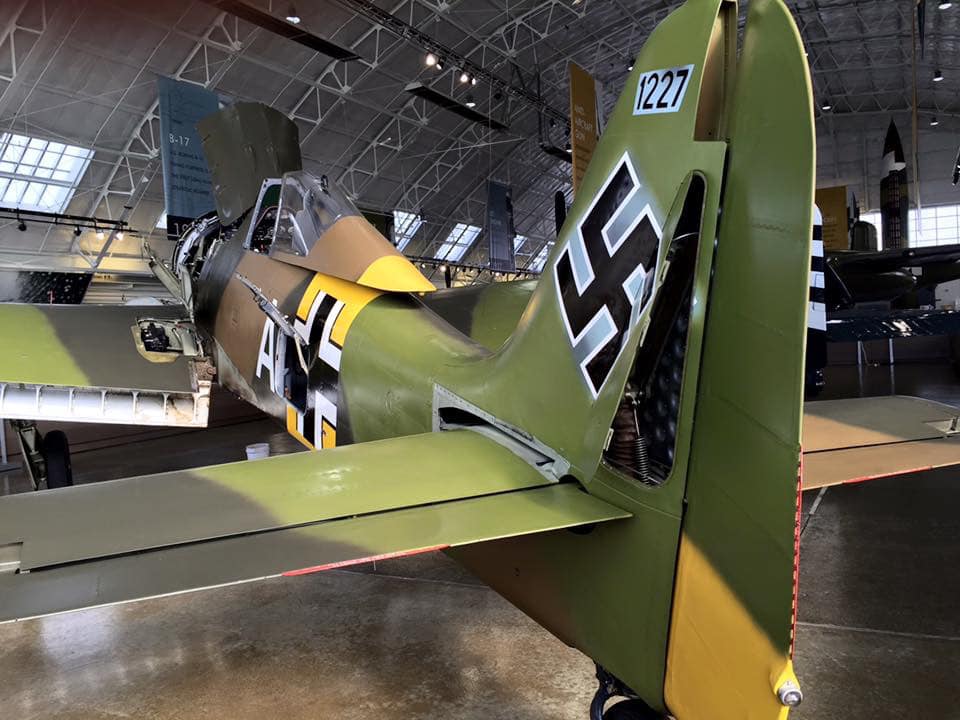
This particular aircraft was built in Bremen in April 1943. It is an example of the Jagdbomber (“Jabos” for short) or fighter bomber modification. It was based at Siversky (southwest of Leningrad) and so has come down through history as the “Leningrad 190.” It is the aircraft of Feldwebel Paul Rätz, Jagdgeschwader 54, Staffel 4 and a veteran of 117 combat missions. I have heard variously that it was painted in forest camouflage using paints scrounged from local residents by Luftwaffe field mechanics, or it was pained in RLM colors being tested at the time. The yellow stripe indicates Russian Front and a letter marking generally refers to ground attack rather than a number for air attack.
While on a “free hunt” for trains with his wingman in the “Corridor of Death” near Voybokalo, east of Leningrad, on July 19, 1943 Rätz encountered heavy anti-aircraft fire. He reported having been hit by flak and made a nearly perfect belly landing. He was reported missing in action, but in fact survived the crash and was taken prisoner in the Soviet Union and was later repatriated to Germany in 1949. The aircraft was found in 1989 where he left it near Leningrad (now St. Petersburg) with his helmet and radio gear on the pilot’s seat.
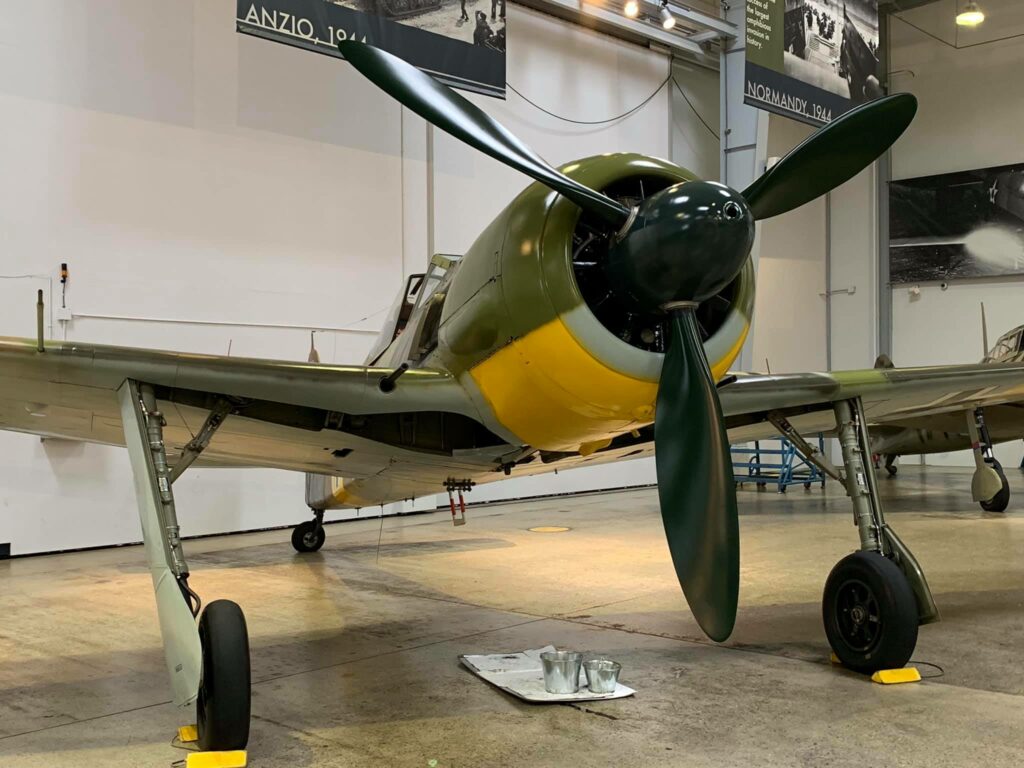
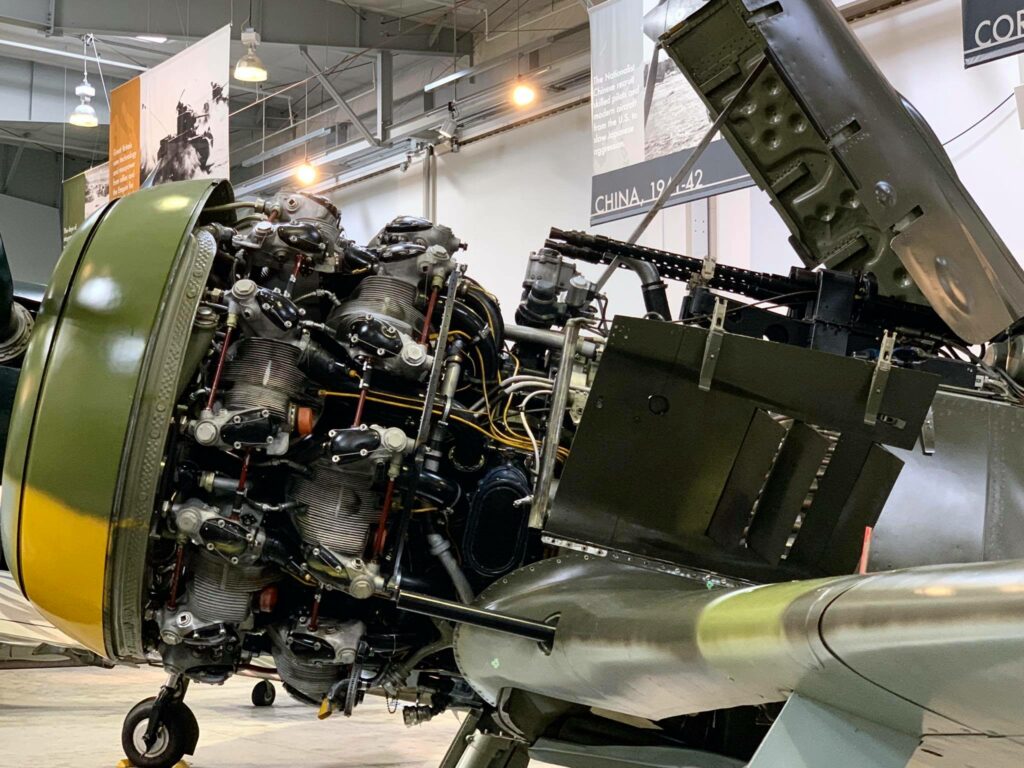
It is believed that slave laborers sabotaged this aircraft as there was no bullet damage, and a rag was found in one of the oil lines. It was rebuilt with as much original skin as possible (I am told as much as 80-90%) and powered by a BMW 801 D-2 air-cooled engine (note the 12-bladed fan behind the propeller) — I have heard that an unused engine still in its crate was found for this project — which was rebuilt at Vintage V-12s in Tehachapi, CA. What was amazing about this aircraft was the Kommandogerät (control device), an electro-mechanical computer that sets the fuel mixture, propeller pitch, boost, and magneto timing all at once. It is my understanding that the famous KommandoGerät in and of itself was half the cost of the BMW 801 “Power Egg” engine (there seems to be question as to any use of that moniker in German-language regions), and that there were disputes between manufacturers Fw and BMW over all the early engine problems (who was to blame); a Luftwaffe officer helped the two companies come to some agreement.
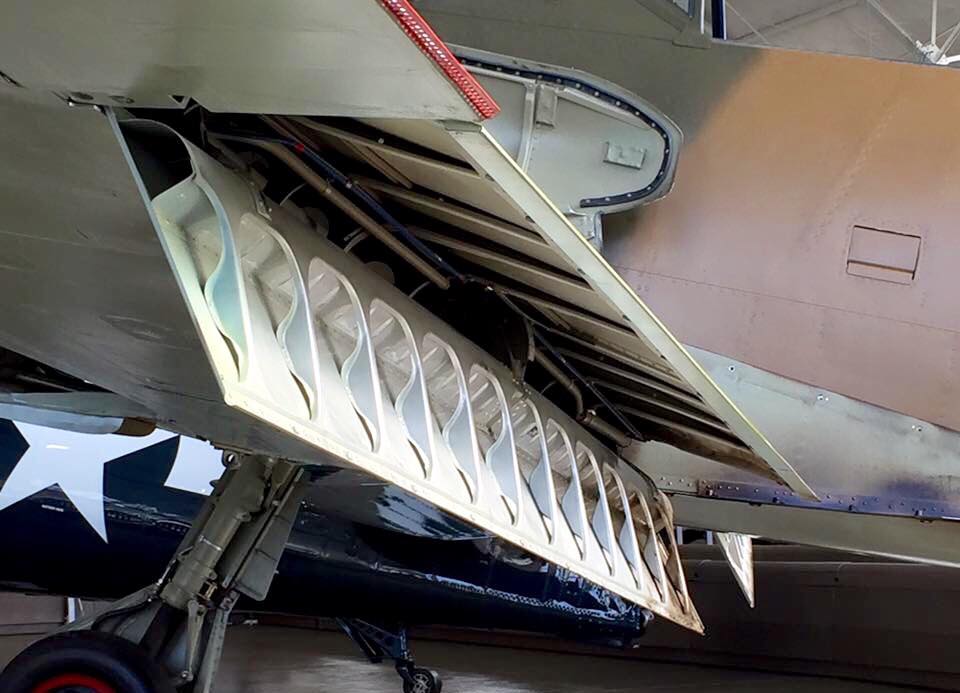
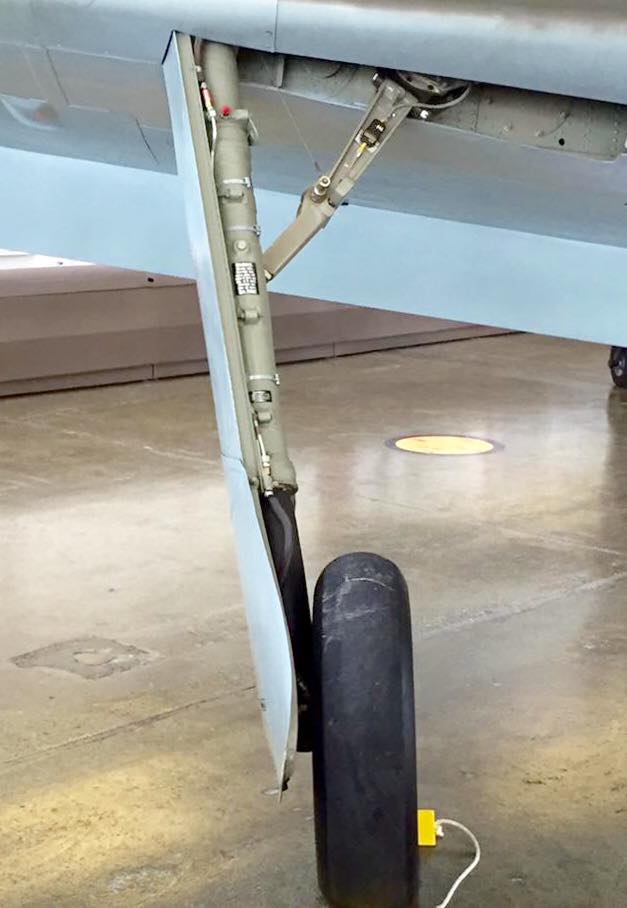
This Jabos modification was armed with two Rheinmetall MG 17 7.92 mm machine guns in the cowling (disparagingly referred to by German pilots as “Türklopfer” or “doorknockers” for their lack of penetrating power) – two of the MG/FF 20 mm cannons in the wings were removed to carry up to 1,320 lbs. of ordnance. It has red mechanical landing gear indicator rods or bayonets which you can see protruding on top of the wings and where it attaches to the landing gear strut.
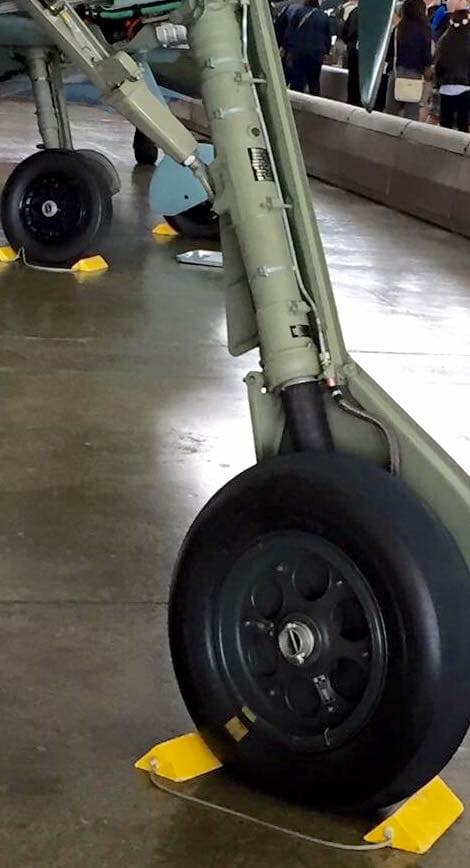
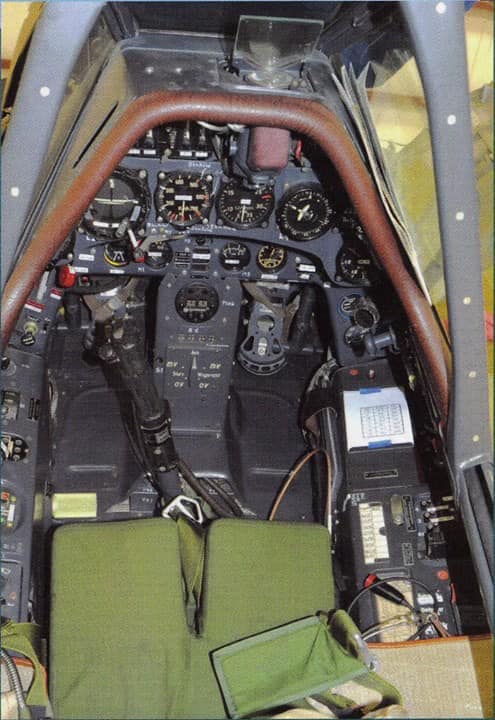
Note that in this vintage of Fw-190 there is a spring-loaded pulley on the canopy to keep the antenna wire taught regardless of the the canopy’s position; this was skipped on later 190’s such as the D-13 Dora (I have photos of that aircraft without the pulley). Flaps are metal whereas the Dora uses wood. Also, since the canopy rails are not parallel the canopy has a hinge on the top to make it flexible. There is a cable from the right landing gear strut to the tailwheel that retracts the tailwheel when the main gear goes up; there is an access panel on the left side of the tail fin to adjust the cable mechanism (see photos and diagrams). The right wheel rim of the aircraft is painted red indicating synthetic fuel (as far as I have determined).
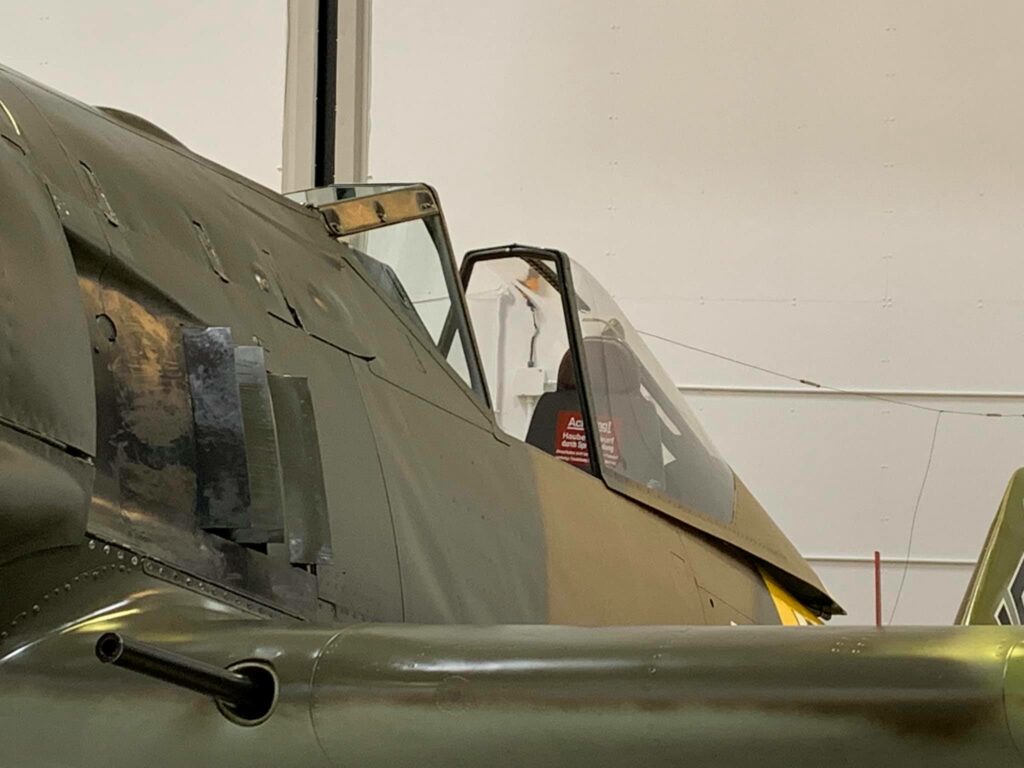
The “Achtung” warning on the armor behind the pilot’s seat reminds ground crews that there is an explosive canopy release – this is due to the difficulty of opening it manually when the aircraft is at speed.
About the author
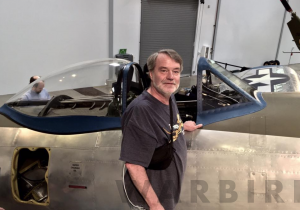 Randy Malmstrom grew up in a family steeped in aviation culture. His father, Bob, was still a cadet in training with the USAAF at the end of WWII, but did serve in Germany during the U.S. occupation in the immediate post-war period, where he had the opportunity to fly in a wide variety of types which flew in WWII. After returning to the States, Bob became a multi-engine aircraft sales manager and as such flew a wide variety of aircraft; Randy frequently accompanied him on these flights. Furthermore, Randy’s cousin, Einar Axel Malmstrom flew P-47 Thunderbolts with the 356th FG from RAF Martlesham Heath. He was commanding this unit at the time he was shot down over France on April 24th, 1944, spending the rest of the war as a prisoner of war. Following his repatriation at war’s end, Einar continued his military service, attaining the rank of Colonel. He was serving as Deputy Wing Commander of the 407th Strategic Fighter Wing at Great Falls AFB, MT at the time of his death in a T-33 training accident on August 21, 1954. The base was renamed in his honor in October 1955 and continues to serve in the present USAF as home to the 341st Missile Wing. Randy’s innate interest in history in general, and aviation history in particular, plus his educational background and passion for WWII warbirds, led him down his current path of capturing detailed aircraft walk-around photos and in-depth airframe histories, recording a precise description of a particular aircraft in all aspects.