






With a title borrowed from Metallica’s classic album, “Ride the Lightning” seems an appropriate name for a journey dedicated to one of Britain’s most iconic combat aircraft. Developed by English Electric and later produced by the British Aircraft Corporation (BAC), the Lightning remains one of the most thrilling aircraft ever to serve with the Royal Air Force. Capable of exceeding Mach 2 and renowned for its astonishing vertical climb performance, the Lightning possessed a presence unlike any other British fighter. Decades after its retirement from RAF service in 1988, it continues to capture the imagination of aviation enthusiasts.
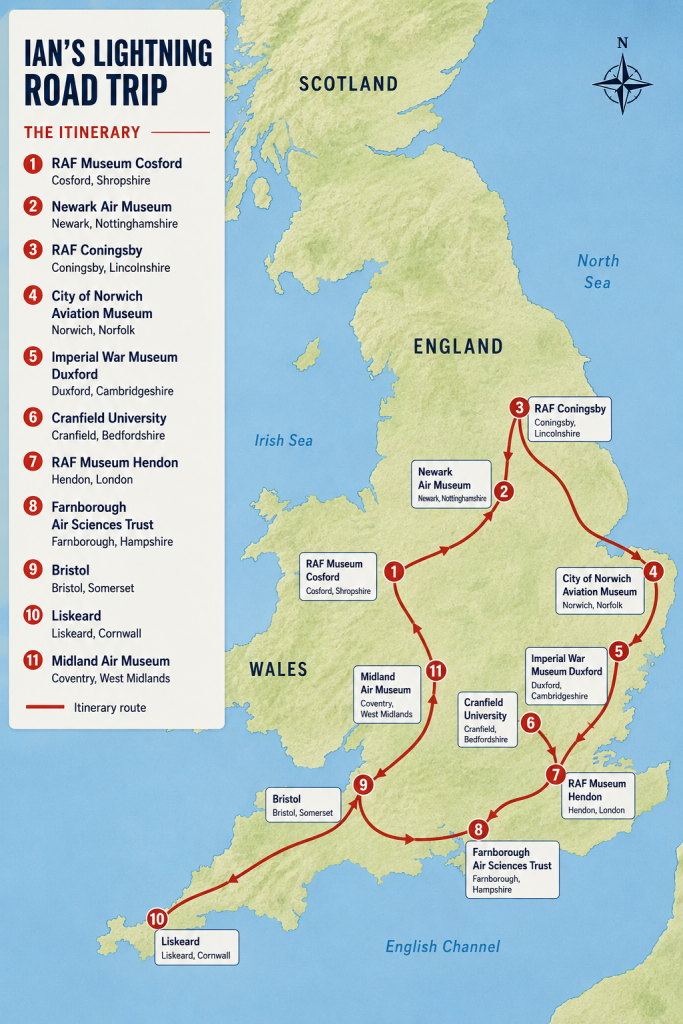
Unfortunately, my own interest in aviation coincided with the aircraft’s final years of service, leaving me with limited opportunities to appreciate the Lightning in its operational prime. A recent photography-focused road trip provided the perfect excuse to remedy that situation. For enthusiasts wishing to see as many surviving examples as possible, the United Kingdom offers a remarkable trail of preserved Lightnings. Museums, RAF stations, private collections, and even a self-storage facility and car dealership all feature examples of this legendary interceptor. The route I devised from north-west England formed a broad loop through central and southern Britain, offering an opportunity to photograph a wide variety of aircraft while exploring the Lightning’s enduring legacy.
The itinerary included the RAF Museum Cosford, Newark Air Museum, RAF Coningsby, the City of Norwich Aviation Museum, Imperial War Museum Duxford, Cranfield University, the RAF Museum Hendon, the Farnborough Air Sciences Trust, Bristol, Liskeard in Cornwall, and finally the Midland Air Museum at Coventry. As with any trip of this scale, careful planning is essential. Museum opening hours, travel times, fuel stops, and photography opportunities all need to be considered, particularly as many of the locations involved are volunteer-run organizations with limited opening schedules.
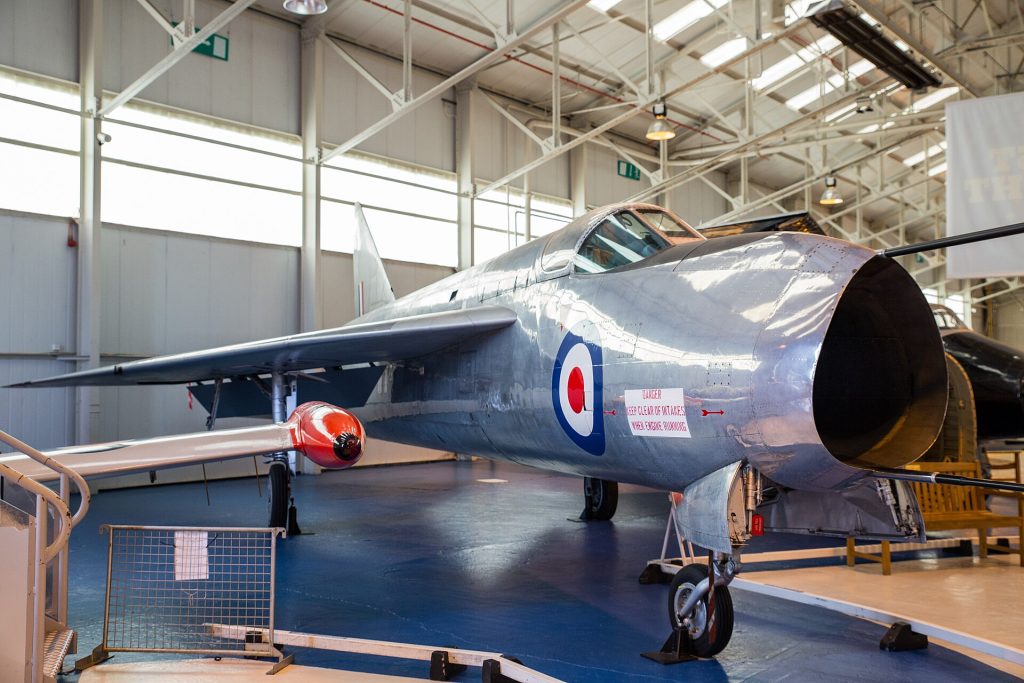
Developed from the English Electric P.1 research aircraft, the Lightning entered RAF service in 1960 as Britain’s first supersonic fighter capable of Mach 2 speeds in level flight. It was the only aircraft of its type designed and built entirely in the United Kingdom. Its layout prioritized rapid interception, with highly swept wings, a pointed radar nose, and a distinctive vertical stack of two Rolls-Royce Avon turbojets. This arrangement delivered immense thrust with relatively low drag, enabling the spectacular climbs that became central to the aircraft’s legend.
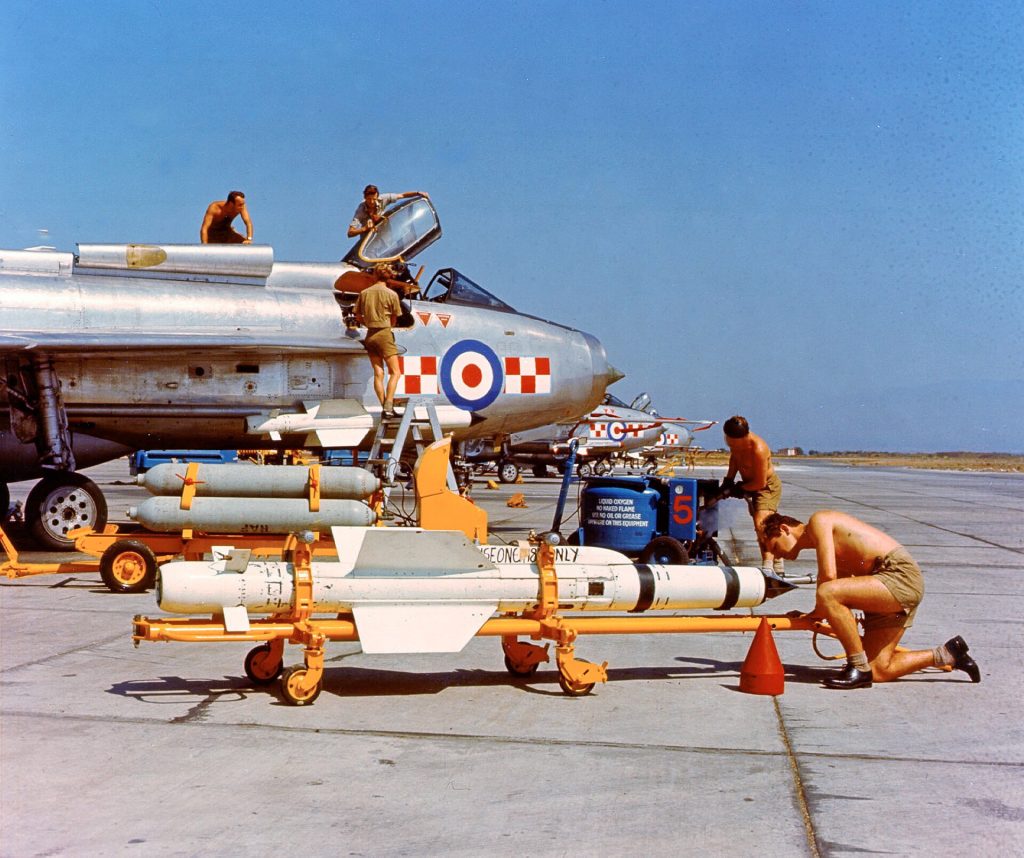
The first prototype was developed by English Electric Aviation Ltd., with future production later taken over by the British Aircraft Corporation. More than 300 Lightnings were built, including early F.1, F.1A and F.2 interceptors, improved F.3 and F.3A variants, the definitive F.6 and F.2A versions, combat-capable two-seat trainers, and export models for Saudi Arabia and Kuwait. In RAF service, the Lightning equipped nine frontline squadrons: Nos. 5, 11, 19, 23, 29, 56, 74, 92 and 111 Squadrons. It defended UK airspace throughout the Cold War and remained in frontline use until 1988, outlasting expectations thanks to its extraordinary performance. Ultimately, high maintenance costs and the arrival of more versatile aircraft such as the Phantom and Tornado brought its RAF career to a close. Today, surviving Lightnings range from gate guardians to carefully preserved museum aircraft, many maintained by dedicated enthusiasts. This journey allowed me to capture as many representative variants of this unique aircraft as possible.
RAF Museum Cosford
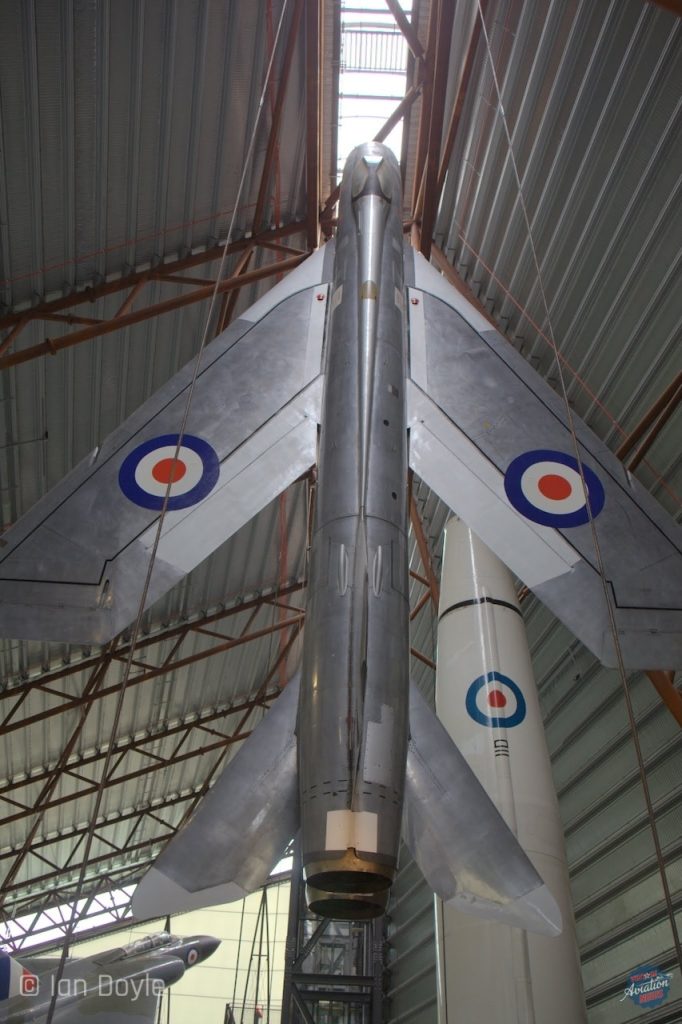
The first leg of my journey began at the RAF Museum Cosford in Shropshire, where the National Cold War Exhibition displays WG760, one of two early P.1A technology demonstrators built in 1954 to prove the radical design. Also on display is Lightning F.1 XG337, the last of the development aircraft. XG337 is suspended dramatically from the roof in a near-vertical climb, dominating the vast hangar alongside numerous other historic aircraft. More observant enthusiasts will note the aircraft’s larger, square-topped fin, which became standard on true production F.3s. With free entry, excellent interpretive displays and a vast collection, Cosford provides superb insight into the Lightning’s place in aviation and Cold War history, making it an appropriate starting point for this trip. For reference, the second P.1A demonstrator, WG763, resides with the Boscombe Down Aviation Collection at Old Sarum Airfield near Salisbury. Sadly, Old Sarum was one airfield too far for this particular journey, although I had previously photographed the aircraft in Manchester, where it once resided at the now-closed Manchester Air and Space Museum.
Newark Air Museum
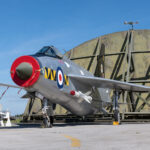
From Cosford, I headed east to the superb Newark Air Museum in Nottinghamshire. One of the UK’s largest volunteer-run aviation museums, Newark has a wonderfully down-to-earth charm. Set on part of the former RAF Winthorpe airfield, it houses more than 90 aircraft and cockpit sections, ranging from Cold War jets to classic training aircraft. What makes Newark stand out is how close visitors can get to the exhibits. The aircraft are not kept at arm’s length, and many are displayed outdoors, giving the site the feel of a living airfield rather than a static gallery. My main interest here was the museum’s standout Lightning T.5, serial XS417. The aircraft is currently resplendent in No. 56 Squadron colours, having previously worn the green and grey topside camouflage of No. 11 Squadron. This was the second of two repaints since she arrived at Newark following retirement in 1987.
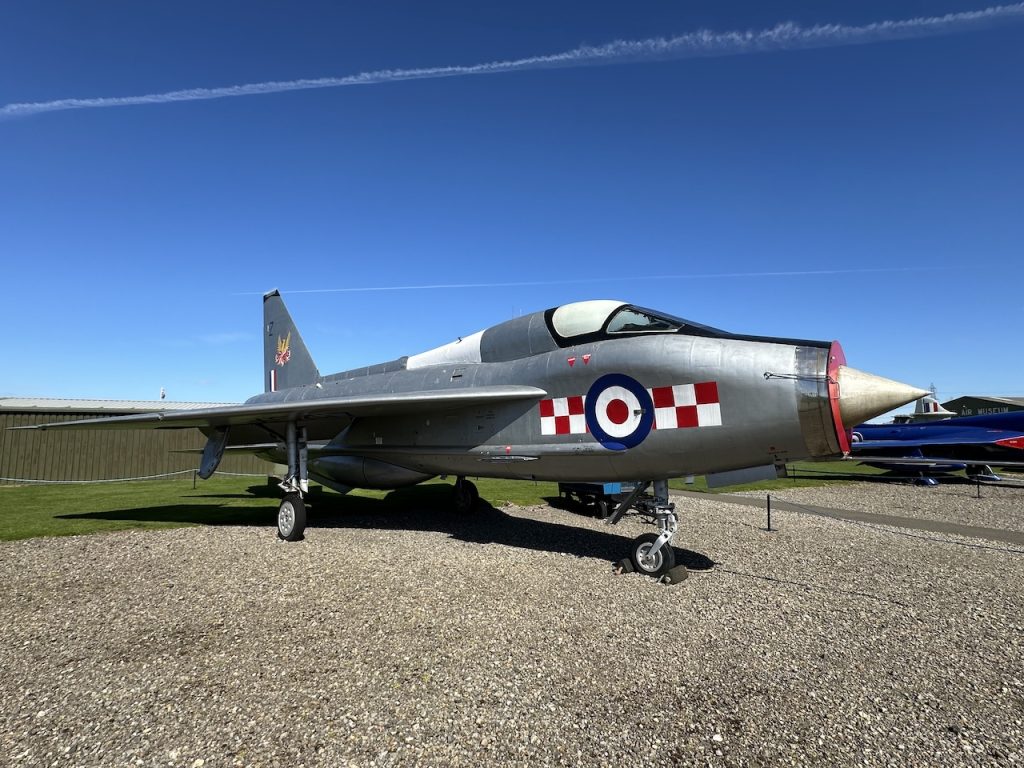
RAF Coningsby
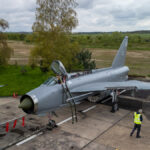
The next stop was the short hop to RAF Coningsby in Lincolnshire, a busy Typhoon base and quick-reaction alert station. While modern Eurofighter Typhoons dominate the skies, the base honours its Lightning past with two impressive examples on display. Notable airframes include F.6 XR753, associated with No. 11 Squadron, and F.6 XS897, painted to represent an earlier aircraft and linked to No. 29 Squadron. These aircraft stand as proud reminders of the Lightning’s interceptor role. Public access is limited for security reasons, but external views of XR753 are possible from public roads. The contrast between the angular, powerful Lightnings and the sleek Typhoons overhead is striking. Many visitors combine the stop with a look at day-to-day RAF operations or a visit to the Battle of Britain Memorial Flight, also based at Coningsby.
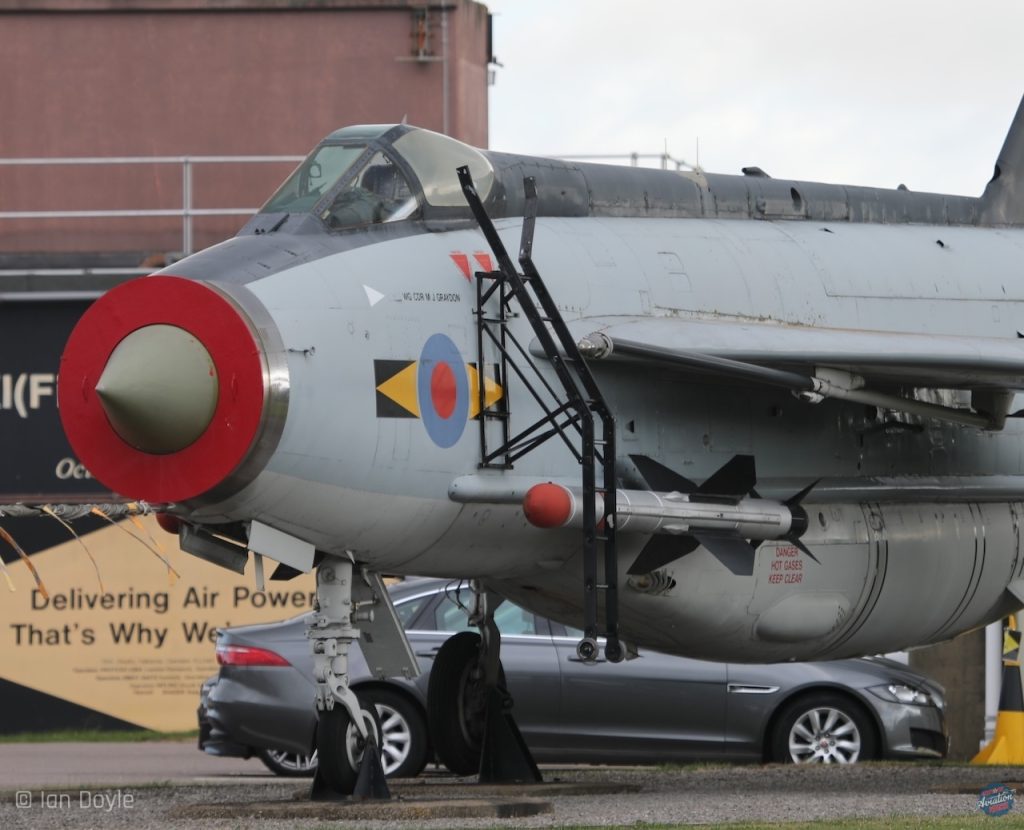
City of Norwich Aviation Museum
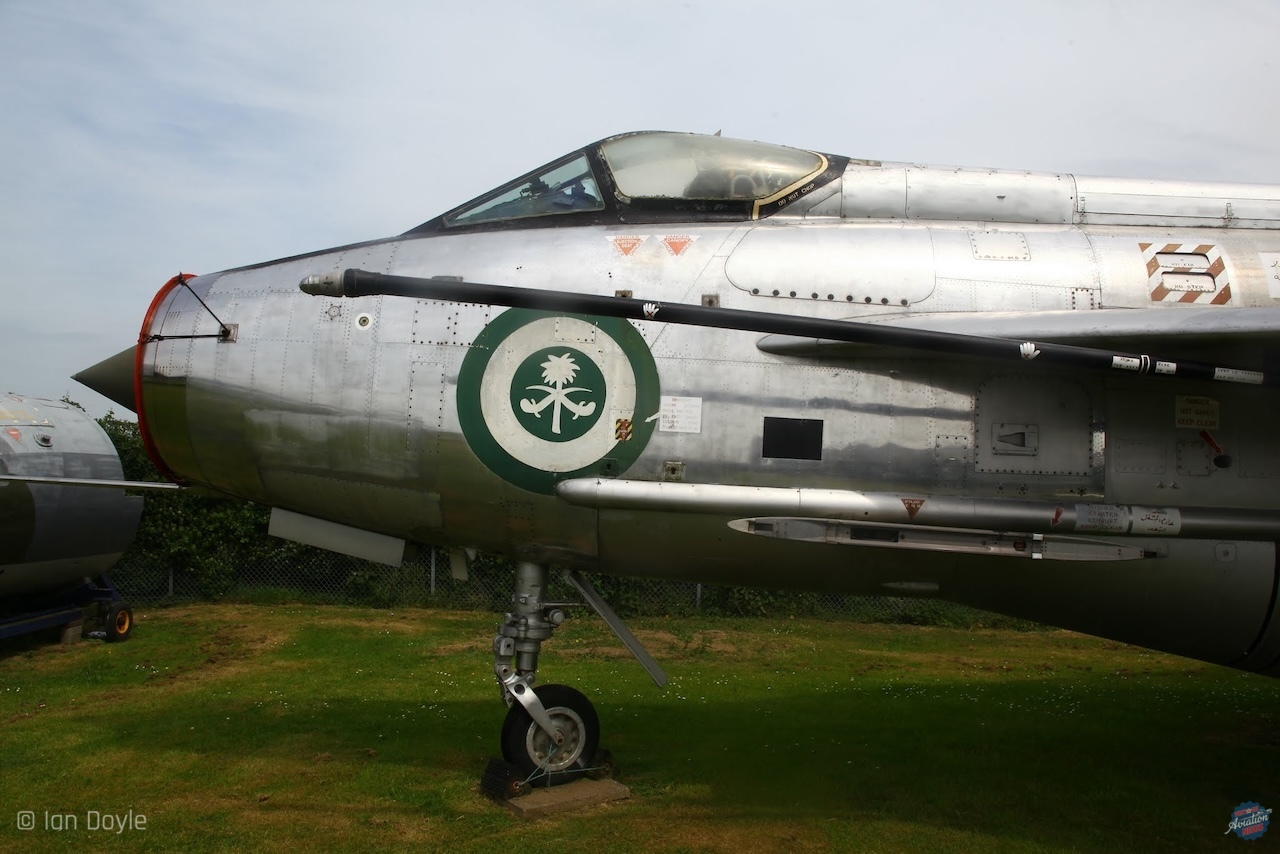
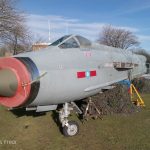
The next stage took me to the City of Norwich Aviation Museum at Horsham St Faith, a former wartime airfield in eastern England. Here I found another standout Lightning, this time an F.53 export model built for the Royal Saudi Air Force. ZF592, formerly RSAF 53-686 and also registered G-AWON, first flew in 1968 and was delivered to the Royal Saudi Air Force, where it served with Nos. 2 and 13 Squadrons. For me, this aircraft represented something of a reacquaintance, as I had seen it 40 years earlier during a tour of the British Aerospace factory at Warton, Lancashire. In 1985, as part of the agreement to purchase the Panavia Tornado, Saudi Arabia traded in its remaining flyable Lightnings to British Aerospace. Around 22 aircraft were flown to Warton for storage and received British serials in the ZF577–ZF598 range. BAe evaluated them for potential resale, with offers made to countries including Austria and Nigeria, but none succeeded. Most were ultimately scrapped or preserved in museums and static displays. The Norwich aircraft offers excellent close-up access for detailed photography. Its eye-catching silver livery carries Saudi markings on one side and RAF No. 74 Squadron “Tiger” colours on the other. The museum’s broader collection, including a Vulcan, Nimrod and Harrier, creates a rich Cold War atmosphere.
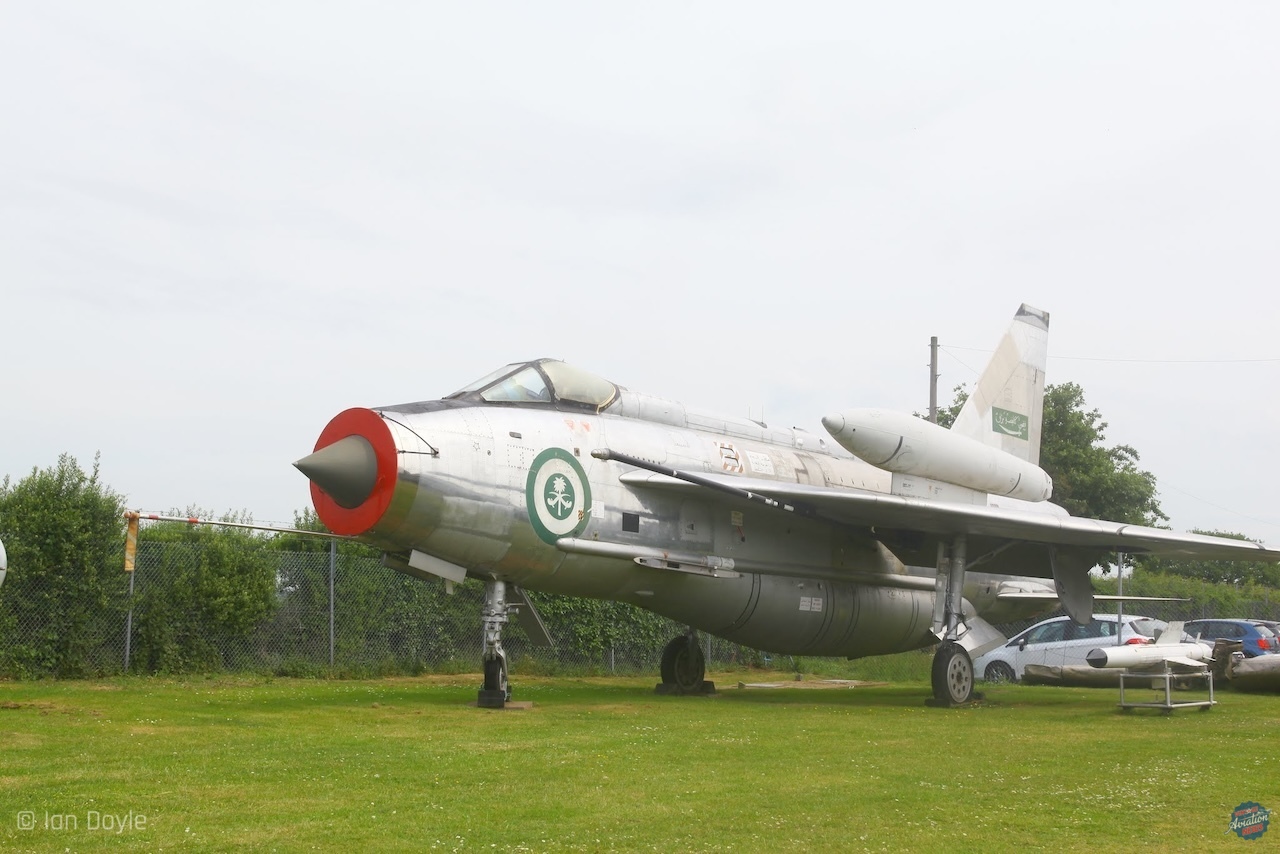
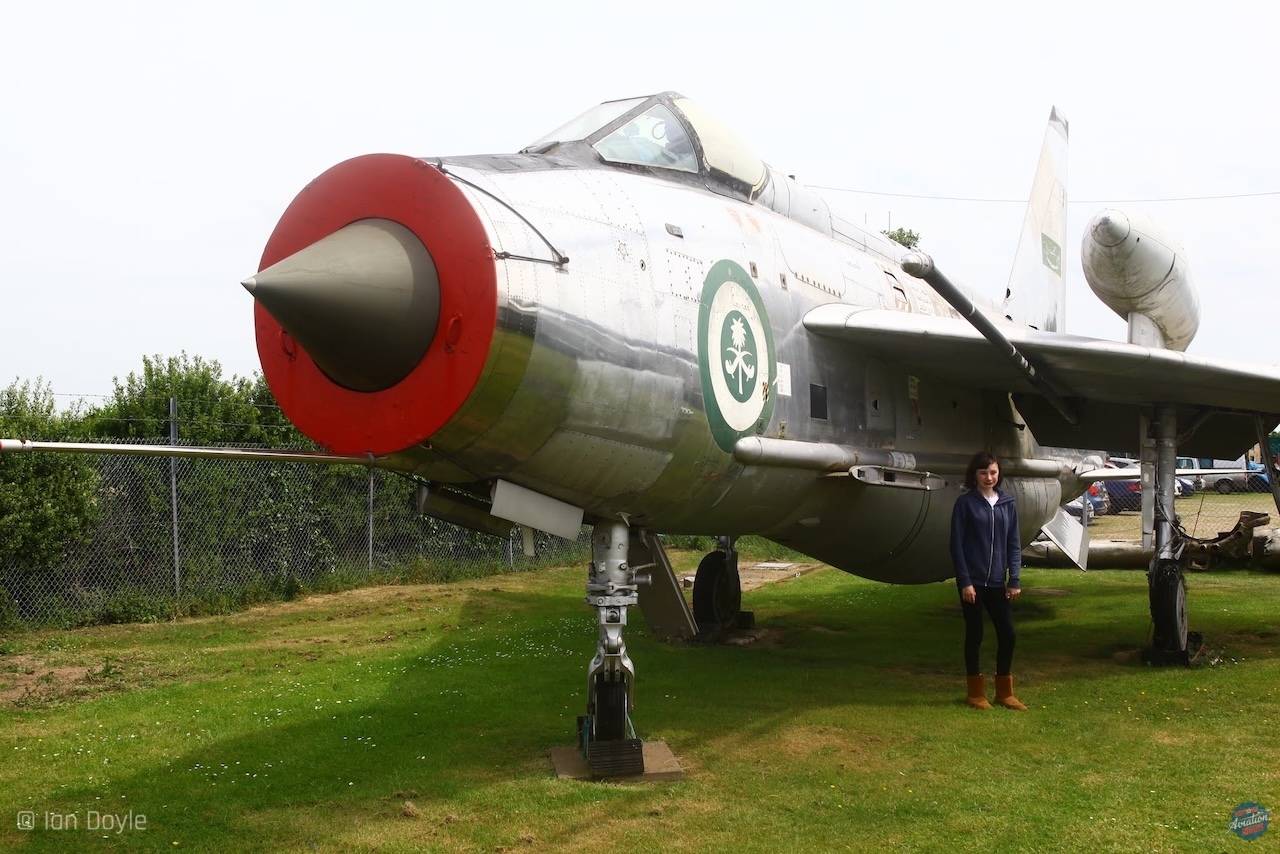
Imperial War Museum Duxford
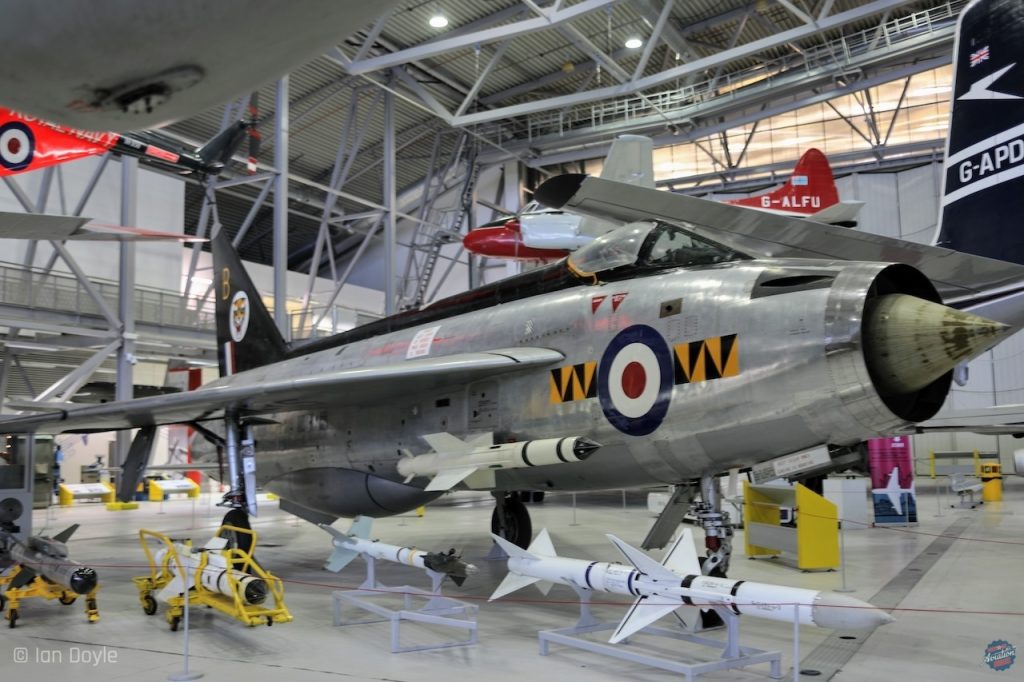
Day two found me at Imperial War Museum Duxford in Cambridgeshire, home to English Electric Lightning F.1 XM135. The aircraft was the second production Lightning and is displayed in No. 74 Squadron “Tigers” colours, coded “B.” XM135 also has a particularly memorable place in Lightning history. In 1966, Wing Commander Walter “Taffy” Holden, who had no prior Lightning experience, inadvertently took off while carrying out ground checks. Fortunately, he managed to land the aircraft safely after a short but undoubtedly memorable flight.
Cranfield
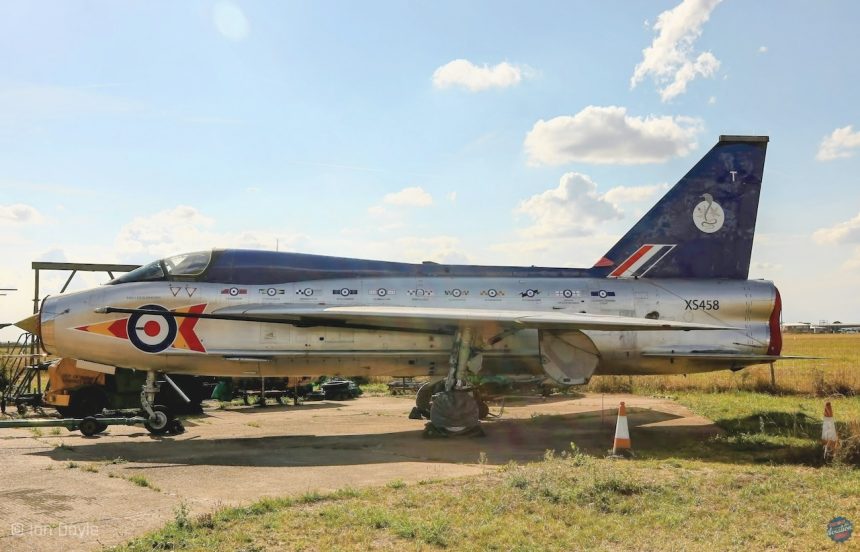
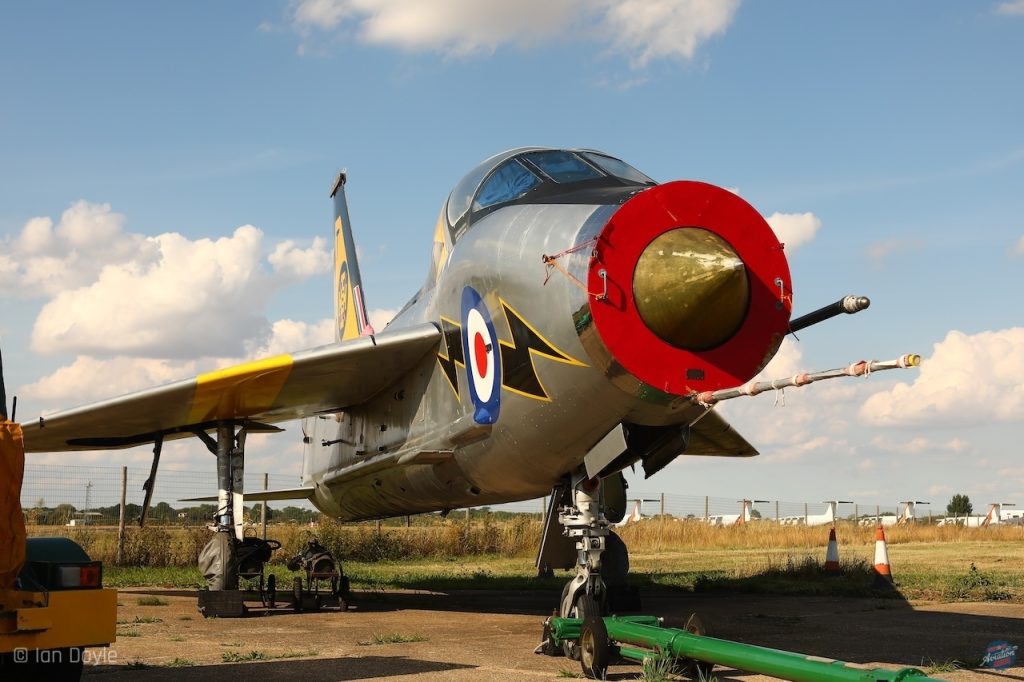
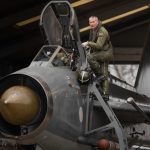
Cranfield is home to one of the most exciting Lightnings in Britain: XS458, the only running T.5 two-seat trainer maintained in live engine-running condition. Delivered to the RAF in 1966, the aircraft has been preserved by dedicated owners and volunteers, including former RAF personnel. Although static during my visit, XS458 has occasionally performed fast taxi runs, complete with the unmistakable roar of Avon engines and flashes of reheat. The port side is painted in No. 92 Squadron markings, with blue and red checks on the fin, while the starboard side carries No. 111 Squadron “Treble One” markings. The fuselage also displays various squadron insignia representing the RAF units that operated the Lightning.
RAF Museum Hendon
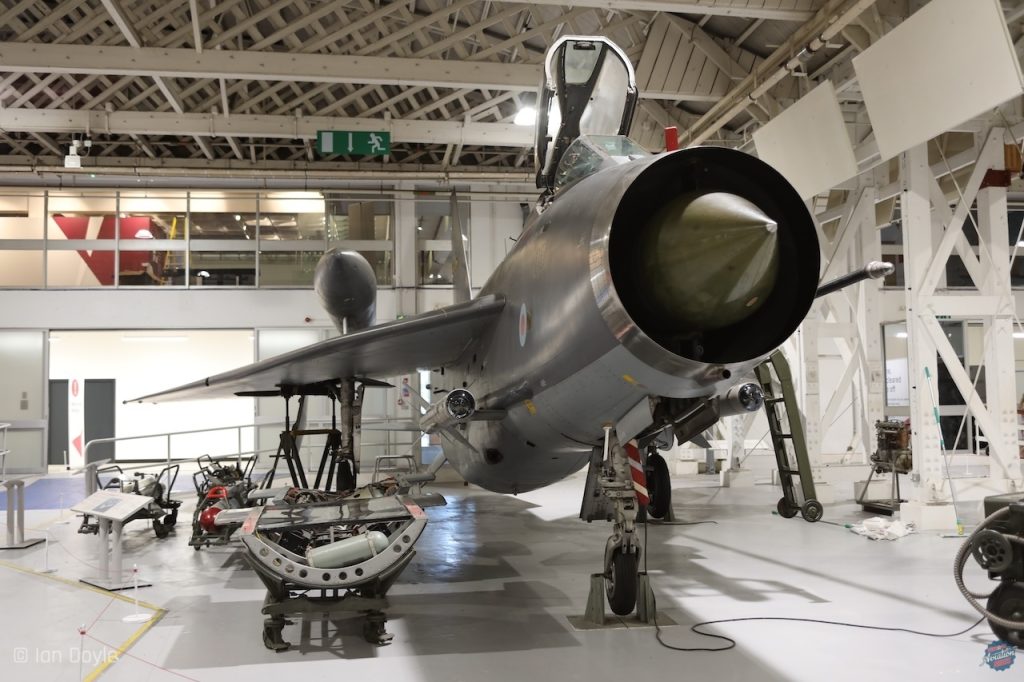
The RAF Museum Hendon, sister site to Cosford and the larger of the two RAF museum locations, is situated near central London and houses Lightning F.6 XS925. Formerly operated by Nos. 5 and 11 Squadrons, the aircraft was retired in 1987 and is preserved in No. 11 Squadron colours. Although the location is tight for photography, the aircraft is displayed in a way that offers a useful appreciation of the overwing tanks carried by some F.6 and F.53 models.
Farnborough Air Sciences Trust
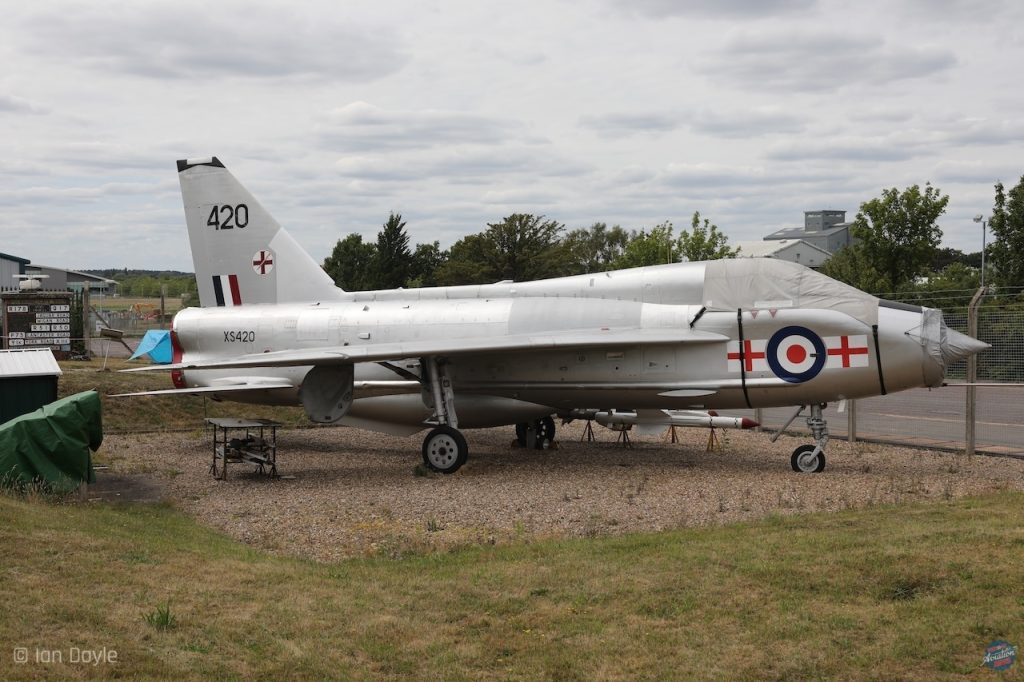
Continuing south brought me to Farnborough, a name synonymous with British aviation evaluation, testing and, of course, legendary trade airshows. The Farnborough Air Sciences Trust museum displays Lightning T.5 XS420, a two-seat trainer that served with training units before arriving at the museum in 1988. The museum explores the science and engineering of flight, with the Lightning perfectly embodying the high-speed research and testing long associated with Farnborough.
Bristol
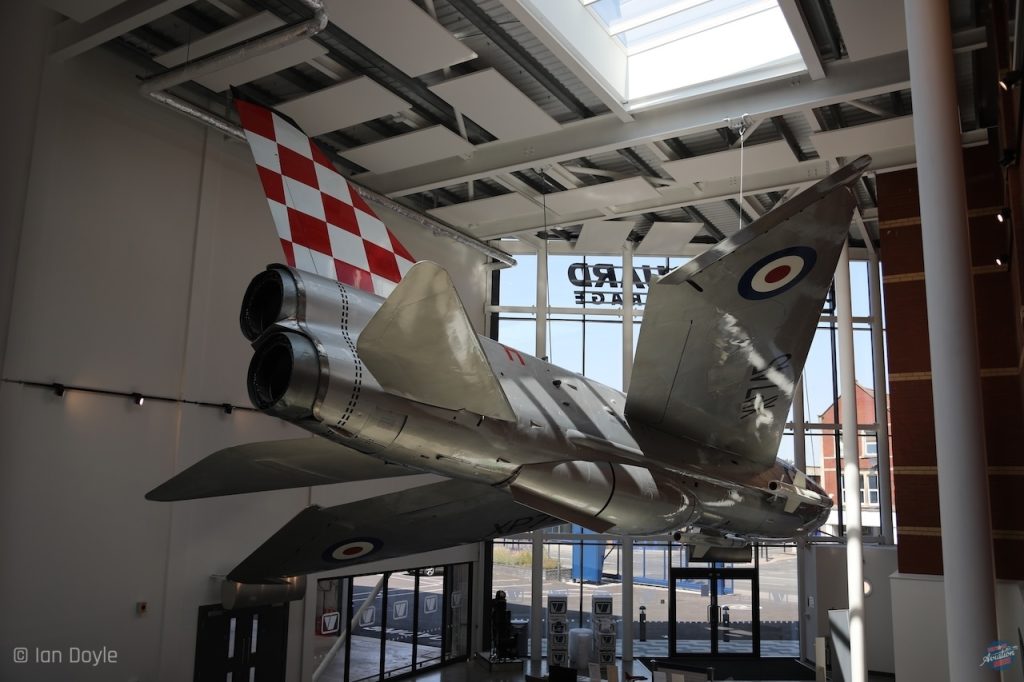
The next leg of the journey led me to Bristol, roughly three hours west of London. This was neither an airfield nor a museum, but one of the more unusual stops on the route. Tucked away inside a city-centre storage facility in Redfield is Lightning F.3 XP745, dramatically suspended in a climbing pose within a glass-topped atrium. Visible from the road and available to view by request at the welcoming reception desk, the aircraft is restored and painted in No. 56 Squadron “Firebirds” markings. It appears ready to fly a top cover over the reception area below. Installed after careful road transport, it represents a creative private preservation effort and offers excellent photographic opportunities, particularly from the balconies that provide unusual angles.
Liskeard
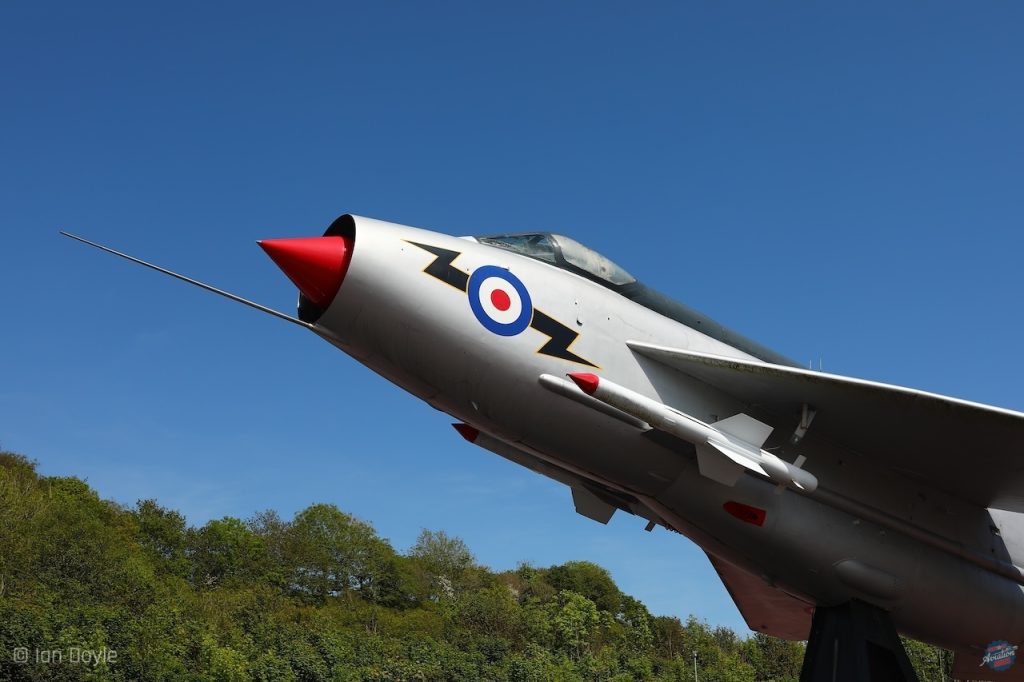
The next stop was Liskeard in Cornwall, another highly unusual location. Outside Castle Motors, a major car dealership, Lightning F.6 XS936 is displayed flying “top cover” over an assortment of automobiles below. It is an unexpected sight and another reminder that preserved Lightnings can be found in some remarkable places.
Midland Air Museum
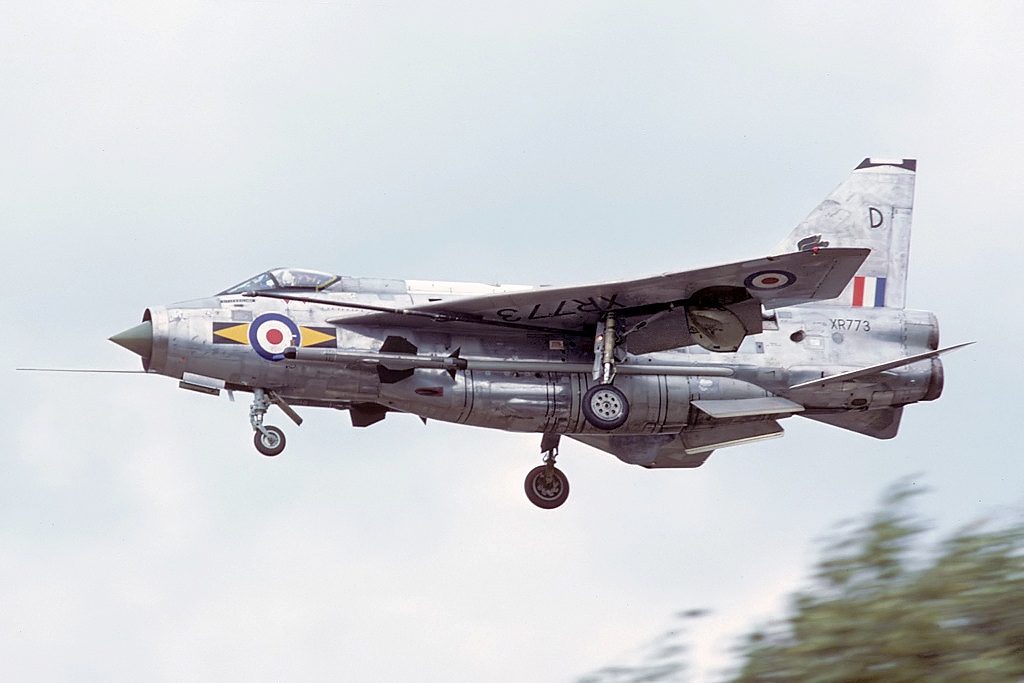
After the long haul to Cornwall, it was time to head north again. Four hours after leaving Cornwall, I arrived at the Midland Air Museum in Coventry, where the museum boasts not one but two Lightnings. The first is F.6 XR771, recently restored to its striking overall silver livery of No. 56 Squadron. The second is ex-Royal Saudi Air Force T.55 55-713/ZF598, a rare two-seat training variant. As Coventry was the final destination on this trip, it was time to head home, with more than 3000 images captured from numerous angles and a far greater appreciation of this classic aircraft. Chasing preserved Lightnings across Britain felt like tracing the fading echoes of an aircraft that once tore holes in the sky at Mach 2. Every stop revealed a different chapter of the type’s story, from museum centrepieces and gate guardians to privately preserved aircraft kept alive through the dedication of volunteers and enthusiasts. More than simply a photographic expedition, the journey provided a renewed appreciation for an interceptor whose raw performance, demanding maintenance and unmistakable silhouette secured its place among the greatest British aircraft ever built. For anyone who still feels the pull of the Lightning’s thunderous Avon engines and near-vertical climb, this is a road trip well worth taking. The author would like to thank Newark Air Museum, the City of Norwich Aviation Museum, the Lightning T5 Group, Vanguard Self Storage, the Midland Air Museum and the RAF Museum Midlands.





Shame you missed Tangmere Aviation Museum. We also have a Lightning experience/ simulator that the public is welcome to “fly”.
There’s one in the museum at Tangmere, near Chichester.
Gatwick Aviation Museum have an ex Saudi Lightning which is ground run twice a year
We have XR749 with us as a gate guard up at Score Energy Ltd in peterhead.
Engines were removed long ago however the sea air is taking its toll on the rest of her.
I am head of maintenance and will be trying to remedy what I can but would love some help!
Refeshingly brilliant article and loving the responses 👏 more please.
Interest in UK Aviation Heritage remains high.
It’s a shame you didn’t see the one at the North east aircraft Museum. In Tyne and Wear