






(Image credit: VAN)
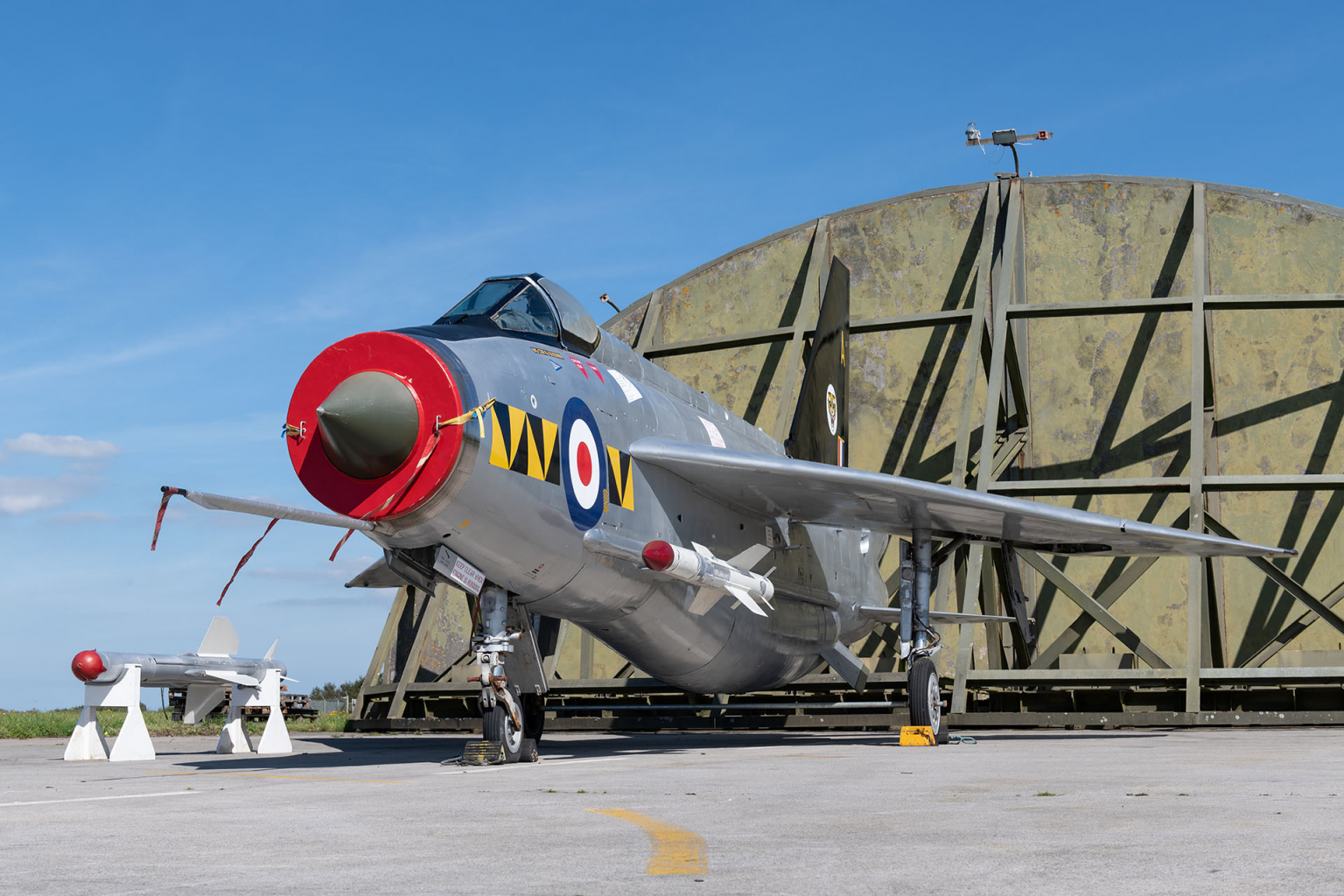
Seventy-one years ago today, on August 4, 1954, the English Electric Lightning P.1A made its maiden flight. Originally developed by English Electric—later absorbed into the British Aircraft Corporation (BAC)—the Lightning was a cutting-edge British jet fighter designed primarily for high-speed interception. It would go on to serve with the Royal Air Force as well as the Kuwait and Royal Saudi Air Forces. One of the Lightning’s most distinctive features was its twin-engine arrangement, with the Rolls-Royce Avon turbojets mounted in a vertical, staggered configuration within the fuselage. This unusual layout not only sets it apart visually but also contributes to its exceptional climb and speed capabilities.
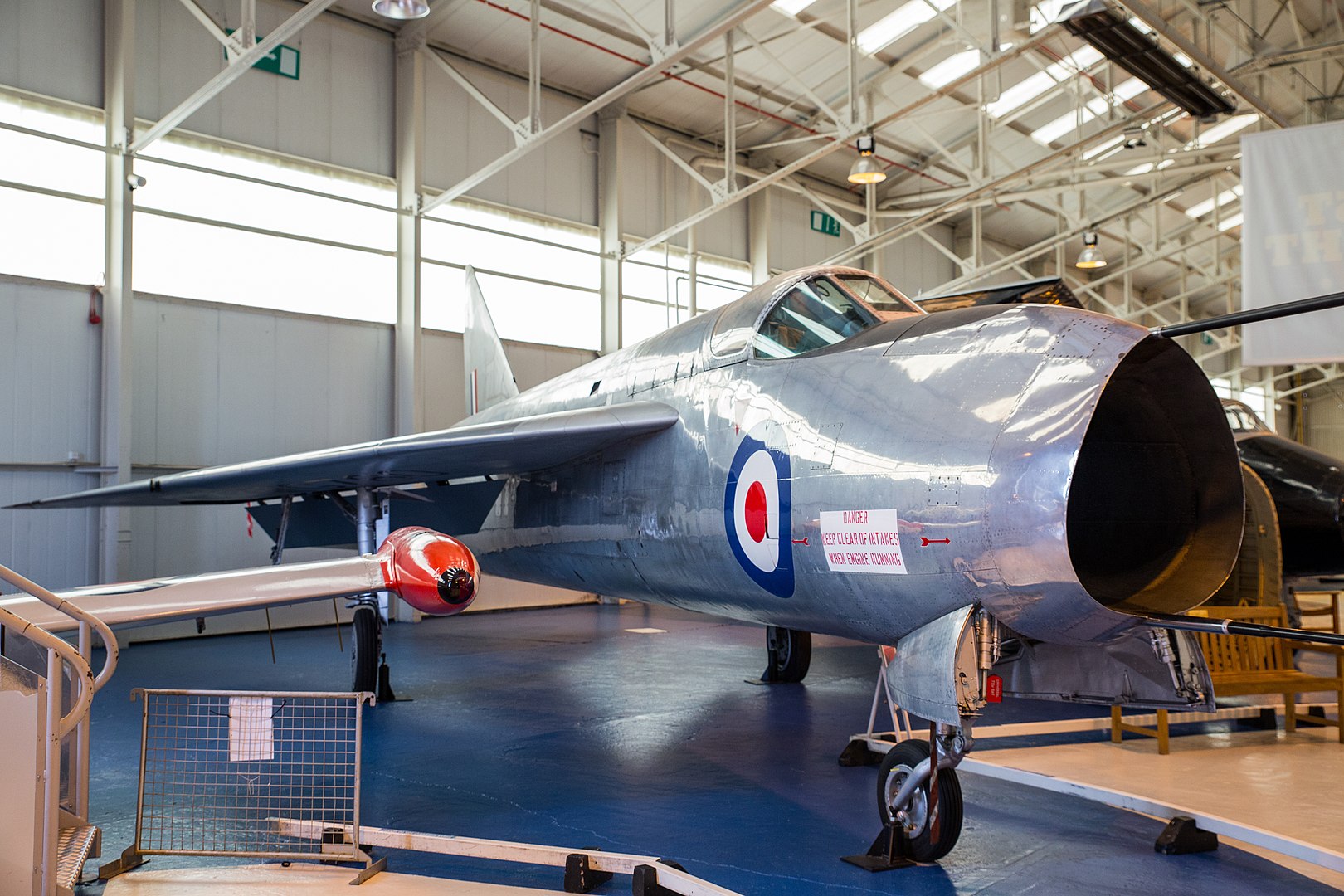
The P.1A emerged from Britain’s need to protect its “V Bomber” nuclear deterrent bases from potential Soviet attacks. The feared Tupolev Tu-22 Blinder posed a serious threat, and the Lightning was conceived to counter it. RAF pilots often described flying the aircraft as “being saddled to a skyrocket,” thanks to its blistering climb rate, top-end speed, and impressive service ceiling. The trade-off was limited range—an accepted compromise for an interceptor tasked with rapid-response defense.
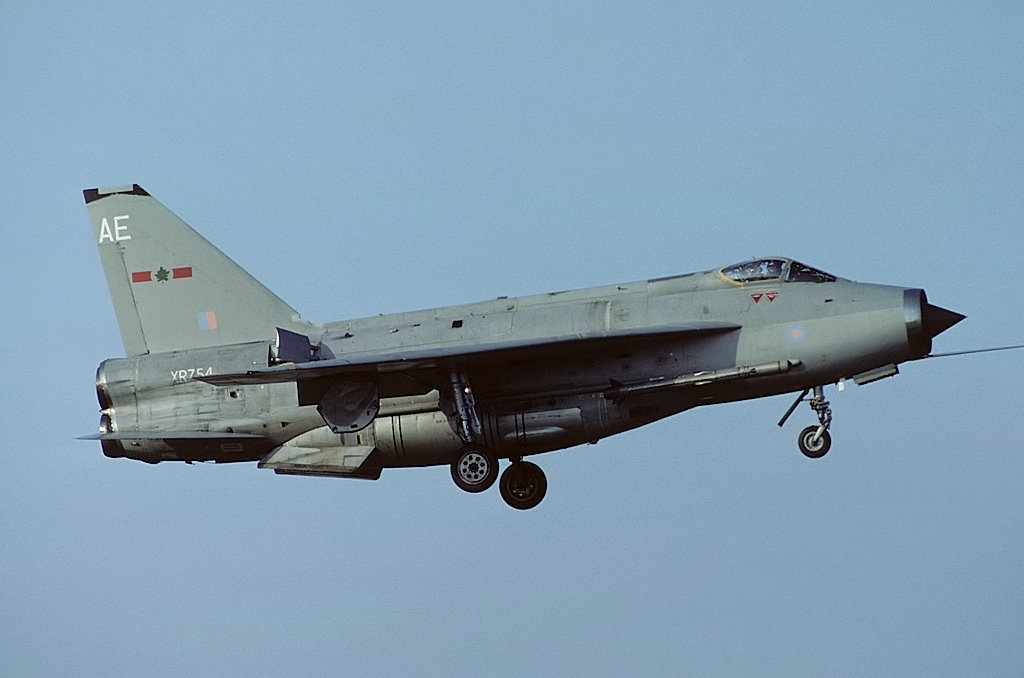
In its later F.6 variant, the Lightning was powered by two Rolls-Royce Avon 301R afterburning turbojets. Each engine produced 12,690 pounds of thrust dry and 16,360 pounds with afterburner engaged. This gave the aircraft a maximum speed of Mach 2.27 (around 1,500 mph), a climb rate of 20,000 feet per minute, and an operational ceiling of 60,000 feet. Combat range was approximately 135 nautical miles. Standard armament included two 30 mm ADEN cannons, complemented by either two de Havilland Firestreak or two Red Top air-to-air missiles mounted under the fuselage.
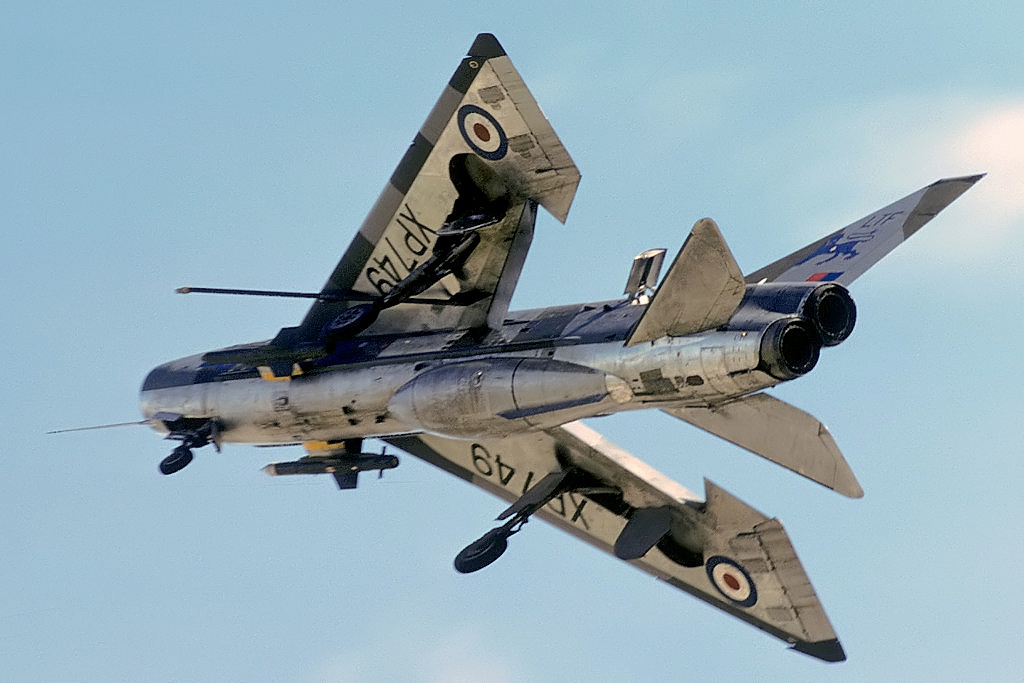
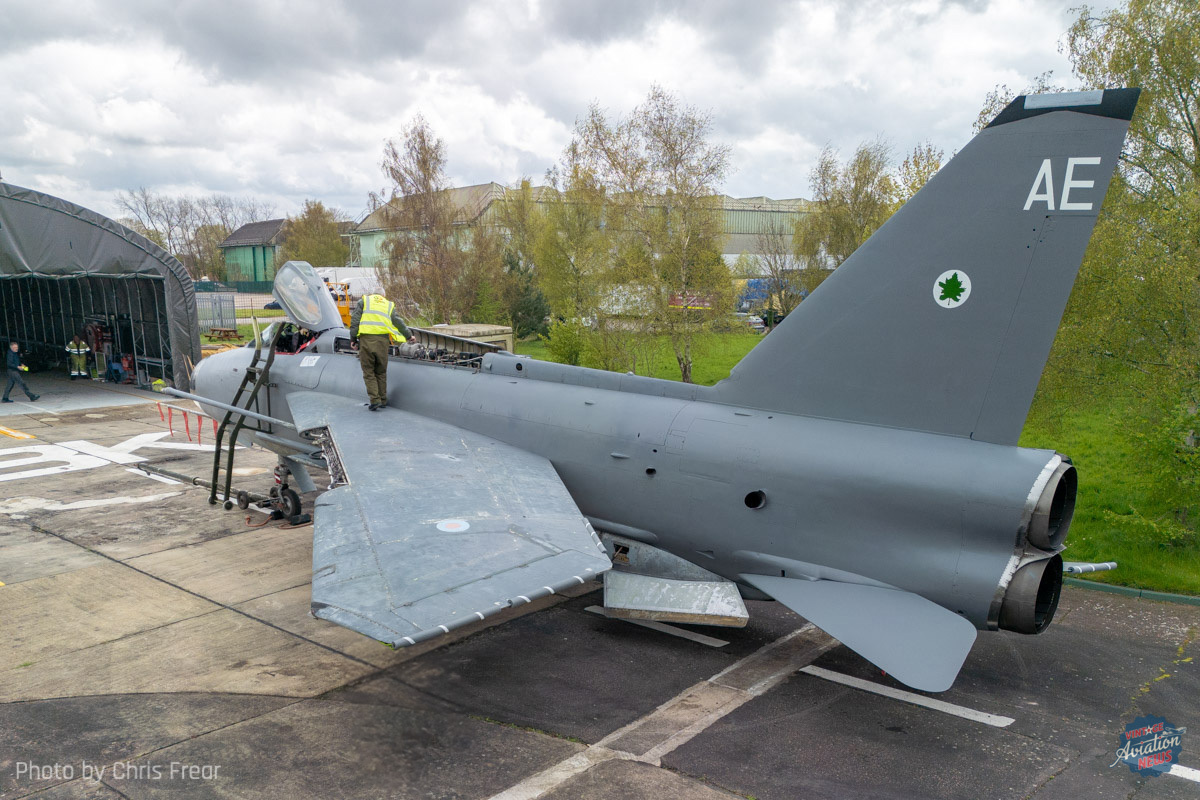
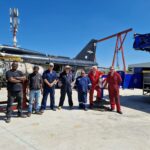
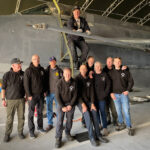
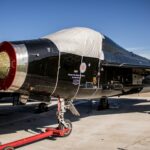
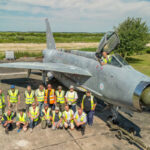
Between all variants, 337 Lightnings were produced before the type was retired from RAF service on April 30, 1988. Today, most surviving examples are preserved in museums, though one T.5 variant—XS452—remains airworthy, now operated by Anglo-Arabian Lightning Organisation. Another, T.5 XS422, is under restoration to flight by the Anglo-American Lightning Organisation in Kiln, Mississippi, but the project at the moment is at a halt. After decades of silence, English Electric Lightning XR724 has fired its engines once again at RAF Binbrook. The Cold War-era jet, restored by volunteers from the Crash Gate 3 group, was brought back to life in a dramatic engine run that echoed the aircraft’s high-speed legacy. These surviving aircraft stand as living reminders of one of Britain’s most iconic Cold War interceptors.



I remember well seeing the ‘Lightning’ at R.A.F ‘War Bird’ Display Days in the 60’s; held locally at R.A.F North Weald (sadly, a commercial Site nowadays) – one of the famous ‘Battle of Britain’ Fighter Defence Bases.
They were owned and flown by 111 Squadron – ‘The Black Arrows’ (who previously flew All-Black Hawker Hunters); and, in those pre -safety days, would put on some … ‘Very Exciting’ Displays.
One item in particular was very memorable.
Toward the end of a great day’s casual flying displays, fairly sedate military & Civilian aircraft …
The Squadron would be announced as due to arrive from the West, the direction of Ware & Hertford, some 30 miles off.
So, there we all are, at the flight-line fence, cameras loaded, all ready … and HERE THEY COME!
On The Deck, out of a Low-Late-Afternoon-Sun … Coming Straight At The Crowd!
Camera poised, all ready for the over-flight … except they didn’t!
In what seemed to be ‘In Our Laps’, the Squadron Went Vertical, With After- Burners Lit!
The Photograph? What Photograph?
The Noise and Vibration was unbelievable! Drop the Camera, Hands On Ears!!!
And that became their Arrival ‘Calling Card’; and every time you could feel your insides doing s Very Lively Jig!
Probably highly dangerous, but ‘WHAT THE HELL – IT WOKE EVERYONE UP’!
Great, great, long-gone days; but what memories … ‘Eh, Chaps!’
Bae Warton had a Lightning as a chase plane for following Tornado aircraft on their first flight after coming out of the production hangar during the 1980/90s. I remember weighing a Lightning at Bae Salmesbury.
I saw Lightnings at Biggin Hill in the 60’s, almost at runways edge. When they came past at rooftop level it made the ground shake.
I was born in the late 1940s within a short cycle ride from RAF Binbrook. The sound – what a sound! – and site of Lightnings on QRA going vertical was a frequent joy never to be forgotten. Likewise the Vulcans often in threes on exercise. Never to be forgotten but now consigned to reminiscing in the UK.