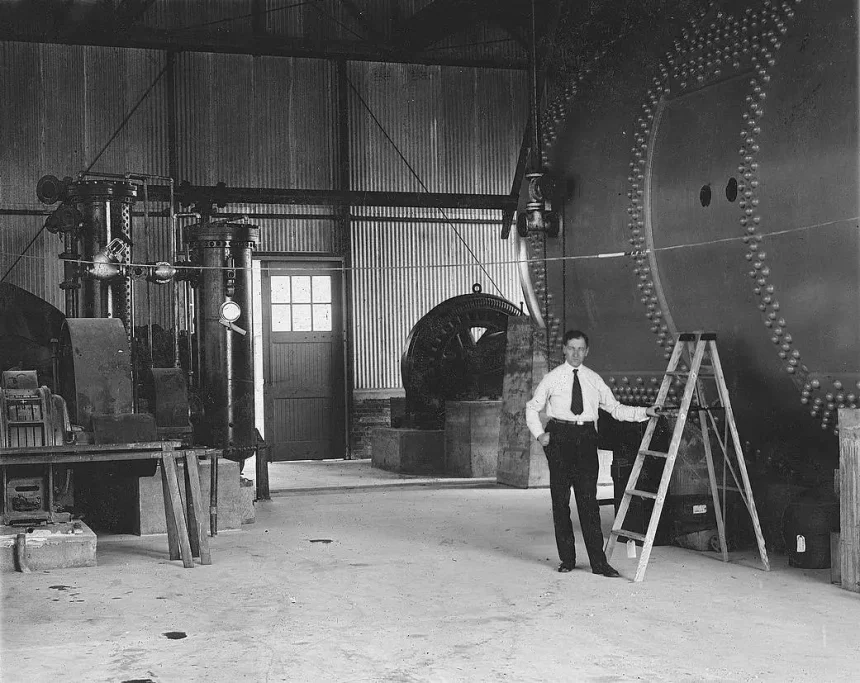

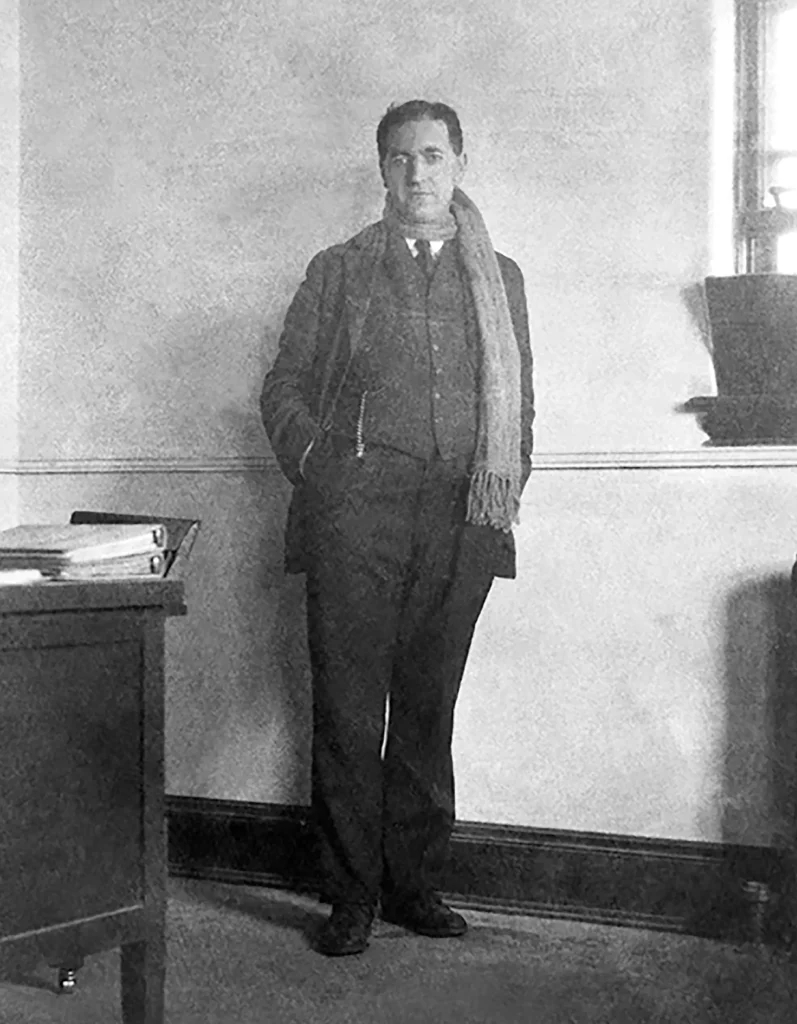
Max Munk, a German-born engineer, made important contributions during his six years at the NACA, which later became NASA. His major development was the Variable Density Tunnel (VDT), a new type of wind tunnel that could mimic real flight conditions. Munk also changed how the aviation world evaluated wing shapes, which improved airplane design. Max Munk was born in Hamburg, Germany. He earned an engineering degree in 1914 and, in 1917, a doctorate in physics and engineering from the University of Göttingen. Munk was a protégé of the famous aerodynamicist Ludwig Prandtl. As a result, the management at NACA wanted to use his theoretical expertise. President Woodrow Wilson signed orders allowing Max Munk to come to the United States and work for the government because he had been a former enemy, a process that happened again after WWII to bring Wernher von Braun and his rocket team to the US. In 1920, Munk moved to Washington, D.C., to work as a technical advisor at NACA, where he focused on theoretical problems.
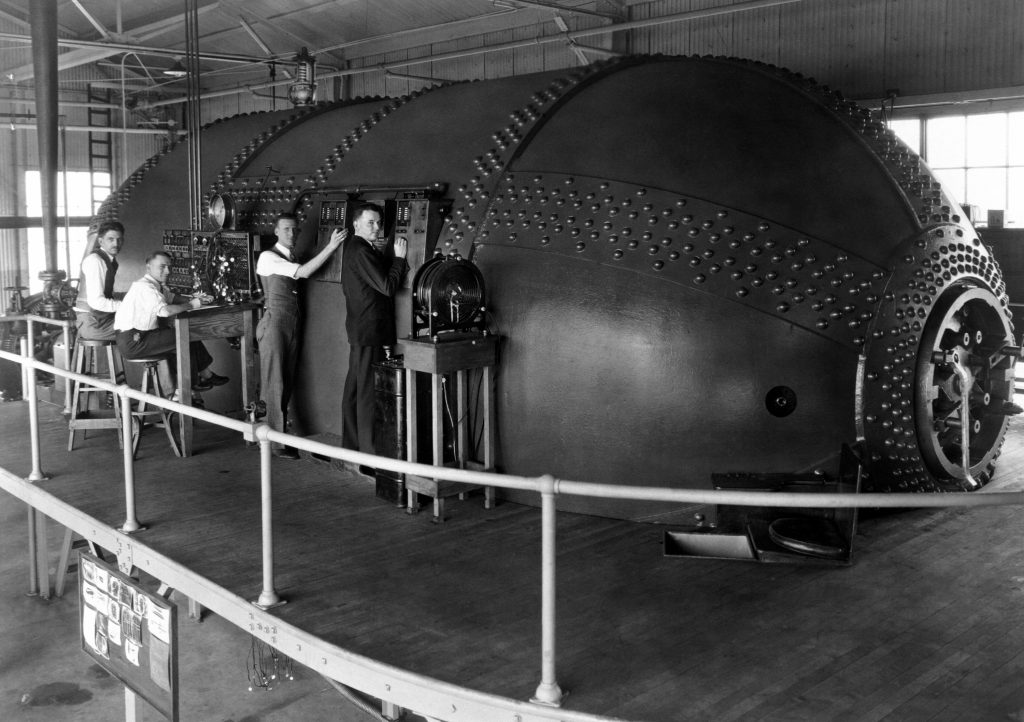
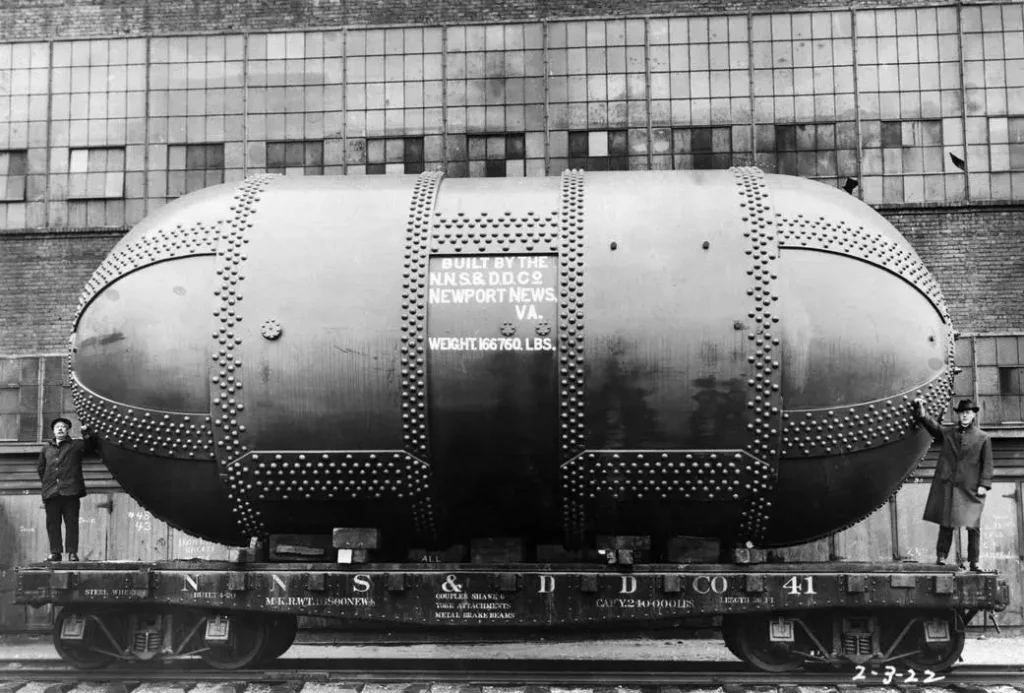
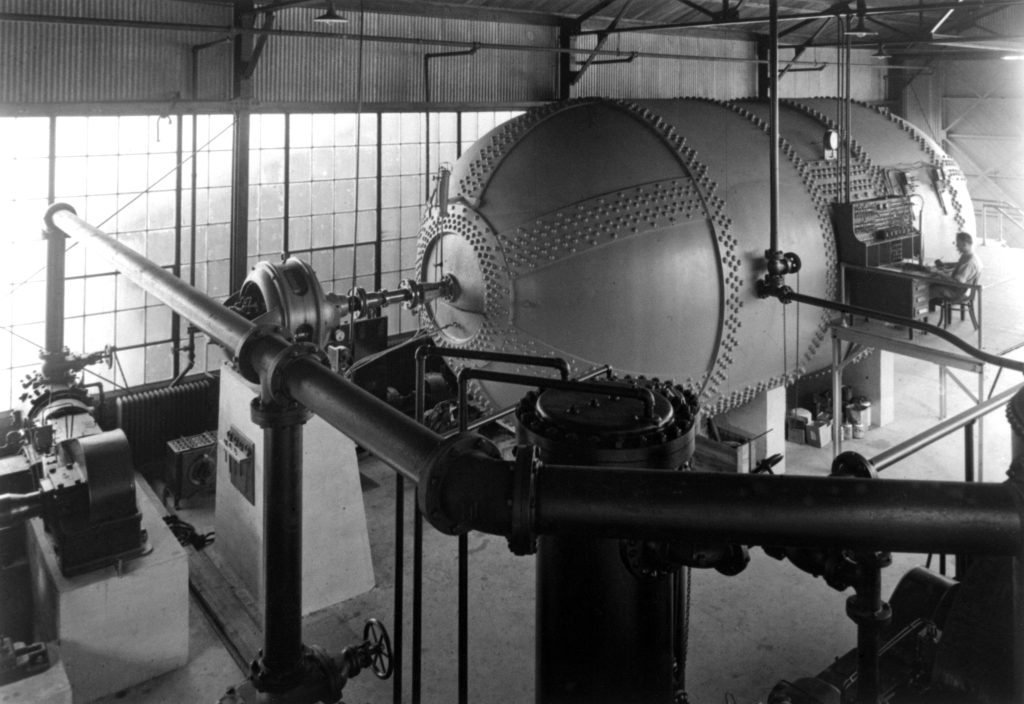
In 1921, while in Washington, Max Munk proposed a new facility for the NACA, which then had only one outdated wind tunnel used mainly for staff training. A major issue with atmospheric wind tunnels was the effect of the “Reynolds number” on test results. It led to important differences between wind-tunnel data and actual flight data, especially for critical factors such as maximum lift during landing approaches. Munk developed a wind tunnel that increased air density by pressurizing the air, helping mimic flight conditions and leading to the Langley VDT, which began operating in 1922. The VDT produced important results and helped the NACA lead in wind tunnel technology for over ten years. As a result, Members of Congress were impressed and provided additional funding. Munk also made contributions to airfoil theory. Max Munk pursued his doctoral thesis under Ludwig Prandtl, in which he studied airfoils.
In 1922, Max Munk introduced the thin-airfoil theory, which helped model how airfoils behave by separating the effects of shape factors such as thickness and camber. The theory was the main method for designing airfoils until the 1930s. At the time, Eastman Jacobs at Langley developed laminar flow airfoils, leading to the well-known NACA family of airfoil shapes. Munk worked at the NACA in Washington for six years. In 1926, after his success in airfoil research at the Virginia Polytechnic Institute, he became the Chief of the Aerodynamics Division at the Langley Memorial Aeronautical Laboratory (LMAL). The role made him second-in-command at Langley. Max Munk managed all wind-tunnel tests, flight research, and analytical research at the lab, and wrote or co-wrote 57 reports during his time at NACA. Even though he was popular with NACA management, many people at Langley did not like him. His intelligence made him a great thinker, but others saw him as arrogant and quirky, leading to arguments and conflicts with the engineers who tried to work with him.
Floyd Thompson, who would be the future Director at Langley, remembered a heated argument between Max Munk and Fred Weick, a well-known researcher at the Langley Propeller Research Tunnel. The debate got tense when Munk said, “Mr. Weick, we should agree, so that when we get in meetings, we say ‘this is the way it should be.’ No one will dare stand against us. Therefore, we should agree on my position!” However, Weick left the meeting and kept his own views. Max Munk resigned from the NACA in 1927. After he retired, he worked for the Alexander Airplane Company and Westinghouse, the American Brown Boveri Electric Corporation. He taught mechanical engineering at Catholic University and, in 1945, became a research physicist at the Naval Ordinance Laboratory, where Max Munk focused on fluid motion in turbulent conditions. Munk passed away on June 3, 1986, in Ocean City, Maryland, at age 95. As one of the Pioneers of Aeronautical Engineering, Max Munk helped NACA to develop aviation technologies that made aviation as we see it today. Read more such stories HERE.