
By Michael W. Michelsen, Jr.
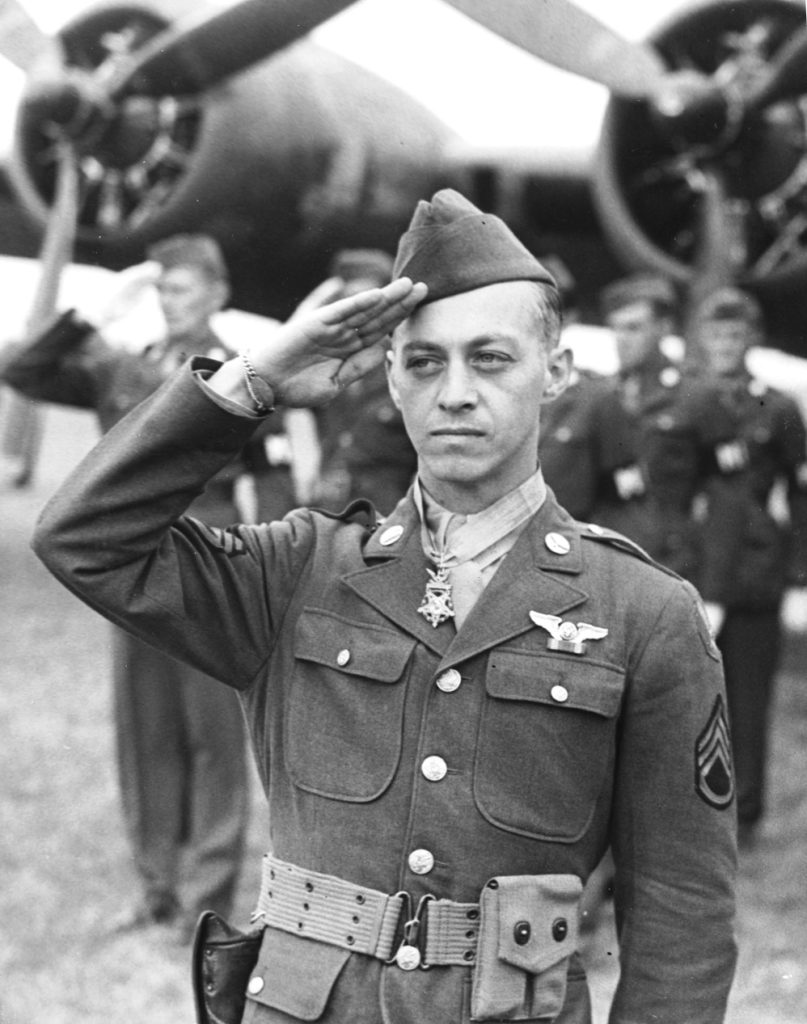
Part of being successful in the military, as in business and life, is being liked, or at least getting along with others. SSgt. Maynard Harrison “Snuffy” Smith proved throughout his life that he could do neither. Regardless, he left the Army Air Corps after World War II a hero, not to mention a Medal of Honor recipient. Smith was born in Caro, Michigan, on May 19, 1911. His father was a successful attorney. His mother was a schoolteacher. From early in his life, Smith was considered a troublemaker, so much so that his father enrolled him in Howe Military Academy in Howe, Indiana. After he graduated, Smith went through several jobs until his father died in 1934, when he decided to quit and live off his inheritance. Smith also went through two marriages that ended in divorce. With his second wife, he had a son, William. After failing to make child support payments, a judge is said to have offered him a choice: jail or enlist in the Army. Smith chose the latter. He was later photographed by the local newspaper with other inductees wearing handcuffs and escorted by the sheriff.
Off to War
Smith volunteered for gunnery school after completion of basic training. At the time, gunners were NCOs, a quick and painless way to earn rank and extra pay. Smith’s first stop after graduating from gunnery school was Thurleigh, Bedfordshire, in south central England, where he was assigned to the 423rd Bombardment Squadron. Smith’s short stature made him an ideal candidate for service as a ball turret gunner, but it didn’t take long for his reputation for being hard to get along with to catch up with him. He earned the nickname “Snuffy” after the cantankerous character of the era in Barney Google and Snuffy Smith, a popular comic strip. Smith was not well-liked due to his personality, but both he and others tried to get along since they were all in the Army together.
The Day Hell Broke Out
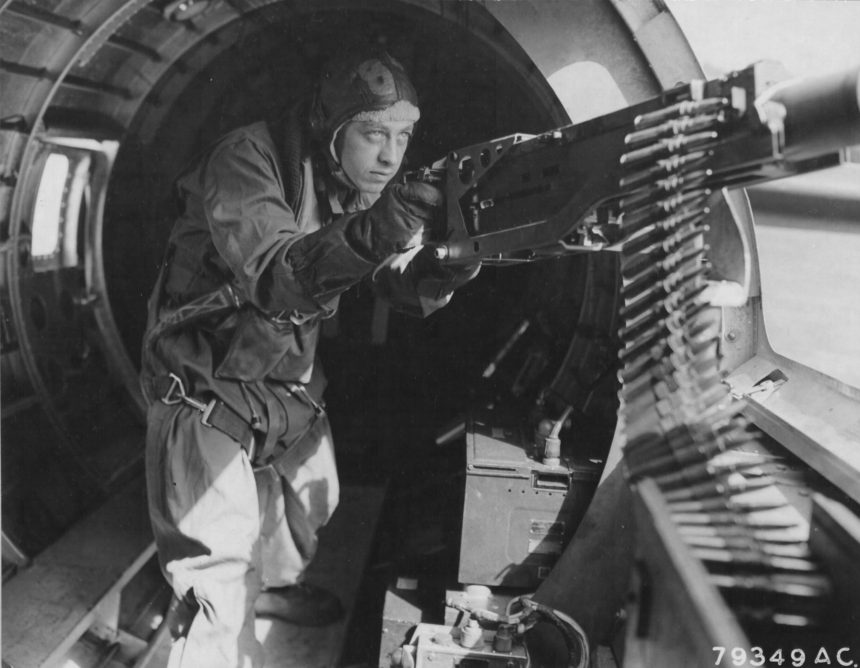
May 1, 1943, started much like any other day in the skies over France. The intended target was the U-boat pens at Saint Nazaire. The flak was minimal, and there didn’t seem to be a German fighter anywhere, or so they thought. It was shaping up to be an easy and highly successful mission. Until it wasn’t. Saint Nazaire was heavily defended by German anti-aircraft guns. It was nicknamed “flak city” by the airmen. It was Smith’s first combat mission. The formation wasn’t a full complement since several of the assigned aircraft had mechanical problems and had to turn back, but they were still able to complete the mission and release their bombs. After their bombs were dropped, the German fighters showed up. The entire flight of the American aircraft was hidden by flying into a large cloud bank. After the B17s emerged from the clouds, the navigator in the lead aircraft believed they were approaching the southern coast of Britain. In fact, he had made a navigational error and instead was approaching the city of Brest on the northern coast of France. After exiting the cloud bank, the pilot descended to 2,000 feet and almost immediately started taking fire from several German anti-aircraft positions. Smith’s aircraft was hit, and the fuel tank ruptured. The center of the fuselage burst into flames, knocking out communications and severing power lines. After the fire started, Smith’s turret wouldn’t function, and his intercom went out. Smith couldn’t communicate, so he climbed from the turret and began assisting others in the fuselage, including two wounded crew members. Three other crew members bailed out, which Smith refused to do because of his wounded crewmates. The three crew members who bailed out were never heard from again. While tending to the wounded, Smith also worked feverishly to man the .50 machine guns and to put out the fires. For nearly 90 minutes, Smith threw burning debris out of the fuselage and put out fires with a fire extinguisher and by urinating on it.
Home at Last
When Smith’s bomber finally made it back to England, the pilot landed at the first available airstrip. Immediately upon landing, the aircraft broke in half due to the damage. Maintenance crews counted more than 3,500 holes in the fuselage from bullets and shrapnel. Snuffy Smith’s selfless actions had saved the lives of the remaining six crewmembers. Journalist Andy Rooney was present at the air base where Smith’s plane landed and penned a front-page story about the obnoxious ball gunner’s exploits. Smith was subsequently awarded the Medal of Honor.
A Week in the Kitchen
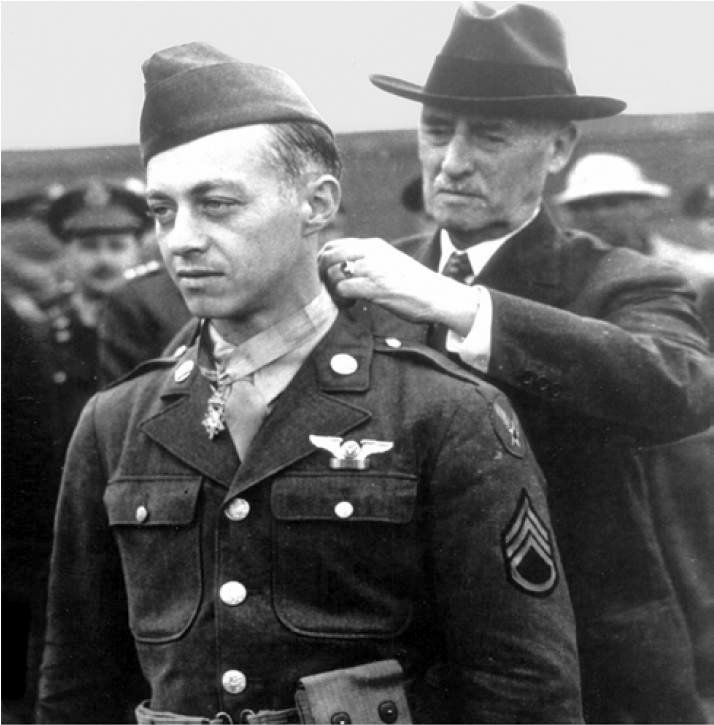
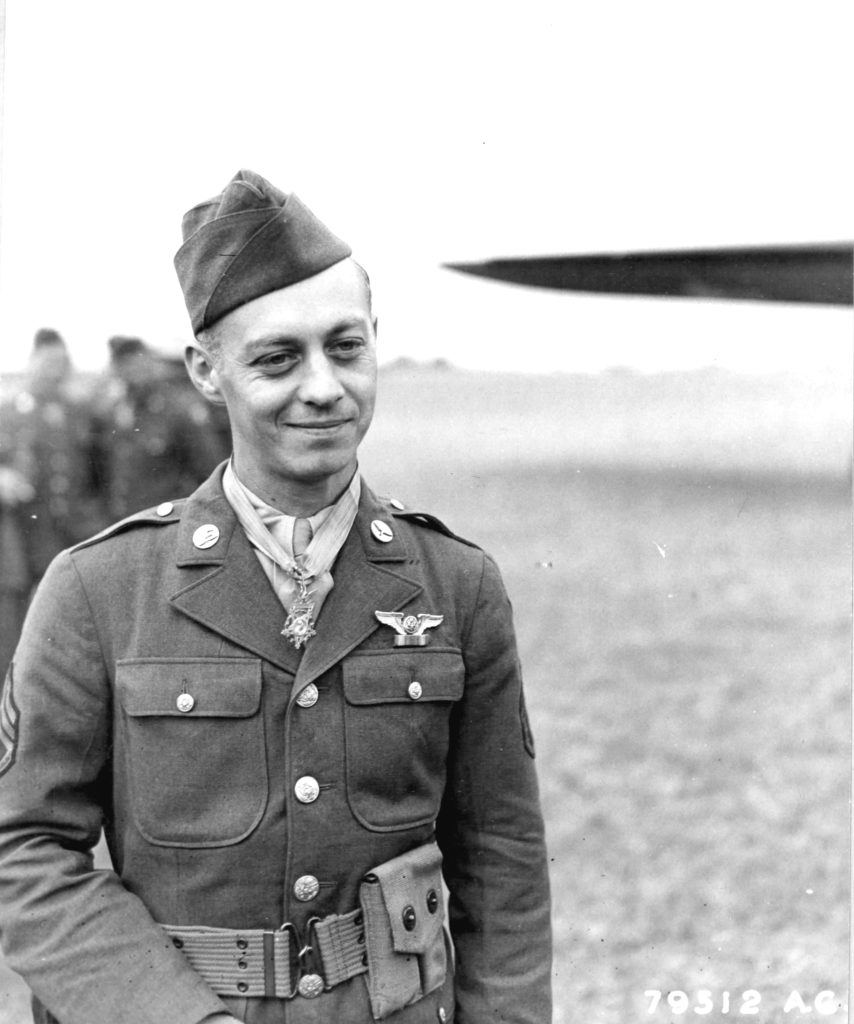
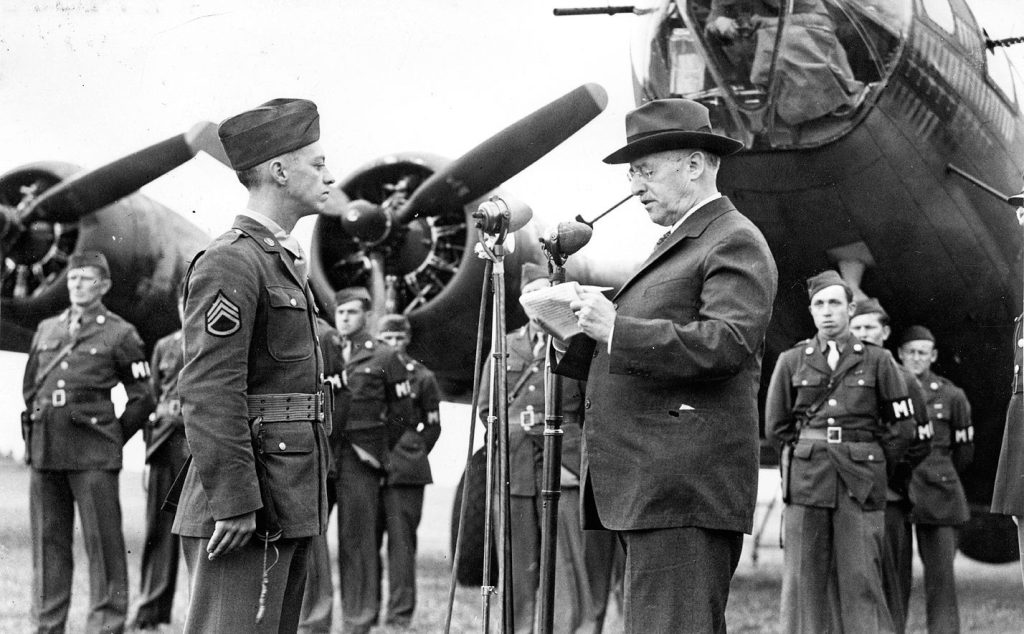
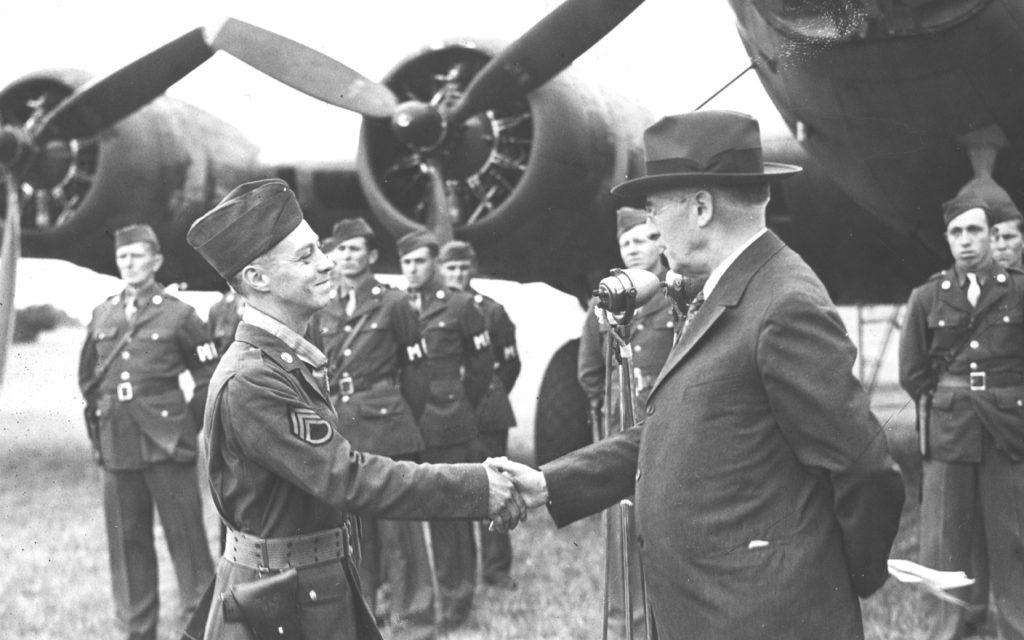
Smith had a nasty habit of arriving chronically late to command meetings. As a result, he was put on KP duty as a punishment. During the same week he was informed that he was to be awarded the nation’s highest award for courage in the face of the enemy, the Medal of Honor, which was presented to him by Secretary of War Henry Stimson.Smith flew four more combat missions after receiving his medal, but was eventually grounded, the result of battle fatigue, or what is known today as post-traumatic stress disorder. He was made a clerk and eventually reduced in rank to Private because his job performance was so bad.
Home at Last
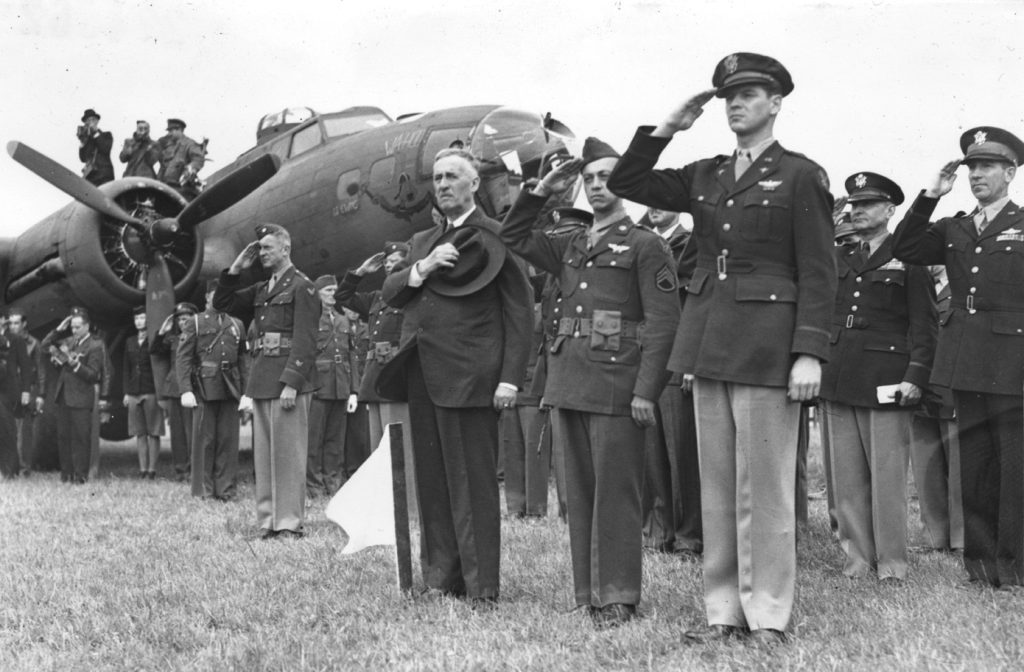
On February 2, 1945, Smith returned home. Even with his checkered record, his hometown greeted him like the hero he was. There was an exuberant parade to welcome him home. He was discharged from the military three months later. Whenever Smith was asked about his experience in the military, he had nothing to give but disdain. In a 1982 interview with this author, Smith characterized the Medal of Honor thus: “I have always tried to keep the Medal of Honor in perspective,” he explained. “I did what I did because it needed to be done. I just happened to be the one who was there to do it. They just happened to give me a medal for it,” Smith continued to have the same problems later in life as he had prior to his military service. As a civilian, Smith had trouble holding jobs, and legal problems also dogged him for the remainder of his life. Smith married his third wife, Mary Rayner, in 1944. The couple met at a USO dance in Bedford, England. They eventually had three sons and a daughter, putting down roots in St. Petersburg, Florida, where he died on May 11, 1984, of heart failure at age 72. He is buried at Arlington National Cemetery.