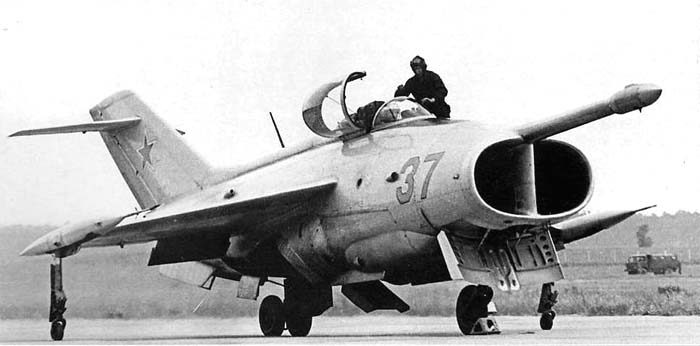

The idea of a vertical takeoff and landing aircraft existed long before jet aviation. It became practical only after the arrival of turbojet engines in the late 1940s. Even then, it took years of testing before a workable aircraft could be built. By the late 1950s, engineers at the Yakovlev design bureau in the Soviet Union began studying vertical flight. To make the vertical takeoff and landing concept successful, the engineers first needed to develop compact, powerful turbojet engines. The engineers considered various concepts, including lift engines and rotating-nozzle engines, but the final draft design used two turbojet engines with adjustable nozzles to direct thrust downward for vertical flight and backward for forward flight. In April 1961, the Yakovlev design bureau proposed to develop a single-seat fighter-bomber prototype. Initially, the aircraft was envisaged to use two engines, each producing nearly 5,000 kgf of thrust. But just as the aircraft was being built, the engineers developed a more powerful Tumansky R-27-300 vectored-thrust axial-flow turbojet engine producing 12,000 pounds of thrust. The aircraft, designated Yak-36, was equipped with two of them.
Design of Yak-36
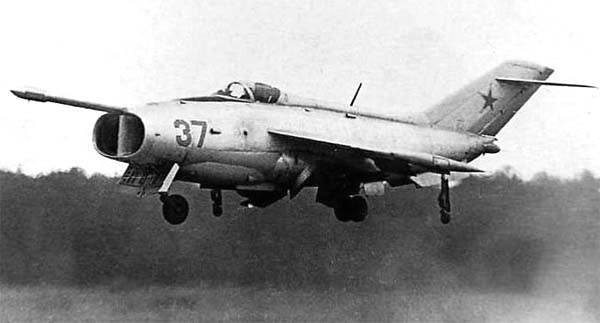
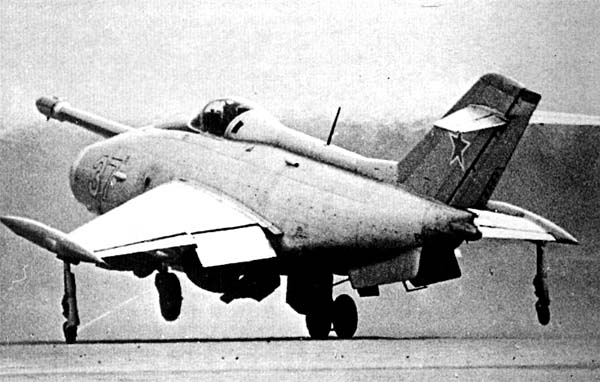
A total of four prototypes were built, with the first used for structural testing and the others for flight experiments. The Yak-36 was 55.9 feet long, 14.9 feet high, with a wingspan of 32.10 feet and a wing area of 180 square feet. Its empty weight was 11,684 pounds, and the maximum takeoff weight was 19,621 pounds. With a fuel capacity of 5,700 pounds, its range was 230 miles. The maximum speed of the aircraft was 560 mph with a service ceiling of 39,000 feet and a hovering ceiling of 6,200 feet. It had provisions for two 0.91-inch cannons, two hardpoints that could each carry 220 pounds of bombs or missiles, and two rocketpods that could each carry 16 rockets. The aircraft had a traditional body and wings, but its engines were placed at the front. The exhaust nozzles were located near the center of the aircraft’s weight to help keep it balanced during vertical flight. To control the aircraft while hovering, it used gas-jet rudders at both the front and back. Such a setup was chosen to help control the aircraft’s movement when the wings couldn’t. The landing gear had a bicycle-style design, with extra supports on the wings. The first ground and tethered-hover tests started on January 9, 1963. During these tests, the aircraft was lifted a short distance above the ground while secured by cables. Later, free-hover tests were conducted at low altitudes, and dozens of such tests were completed over time. The aircraft experienced several problems during these tests. When hovering over a solid surface, hot exhaust gases made it unstable. The aircraft could roll or drift, and controlling it with gas-jet rudders was challenging at first. The engine exhaust also damaged the ground surface, especially concrete, because the high-temperature jet flow could harm it. One test aircraft was even lost during a hard landing due to a landing-gear failure.
The Cancellation
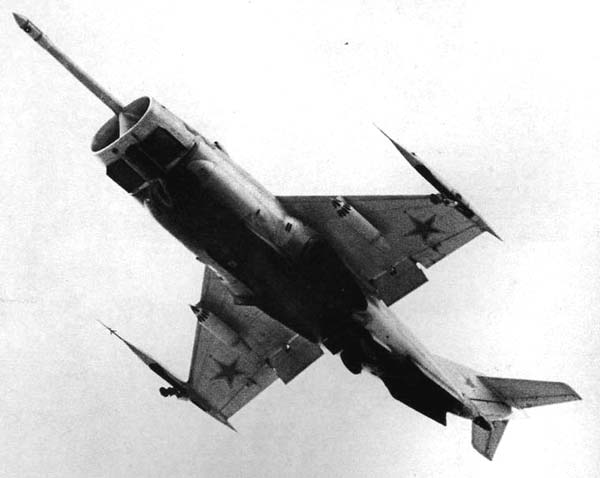
Test pilots created ways to control the aircraft during takeoff, hovering, and landing. They studied different methods for vertical landing. One method involved descending from a higher altitude, similar to a helicopter. Another focused on altitude, aircraft speed, and the transfer of lift from the wing, which proved more useful. On July 27, 1964, the Yak-36 took off and landed conventionally to test its performance in the air. Over time, the plane became more stable due to improved control systems and better techniques from pilots. On February 7, 1966, the Yak-36 completed its vertical takeoff, performed a circuit flight, and landed conventionally. On March 24, 1966, it successfully did a full vertical takeoff and landing, becoming the first Soviet jet to demonstrate vertical flight. The Yak-36 was shown to the public at an air display in Moscow in July 1967. While the aircraft performed well overall in test flights, it could not carry enough payload, and the USSR Ministry of Defence was not interested in an aircraft with minimal payload. As a result, the Yak-36 did not enter production after testing and remained a research aircraft. However, the aircraft provided important information about vertical flight and engine design, which led to the development of the Yak-36M, which later became the Yak-38, the Soviet-only operational vertical takeoff and landing strike aircraft and its first operational carrier-based fixed-wing aircraft. In the Grounded Dreams series, the Yak-36 was the first step in the Soviet development of vertical takeoff jets and the knowledge gained from its testing helped with later aircraft designs. Read other Grounded Dreams articles HERE.