
By Kenneth P. Katz
The first part of the series covered the formation of the Hamilton Standard Propeller Company as part of United Aircraft and Transport Corporation (UATC). UATC was an ambitious attempt to achieve horizontal and vertical integration in the rapidly emerging aviation industry. Click HERE to learn more about the first part. From the perspective of somebody who has never seen an airplane, the most obvious way to propel an aircraft is for it to flap its wings. After all, birds, insects, and bats fly, and they do that by flapping their wings. It turns out that building an aircraft that flaps its wings, called an ornithopter, is nearly impossible. Flapping wings require an extraordinary combination of aerodynamics, structure, muscles, and controls to make a motion that is much more intricate than a simple up-and-down movement. Furthermore, flapping wings don’t scale up, which is why there are no birds the size of large mammals and no insects the size of large birds.
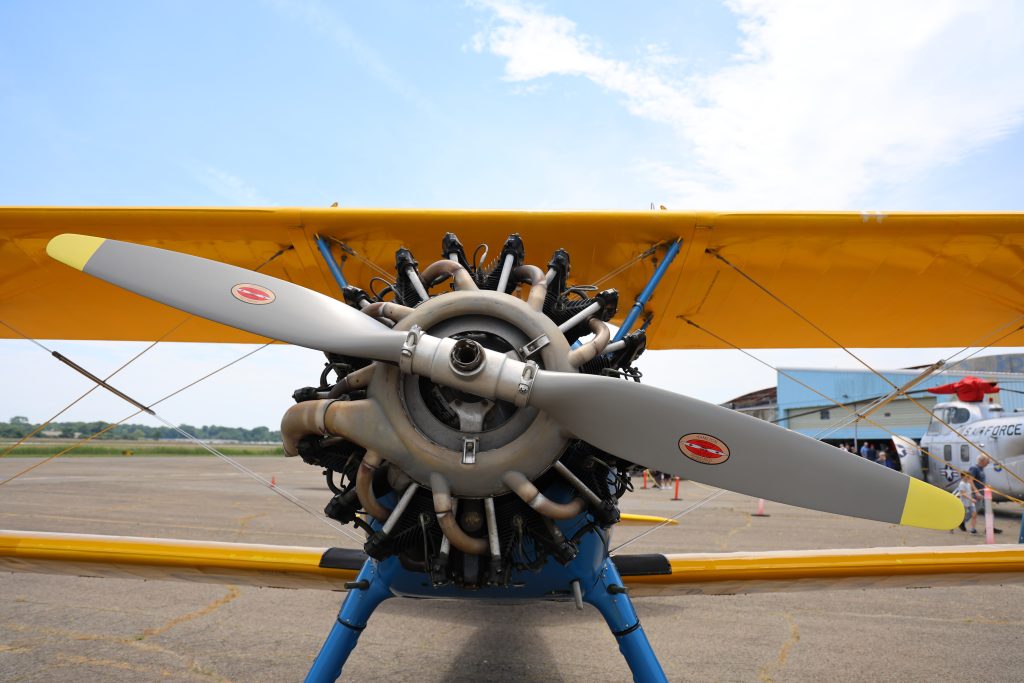
Ornithopters with flapping wings being unfeasible, the next idea was to use a propeller, since some steamships used them. Propellers were commonly called “screws” since it seemed intuitive that they screwed through the water in the manner that a wood screw entered a piece of wood. In fact, that is not how a propeller works. One of the brilliant insights of the Wright brothers, that enabled them to invent the airplane, was that an airplane propeller was actually a rotating wing. Creating lift along its axis of rotation, the propeller pushed air backwards, which resulted in thrust. In a given flight condition, a wing has optimal performance at one angle of attack, which is defined as the angle between the relative wind incoming to the wing and the chord line of the wing. For propellers, the angle of the chord line of the blade at a particular station along the blade is called a pitch angle. Because the further from the hub, the larger the radial air velocity incoming to the blade, the blade pitch angle is highest near the hub and gradually reduced along the blade.
The angle of the incoming airflow to the blade is a function of the forward airspeed of the airplane and the radial velocity of the rotating propeller. Since both the forward airspeed and the rotational angular velocity of the propeller vary over the flight envelope of the airplane, the pitch angle of the propeller blades on a fixed-pitch propeller is optimized for one flight condition. Typically, the propeller is optimized either for takeoff and climb or for cruise. At other than the optimal flight condition, a fixed-pitch propeller is less efficient at converting the power of the engine into thrust. Essentially, an airplane propeller is analogous to the transmission of a car. The engine converts the chemical energy of the fuel into mechanical power. The car’s transmission or the airplane’s propeller then converts the mechanical power of the engine into propulsive force. Continuing the analogy, a fixed-pitch propeller is like a one-speed transmission.
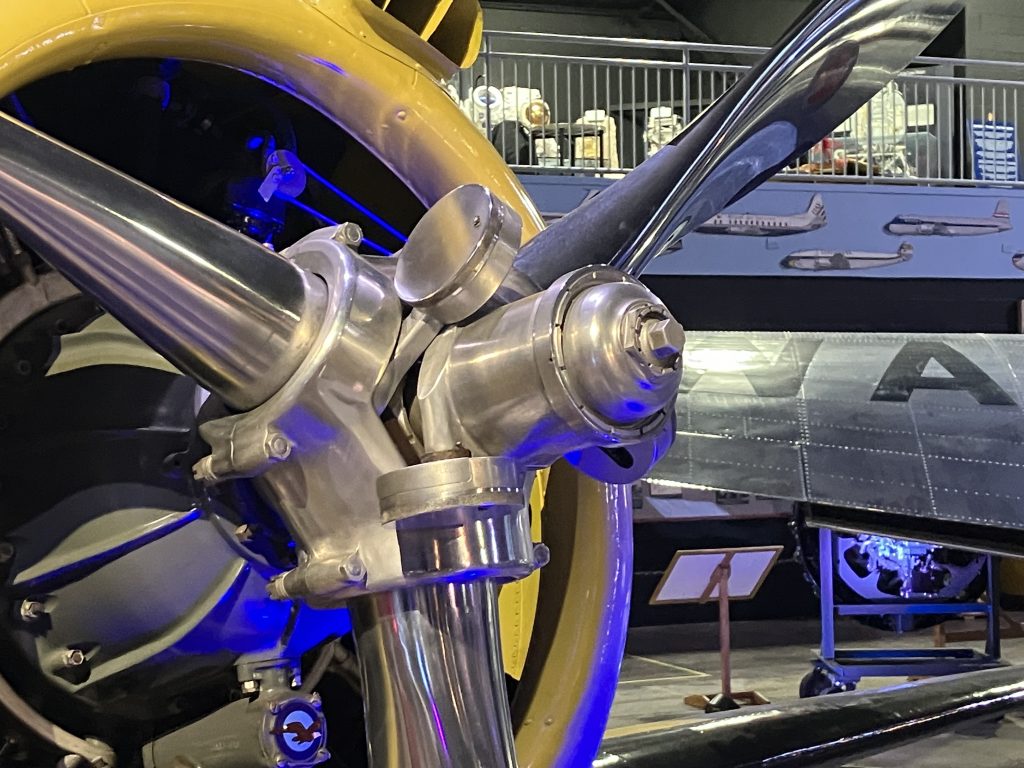
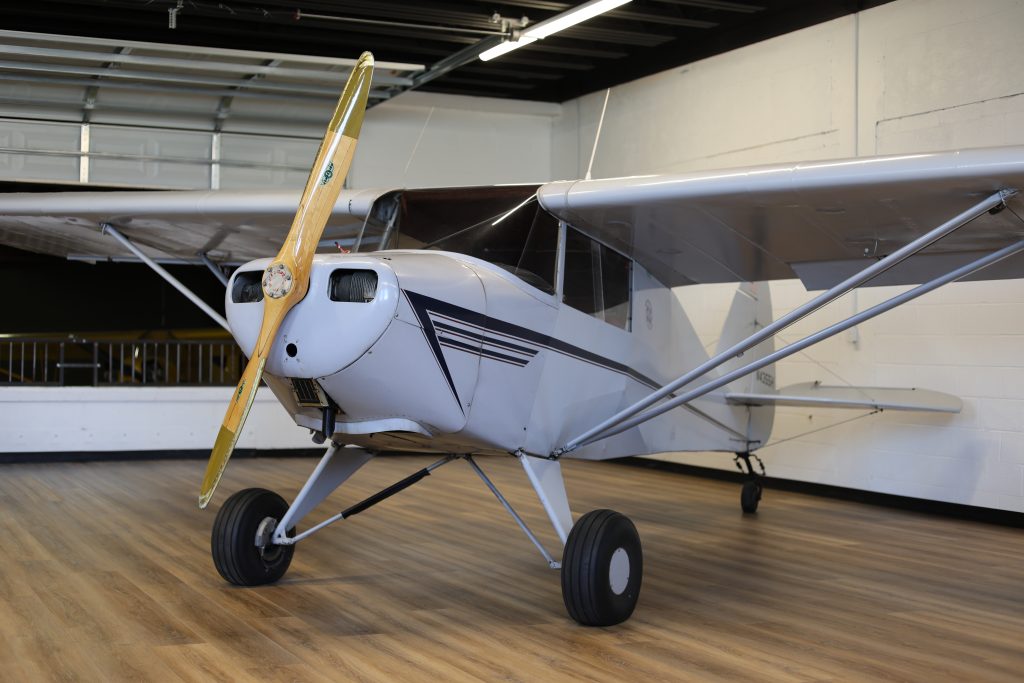
In the early days of aviation, the performance envelope of airplanes was small enough that a fixed-pitch propeller could have adequate performance over that envelope. World War I airplanes had fixed-pitch propellers. To this day, fixed-pitch propellers suffice for aircraft such as the Piper Archer, Cessna 172, and Vans RV-12. But as aviation advanced, it became apparent that the pitch of the propeller blades would need to be changed in flight to have aircraft with good performance for both take-off/climb and high-speed cruise. In the words of Wilbur Wright, “the best propeller for starting is not the best for flying“. A controllable-pitch propeller is a difficult technical challenge. The centrifugal forces where the propeller blades connect to the hub are high. The different blades of the propeller all need to be changed the same amount, because otherwise the structural loads and vibrations will be destructive. The control command for blade pitch needs to be transmitted through the rotating hub of the propeller. Although developing the controllable-pitch propeller was a difficult technical challenge, it was one that had to be met to increase airplane performance.
Controllable pitch was not the only development that was needed to advance propeller technology. Aircraft propellers traditionally had been made of wood. There was a concern that a metal aircraft propeller would be subject to fatigue and suffer structural failure. Unfortunately, wood also suffered from disadvantages as a propeller material, such as resistance to climatic conditions. Wood propellers tended to damage easily and absorb moisture. Furthermore, a propeller blade constructed from metal could be thinner than a wooden blade, which would reduce drag at high rotational speed. It also seemed likely that metal would be the only practical material from which to fabricate the parts of a controllable-pitch propeller. Starting in 1917, the foremost institution for the advancement of propeller technology in the United States was the Engineering Division of the US Army Air Service at McCook Field, near Dayton, Ohio. Today, that organization remains in a leadership role in aerospace technology as the Air Force Research Laboratory. Frank W. Caldwell was the civilian chief engineer for propellers at McCook Field. Throughout the 1920s, Caldwell and the McCook team, working with industry, explored these two critical technologies: controllable-pitch propellers and metal propeller blades. Standard Steel Propeller Company became one of the primary industrial partners of McCook Field.
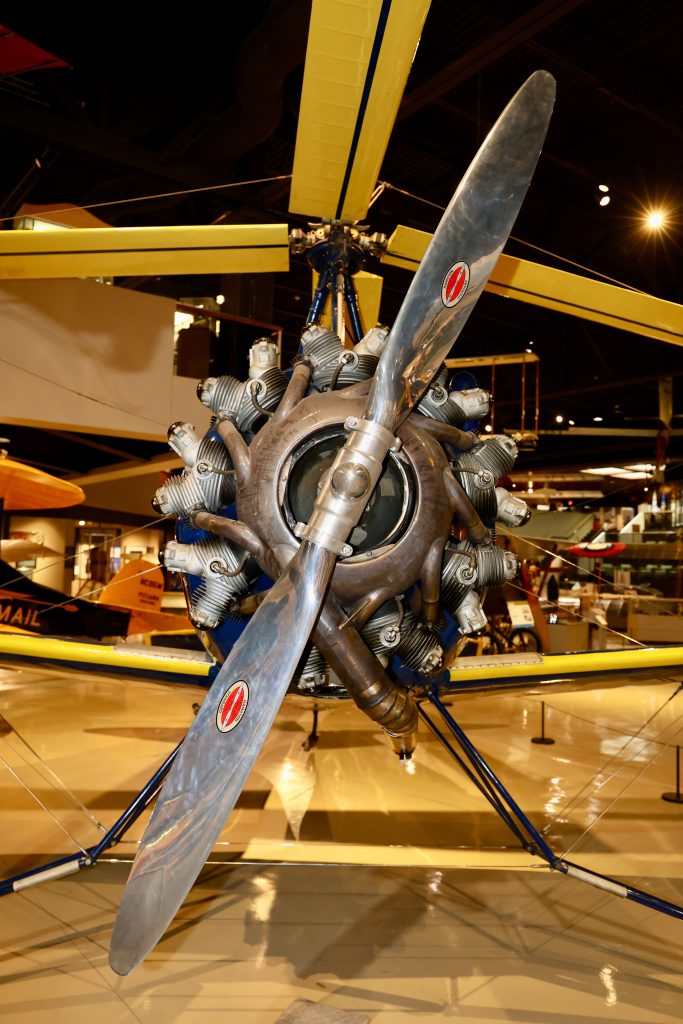
The controllable-pitch propeller was a truly difficult technical problem to solve. An intermediate step was the detachable-blade, ground-adjustable propeller. Using a metal-bladed propeller of this type supplied by Standard Steel Propeller Company on a Ryan NYP airplane, Charles Lindbergh made his famous flight from New York to Paris. By the late 1920s, metal detachable-blade, ground-adjustable propellers were in broad use for the most advanced types of aircraft. In June 1929, Standard Steel Propeller Company hired Frank W. Caldwell to be its chief engineer. The year 1929 was also the year that UATC was formed, with Hamilton Aero Manufacturing being one of its first acquisitions. The November 1929 merger of Hamilton Aero Manufacturing and Standard Steel Propeller Company created Hamilton Standard Propeller Company as part of UATC. In theory, Hamilton Standard was equal parts Hamilton and Standard. In practice, it was understood that Standard Steel Propeller Company was the more innovative of the two companies, and Frank W. Caldwell became the chief engineer of Hamilton Standard, with Erle Martin becoming his assistant in June 1930.
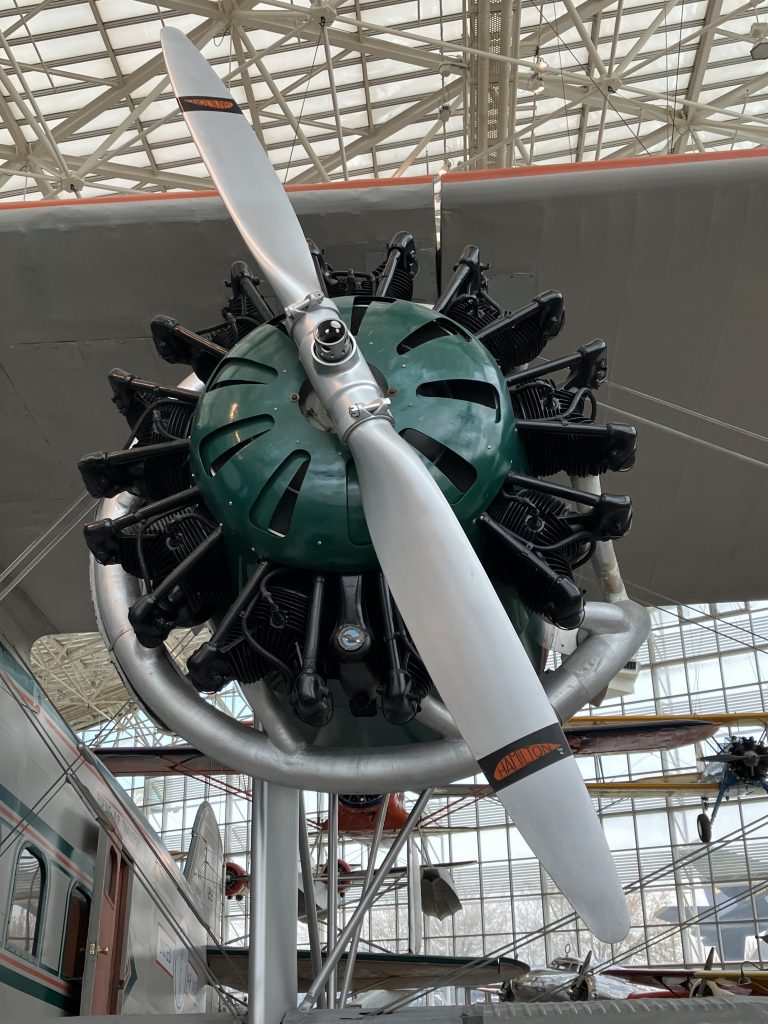
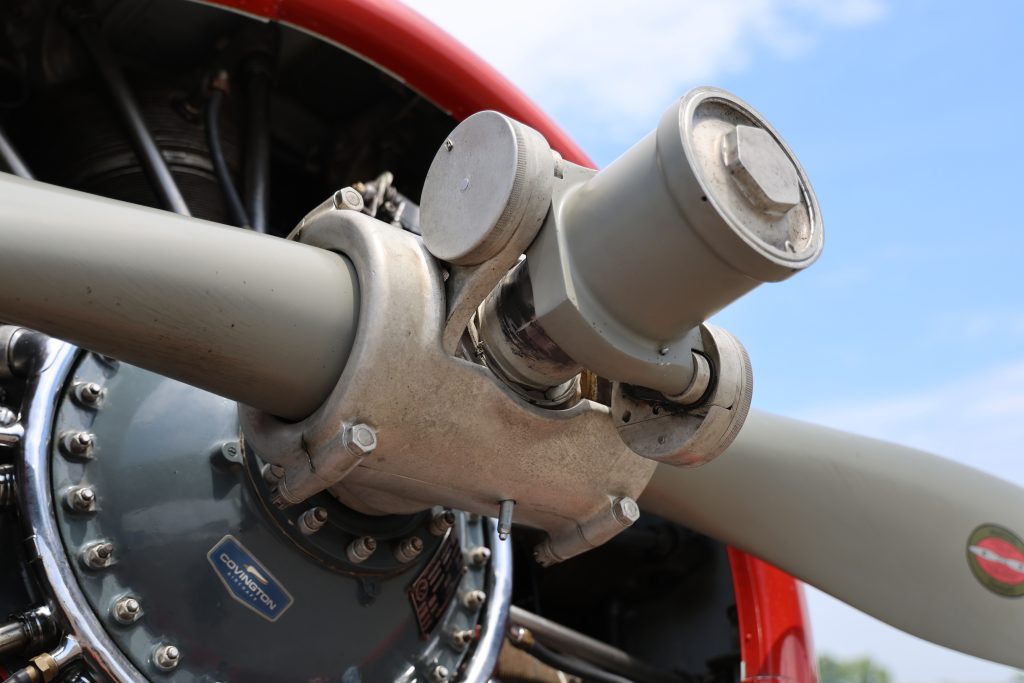
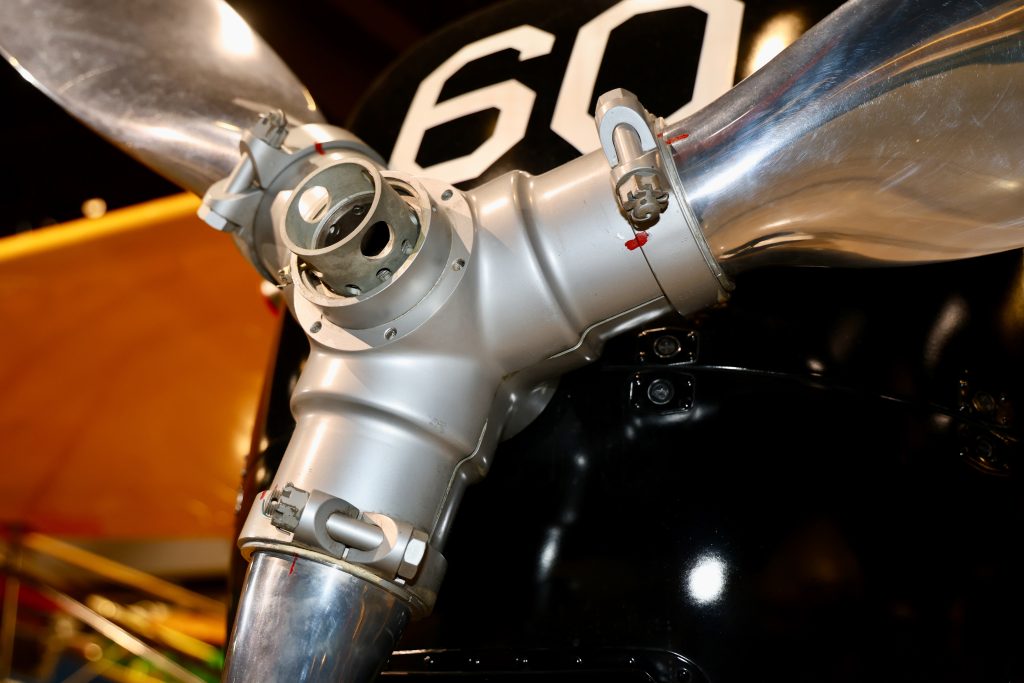
The great stock market crash of 1929 and the subsequent Great Depression were not auspicious circumstances to launch Hamilton Standard Propeller Company. However, the company was fortunate that it still had enough business to both maintain operations and fund development of the controllable-pitch propeller. It also benefited from the financial support of its corporate parent, UATC. UATC had astute and progressive management that understood that investments in research and development were essential in the highly technological business of aviation. Controllable-pitch propellers would be an enabling technology for the next generation of high-performance aircraft. If Hamilton Standard could provide controllable-pitch propellers, the results would be more business not only for Hamilton Standard, but also for Pratt & Whitney engines, the airplanes built by the several aircraft divisions of UATC, and the airlines owned by UATC. Caldwell’s concept for a controllable-pitch propeller, based on his work at McCook Field and Standard Steel Propeller Company’s developments, created the design for the first practical controllable-pitch propeller. The design was elegant. The propeller had two pitches: low blade pitch for takeoff and climb and the high blade pitch for cruise. The pilot controlled propeller pitch from the cockpit. The propeller pitch control inceptor actuated a valve that took pressurized oil from the engine oil system. The oil provided hydraulic pressure to move a cylinder through the hollow crankshaft and into the propeller hub. The cylinder engaged with the blades to cause them to rotate to a higher pitch. When the pilot moved the control inceptor to reduce the pitch, the valve cut off engine oil pressure to the propeller hub. Centrifugally operated counterweights on the propeller hub then rotated the propeller blades to a fine pitch. The design was inherently fail-safe. If oil pressure was lost downstream of the control valve, the propeller would automatically go to low blade pitch, as was desirable.
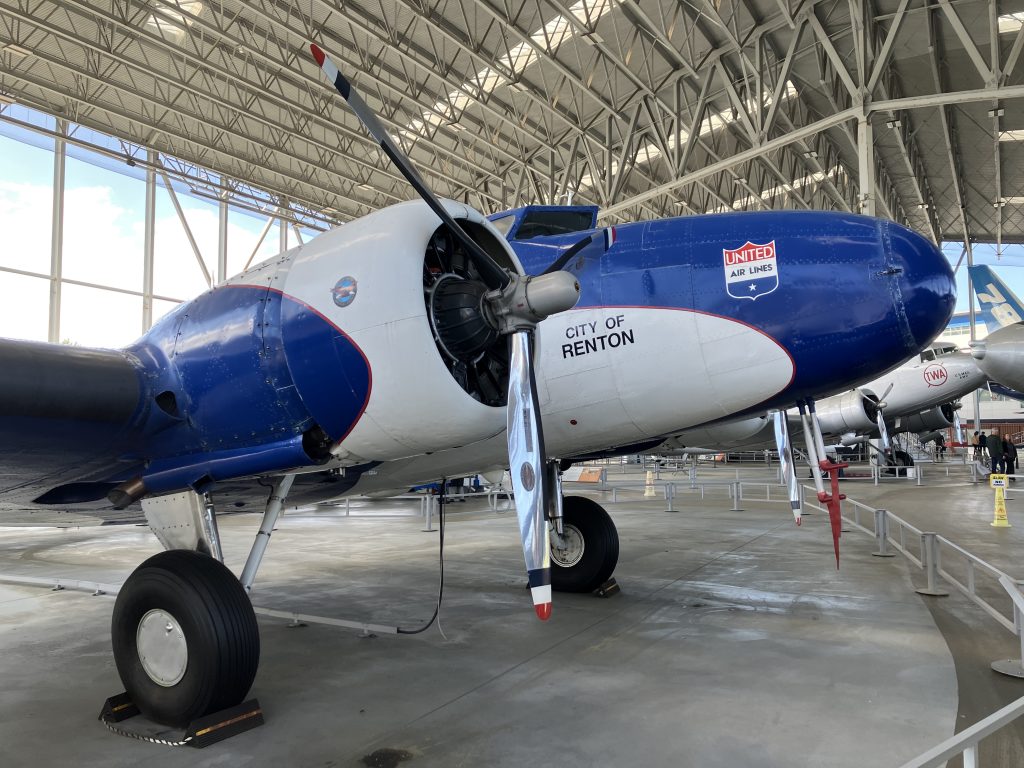
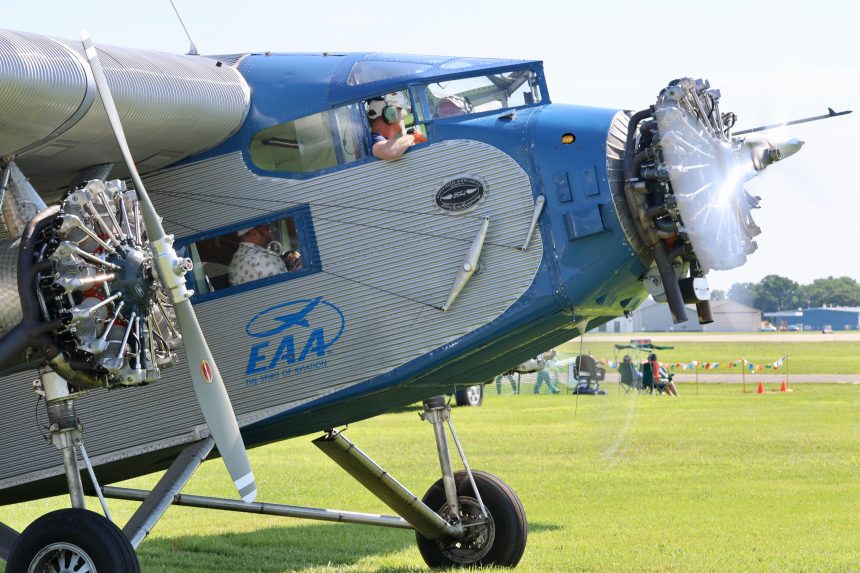
By 1930, the first aircraft were being propelled by the Hamilton Standard controllable-pitch propeller. Flight tests by UATC proved and quantified the performance benefits of the controllable-pitch propeller at the aircraft level. Despite the performance benefits of the controllable-pitch propeller, the aircraft industry had to convince itself that the controllable-pitch propeller was safe and reliable, and that the increased weight of its mechanisms and controls was justified by the increase in performance. For example, the Boeing 247 had been designed as a modern airliner to replace the Ford Tri-Motor and Boeing Model 80. Originally, it had detachable-blade ground-adjustable propellers. Initial performance tests of the Boeing 247 were disappointing. An improved version, the Boeing 247-D, incorporated the Hamilton Standard controllable-pitch propellers and had better performance. While Boeing, like Hamilton Standard, was a company within the UATC portfolio, Hamilton Standard was also marketing its products to competitors of UATC airframe manufacturers. The Douglas DC-1 and later the DC-2, direct competitors to the Boeing 247-D, also used the Hamilton Standard controllable-pitch propellers. The Hamilton Standard controllable-pitch propeller was one of the set of technologies that revolutionized aviation in the 1930s. Others included greatly improved engines, semi-monocoque stressed-skin aluminum construction, cantilevered wings, retractable landing gear, and low-drag engine cowls. The impact of these technologies was dramatic, as can be readily seen by comparing the most advanced aircraft of the mid-1920s with their streamlined successors of the next decade. In recognition of the controllable-pitch propeller, Frank W. Caldwell and Hamilton Standard Propeller Company were awarded the 1933 Collier Trophy.