
(Image credit: VAN)
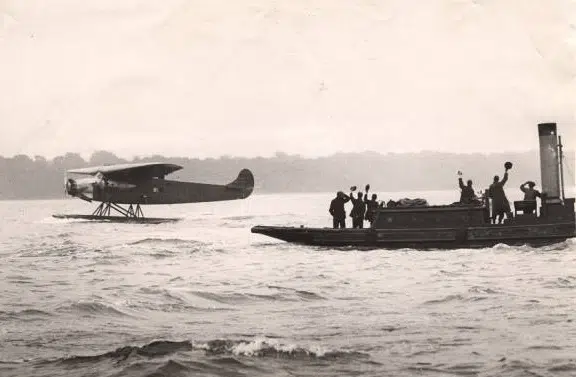
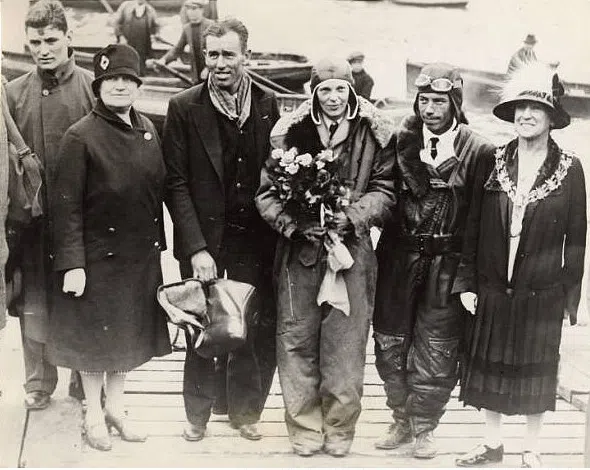
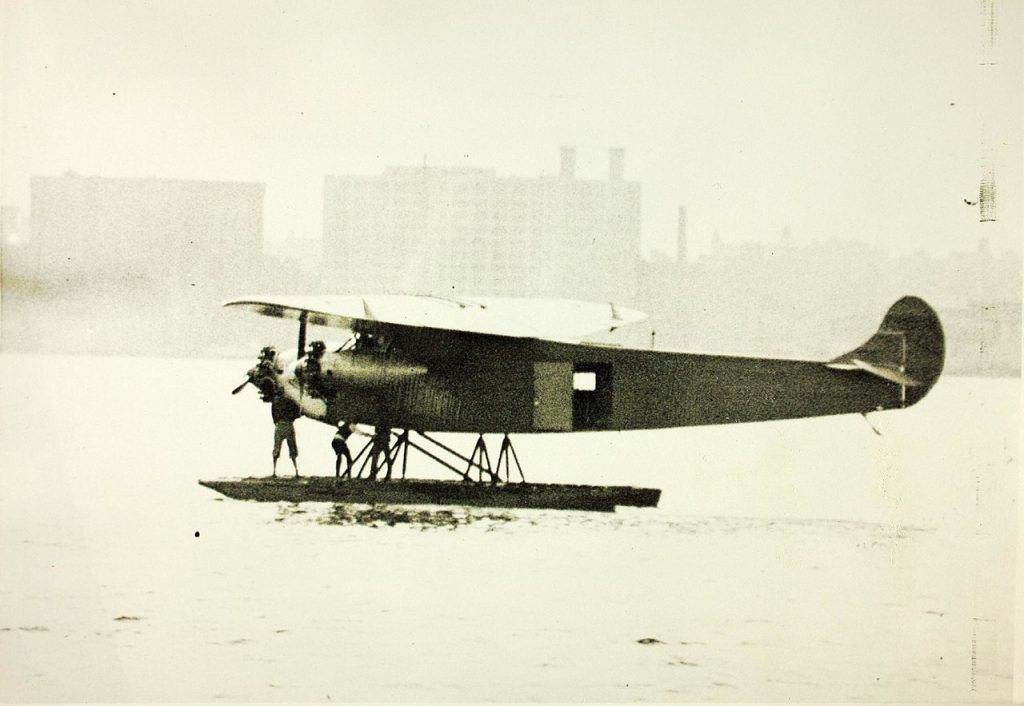
On this day in aviation history, 97 years ago—July 17, 1928—noted aviator Amelia Earhart became the first woman to fly across the Atlantic Ocean. Accompanying her on the historic flight were pilot Wilmer Lower Stultz and mechanic Louis Edward Gordon. The aircraft used for the transatlantic journey was a Fokker F.VIIb/3m, more commonly known as the Fokker Trimotor. Earhart’s aircraft, registered as NX4204, was named Friendship and sported a distinctive orange and gold paint scheme. It was also fitted with floats for water landings.
The Fokker F.VIIb/3m was powered by three Wright J-6 Whirlwind 9-cylinder radial engines, each producing 300 horsepower. The aircraft was crewed by two and could carry up to eight passengers. It had a maximum speed of 130 mph, a range of 650 nautical miles, and a service ceiling of 14,400 feet. The type first flew in 1924 and was one of the most advanced airliners of its time.
The flight departed from Trepassey Harbor, Newfoundland, with a brief stop in Labrador before continuing on to Burry Port, located on the southwest coast of Wales. The total flight time was 20 hours and 40 minutes. Although the journey itself was largely uneventful, it marked a milestone in aviation history, breaking a barrier no woman had yet crossed.
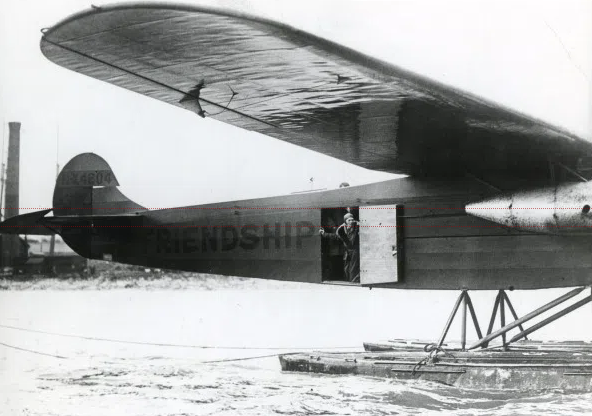
The concept for the flight originated with Mrs. Frederick Edward Guest (née Anne T. Phipps), daughter of American industrialist Henry Phipps, Jr. She had leased the Friendship from Donald Woodward, heir to the Jell-O Corporation of Le Roy, New York. Mrs. Guest aspired to be the first woman to cross the Atlantic by air, but lacking a pilot’s license—and facing opposition from her family due to safety concerns—she instead sought out a suitable candidate to represent the endeavor. She selected Amelia Earhart, whom she described as “an American girl of the right type.” It was a decision that proved prescient: the flight was a resounding success and launched Earhart into global fame.