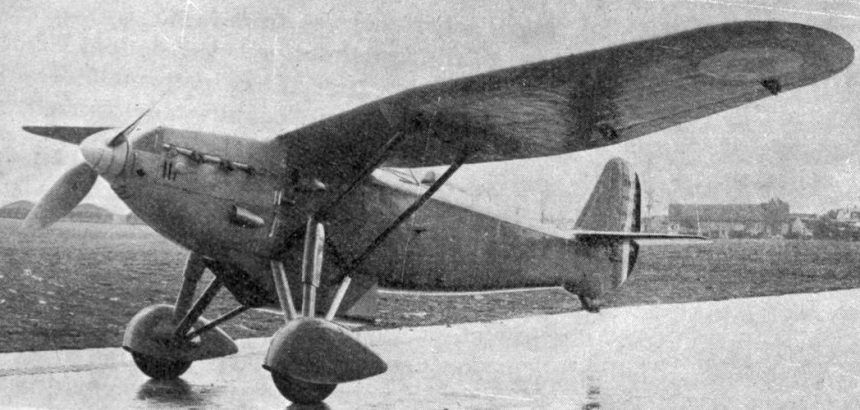


(Image credit: VAN)
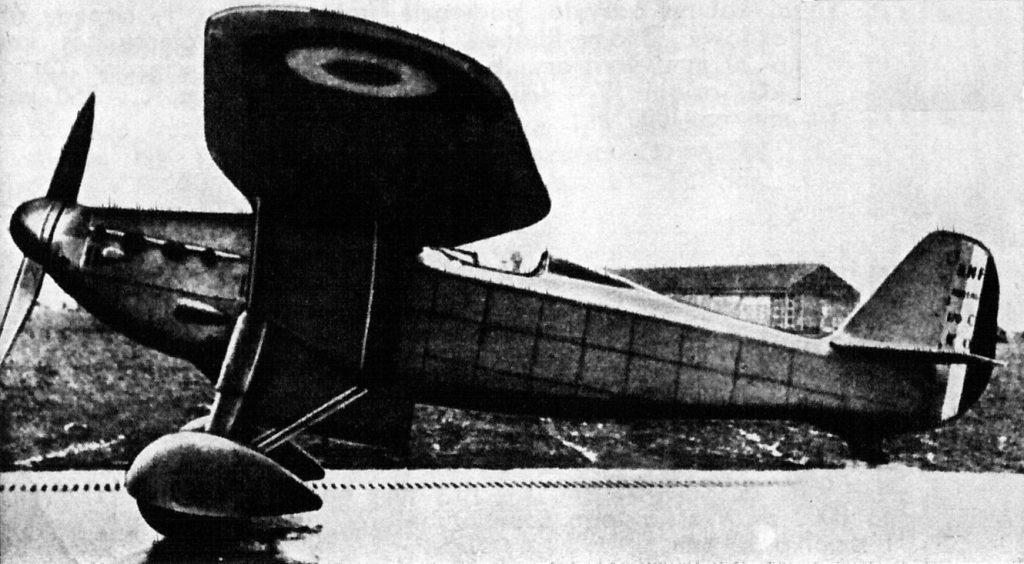
On this day in aviation history, 93 years ago (November 19, 1932), the ANF Les Mureaux 170 took its first flight. The ANF 170 was a French-built prototype single-engine high-wing fighter. Only two of the aircraft were built, as they were ultimately rejected from service with the French Air Force. The ANF 170 was developed in response to a C.1 specification issued by the French Air Ministry in 1930. This specification called for a single-seat fighter that could reach 350 kilometers per hour (217 mph). Additionally, the fighter had to be powered by a supercharged engine. ANF Les Mureaux built the Model 170 as a possible solution to the Air Ministry’s C.1 specification. The 170 was a parasol-winged monoplane that featured all-metal construction. The wings were of a gull design and also tapered to improve airflow over the wing, especially near the bracing struts that created significant parasite drag. The ANF fighter prototype had fixed conventional landing gear and an open cockpit, as was the standard at the time.
The ANF Les Mureaux 170 had a crew of one. Its wingspan was 37 feet 4 inches, and the aircraft’s length was 25 feet 11 inches. ANF Les Mureaux’s fighter utilized a 690-horsepower Hispano-Suiza 12Xbrs liquid-cooled V12 engine for power. The 12Xbrs allowed the Model 170 to attain a maximum speed of 380 kilometers per hour (240 mph). The ANF 170 could climb to 32,800 feet within 23.4 minutes. Armament came by way of two 7.7 millimeter Vickers machine guns in the wings. During flight testing, the ANF 170 demonstrated decent performance, described by some as the “fastest French service aircraft.” On landing, the cockpit offered poor visibility for the pilot. Other, more advanced aircraft had drawn the eye of the French Air Ministry, including the Dewoitine D.500 and Blériot-SPAD S.510. Ultimately, the Air Ministry decided to opt for these aircraft instead of the ANF 170. Although not selected for service and further production, the 170 was further developed by ANF Les Mureaux into the Model 180, another prototype that was deemed obsolete by the time it was needed.