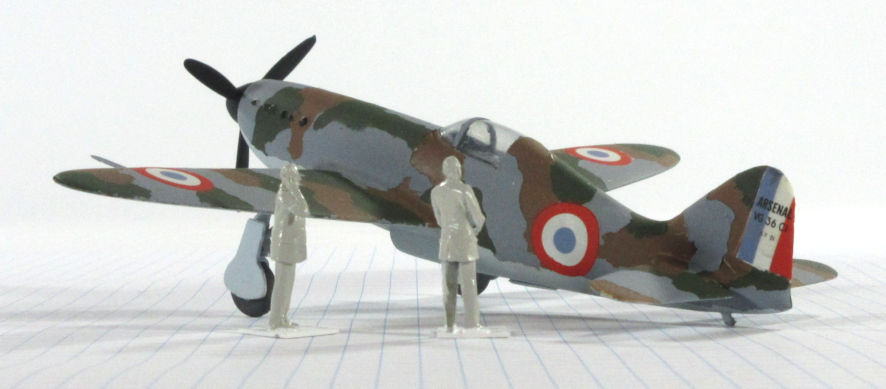
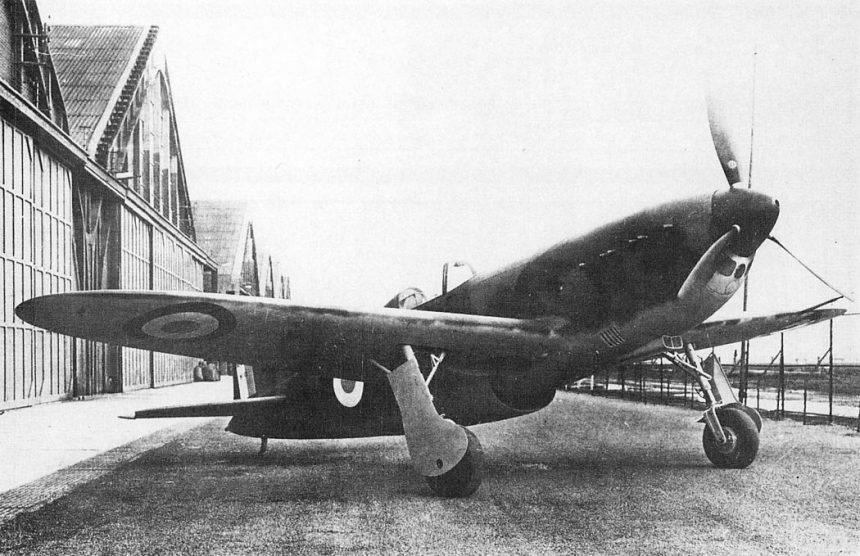


On this day in aviation history, 86 years ago (May 14, 1940), the Arsenal VG-36 flew for the first time. The VG-36 was a variant of the VG-33, a light French-built fighter that was developed at the beginning of WWII. Development of the VG series of aircraft began in 1936, following the issuance of a French specification calling for more modern military aircraft in the fleet. Arsenal took the strategy of creating and offering a “light fighter,” made of wood, that could be built quickly and in large numbers. A contract was offered to three manufacturers for prototypes of their designs: the Arsenal VG-30, the Caudron C.714, and the Bloch MB.700. The designation VG came from the names of the team developing the aircraft, engineer Michel Vernisse (V) and designer Jean Galtier (G). Their resulting VG-30 had an uncanny resemblance to the Macchi C.202. The aircraft was constructed entirely of wood, with plywood covering stringers in a semi-monocoque construction. The VG-30 had a conventional layout as a low-wing monoplane with retractable landing gear. The prototype VG-30 first flew in October 1938. The VG-30 was planned to fly with the Potez 12Dc flat-12 air-cooled inline engine, but this powerplant ran into developmental issues.
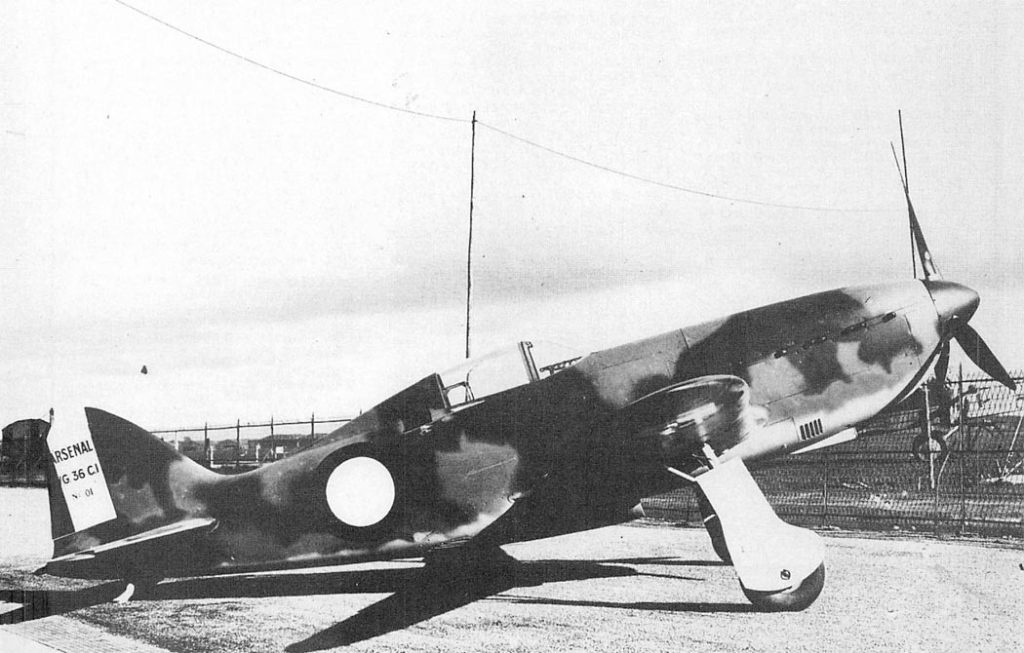
To remedy the engine issues, the VG-31 variant was fitted with the 860-hp Hispano-Suiza 12Y-31 engine, and the VG-32 with the Allison V-1710C-15. The VG-33 used the same 12Y-31 and first flew on April 25, 1939. A maximum airspeed of 344 mph was attained by the VG-33 in flight testing, along with a 650 nmi range and 36,000 ft service ceiling. Armament on the VG-33 consisted of a 20 mm Hispano-Suiza HS.404 cannon and four 7.5 mm MAC 1934 machine guns. The VG-36 utilized the 1,000 hp 12Y-51 engine and featured a freshly redesigned radiator bath that had the same streamlined appearance as that used on the P-51 Mustang. Additionally, the VG-36 had a new canopy design. Only one VG-36 prototype was built. Of the 40 VG fighters built, only 19 made it to the Armée de l’Air by the time of the Armistice with Germany in June of 1940. Only two of these aircraft flew with an active unit – GC 1/55. These flights occurred within only 4 days of the Armistice. In comparison to the Messerschmitt Bf 109, the VG-33 was under-armed. However, the aircraft could have matched it in speed and maneuverability below 16,000 ft of altitude. Like its French counterpart, the D.520, the VG-33 was limited by supercharger limitations, keeping its top speed lower than that of the Bf 109 at higher altitudes.