





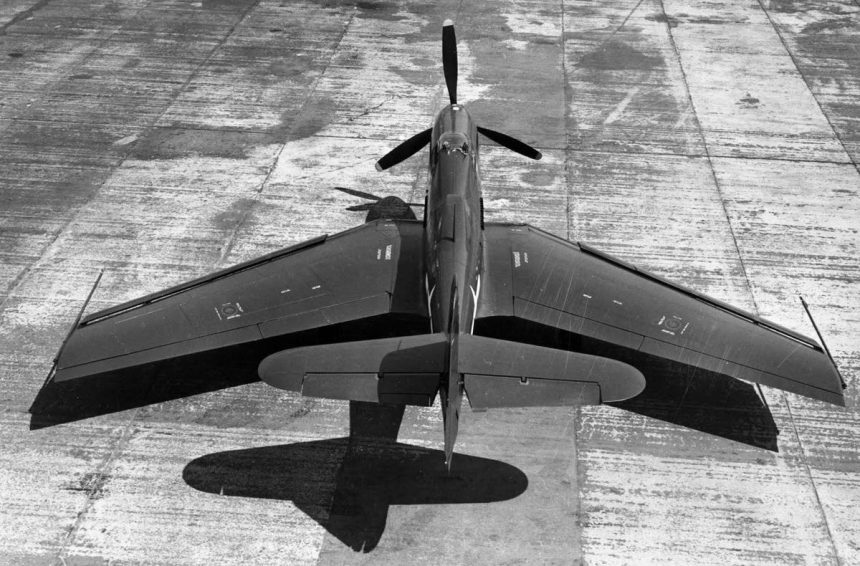

On this day in aviation history, 80 years ago (April 23, 1946), the Bell L-39 took flight for the first time. Not to be confused with the Aero-Vodochody L-39 Albatross jet, the Bell L-39 was an experimental aircraft used to test the flight characteristics of swept wings. Upon the conclusion of World War II, swept-wing technology drew the interest of the United States military. The Germans had conducted much research on the subject and applied it to such aircraft as the Me 262 Schwalbe with great success.
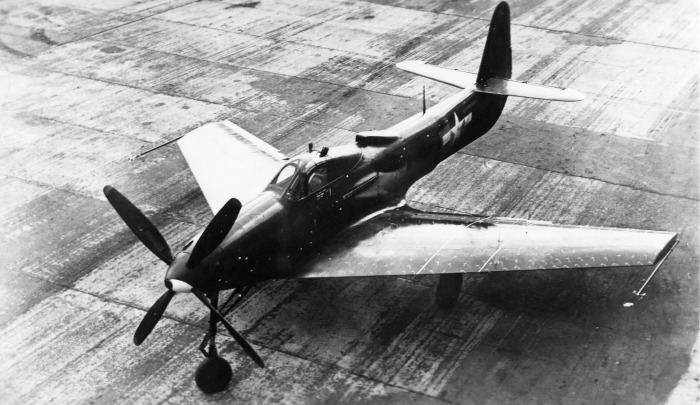
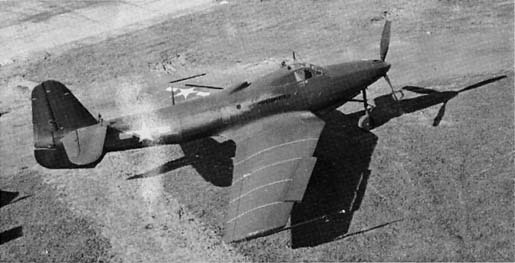
The US Navy desired to test the swept wing’s low-speed characteristics. Bell Aircraft was contracted to modify two of its P-63 Kingcobras as test aircraft, which were later used by NACA for flight testing. These retrofitted P-63s were designated the L-39-1 and L-39-2, with bureau numbers 90060 and 90061, respectively. Both Kingcobras were modified with a straight inner wing panel and 35-degree swept outer panels derived from the P-63E. Neither wing section featured dihedral. Behind the canopy, two cameras were mounted to film the wing’s airflow pattern, indicated by tufts of string affixed to the wings.
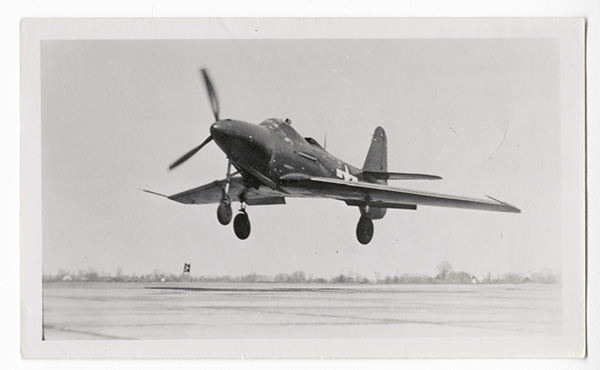
The L-39 had a provision for leading-edge slots on the wings, to be installed as needed. The left and right main landing gear were installed in a fixed position, while the nose wheel retained its retractability. The first flight of the L-39-1 occurred from Niagara Falls Airport with Bell test pilot Alvin M. “Tex” Johnston at the controls. Several handling issues were noted on this flight and corrected by the installation of a ventral fin extension under the rear fuselage. The fuselage was also extended, and a lighter propeller was installed to help balance out the center of gravity. The addition of the optional wing slots improved the L-39’s poor stall characteristics. On August 26, 1946, the L-39 program was paused. The L-39-1 was sent to Langley Field for wing tunnel testing. The L-39-2 was kept by Bell, who used the aircraft to support their X-2 program with a new swept-wing design. On December 12, 1949, both L-39s were transferred to the Lewis Research Center and then eventually sold for scrap in 1955.






Thanks