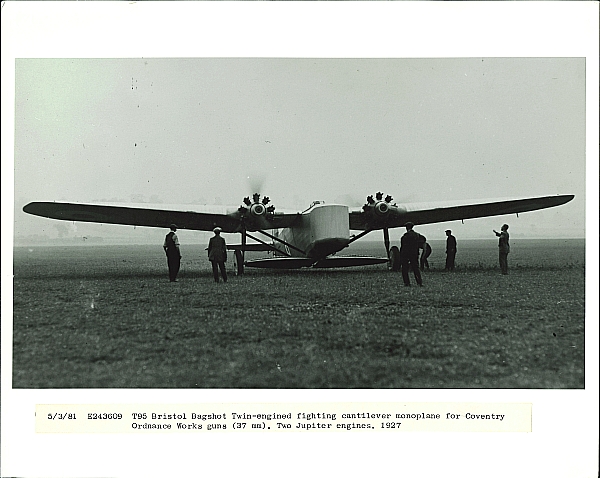
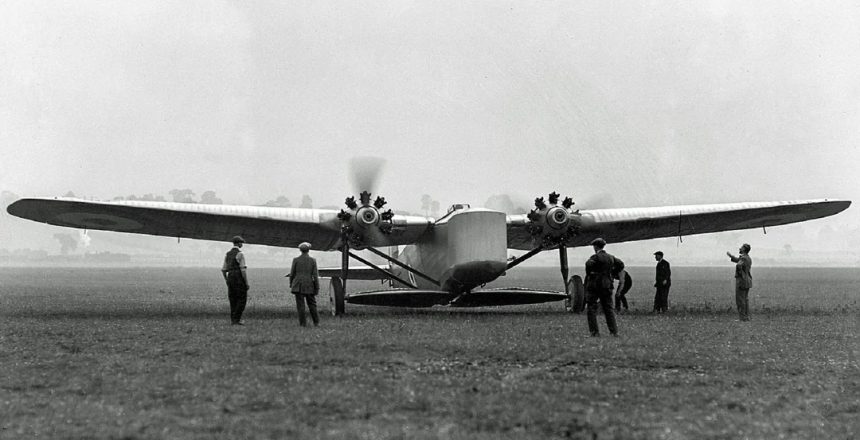

On this day in aviation history, 99 years ago (July 15, 1927), the Bristol Bagshot took flight for the first time. Also known as the Type 95, the Bagshot was a prototype fighter designed by the British-based Bristol Aeroplane Company. In December 1924, the British Air Ministry issued Specification F.4/24. This spec sought a large twin-engined fighter that had a pilot and two gunners, a max airspeed of 125 mph, and a landing speed of 50 mph. Designer Frank Barnwell and his team at Bristol set to work on a solution to the Air Ministry’s request. Barnwell’s resulting fighter design was a high-wing metal monoplane that featured a unique triangular-section fuselage. The form of this fuselage came from two upper longerons and a single lower piece. The Bagshot’s pilot sat in line with the leading edge of the wing, in an open cockpit. The Air Ministry modified their Specification in September 1925, calling for supercharged engines, more fuel capacity, and a higher top speed in cruise flight. Barnwell learned from the Air Ministry that the Bagshot was to carry two Coventry Ordnance Works 37 mm (COW) guns, along with two Lewis guns.
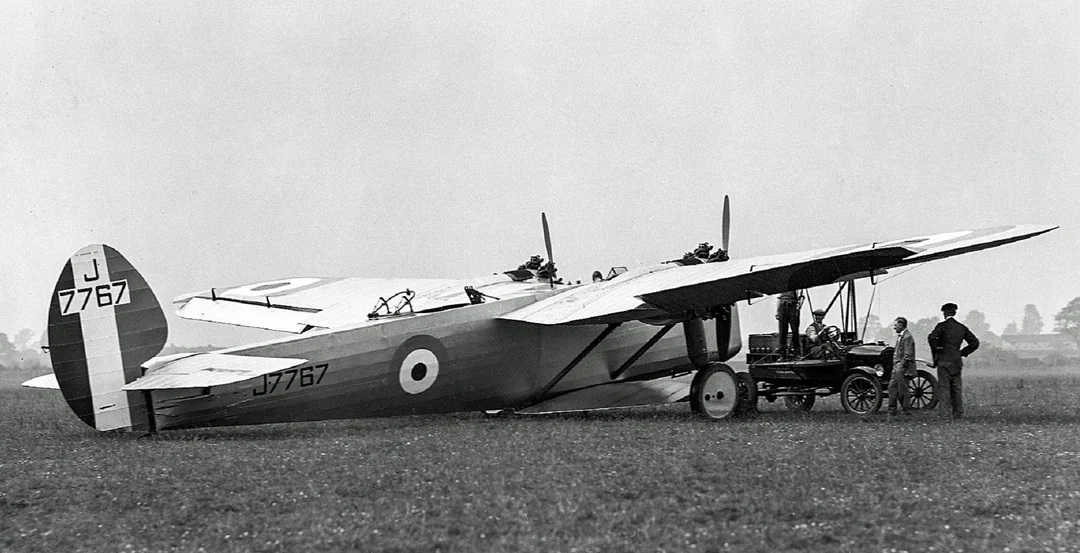
The Air Ministry’s proposed armament would cause the Bagshot to be overweight. A redesign of the aircraft’s fuselage would be necessary to save the future of the prototype. The Bagshot was then constructed with a rolled steel strip fuselage and accepted by the Air Ministry on May 12, 1927, as J7767. Bristol’s chief test pilot, Cyril Uwins, was at the helm for Bagshot’s first flight, which took place at Filton. The Bagshot was found to have poor roll control, a problem that worsened with increases in airspeed. It was found that deflections of the aileron cause the wings to warp, affecting the controls’ overall authority. The Bagshot was grounded for structural testing and transferred to the Air Ministry’s experimental division. The aircraft flew scantily in 1931, but was scrapped shortly after. The Bristol Bagshot was powered by two 450-horsepower Bristol Jupiter VI radial engines and had a maximum airspeed of 125 mph. Empty weight for the fighter prototype was 5,100 pounds, while max gross weight was 8,195 pounds. The Bagshot was 44 feet – 11 inches long, 9 feet -6 inches tall, and had a wingspan of 70 feet.