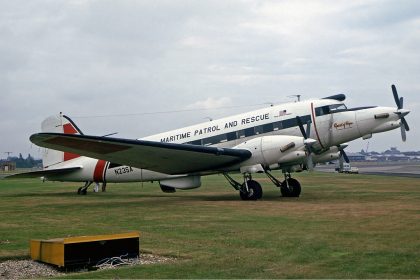
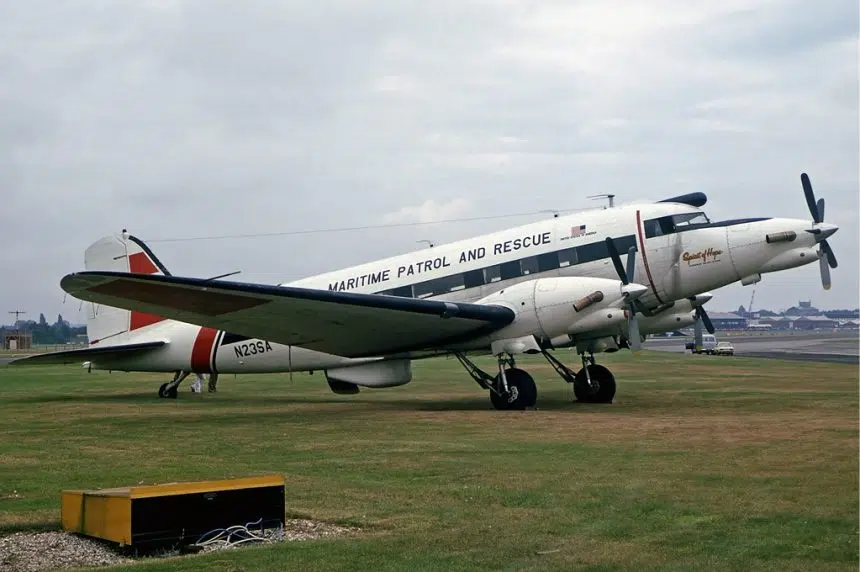


On this day in aviation history, 49 years ago (November 2, 1977), the Conroy Tri-Turbo-Three took flight for the first time. Developed by Conroy Aircraft in the United States, the unusual transport aircraft was a heavily modified Douglas DC-3 fitted with three turboprop engines. Its distinctive configuration was intended to improve the performance and versatility of the legendary DC-3, particularly for operations in remote regions. The Tri-Turbo-Three was developed from Conroy’s earlier Turbo-Three conversion, which replaced the DC-3’s original piston engines with turboprops. The new aircraft incorporated three Pratt & Whitney Canada PT6A engines, with two mounted on the wings and a third installed in the nose. This arrangement provided additional power for takeoff and climbing, while the nose engine could be shut down during cruise to conserve fuel and extend the aircraft’s range.

Only one Tri-Turbo-Three was constructed, but the aircraft found a specialized role supporting operations in polar environments. Equipped with skis, it operated from Resolute Bay in northern Canada and proved capable of landing on rough, snow-covered surfaces. The aircraft also supported private expeditions to Antarctica, including a 1983 expedition associated with an attempt to climb Mount Vinson, the continent’s highest mountain. Following its operational career, the aircraft was placed in storage before being purchased by Warren Basler in 1992. The Conroy Tri-Turbo-Three retained the DC-3’s 95-foot wingspan and was powered by three Pratt & Whitney Canada PT6A-45 turboprop engines producing approximately 1,174 equivalent shaft horsepower each. It could cruise at 230 mph with all three engines operating, or approximately 180 mph with the nose engine shut down. The aircraft had a range of around 2,700 miles, a maximum takeoff weight of 29,000 pounds, and a cargo capacity of approximately 12,000 pounds.