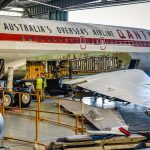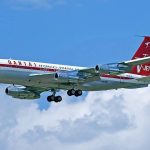


With John Travolta’s former Boeing 707 now being reassembled at the Historical Aircraft Restoration Society (HARS) Aviation Museum in Albion Park, New South Wales, Australia, one question continues to follow the project: Why was the aircraft dismantled and shipped across the Pacific rather than flown to its new home? According to HARS, the answer involves a combination of engine-pylon inspection requirements, the disruption caused by COVID-19, and a maintenance facility whose workload ultimately left the historic airliner facing further years of delay. Click HERE. to support the museum’s restoration effort.
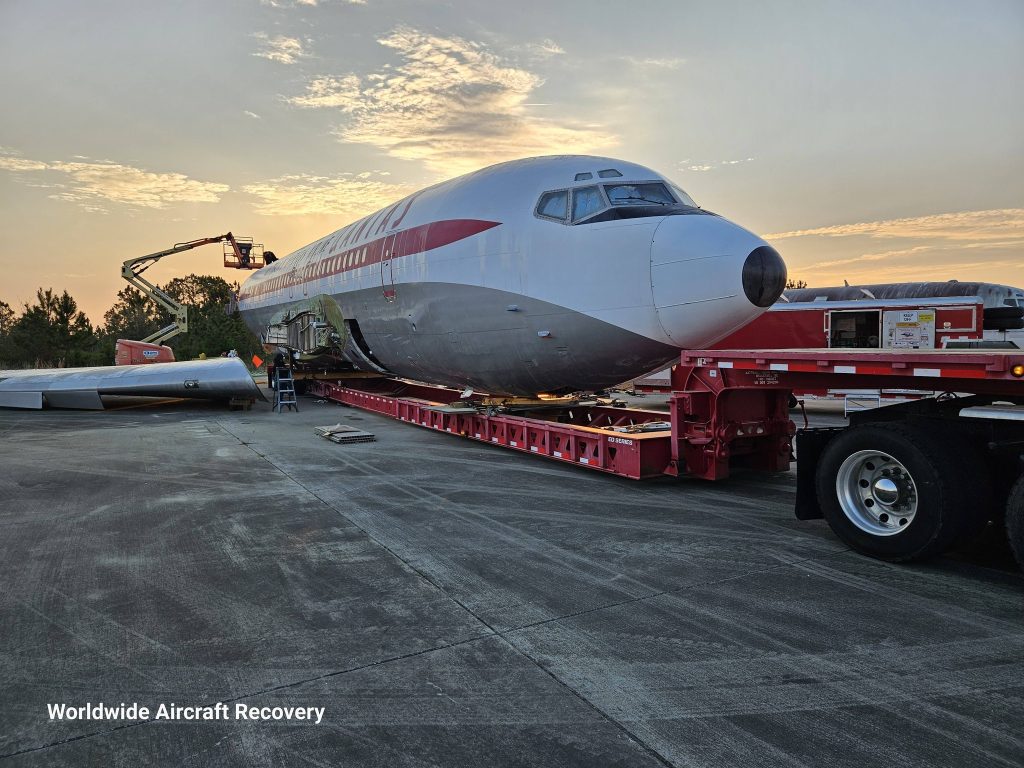
As previously reported by Vintage Aviation News, Travolta donated the aircraft to HARS in 2017, with the original intention of participating in its delivery flight to Australia. Instead, the project eventually became a major aircraft recovery and transportation operation, followed by the reassembly now underway at HARS. The aircraft, registered N707JT, is the last of 13 short-fuselage Boeing 707s built for Qantas. These distinctive aircraft became affectionately known as Hotrods, a nickname reflecting the performance available from their combination of a relatively light airframe and powerful engines. Their shorter fuselage also offered operating advantages on the airline’s long-distance network. VAN’s earlier report on the aircraft’s journey to Australia outlined its significance as a surviving Boeing 707-138B.
HARS explains that the cost of meeting engine-pylon airworthiness requirements had made continued private operation increasingly difficult. The organization says scrapping became a possibility before its members proposed preserving the aircraft, with the hope of keeping it operational. The safety concerns surrounding the 707’s engine attachments were substantial. On May 18, 2011, an Omega Aerial Refueling Services Boeing 707 suffered an engine-and-pylon separation during takeoff from Point Mugu, California. The detached assembly struck the adjacent engine, and the aircraft crashed, although all three crew members survived. Subsequent federal requirements addressed inspections of the fittings securing the engine-support structures to the wings, including checks for cracking and confirmation that the correct components were installed.
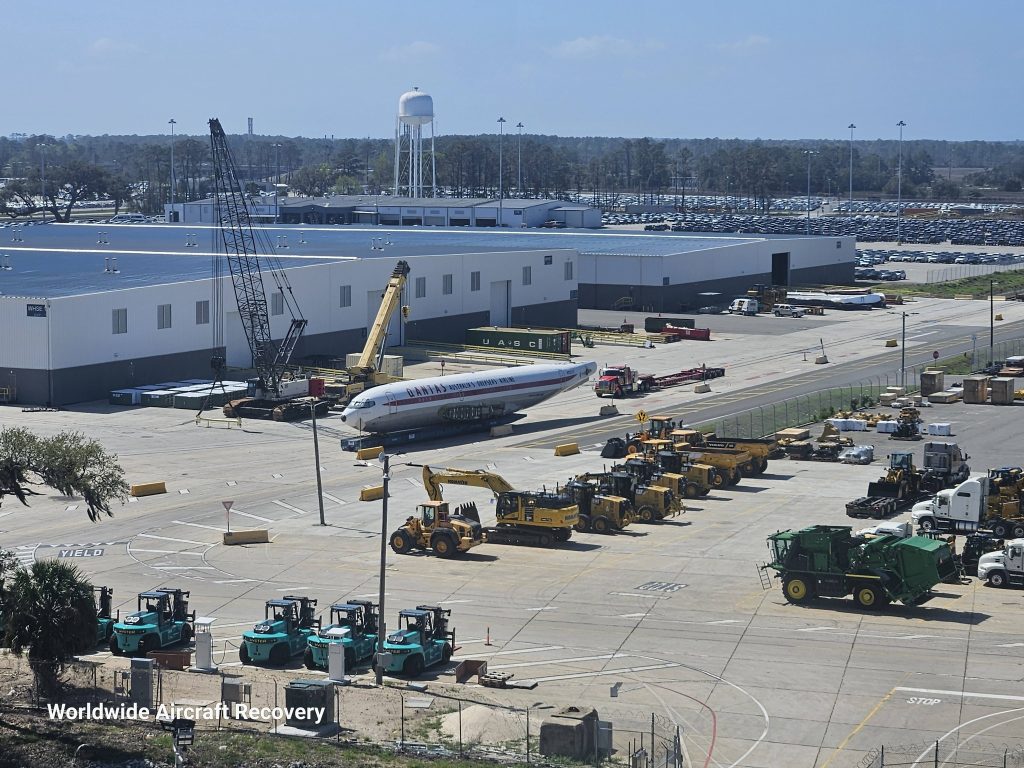
According to HARS, its initial plan was to complete the necessary work in the United States before flying Travolta’s aircraft to Australia. The organization says the Federal Aviation Administration authorized a one-time flight to a maintenance facility in Georgia. Engineers who subsequently inspected the aircraft were encouraged by its apparent condition. “We felt like we could just fuel it up and fly it home,” HARS recalled of the engineering team’s assessment.

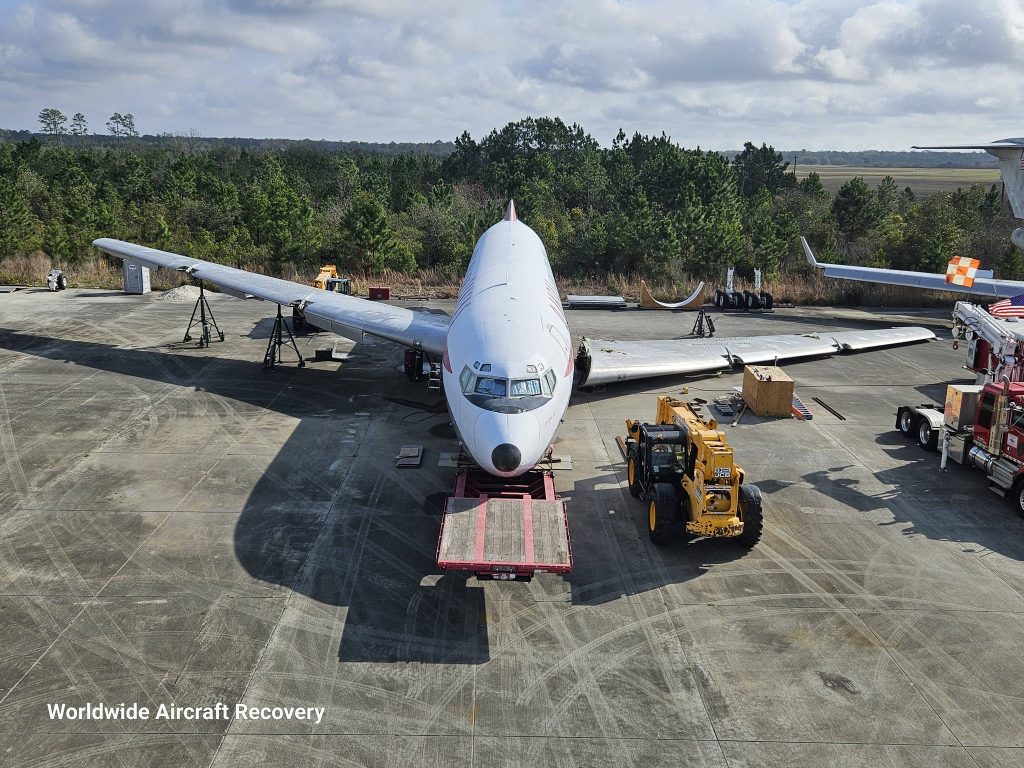
That confidence, however, did not remove the outstanding airworthiness requirements. HARS says it sought consideration of the aircraft’s comparatively low flying hours, but those discussions did not secure authorization for the proposed delivery flight to Australia. Then the pandemic intervened. Travel restrictions prevented HARS engineers from reaching the aircraft, while the maintenance provider experienced workforce disruption. When activity resumed, the company faced a substantial backlog, and the museum’s 707 remained behind other work. HARS eventually concluded that waiting for the required maintenance in the United States could add years to the project. Dismantling and shipping the aircraft offered a way to bring it home and place the work directly in the hands of the organization’s own engineers.

Those engineers include personnel with extensive experience maintaining Boeing 707s. HARS also notes that one member of its team helped prepare another former Qantas Hotrod for its return from England to the Qantas Founders Museum in Longreach, Queensland—experience that helps explain the group’s confidence in tackling this aircraft.

For now, reassembly is the immediate task. HARS hopes that subsequent work can bring the 707 to a condition suitable for taxiing, while retaining the possibility of exploring a return to flight. That remains an aspiration, with no confirmed flying timetable in the explanation provided. The journey to Australia took a very different form from the one originally envisioned. With the aircraft finally at HARS, however, its engineers can now assess and advance the project at the museum, drawing on their own experience to determine what the future holds for the last of Qantas’ Hotrods. Click HERE. to support the museum’s restoration effort. For more information, visit www.hars.org.au