
(Image credit: VAN)
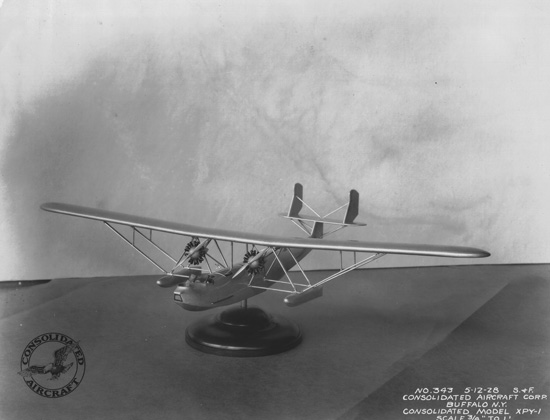
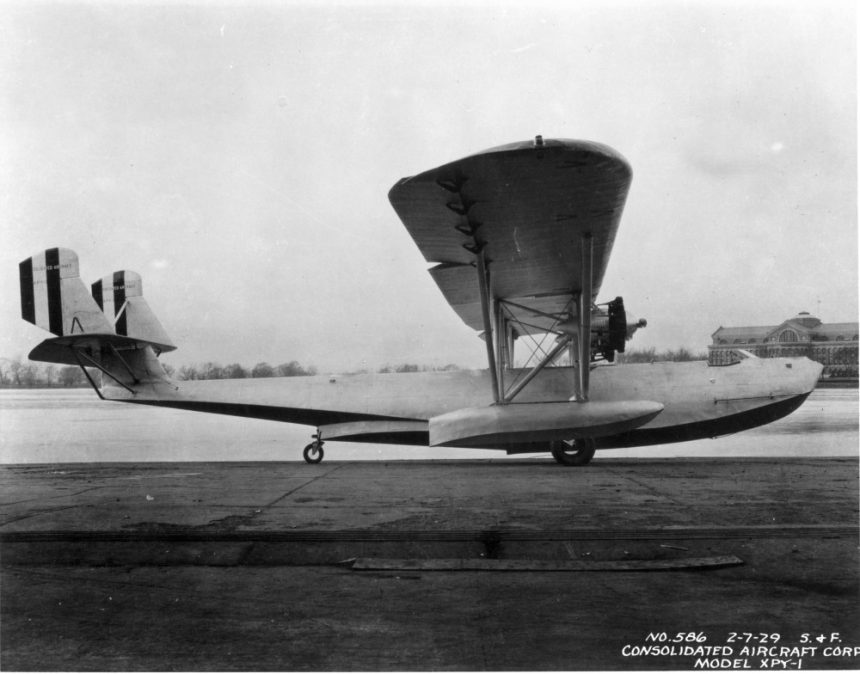
On this day in aviation history, 97 years ago (January 10, 1929), the first flight of the Consolidated XPY-1 occurred. The XPY-1 was a maritime flying boat that was designed to be used on patrol missions. Also built by Martin Aircraft as the P3M, the XPY-1 was a biplane design. Both Martin and Consolidated built the patrol aircraft due to the US Navy awarding production contracts separately from prototype awards. Martin’s P3M version was a parasol monoplane, rather than the sesquiplane design originally made by Consolidated.
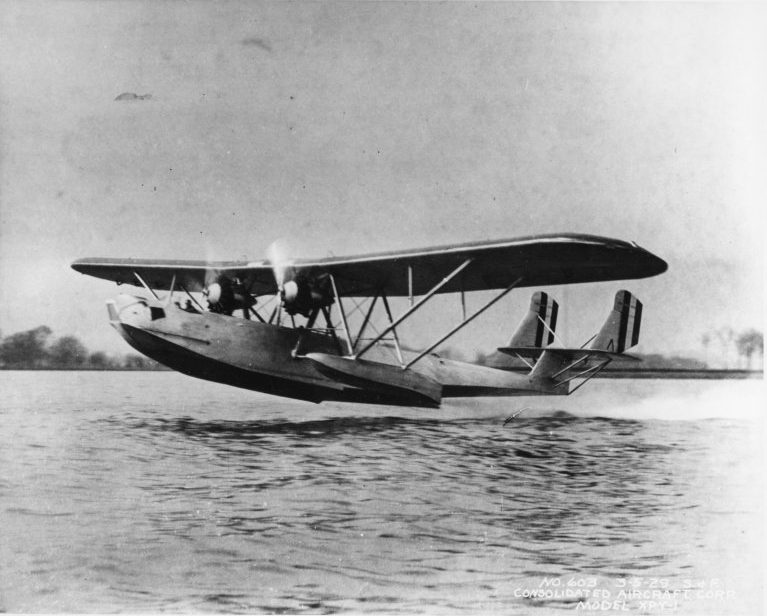
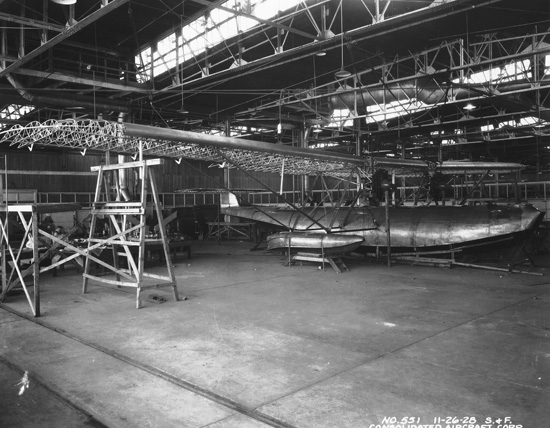
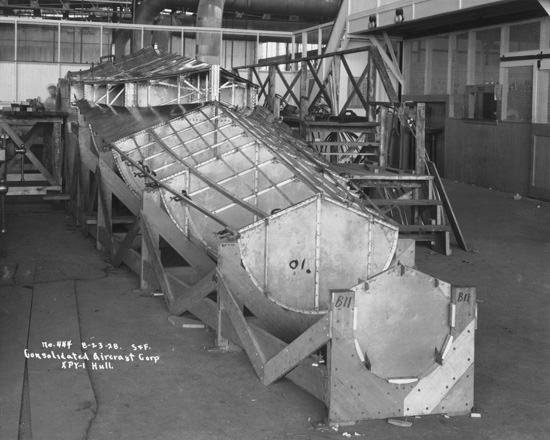
Consolidated developed the XPY-1 on February 28, 1928, when the US Navy officially designated the contract. The design would begin as the prototype Model 9, XPY-1. The prototype was designed by Isaac M. Laddon under the guidance of Captain Holden C. Richardson’s specifications. Construction of the prototype began in March of 1928, and the first flight took place on 1/101929 at Anacostia NAS, in Washington, D.C. On May 26, 1931, the US Navy placed an order for an upgraded version of the aircraft, called the Consolidated Model 22 Ranger. This modified flying boat, designated XP2Y-1, featured an enclosed cockpit, retained the sesquiplane design, and three Wright R-1820-E1 Cyclone engines.
The P2Y-1 would serve with squadrons VP-10F and VP-5F, while completing a number of long-range formation flights. The P2Y-3 was flown by VP-4F at Pearl Harbor. In 1939, the aircraft was in operation with VP-19, VP-20, and VP-21. By late 1941, all P2Y-2s and P2Y-3s had seen their operational use come to an end, as they were moved to Naval Air Station Pensacola. In addition to serving with the US Navy, the Commodore P2Y also saw service with the Colombian Air Force as a bomber in the Colombia-Peru War, from 1932 to 1933.
The Consolidated P2Y-3 had a crew of five and was powered by two 750-horsepower Wright R-1820-90 Cyclone radial engines. P2Y-3s could cruise at 118 mph and attain a maximum airspeed of 149. The P2Y-3 had a range of 1,030 nautical miles and a service ceiling of 16,100 feet. Armament came in the form of three flex-mounted .30 calibre M1919 Browning machine guns, one in the bow and two rear-mounted. Additionally, the aircraft could be armed with 2,000 pounds of bombs. Between Consolidated and Martin, 78 Model 22 P2Ys were built. None are known to survive today.