






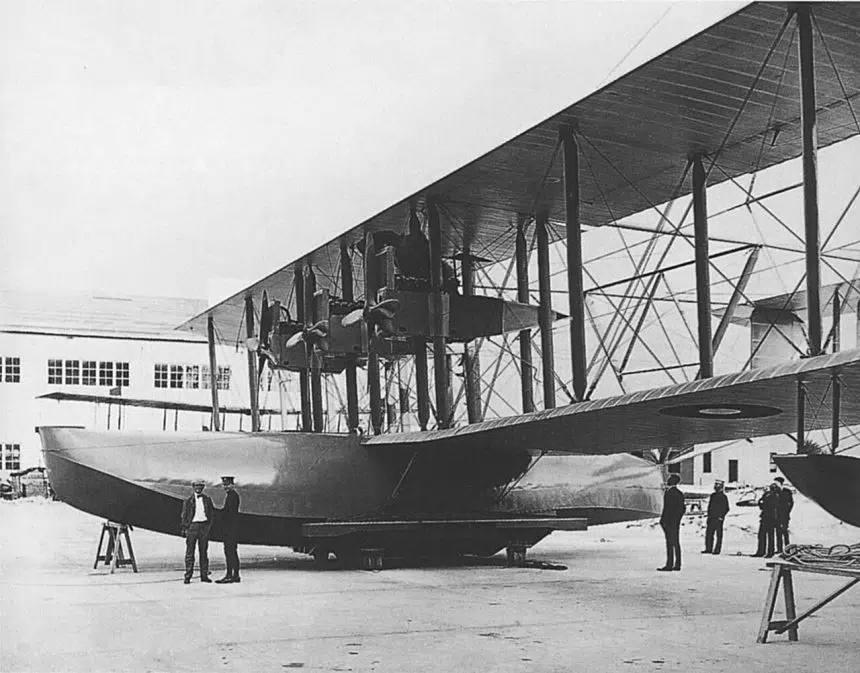

On this day in aviation history, 108 years ago (October 4, 1918), the first flight of the Curtiss NC-1 took place. Developed by the Curtiss Aeroplane and Motor Company for the United States Navy, the massive aircraft was designed for long-range maritime patrol during WWI. The “NC” stood for Navy-Curtiss, while the aircraft became popularly known as the “Nancy.”

The United States Navy wanted an aircraft capable of conducting long-range anti-submarine patrols and, if possible, crossing the Atlantic under its own power. Such capability would eliminate the need to ship aircraft through waters threatened by German U-boats. Curtiss responded with one of the largest biplanes yet constructed, complete with sleeping accommodations and wireless communications equipment.

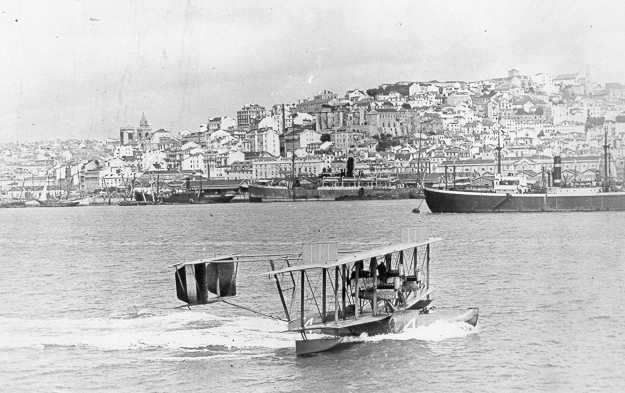
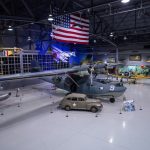
The NC-1 was initially powered by three 400-horsepower Liberty engines, but testing demonstrated that additional power was necessary. A fourth engine was subsequently installed in a pusher configuration. Ten NC flying boats were ultimately constructed, with the design achieving its greatest fame in May 1919 when the NC-4 completed the first transatlantic flight by an airplane. The historic NC-4 survives today at the National Naval Aviation Museum in Pensacola, Florida.

In its four-engine NC-4 configuration, the Curtiss NC had a wingspan of 126 feet and measured 68 feet 3 inches in length. Four 400-horsepower Liberty L-12 engines provided a maximum speed of approximately 85 mph. The aircraft had a range of 1,470 miles, endurance approaching 15 hours, and a service ceiling of 4,500 feet. Its immense wing covered more than 2,400 square feet.








I had an airplane stamp book in my youth back in the mid 1960s. One of the stamps was the NC-4. No longer have the book; believe it was lost when my grandparents lost their home to a fire (fortunately, the house was vacant when it burned down). Thanks for the story.