
(Image credit: VAN)
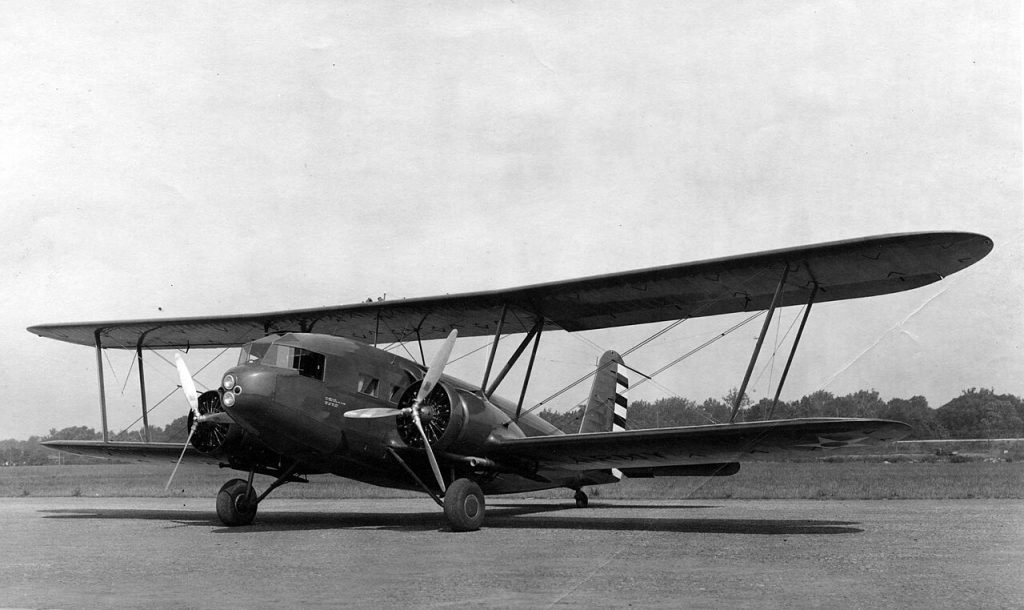
On this day in aviation history, 93 years ago (January 30, 1933), the first flight of the Curtiss T-32 Condor II took place. The T-32 was a large biplane built by American aircraft manufacturer Curtiss Aeroplane and Motor Company. Condor IIs were developed both as airliners and bomber aircraft. The United States Army Air Corps was the primary user of the T-32, flying them as executive transports.
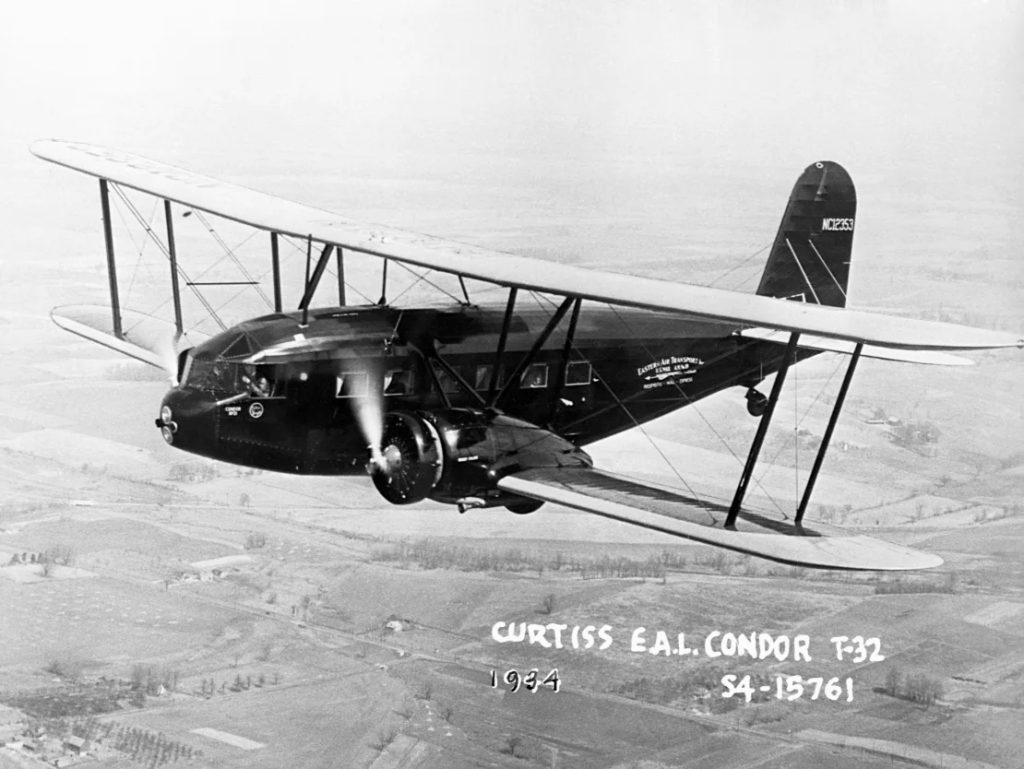
Curtiss designed the T-32 as a large two-bay biplane of mixed construction. The aircraft featured retractable landing gear and was powered by two 650-horsepower Wright GR-1820-F11 Cyclone 9-cylinder radial engines. After the first successful flight of the Condor II, a production batch of 21 aircraft was manufactured. The first series of aircraft was configured as passenger carriers, with luxury night-sleeper accommodations. These first production Condor IIs would go on to fly with Eastern Air Transport and American Airways, the early forms of Eastern Air Lines and American Airlines. For the next three years, Condors would fly frequent scheduled night routes for the airlines. In 1934, American Airlines made the claim of the Condor II being “The World’s First Complete Sleeper-Planes.”

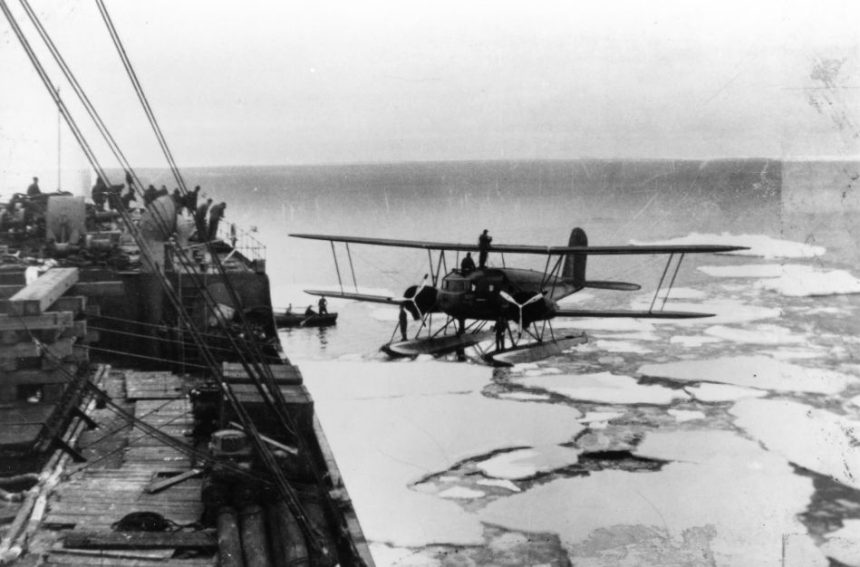
In military service, the T-32 would prove to be a reliable and popular choice. The Colombian Air Force operated three Condors equipped with floats during the Colombia-Peru War in 1933. The United States Army Air Corps bought two modified T-32s. Designated as the YC-30, these aircraft would serve as executive transports. One of these T-32s was modified with extra fuel tanks and flown during the 1939–1941 United States Antarctic Service Expedition. At the outbreak of World War II, four T-32s were pressed into service with the Royal Air Force. Eight bomber variants of the Condor II were built, named the BT-32. The BT-32 featured manually operated machine-gun turrets in the nose and atop the rear fuselage. These variants were exported to China, Colombia, and Peru.

The Curtiss T-32 Condor II had a crew of 2, and a capacity for up to 15 passengers and 600 pounds of mail. The aircraft could cruise at 145 mph and attain a maximum airspeed of 170 mph, while burning an average of 70 gallons of fuel per hour. Condor IIs had a flight endurance of 4 hours and a range of 500 nautical miles. Service ceiling for the T-32 was 15,500 feet. Curtiss built 45 T-32s, and none are known to survive today.