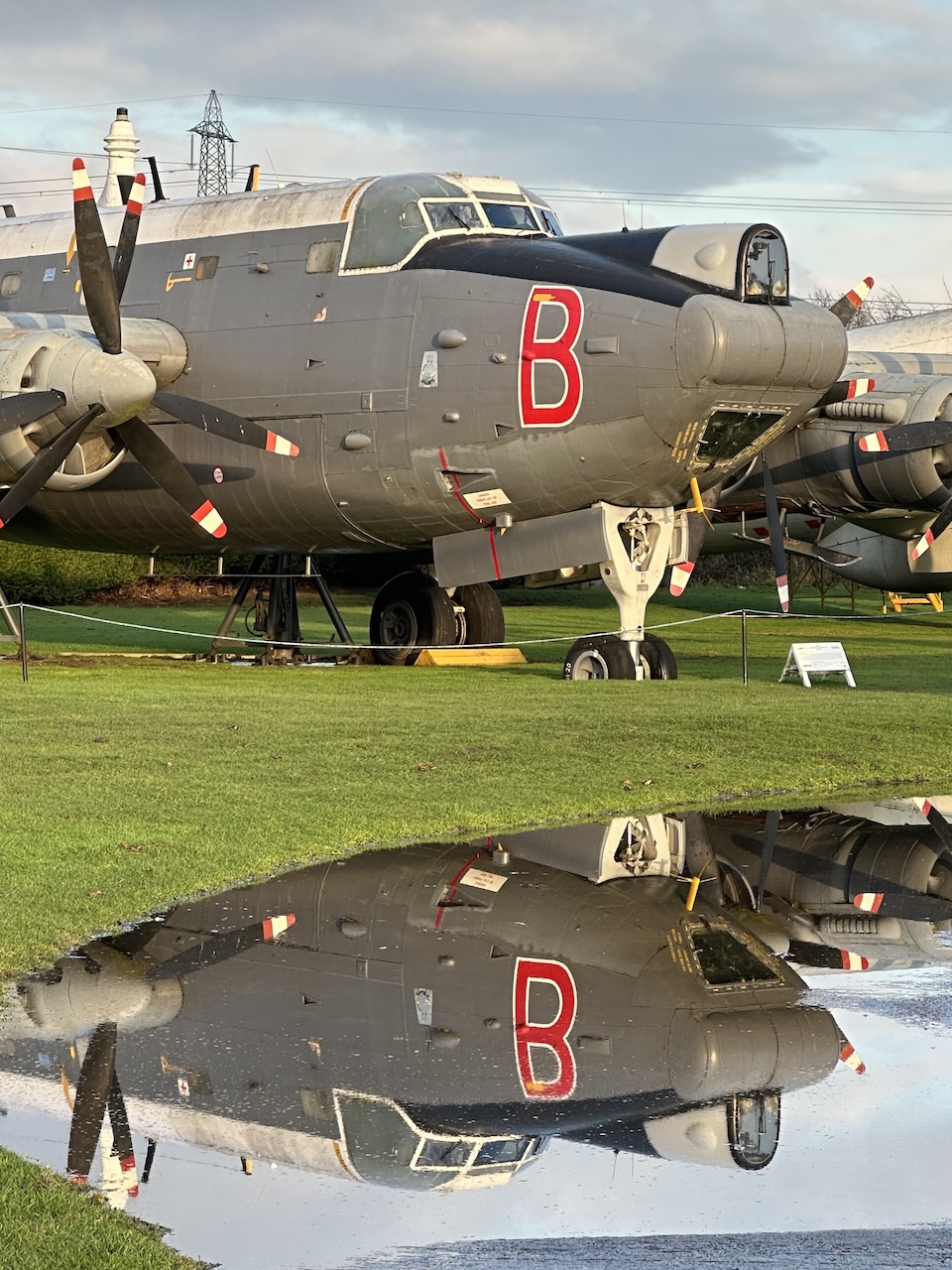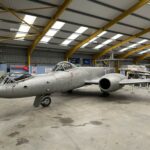
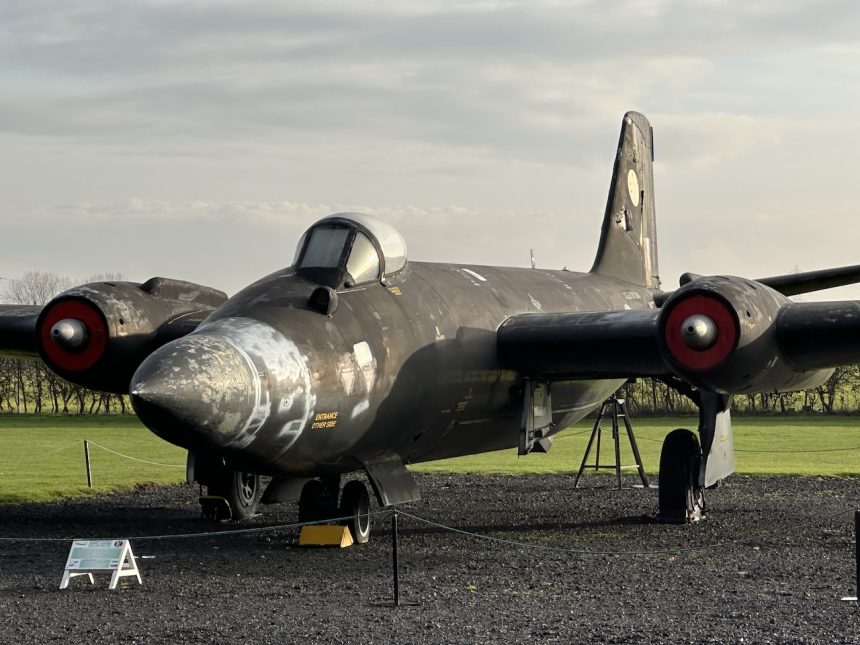

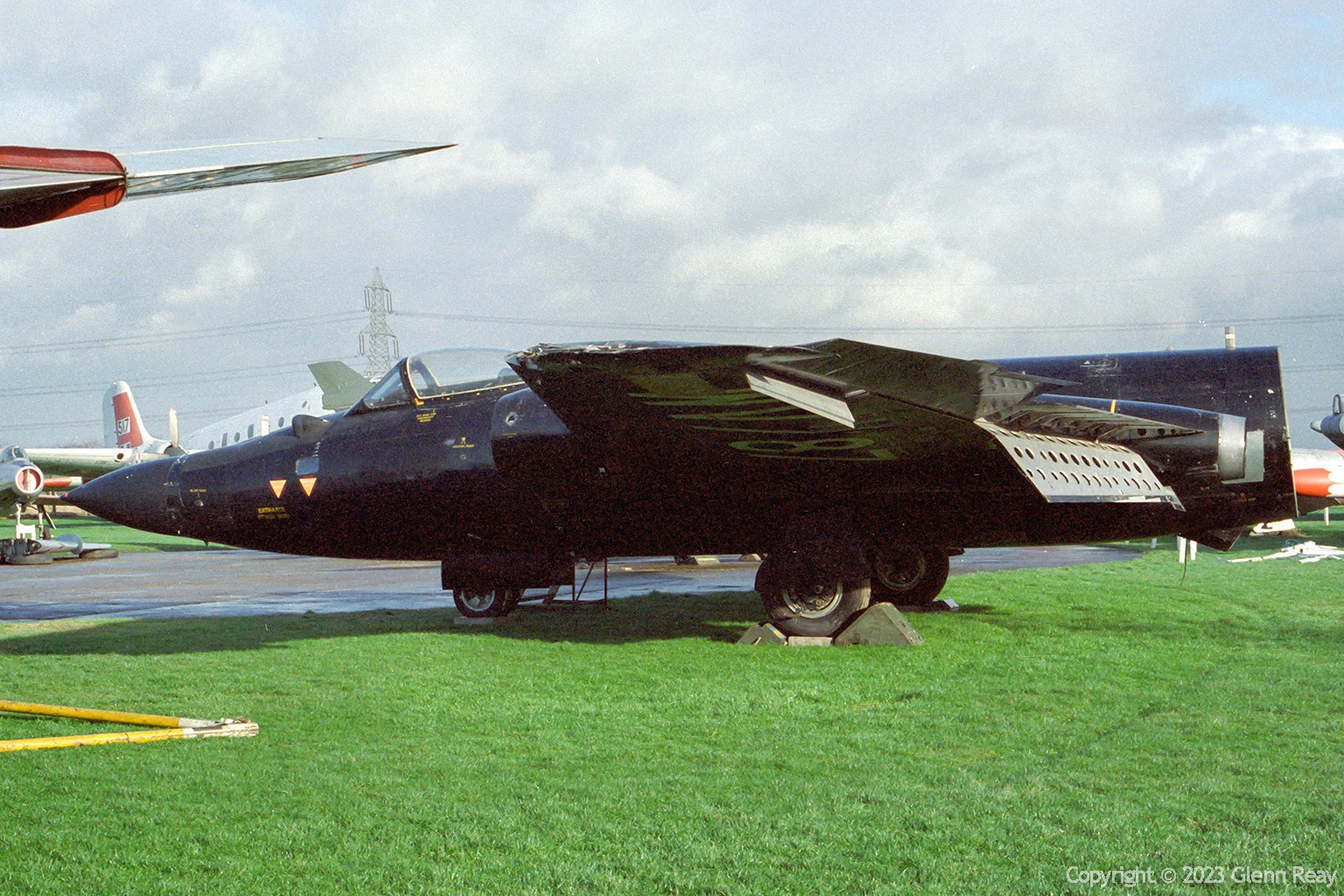
A post-Christmas rise in temperatures has allowed volunteers at Newark Air Museum (NAM) to begin preparatory de-corrosion work on one of this year’s most significant aircraft repaint projects: Canberra B.2 (Mod) WV787. NAM’s distinctive all-black trials and development airframe has already seen the first work undertaken on its heavily modified nose. Over the coming weeks and months, as weather conditions permit, further work will be carried out on this unique British aircraft. As conditions improved on Saturday, 17 January, late-afternoon sunshine also provided a brief opportunity for a reflective photographic moment featuring Avro Shackleton MR.3 WR977. It is anticipated that this popular Avro type will also receive further repainting attention from museum volunteers later in the year.
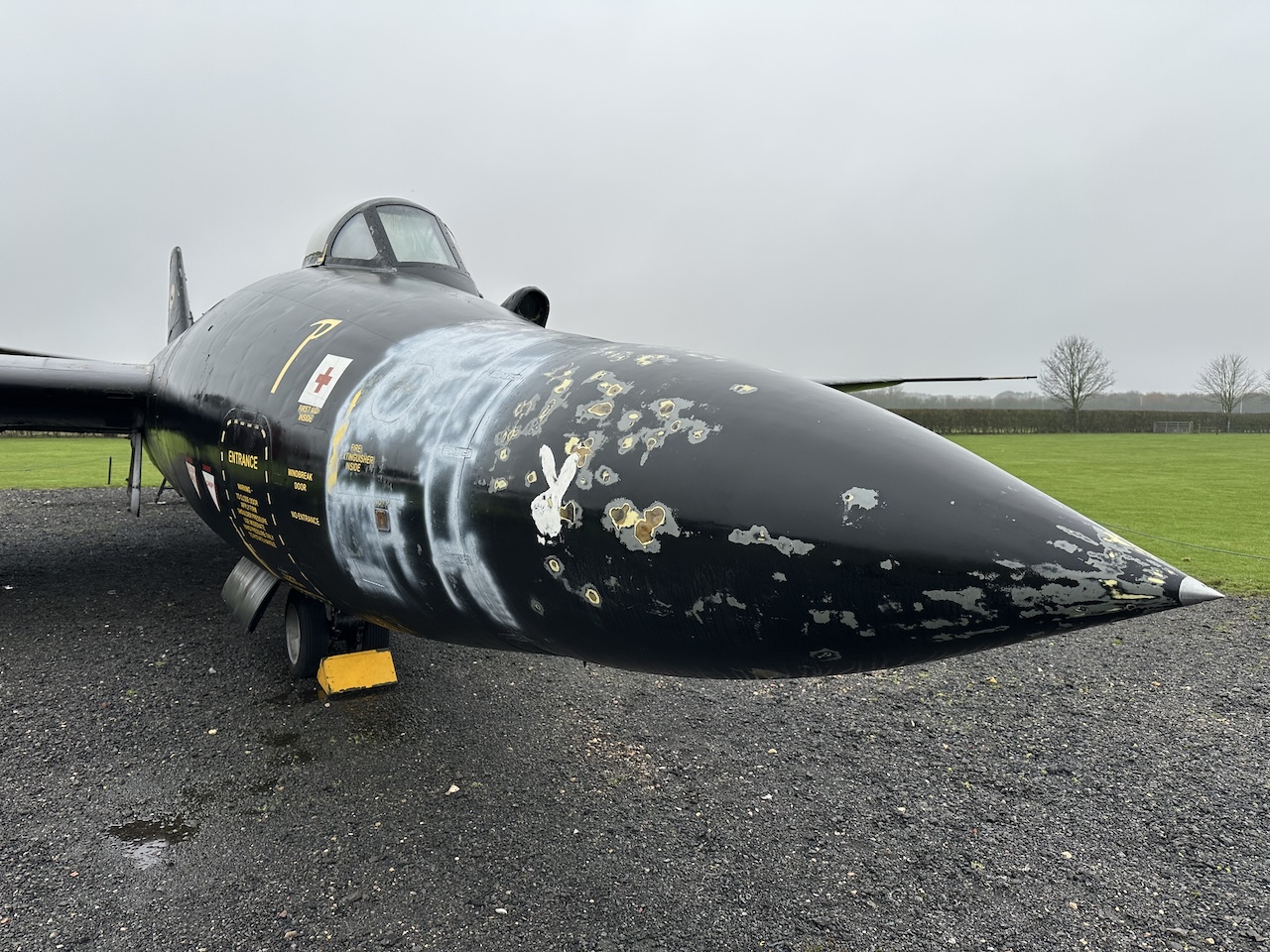
WV787 was built as a Canberra B.2 by the English Electric Company at Preston and delivered to the Royal Air Force in September 1952. Originally designed as a light tactical intruder and bomber, the aircraft had a crew of two, a length of 65 feet, and a wingspan of 64 feet. It was capable of a maximum speed of 580 mph, a range of 800 miles, and a service ceiling of 48,000 feet, powered by two Rolls-Royce Avon 109 turbojet engines.
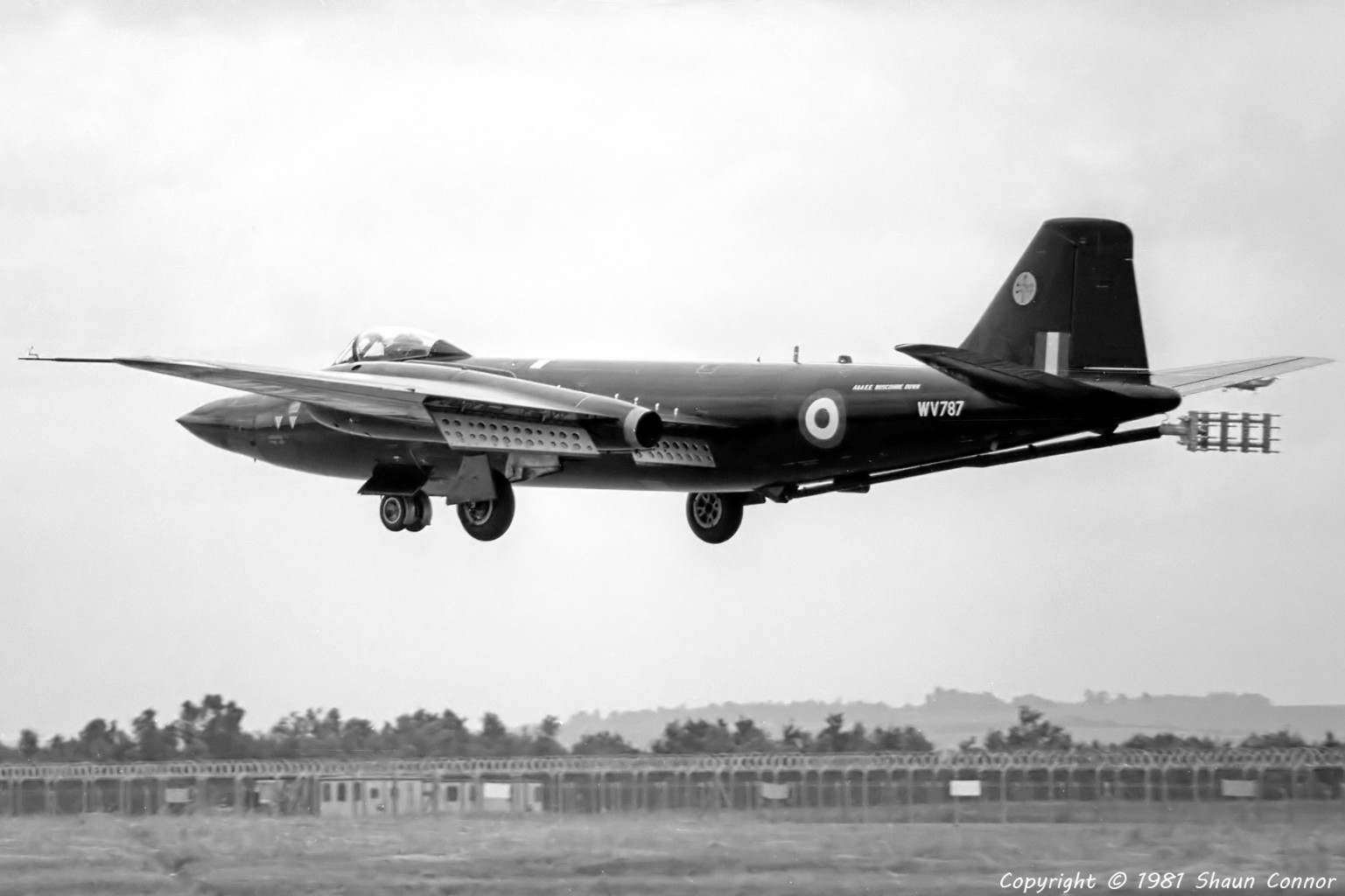
In May 1953, WV787 transferred from the RAF to the Ministry of Supply and was allocated to Armstrong Siddeley at Bitteswell, where it served as a Sapphire engine testbed. These engines were later used in the Mk.8 and Mk.9 Gloster Javelin interceptors. Following a brief period with the Aeroplane and Armament Experimental Establishment (A&AEE) at Boscombe Down, the aircraft’s varied career continued with a move to Ferranti. There, it was rebuilt to Canberra B(I)8 configuration, incorporating a modified nose and radar system developed for what would later become the Blackburn Buccaneer. WV787 was subsequently modified again to conduct de-icing trials. This configuration included a rearward-facing anti-submarine warfare circuit television monitor installed behind the bomb bay, which recorded footage of test aircraft flying through spray generated by a spray boom and nozzle array mounted on WV787. The aircraft concluded its developmental career in August 1984, after which it was allocated maintenance serial 8799M and flown to RAF Abingdon for use in battle damage repair training. The aircraft was eventually saved by Newark Air Museum in 1985, following a second offer from the Ministry of Defence after an initial proposal had been declined. WV787 was purchased by museum member Mich Stevenson and transferred to Winthorpe in November 1985. Once reassembled, hundreds of temporary “jo-bolted” battle damage repairs were replaced with authentic aircraft skin repairs. Known affectionately as the “Black Beauty,” WV787 has since been displayed in various locations around the museum site, including Hangar 2 until the COVID-19 lockdowns, when it was moved outdoors.
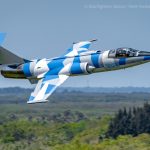
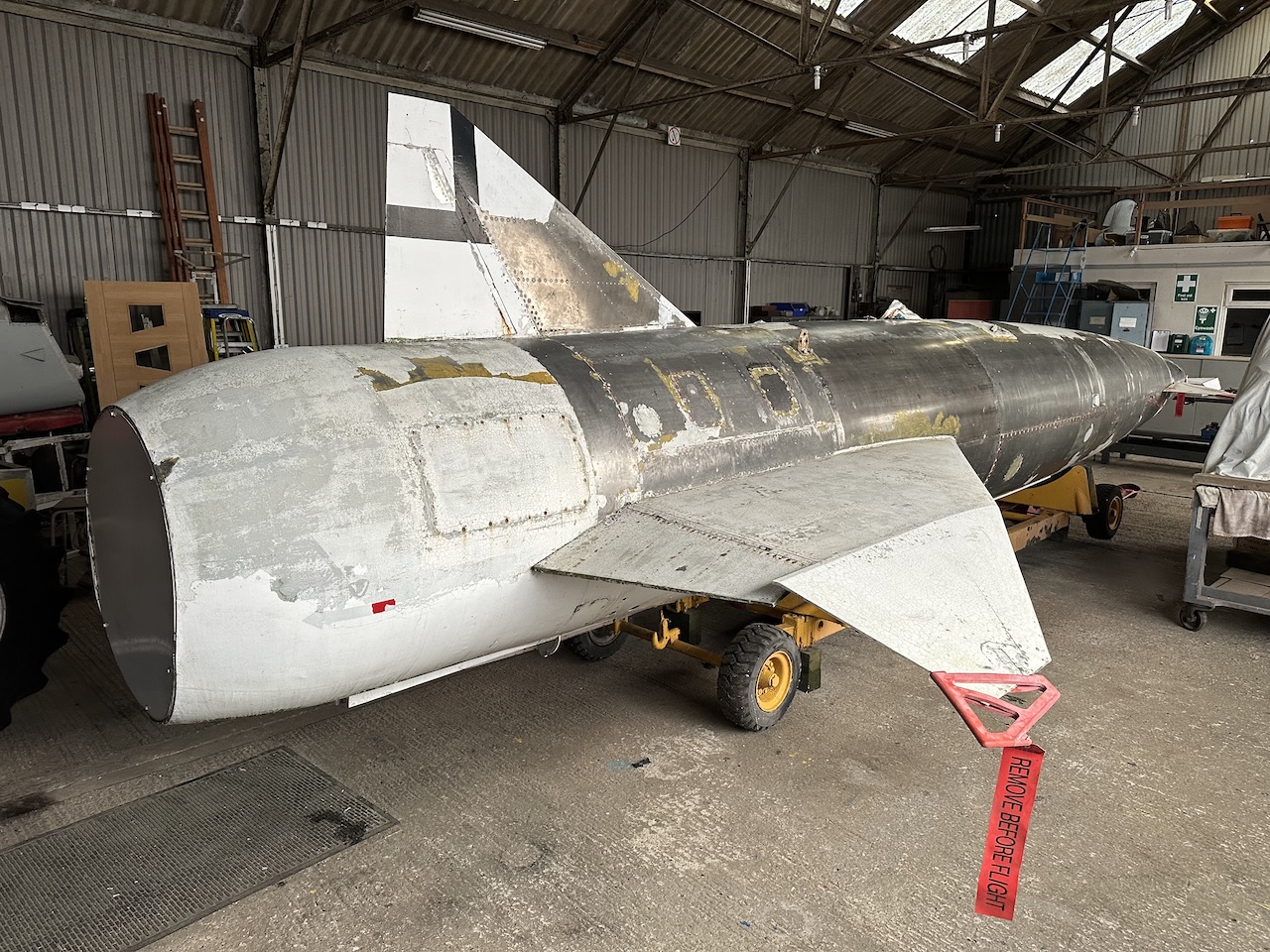
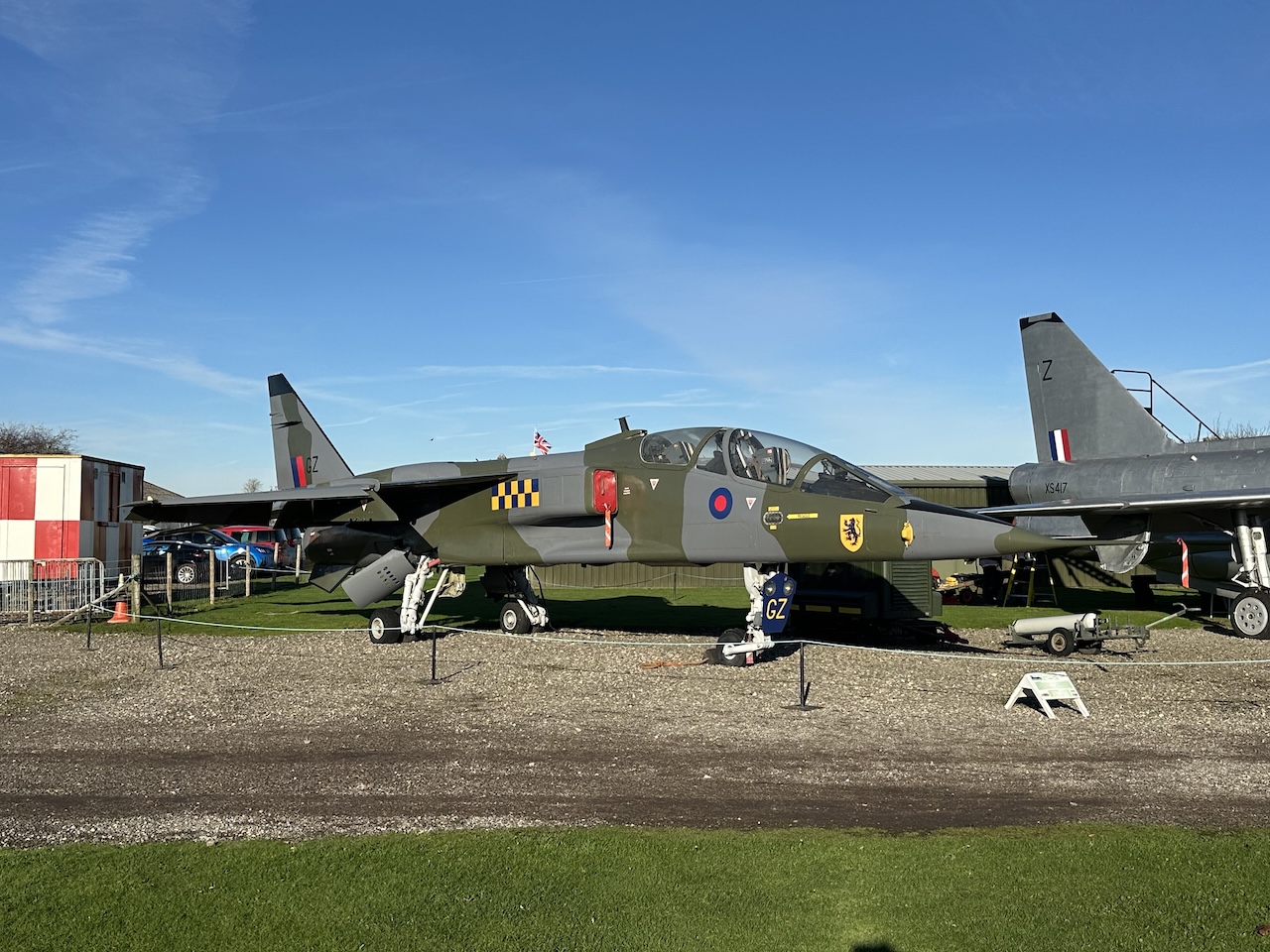
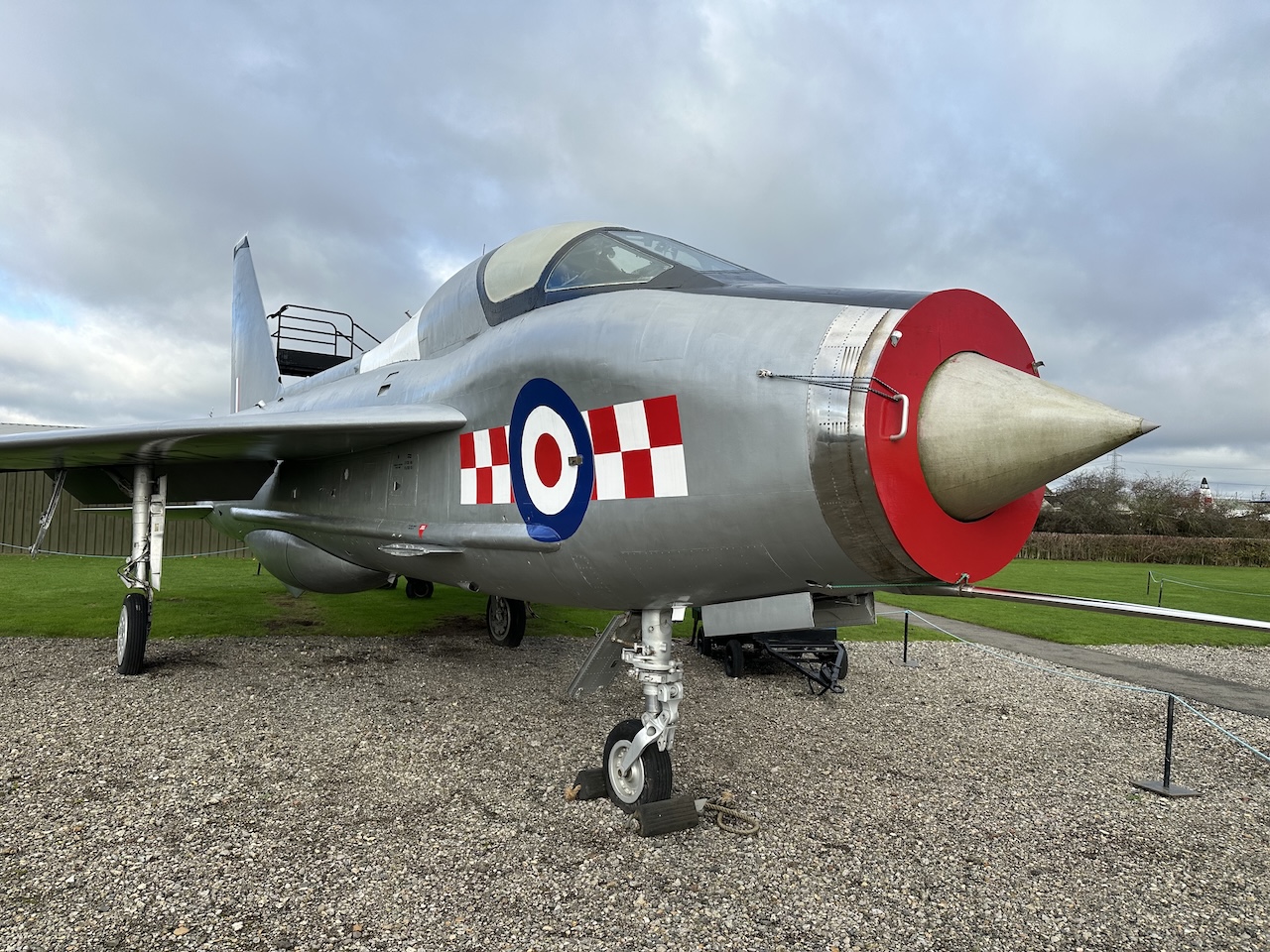
Alongside this activity, museum volunteers were also able to complete the crucial application of detailed markings to the recently repainted SEPECAT Jaguar T.2A XX829. The former Anglo-French strike fighter trainer now wears the wraparound camouflage scheme it carried during squadron service with No. 54 Squadron. In contrast, work on the adjacent English Electric Lightning T.5 XS417 has been temporarily suspended due to unsuitable weather conditions, delaying completion of its planned No. 56 Squadron repaint. While the airframe has been repainted, detailed markings will be applied once temperatures rise to acceptable levels. Elsewhere on site, more in-depth restoration work is currently underway on the museum’s Blue Steel missile, which has been moved into Newark Air Museum’s workshop facilities.
The Newark Air Museum secured its first airframe in 1963 and was formally incorporated as a limited company (No. 930888) and registered as a charity (No. 256434) in April and September 1968 respectively. After several years spent preparing its permanent home at Winthorpe Showground, a former World War II training base, Newark Air Museum officially opened to the public on Saturday, 14 April 1973. In Easter 1990, the museum opened its first Aircraft Display Hall, providing 1,860 square metres of exhibition space. In 1994, the trustees began negotiations to purchase farmland on the museum’s southern boundary to secure its long-term future. These negotiations culminated in the purchase of 5.01 hectares of land prior to Christmas 1995. In November 2004, the museum opened its second Aircraft Display Hall following the successful completion of a project supported by the Heritage Lottery Fund. Newark Air Museum continues to evolve and has achieved Accredited Museum status as well as the VAQAS quality standard. Today, it stands as one of the largest volunteer-managed aviation museums in Great Britain. For more information about the Newark Air Museum, visit www.newarkairmuseum.org.