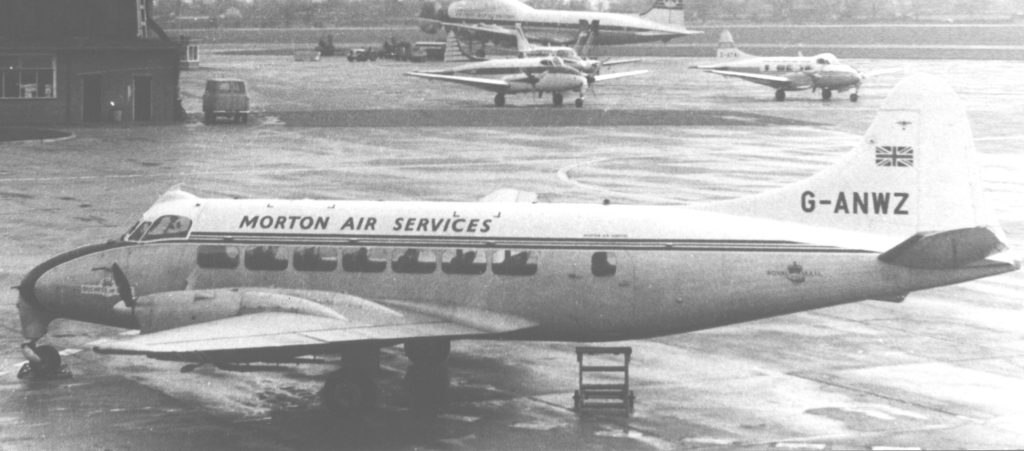
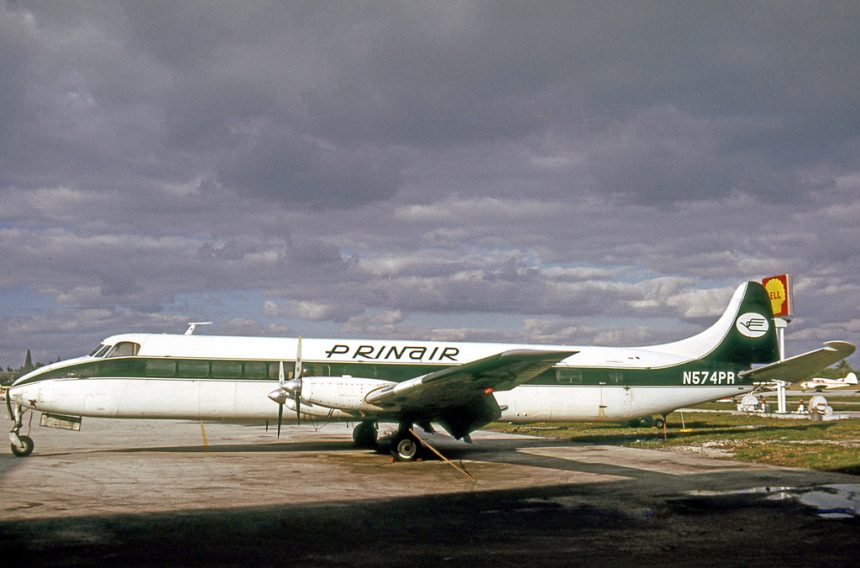

On this day in aviation history, 76 years ago (May 10, 1950), the first flight of the de Havilland DH.114 Heron took place. The DH.114 was a small British propeller-driven airliner, and a further development of the de Havilland DH.104 Dove. The Heron featured a longer fuselage and two more engines than the Dove. The DH.114 retained the ruggedness of the DH.104, along with the conventional low-wing monoplane format with a tricycle undercarriage. Like the Dove, the Heron was ideal for regional and commuter routes. de Havilland designed the DH.114 with simplicity in mind, and many DH.104 parts were interchangeable on the new airliner. The Heron could reach “off the beaten path” airports in remote areas, serving areas that truly relied on small airliner service. Heron prototype G-ALZL was the first to fly. on 5/1/1950. The flight occurred from Hatfield, UK, with pilot Geoffrey Pike at the helm. After 100 hours of flight testing, the DH.114 prototype was unveiled to the public at the Farnborough Airshow on September 8, 1950.
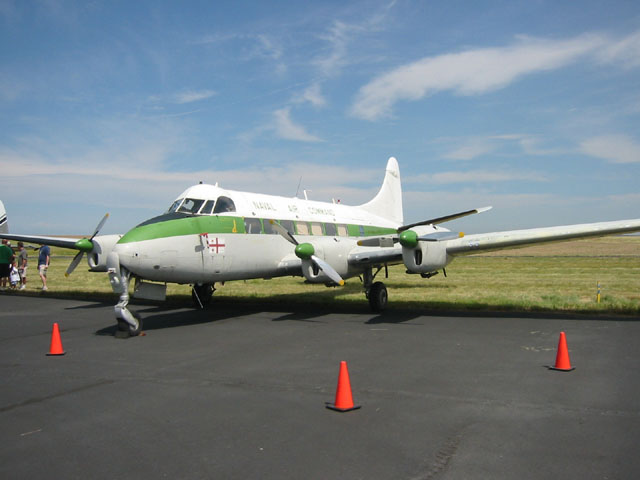
The de Havilland DH.114 was powered by four 250-hp de Havilland Gipsy Queen 30 Mk.2 6-cylinder inverted inline engines. A crew of 2 flew the aircraft, while room for 14 passengers was available in the cabin. The Heron could cruise at 183 mph and reach its service ceiling of 18,500 ft promptly, thanks to a 1,140 fpm rate of climb. The DH.114 had a range of 795 nautical miles. Takeoff occurred at 2,425 ft of runway, while landing required at least 2,065 ft. De Havilland built a total of 149 Herons, and the aircraft would see service the world over. Civilian and military operators alike were fond of the DH.114, with its simple design, comfortable interior, reliability, and the additional safety buffer of having four engines. Some variants of the Heron were modified by the Riley Aircraft Corporation as the Riley Turbo Skyliner. These Herons were retrofitted with 290-hp Lycoming IO-540 flat-six piston engines. Canadian firm Saunders Aircraft Corporation also modified 12 DH.114s, with a longer fuselage and two 750-shp Pratt & Whitney Canada PT6A-34 turboprop engines.