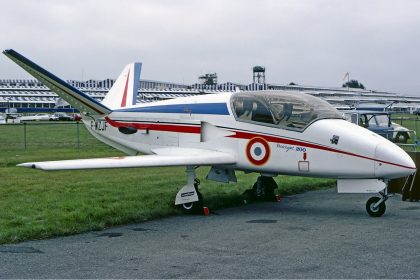
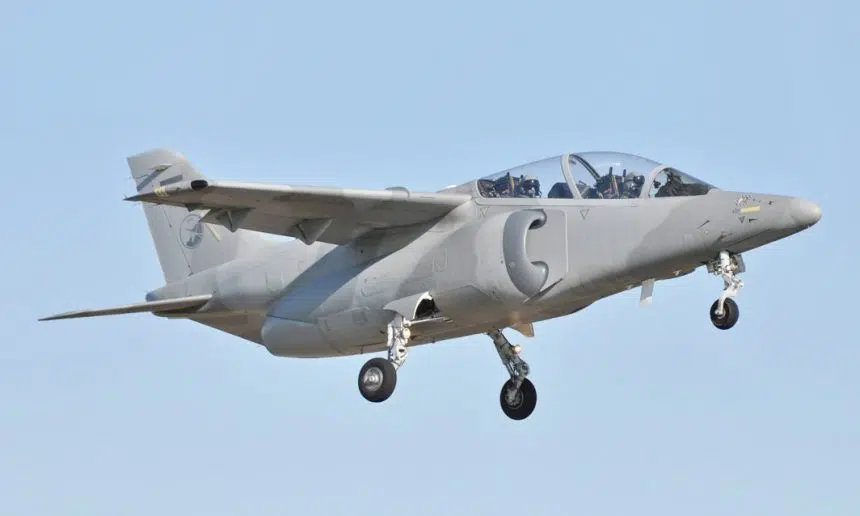

On this day in aviation history, 42 years ago (October 6, 1984), the FMA IA 63 Pampa took flight for the first time. Developed by Argentina’s Fábrica Militar de Aviones (FMA) with assistance from Germany’s Dornier, the Pampa was designed as an advanced jet trainer with a secondary combat capability for the Argentine Air Force. Development began in 1978 as Argentina sought a replacement for its aging Morane-Saulnier MS-760 trainers. FMA partnered with Dornier to develop the new aircraft, which was powered by a single Garrett TFE731 turbofan. Although influenced by the Dassault/Dornier Alpha Jet, the Pampa was smaller and incorporated a straight supercritical wing rather than the Alpha Jet’s swept-wing configuration.

The first production Pampas were delivered to the Argentine Air Force in April 1988. The design subsequently underwent several modernization programs, producing the AT-63 Pampa II and later Pampa III. During the 1990s, the aircraft was also developed into the Pampa 2000 for the United States Joint Primary Aircraft Training System competition, but lost to the design that became the T-6 Texan II. The IA-63 measures 35 feet 10 inches in length with a wingspan of 31 feet 9 inches. Power comes from a single 3,500-pound-thrust Honeywell TFE731 turbofan. The Pampa can reach a maximum speed of 509 mph, has a range of approximately 930 miles, and a service ceiling of 42,300 feet. For combat training and light attack duties, the aircraft can carry a 30 mm cannon along with rockets, bombs, and other stores on five hardpoints.