
(Image credit: VAN)
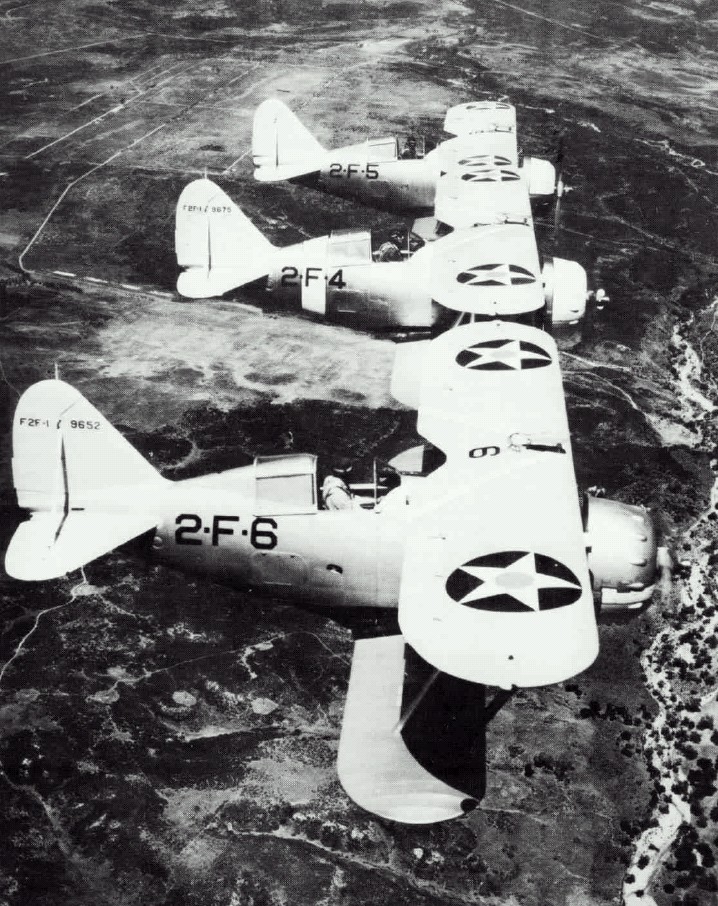
On this day in aviation history, 92 years ago (October 18, 1933), the Grumman F2F flew for the first time. The F2F was a single-engine biplane fighter aircraft that featured retractable landing gear for improved aerodynamic performance. This Grumman biplane did not have an official nickname, but some sources say the F2F was unofficially called the “flying barrel” by those who flew it. The barrel-chested F2F served as the United States Navy’s mainline fighter from 1936 to 1940, operating from both land bases and aircraft carriers.
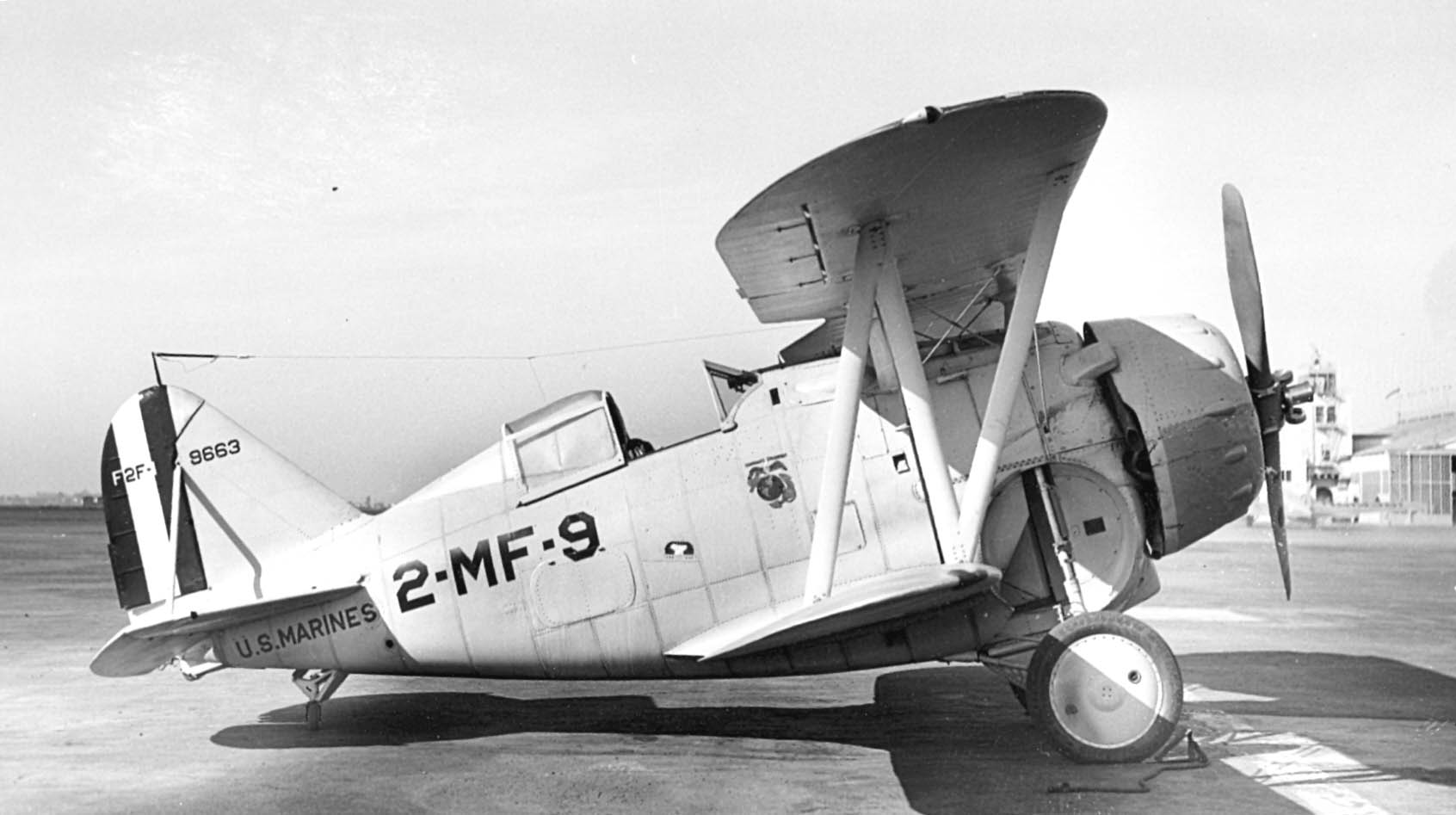
Grumman’s previous success with the FF-1 fighter—a biplane that was ahead of its time in speed—earned the company a contract to develop a new fighter. This aircraft would be designated the XF2F-1. The prototype featured two .30-caliber machine guns, along with watertight compartments that reduced weight and enhanced survivability should a water landing be required. A 625-horsepower XR-1534-44 Twin Wasp Junior radial engine powered the XF2F-1, pushing the aircraft to a top speed of 229 miles per hour at 8,400 feet—22 miles per hour faster than the FF-1 at the same altitude. The XF2F-1 also demonstrated greater maneuverability than its predecessor.
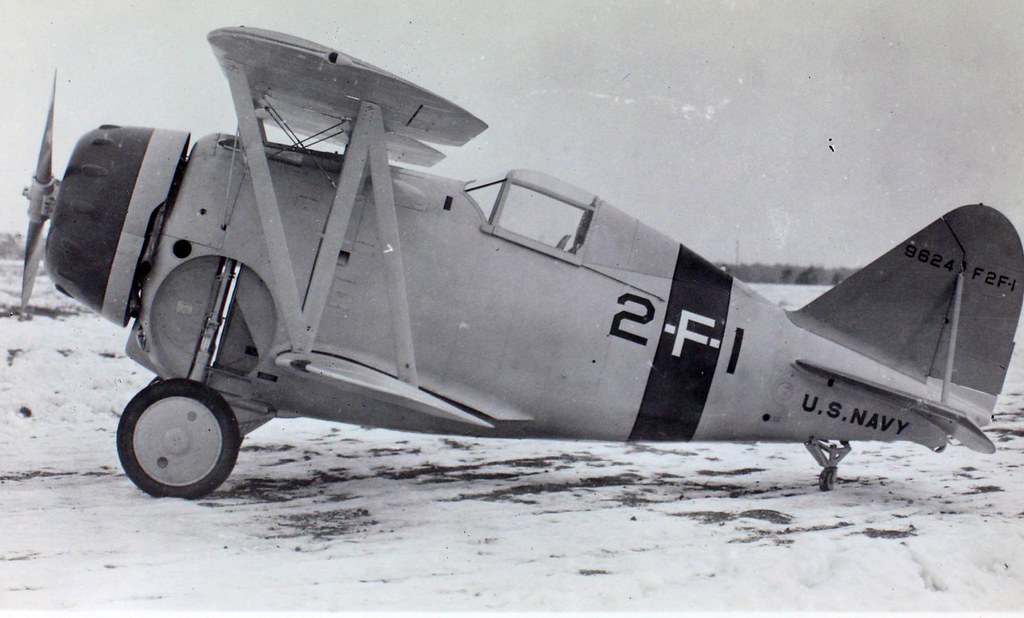
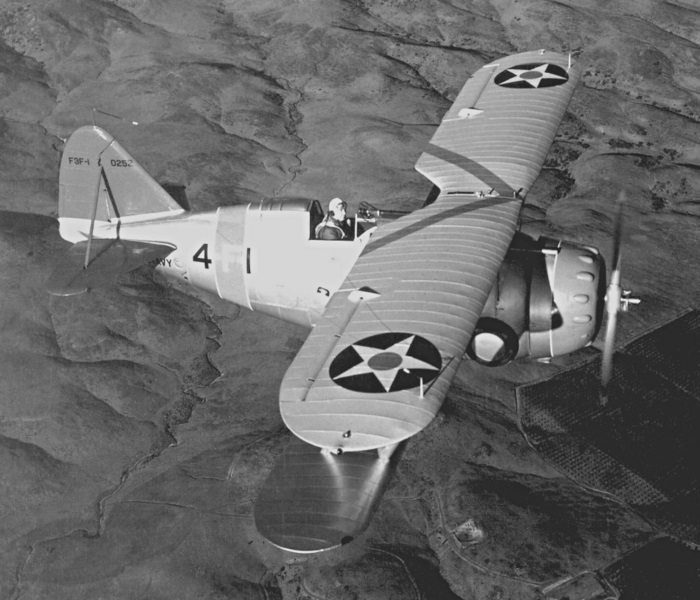
The production Grumman F2F-1 was powered by a 700-horsepower Pratt & Whitney R-1535-72 Twin Wasp Junior radial engine. The aircraft could reach a maximum speed of 231 miles per hour, had a service ceiling of 27,100 feet, and a range of 856 nautical miles. The production “flying barrel” retained the prototype’s twin .30-caliber guns mounted above the cowling. On May 17, 1934, the United States Navy ordered 54 F2F-1 fighters. In January 1935, the first 19 were delivered to the Navy. The F2F-1 served notably from 1935 to late 1939, when the Grumman F3F-3 began replacing it in front-line service. By 1940, the F2F was relegated to training and transport duties, and by early 1943, the last of the F2Fs were stricken from U.S. Naval service. No Grumman F2Fs are known to survive today. As unfortunate as that is, the legacy of the F2F lives on through the Grumman lineage it helped inspire—including the F3F, F4F/FM-2 Wildcat, and F6F Hellcat.