






(Image credit: VAN)
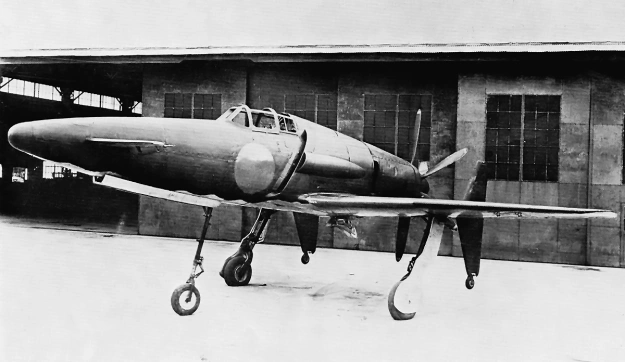
Eighty years ago today, on August 3, 1945, the Kyushu J7W Shinden—translated as Magnificent Lightning—took to the skies for the first time. Developed late in World War II, the Shinden was one of the most unconventional fighter aircraft designs of its era. Featuring a canard configuration, its horizontal stabilizer was placed at the nose, while the wings and engine were located at the rear in a “pusher” arrangement. This layout was rare at the time, though the United States was experimenting with a similar concept in the Curtiss-Wright XP-55 Ascender.
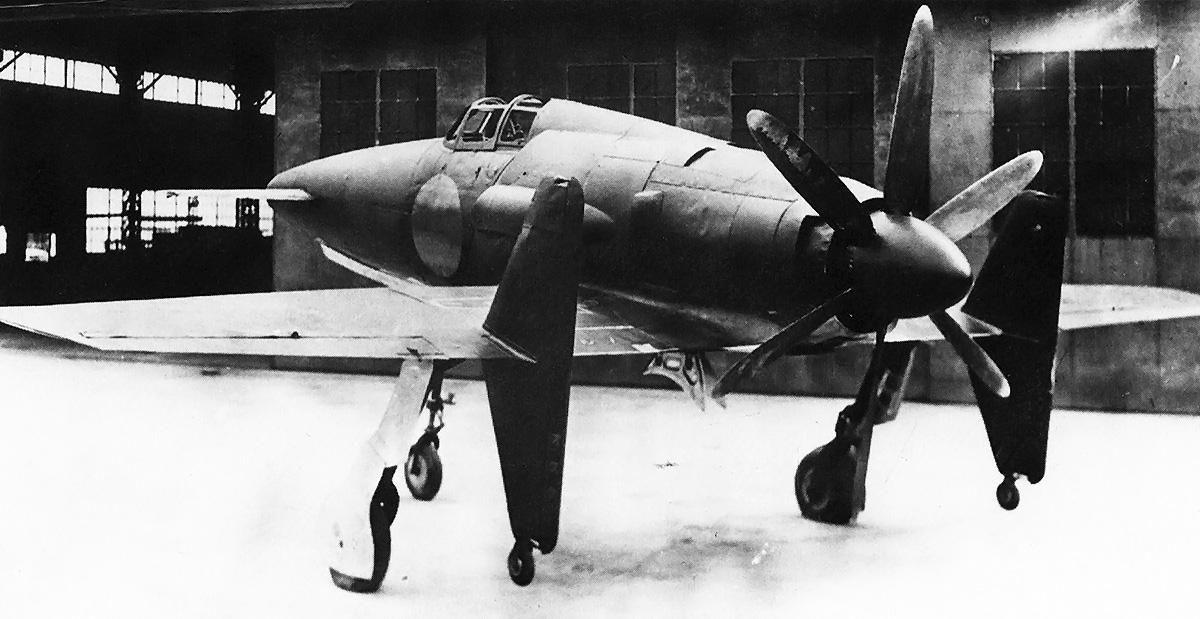
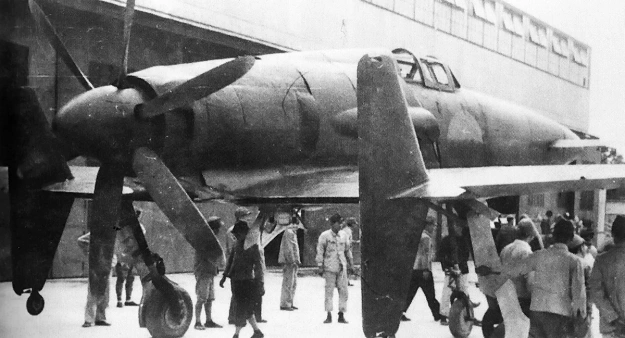
Rear view of the J7W1 highlighting its six-blade propeller, 12-blade engine cooling fan, exhaust augmenter outlet, and full-height rudders on the vertical stabilizers.
The J7W was conceived by Kyushu Aircraft Company in cooperation with the Imperial Japanese Navy as a land-based, short-range, high-speed interceptor to counter the increasing threat of American B-29 Superfortress bombing raids over mainland Japan. Japan began exploring the canard concept in 1943, producing the Yokosuka MXY6 research glider to study the aerodynamics of such an unconventional layout. Tests with the MXY6 in 1944 proved successful enough to proceed with building two J7W prototypes. The first was completed in April 1945.
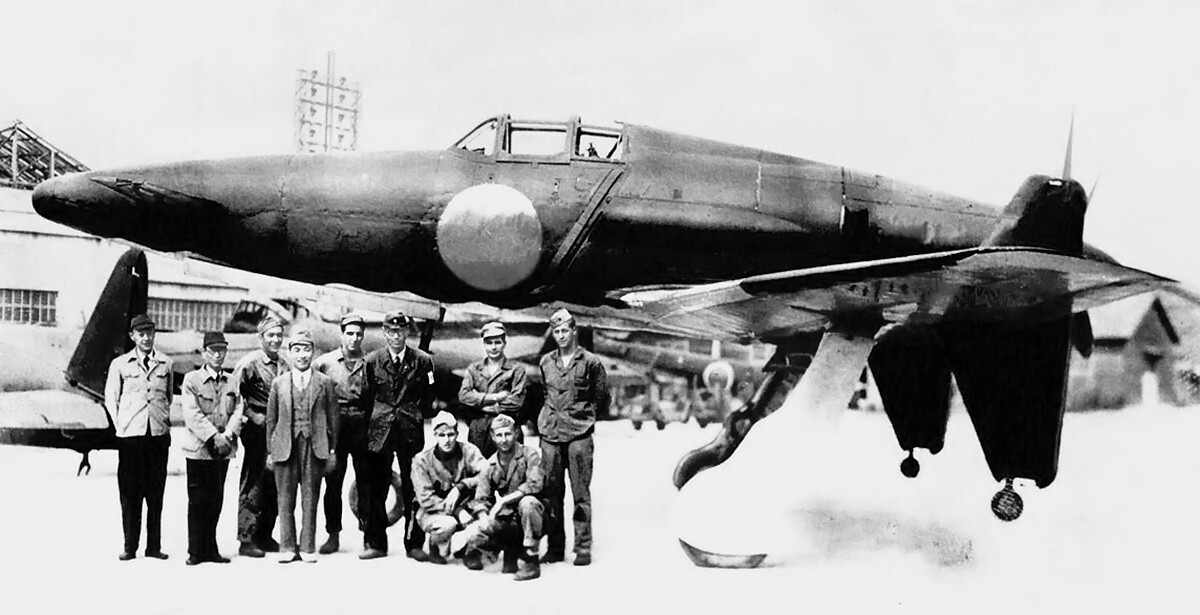
Power came from a Mitsubishi Ha-43 Model 12 18-cylinder radial engine, producing 2,130 horsepower at takeoff and between 1,660 and 1,730 horsepower at altitude. Driving a six-bladed constant-speed propeller, the Shinden was projected to reach a top speed of 470 mph, cruise at 262 mph, operate at altitudes up to 39,000 feet, and have a range of 460 nautical miles. Planned armament included four nose-mounted 30 mm Type 5 cannons with 60 rounds each, and in a secondary ground-attack role, it could carry four bombs of either 66 or 130 pounds.
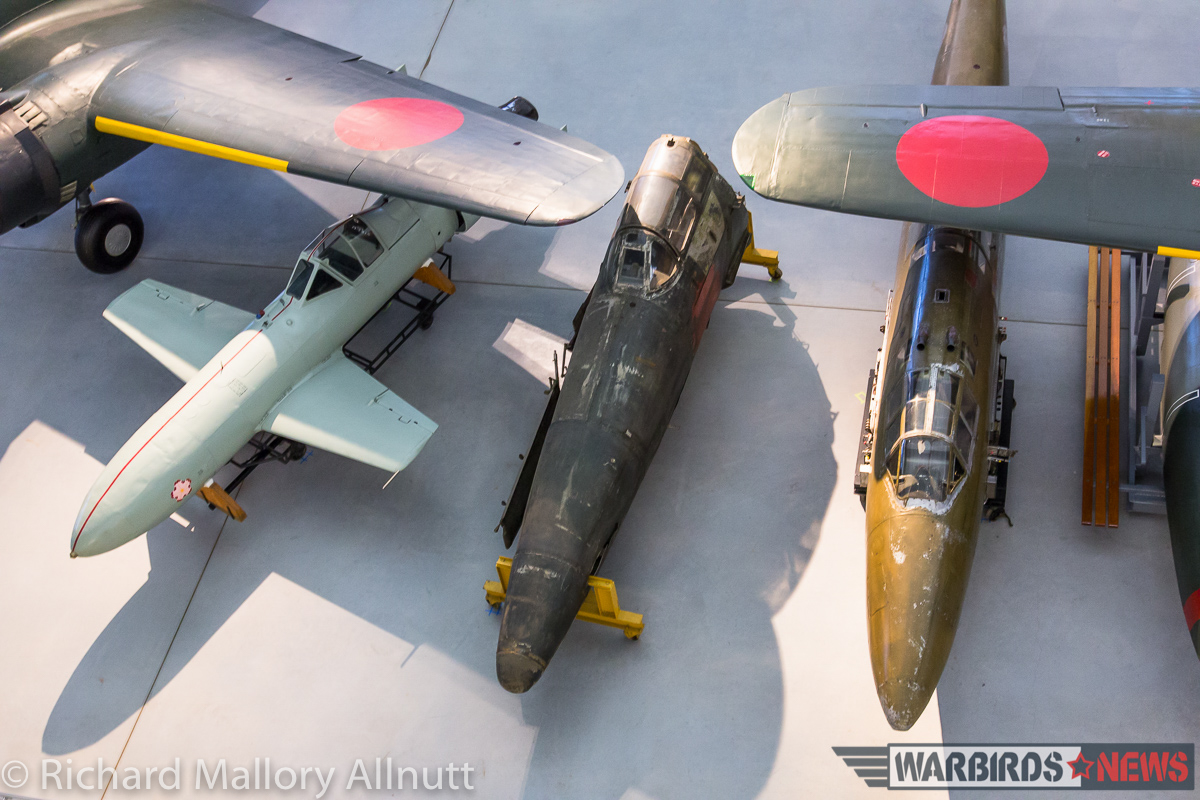
Unfortunately for the Japanese, the Shinden’s first flight came just days before the end of the war, leaving no time for full evaluation or mass production. Of the two prototypes built, only one survives. Today, that aircraft is preserved in the collection of the Smithsonian National Air and Space Museum. Its fuselage is displayed at the Steven F. Udvar-Hazy Center at Washington Dulles International Airport, while the rest of the airframe remains in storage awaiting a preservation effort that will reunite its components without compromising its historic patina. Two full-scale replicas of the J7W have also been built in Japan in recent years.








It was also featured in the movie Godzilla Minus One. They used it to help destroy the monster in the end.