






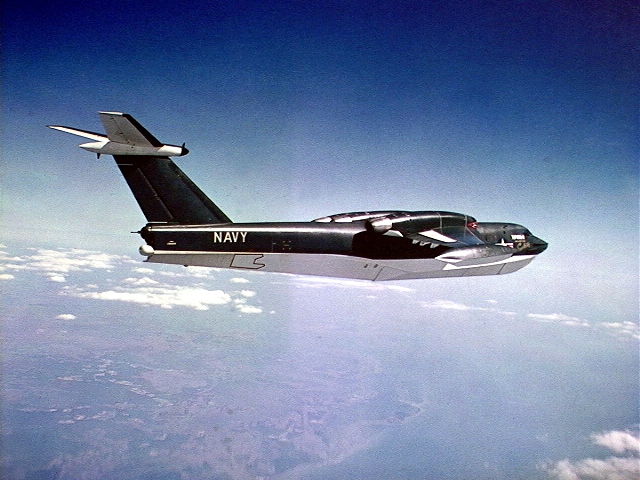


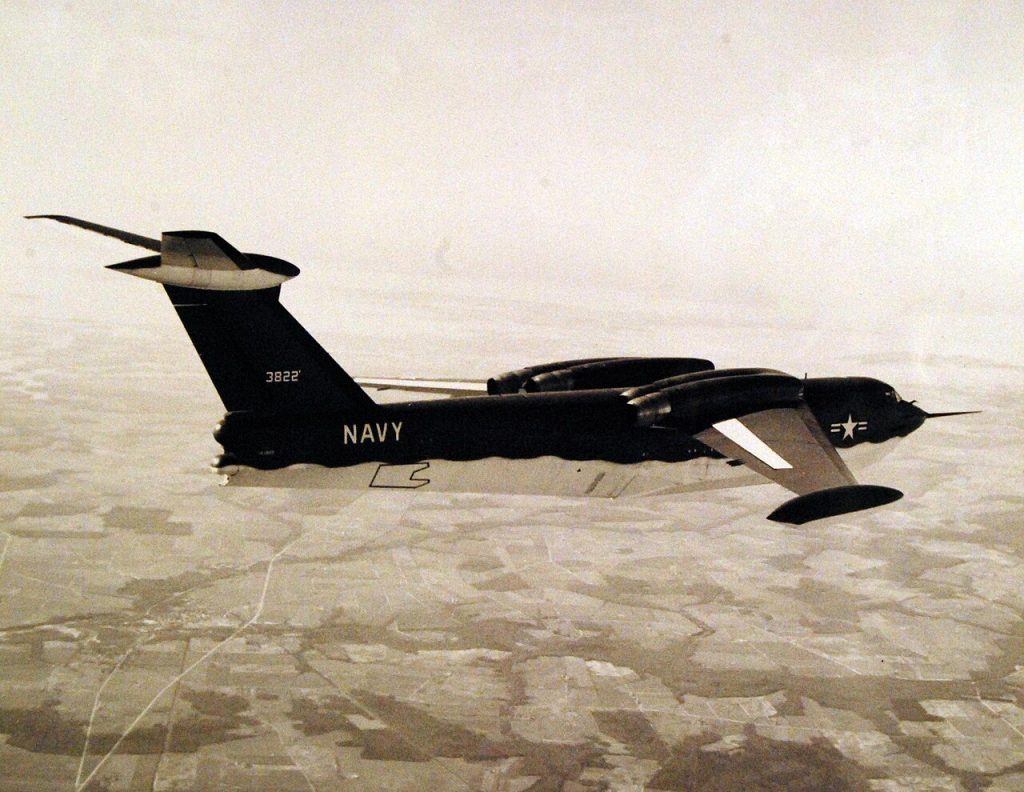
On this day in aviation history, 71 years ago (July 14, 1955), the first flight of the Martin P6M SeaMaster took place. Picture this: a strategic flying-boat bomber. Crazy? Perhaps. But it was indeed an experiment between the Glenn L. Martin Company and the United States Navy. The P6M was developed in the early years of the Cold War to fill the need for a strategic nuclear weapon delivery system for the Navy. Traditional strategic bombers of the period that the US Air Force was flying would be too large to operate from aircraft carriers. So, a purpose-built flying-boat bomber was the proposed solution.
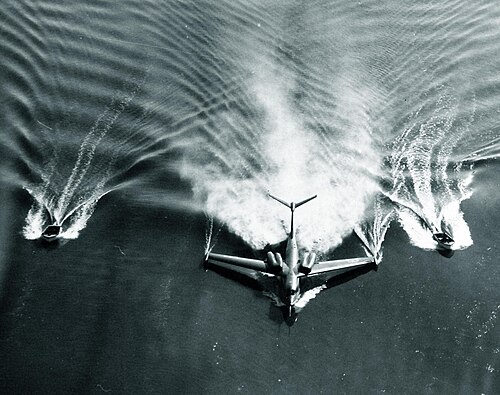
The US Navy felt that the Air Force, with their Strategic Air Command, was eclipsing their own strategic role. The P6M would seek to remedy this imbalance, ensuring that their budgets and pride stayed intact. The Navy issued a specification for its desired bomber, and Martin came up with a proposed solution. Martin’s design, the XP6M-1, was powered by four Allison J71-A-4 turbojet engines, each with 17,500 pounds of thrust. The engines were installed in over-wing pods, which kept their intakes out of the line of sea spray. The XP6M-1’s wings were swept at 40 degrees, and they featured tip tanks that doubled as floats.
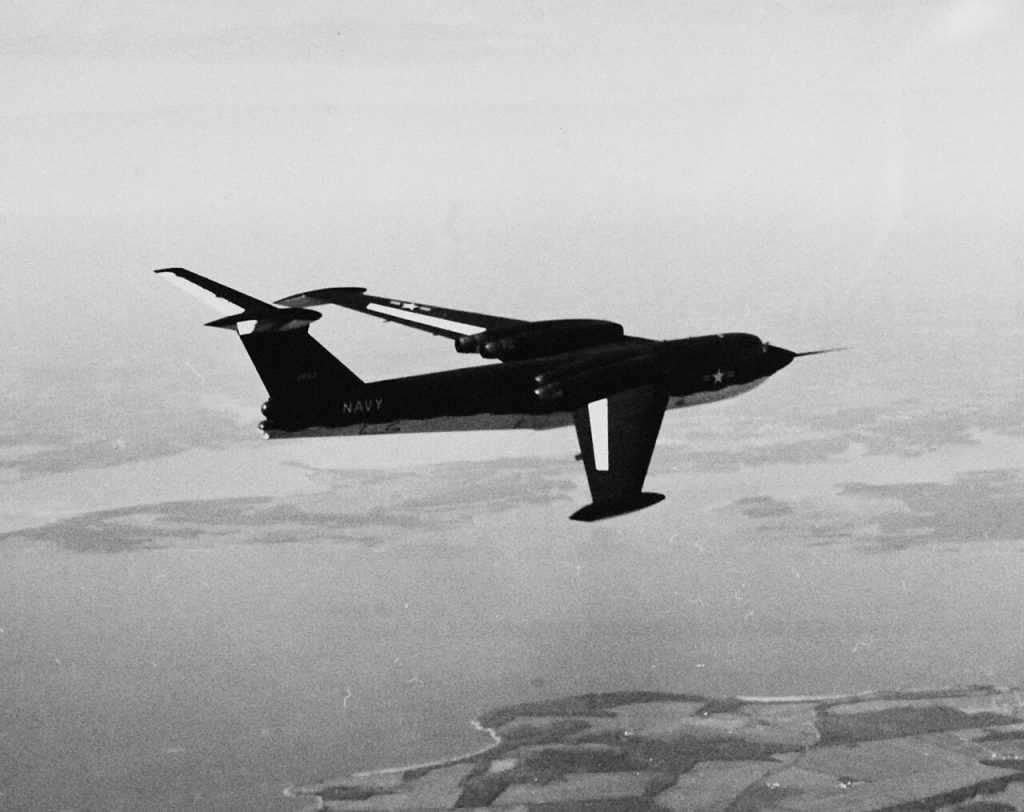
Martin manufactured two prototype SeaMasters, six pre-production YP6M-1 models, and eight P6M-2 production variants. The P6M-2 had a crew of four and a maximum airspeed of Mach 0.894 (686 mph), although the aircraft would typically cruise closer to 535 mph. The SeaMaster had a combat range of 650 nmi with a full payload of 30,000 lbs, and a service ceiling of 50,000 ft. A thrust-to-weight ratio of 0.368 and a 7,380 fpm climb rate meant that the P6M-2 was no slouch in performance. The SeaMaster was armed with two 20 mm cannons in a rear remotely operated turret and could also be loaded with mines, recon equipment, or bombs.
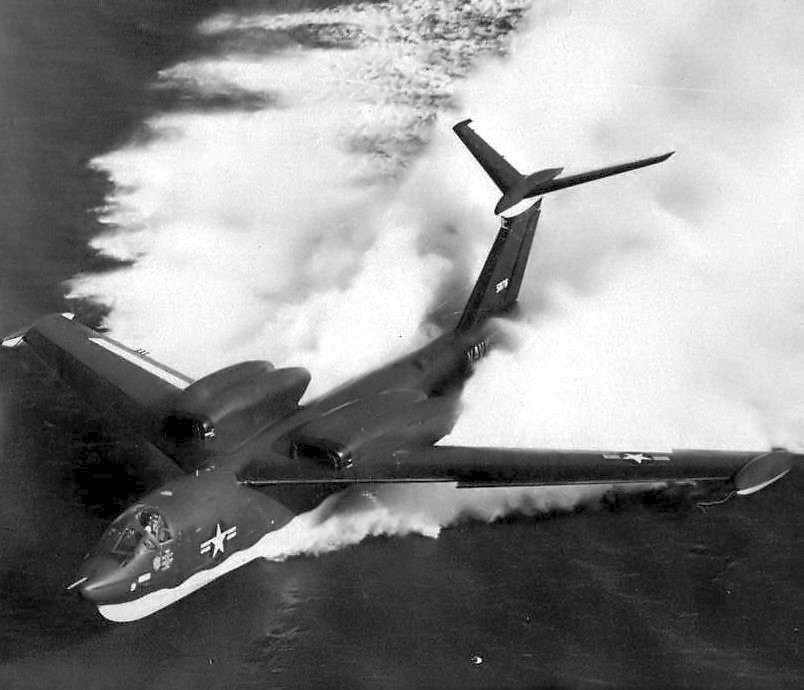
In flight testing, the P6M demonstrated compressibility issues above Mach 0.8. The engine nacelles were shrunk to remedy the problems encountered. In the water, the aircraft would dig into the water due to the tip tanks, causing engine surges. These squawks were also addressed, but the SeaMaster’s time was drawing to a close. Defense budget cuts mean that the P6M would lose out to ballistic missile funding, and submarines to launch them. Martin made an attempt to salvage the aircraft’s future by marketing it on the civilian market as the SeaMistress, but there was no interest. The P6M was the final aircraft built by Martin. No complete airframes of the SeaMaster exist today, but a section of the tail is on display at the Glenn L. Martin Maryland Aviation Museum.












Great aircraft. Ultimate flying boat!