








(Image credit: VAN)
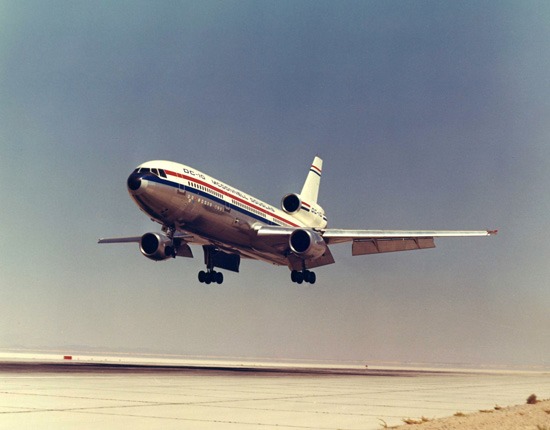
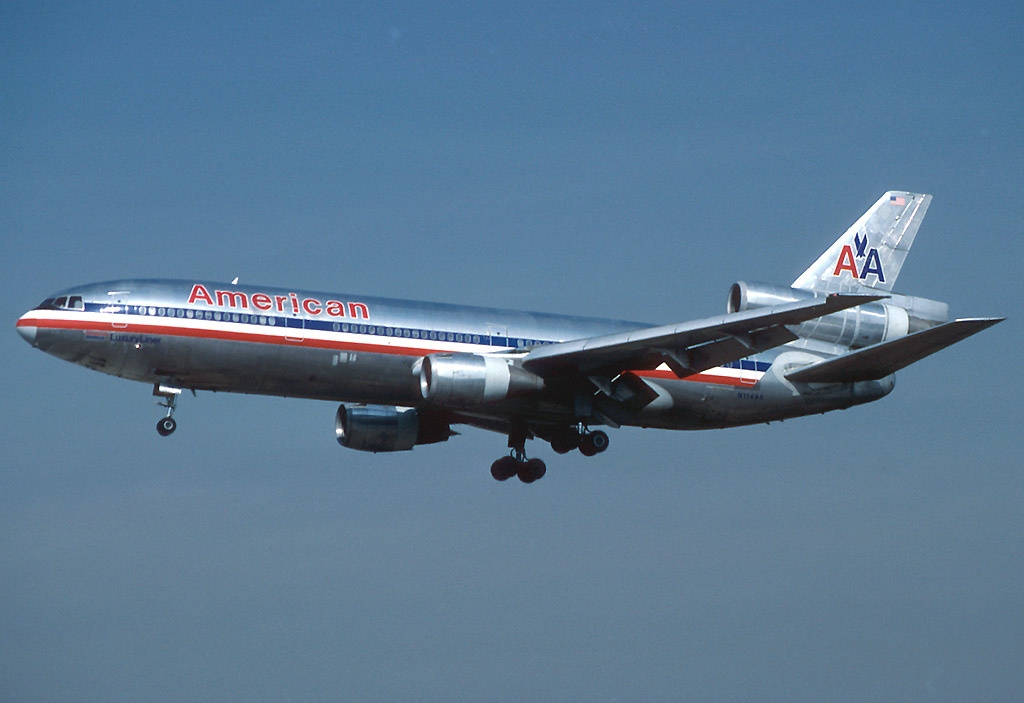
On this day in aviation history, 55 years ago (August 29, 1970), the McDonnell Douglas DC-10 made its maiden flight. Designed as a wide-body tri-jet airliner, the DC-10 was intended to succeed the DC-8 on long-haul routes. Its distinctive three-engine configuration placed two turbofans under the wings and a third at the base of the vertical stabilizer. Inside, the aircraft featured a twin-aisle cabin with three seating sections—left, right, and center. Following flight testing, American Airlines introduced the DC-10 into passenger service on August 5, 1971.
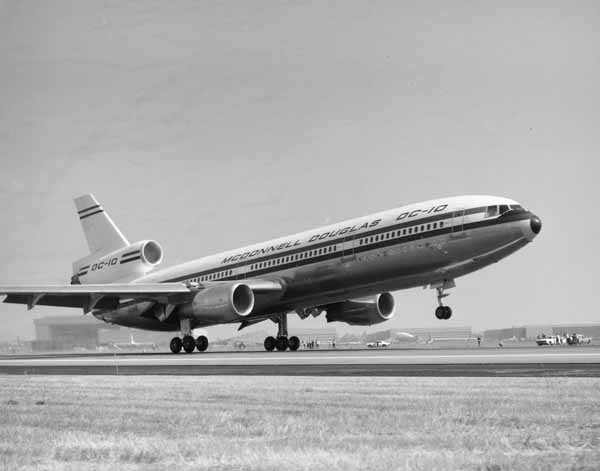
The DC-10-40 series typically carried a crew of three and accommodated between 270 and 380 passengers depending on configuration. Powered by three Pratt & Whitney JT9D-20 or -59A engines, each producing 53,000 pounds of thrust, the DC-10 cruised at Mach 0.82 (544 mph) and could reach a service ceiling of 42,200 feet. With a range of 5,100 nautical miles, the type was well-suited for long-haul international operations. In addition to commercial use, the DC-10 was adapted for military service as the KC-10 Extender, a multi-role aerial refueling and cargo aircraft. In total, McDonnell Douglas produced 386 DC-10s and 80 KC-10s between 1971 and 1989.
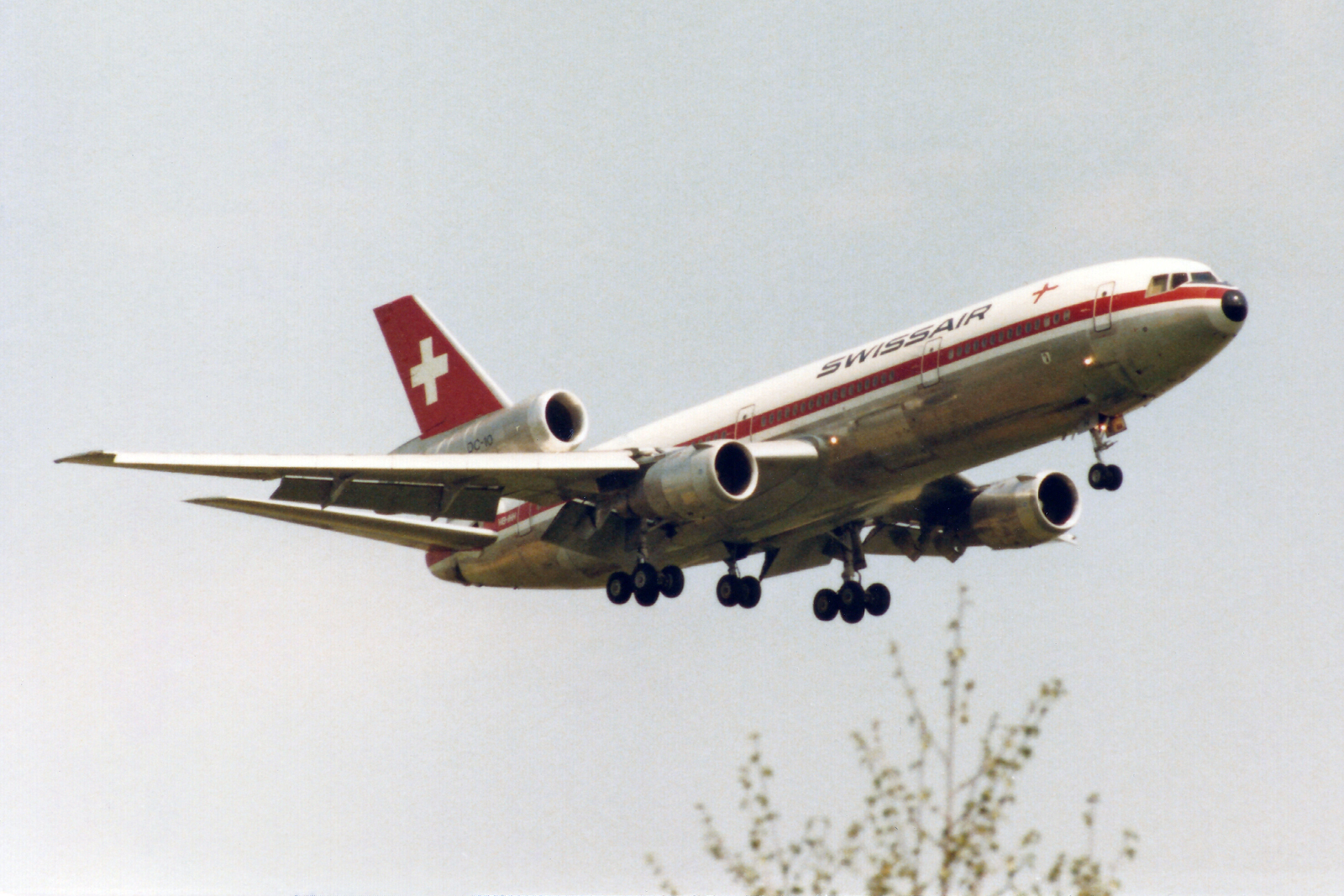
While no longer a mainstay of commercial passenger fleets, the DC-10 continues to fly in specialized roles. Orbis International operates one as a flying hospital, while others serve in cargo operations with carriers such as Transportes Aéreos Bolivianos and Cargo Three. Modified DC-10s also support aerial firefighting with 10 Tanker Air Carrier and aerial refueling with Omega Aerial Refueling Services. The KC-10 Extender, after more than four decades of service, was retired from the U.S. Air Force in September 2024. The McDonnell Douglas DC-10 remains a testament to robust design and engineering. Though its passenger service has largely ended, its continued use in cargo, firefighting, and humanitarian missions underscores its enduring legacy as one of the most versatile tri-jets ever built.








Question: who is Al Ueltschi? Ask Orbis. He made all this happen.