

(Image credit: VAN)
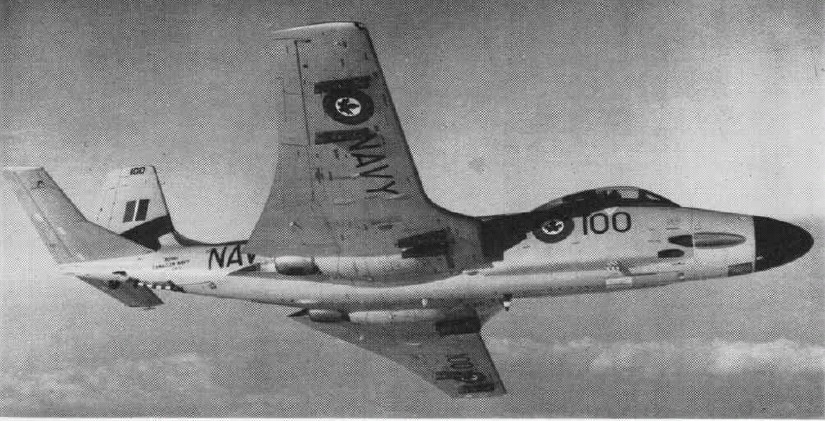
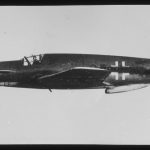
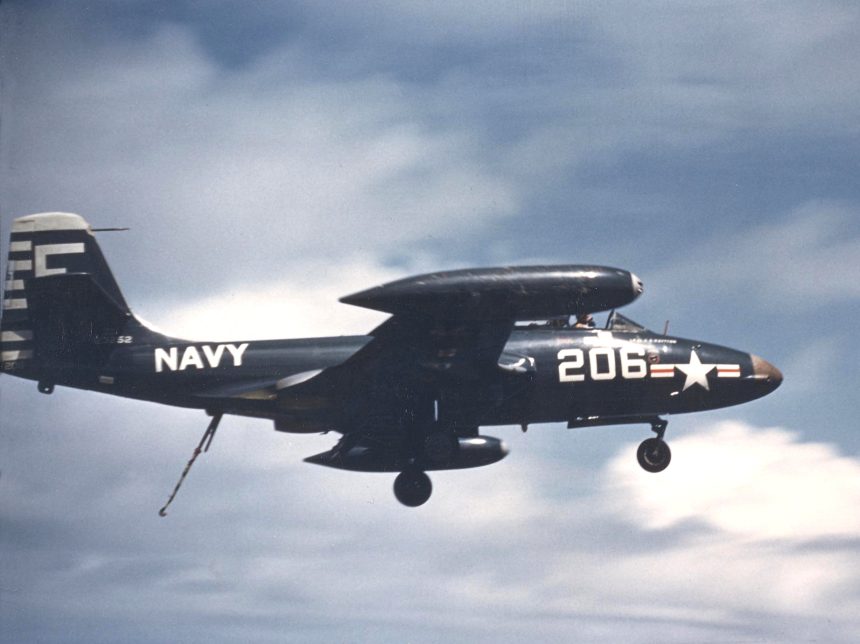
On this day in aviation history, 79 years ago (January 11, 1947), the McDonnell F2H Banshee took flight for the first time. The F2H was a single-seat carrier-based fighter jet that was flown by both the United States Navy and Marine Corps. The Banshee was also flown by the Royal Canadian Navy, the only jet-powered fighter to be deployed by this branch of the service. During development, the aircraft was known by McDonnell as the Model 24. Development of the Model 24 began during the late 1940s as a derivative of McDonnell’s earlier FH Phantom design.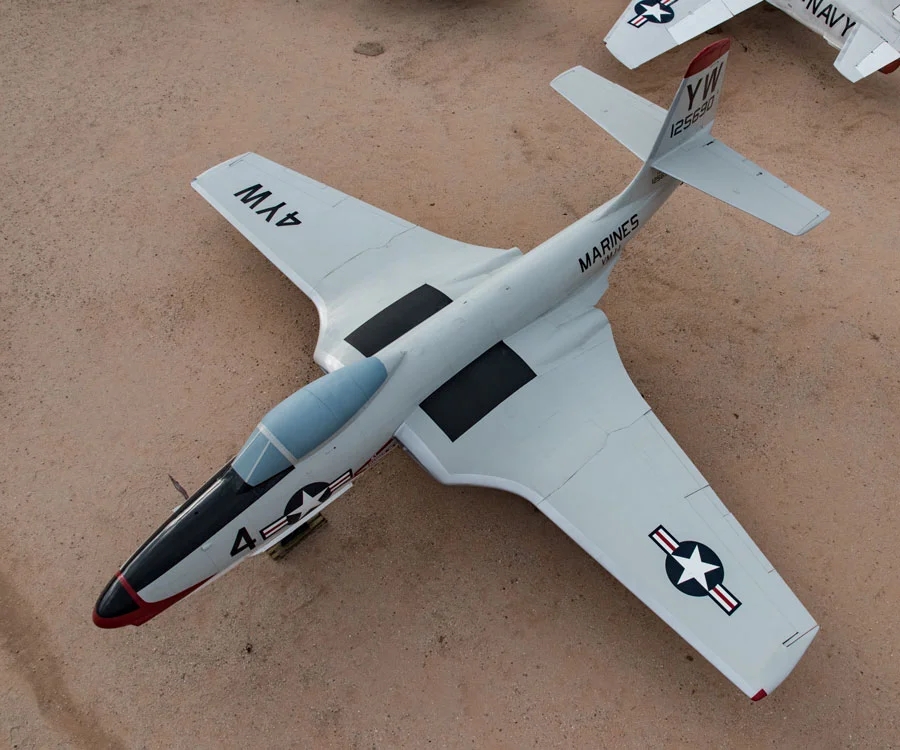
The F2H Banshee was an upgrade from the FH Phantom; it was larger overall, offered more firepower, and had higher-powered engines. Additionally, the Banshee featured a pressurized cockpit, “kneeling” nose landing gear, and a pilot’s ejection seat. The Banshee used a straight-wing design, making it slower than other swept-wing fighter contemporaries. Despite this limiting factor, the F2H was produced in several variants, including nuclear-armed, night-fighter, and photo-recon. Banshees saw service during the Korean War, although they were kept outside of “MiG Alley” and relegated to reconnaissance missions. No F2H pilots recorded aerial victories during the conflict; however, three aircraft were lost to anti-aircraft fire.
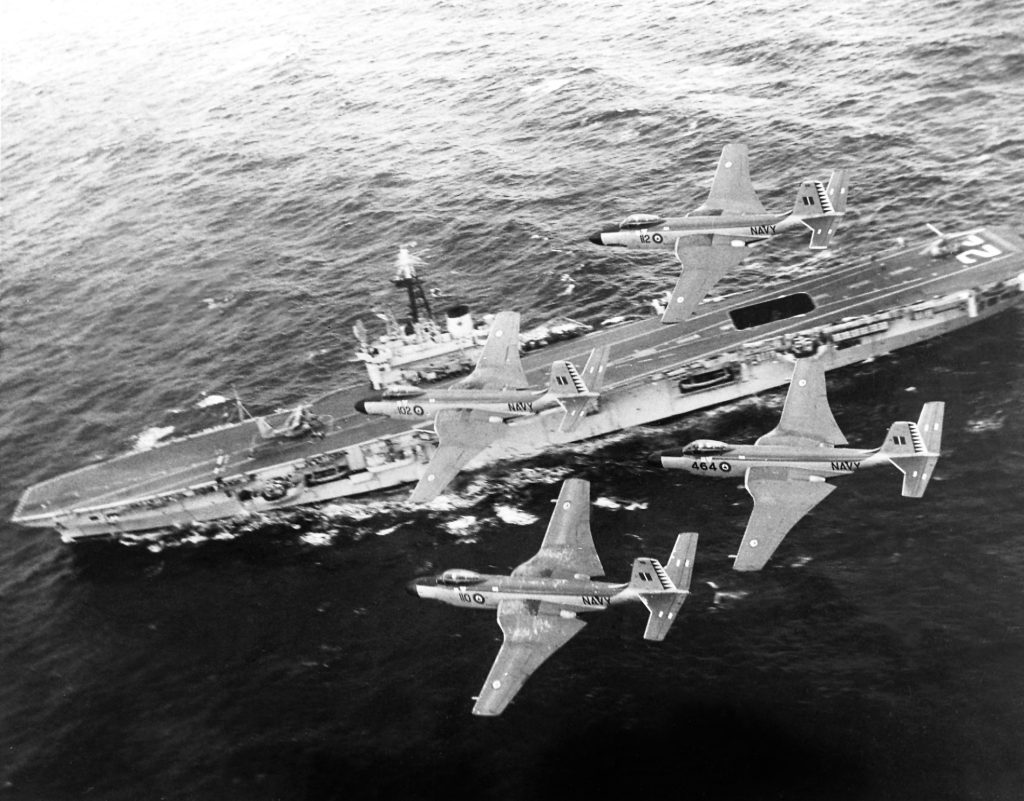
McDonnell’s F2H-3 Banshee variant was powered by two Westinghouse J34-WE-34 turbojet engines, each with 3,250 pounds of thrust. The F2H could cruise at 461 mph and attain a maximum airspeed of 580 mph. The Banshee had a combat range of 1,015 nautical miles and a service ceiling of 47,000 feet. Armament for the F2H was provided by four 20 millimeter Colt Mk 12 cannons. Additionally, the aircraft could be loaded with either eight 60-pound high-explosive rockets, six 500-pound bombs (and two 60-pound rockets), or two AIM-9 Sidewinder missiles. From 1947 to 1953, McDonnell built a total of 895 F2H Banshees. Today, ten are known to survive, with seven of them on display at museums within the United States.