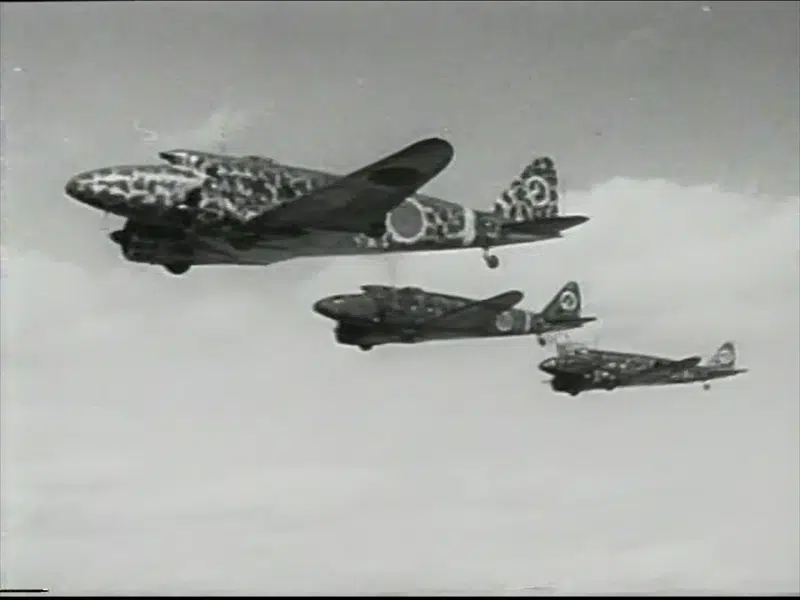

On this day in aviation history, 90 years ago (September 12, 1936), the prototype of the aircraft that would become the Nakajima Ki-34 took flight for the first time. Originally designated the AT-2 and developed as a civil airliner, the Japanese twin-engine transport would later serve extensively with the Imperial Japanese Army Air Force. During WWII, the Allies assigned the Ki-34 the reporting name Thora. Development began in 1935 after Nakajima Aircraft Company, which already held license-production rights for the Douglas DC-2, sought to develop a smaller airliner for routes that could not justify the larger aircraft. The resulting AT-2 was a low-wing monoplane of largely all-metal construction with retractable main landing gear. The prototype was powered by two 580-horsepower Nakajima Kotobuki radial engines.

Thirty-two AT-2s were produced for civil operators before the design was adapted for military service following the outbreak of the Second Sino-Japanese War. More powerful engines were fitted, and the aircraft became the Army Type 97 Transport, or Ki-34. It served in liaison, communications, paratrooper training, and special-forces operations, while some aircraft also entered Imperial Japanese Navy service as the L1N1. A total of 351 aircraft of the family were constructed. The Ki-34 measured 50 feet 2 inches in length with a wingspan of 65 feet 4 inches and was powered by two 710-horsepower Nakajima Kotobuki 41 radial engines. It could reach approximately 220 mph, cruise at 190 mph, and had a range of 750 miles and a service ceiling of 23,000 feet. The aircraft carried a crew of three and accommodated up to eight passengers.