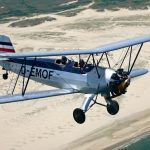
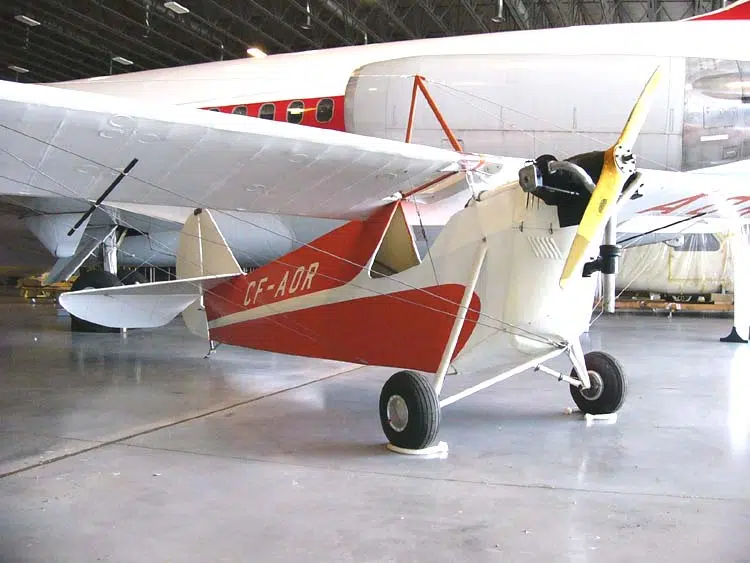

The Aeronautical Corporation of America, originally formed as Cincinnati Aeronautical Corporation, was founded on November 11, 1928, in Cincinnati, Ohio. It is often shortened to Aeronca and became the first American company to produce a commercially successful general aviation aircraft. In 1941, the company officially changed its name to Aeronca Aircraft Corporation. The company began production in 1929 with the Aeronca C-2 monoplane, known as the “Flying Bathtub.” The “C” in its name stands for Cincinnati. In 1937, the company introduced the Scout, a two-seater model. The Scout evolved into the Chief and Super Chief the following year. In 1937, the Ohio River flood washed away the entire Lunken Airport area, destroying Aeronca’s factory, tooling, and nearly all early blueprints and drawings. Because of this, the company moved out of the floodplain in 1939 to Hook Field Municipal Airport in Middletown, Ohio. By October 1940, the factory had to expand by 25,000 square feet to meet production needs.

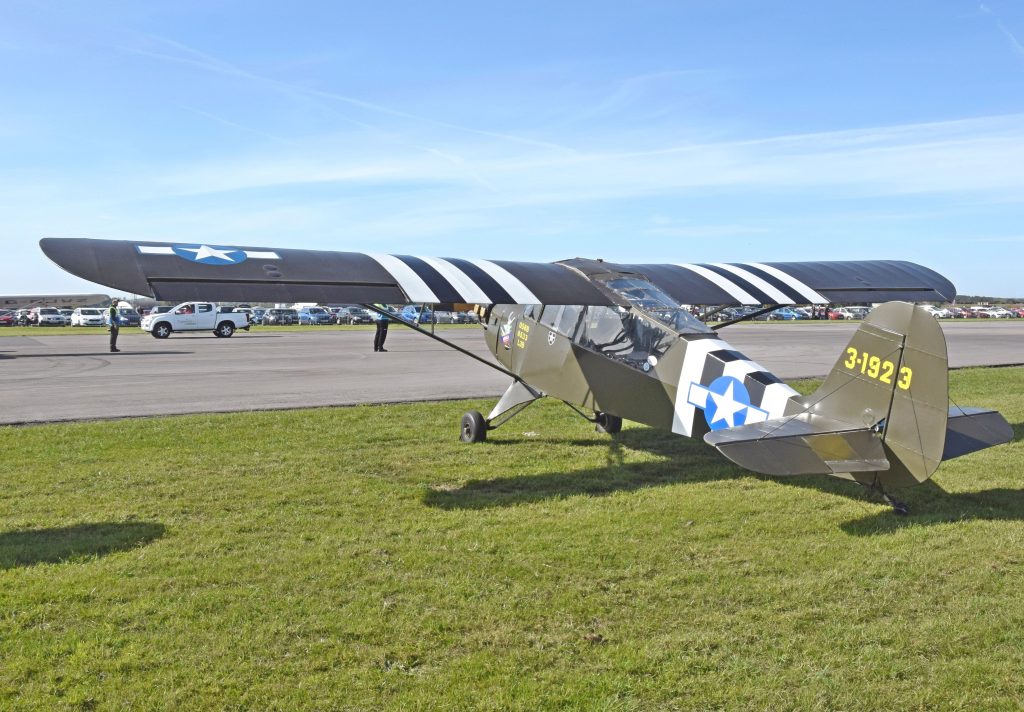
During WWII, the company developed the Defender, a training version of the Chief aircraft, designed with a higher rear seat. It was used to train many pilots who flew in WWII. During and after the war, several observation and liaison aircraft, including the L-3/O-58, saw extensive use on the front lines. A glider-training version of the Defender, called the Aeronca TG-5, removed the engine for a third seat. The change helped train combat glider pilots who would fly larger crafts like the Waco CG-4A. Aeronca’s WWII designs (the Defender, TG-5, and L-3) changed a lot from earlier and later models. They used a four-longeron, rectangular-cross-section fuselage instead of the traditional three-longeron, triangular-cross-section design. The new design provided additional strength. In 1945, after WWII ended, Aeronca resumed making civilian aircraft with two new models, called the 7AC Champion and the 11AC Chief. The Champ had a tandem seating arrangement like a prewar trainer, while the Chief had the same name and seating as previous Chief models. However, both planes were brand-new designs made to cut production costs and shared over 80% of their parts. Designing both models at the same time meant they shared many parts. The tandem-seat Champ, which looked like the popular Piper J-3 Cub, was more popular with buyers. From 1945 to 1951, the company made nearly 8,000 Champions, while it produced about 2,000 Chiefs during the same period. To support the new production, the company rented two hangars at Dayton Municipal Airport for assembly.
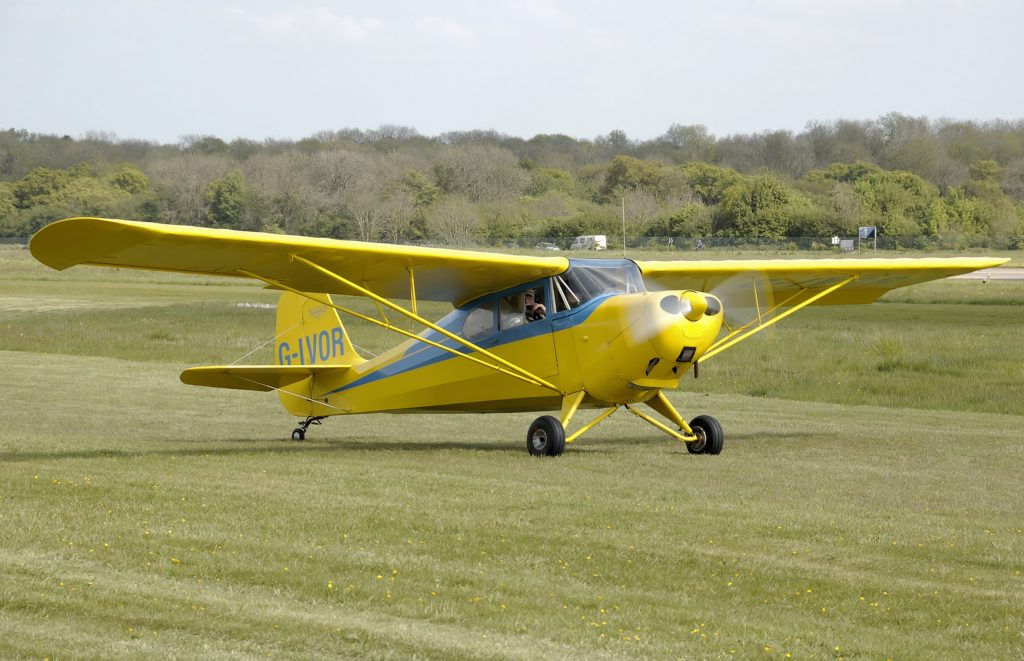
Aeronca stopped making light aircraft in 1951. In 1954, it sold the Champion design to Champion Aircraft Corporation in Osceola, Wisconsin. This company continued to build different versions of the Champion and created the Citabria. The design was sold again to Bellanca Aircraft Company in 1970 and then to American Champion in 1988, where it is still made today. In 1959, Aeronca bought Longren Aircraft Corporation. By 1965, however, the company was nearly bankrupt. The company hired Alfred A. Handschumacher as president to help make it profitable again. In the early 1970s, Aeronca worked with Bede Aircraft to build the Bede BD-5J Microjet, the world’s smallest jet airplane. After building the prototype, Aeronca decided not to continue the project. In 1978, Aeronca planned to start making aircraft again, specifically a very light business jet called the Foxjet ST600. However, they canceled the project because the WR-44 engine was not available. In 1986, Fleet Aerospace took over the company through a hostile takeover. Today, Aeronca makes parts for aerospace companies such as Boeing, Northrop Grumman, Lockheed, and Airbus. During its 23 years as a general and military aviation manufacturer, Aeronca produced 17,408 aircraft across 55 different models. Read more Forgotten Factories articles HERE.