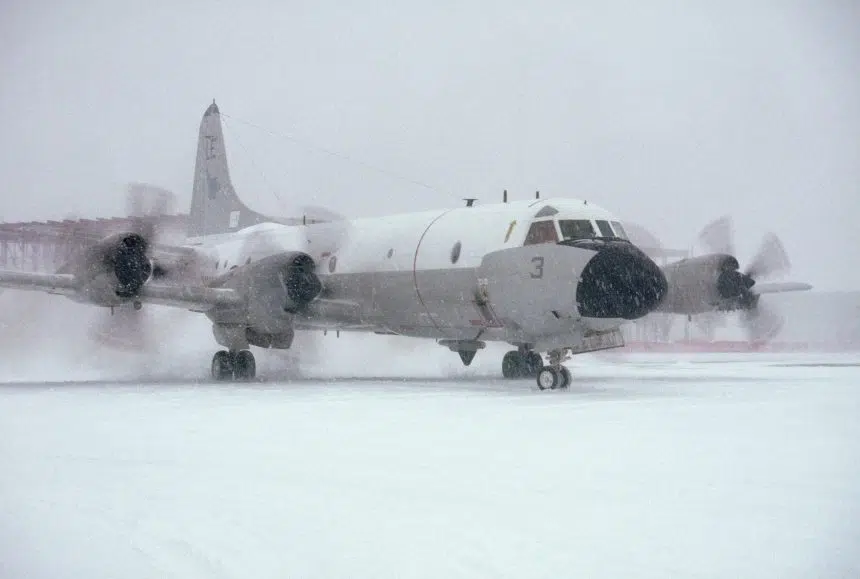

Patrol Squadron 11 (VP-11), also known as the “Proud Pegasus,” was a US Navy squadron that focused on maritime patrol for more than 40 years. The squadron was formed at NAS Quonset Point in Rhode Island on May 15, 1952. It started with the P4Y-2 Privateer and P2V Neptune aircraft, then transitioned to the P-3 Orion, and finally flew the P-3C UII.5. VP-11 began operations with 12 P4Y-2 Privateers and made its first deployment to Naval Station Argentia, Newfoundland, between January and June 1953. After returning, the squadron switched to the P2V-5 Neptune, replacing its WWII-era Privateers with one of the Navy’s main postwar anti-submarine aircraft. Later, it received the P2V-7 and, in December 1962, the SP-2H Neptune. The squadron began testing new maritime surveillance technology. In 1960 and 1961, Patrol Squadron 11 took part in underwater sound tests and evaluated new sonobuoy equipment. In February 1962, its Argentia detachment conducted ice reconnaissance over the Gulf of St. Lawrence, helping assess ice information sent by the TIROS 4 weather satellite.

During the Cuban Missile Crisis in October and November 1962, Patrol Squadron 11 was called to Argentia with just 12 hours’ notice and completed 1,065 hours of surveillance missions. In 1965, the squadron operated in the Caribbean, providing round-the-clock surveillance from Guantanamo Bay during the Dominican Civil War. In October 1967, Patrol Squadron 11 deployed to Keflavik, Iceland, for anti-submarine warfare operations and received a Navy Unit Commendation. It was the first time a patrol squadron received this award while not in a combat zone. The squadron took part in NATO exercises and continued its Cold War patrols across the North Atlantic and Mediterranean. A prominent change came in January 1967 when VP-11 received the P-3B Orion. This aircraft greatly improved the squadron’s ability to hunt submarines. By 1973, the squadron upgraded its planes with the DIFAR system, which replaced the older JULIE detection system. VP-11 was the last squadron on the East Coast to get this upgrade. In July 1972, the squadron was sent on an emergency mission to the western Pacific. They operated from Cubi Point in the Philippines, with a team at U-Tapao in Thailand. Patrol Squadron 11 conducted patrols over the South China Sea and Gulf of Tonkin, even though heavy rain made their work difficult. The squadron’s disaster-relief efforts in the Philippines earned it a Philippine Presidential Unit Citation.

During the 1970s and 1980s, Patrol Squadron 11 was active in the Atlantic and Mediterranean. It operated from Rota, Spain, and Lajes, Azores. In 1981, VP-11 began transitioning from the P-3B DHC-11 to the P-3C UII. That same year, the squadron successfully fired a live Harpoon missile for the first time during an exercise. One of Patrol Squadron 11’s main missions was to confront submarines during the Cold War. During a deployment to Keflavik in 1988, the squadron faced some of the worst weather conditions recorded there in over ten years. By the end of the deployment, its crews had flown 744 sorties and contacted 17 frontline Soviet submarines. In 1989, a team from the squadron went to Key West to help the US fight drug smuggling. It flew more than 300 hours to disrupt drug routes at sea. The next year, the squadron went to Sigonella, Sicily, to support Operation Desert Shield, with extra teams also operating from Crete and Saudi Arabia. As the Soviet Union weakened, Patrol Squadron 11 took on more missions related to drug control, regional security, and working with allies. In 1992, its team at Roosevelt Roads supported national drug efforts, helping to seize 10,000 kilograms of cocaine and 20 tons of marijuana.

In 1993, the squadron flew over 250 armed missions in the Adriatic to support United Nations resolutions about the former Yugoslavia. It was also the first patrol squadron to use the AGM-65 Maverick missile. The next year, Patrol Squadron 11 returned to Roosevelt Roads for another deployment focused on counter-drug operations. It led to many vessel seizures and the arrest of suspected drug traffickers. Its last major deployment was in 1996 when VP-11 operated from Sigonella, supporting US and allied commanders in the Mediterranean and Africa. The squadron’s missions included fighting submarines, gathering information over the former Yugoslavia, and helping to evacuate US personnel from Liberia during Operation Assured Response. For these efforts, the squadron received a Navy Meritorious Unit Commendation. In the 1990s, the Proud Pegasus had advanced significantly from its beginnings with the Privateer in 1952. The squadron upgraded its aircraft through several types of Neptunes, with the P-3 Orion becoming its main aircraft. In 1993, the squadron received the P-3C UII.5. Patrol Squadron 11 was disbanded on August 2, 1997, at NAS Brunswick.