
(Image credit: VAN)
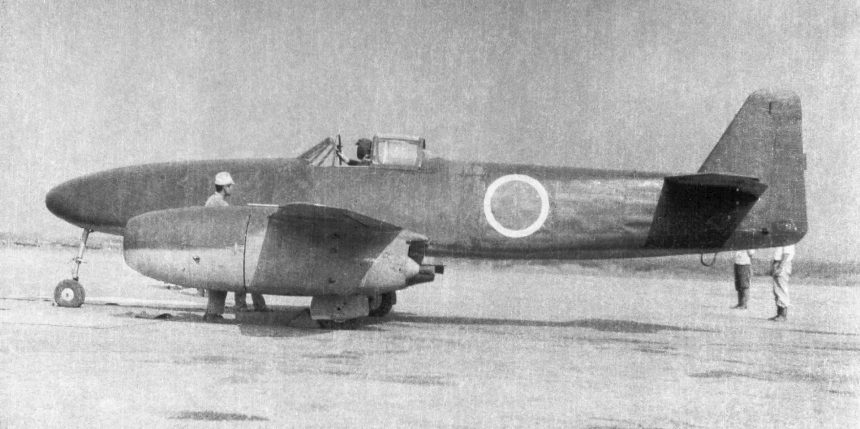
Eighty years ago, on August 7, 1945, the Nakajima Kikka took to the skies for the first time. Named after the tachibana orange blossom, the Kikka was Japan’s first turbojet-powered aircraft and was envisioned for ground-attack and anti-ship missions. Its design was inspired by Germany’s Messerschmitt Me 262 Schwalbe, which Japanese military officials observed during a 1942 visit to Germany. Impressed by the jet’s capabilities, they recognized the need for a similar aircraft in Japan’s arsenal.

Soon after, the Imperial Japanese Navy tasked Nakajima with developing a carrier-capable attack jet that could be built quickly by unskilled labor. Folding wings were specified to allow for carrier operations. The design team—led by Kenichi Matsumura and Kazuo Ohno—produced a sleek twin-engine aircraft that bore a superficial resemblance to the Me 262, though it was a unique Japanese design beneath the surface.

Power came from two Ishikawajima Ne-20 axial-flow turbojet engines, each producing 1,047 pounds of thrust. Developed with little more than photographs of a cutaway German BMW 003 engine, the Ne-20 was a remarkable achievement of wartime engineering. The Kikka was projected to reach a maximum speed of 432 mph, with a thrust-to-weight ratio of 0.27, a range of 589 nautical miles, and a service ceiling of 39,000 feet. Planned armament included either a 500 kg or 800 kg bomb for the base variant, with later versions intended to carry two 30 mm Type 5 cannons with 50 rounds each.
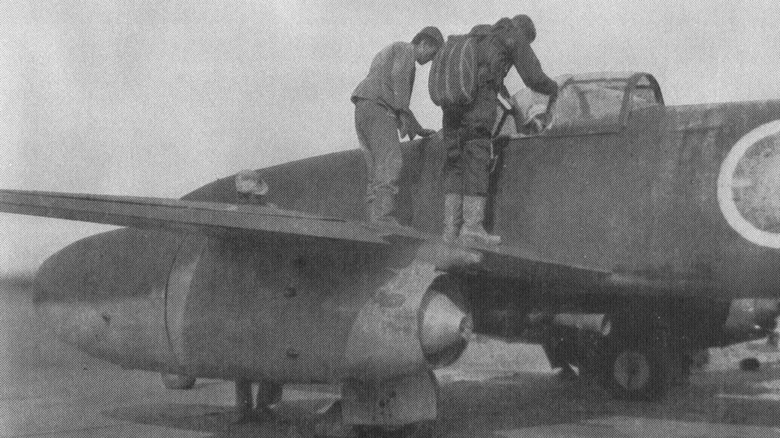
Only one Kikka prototype was completed and flown before Japan’s surrender. Five additional airframes—intended to be two-seat trainers—remained unfinished at war’s end. The aircraft never had the chance to undergo full development, testing, or production, leaving historians to speculate on what might have been had the Kikka entered service earlier.