

(Image credit: VAN)
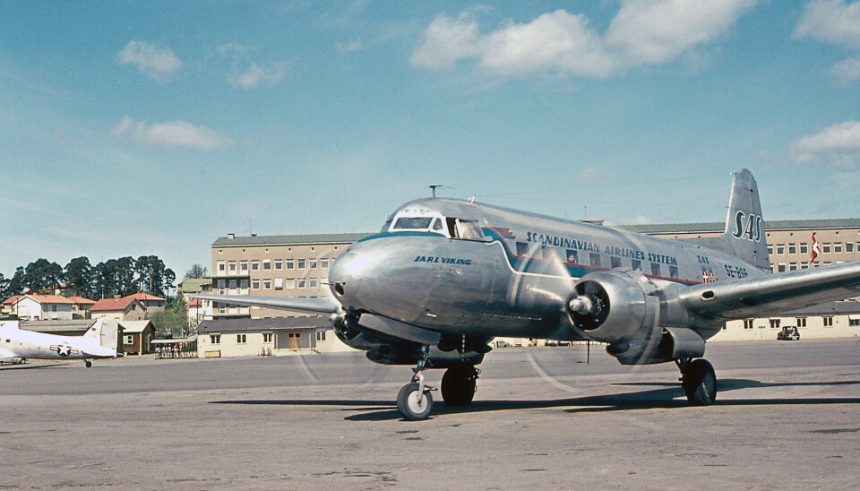
On this day in aviation history, 79 years ago (November 16, 1946), the first flight of the Saab 90 Scandia took place. Designed and built by Swedish aviation manufacturer Svenska Aeroplan Aktiebolaget (SAAB), the Scandia was a civilian passenger transport. Development of the Saab 90 began in 1944, as Saab realized that the nearing end of World War II would cut into their production and ability to stay alive. They needed to design an aircraft that would have usefulness after the war ended, in the civilian world.
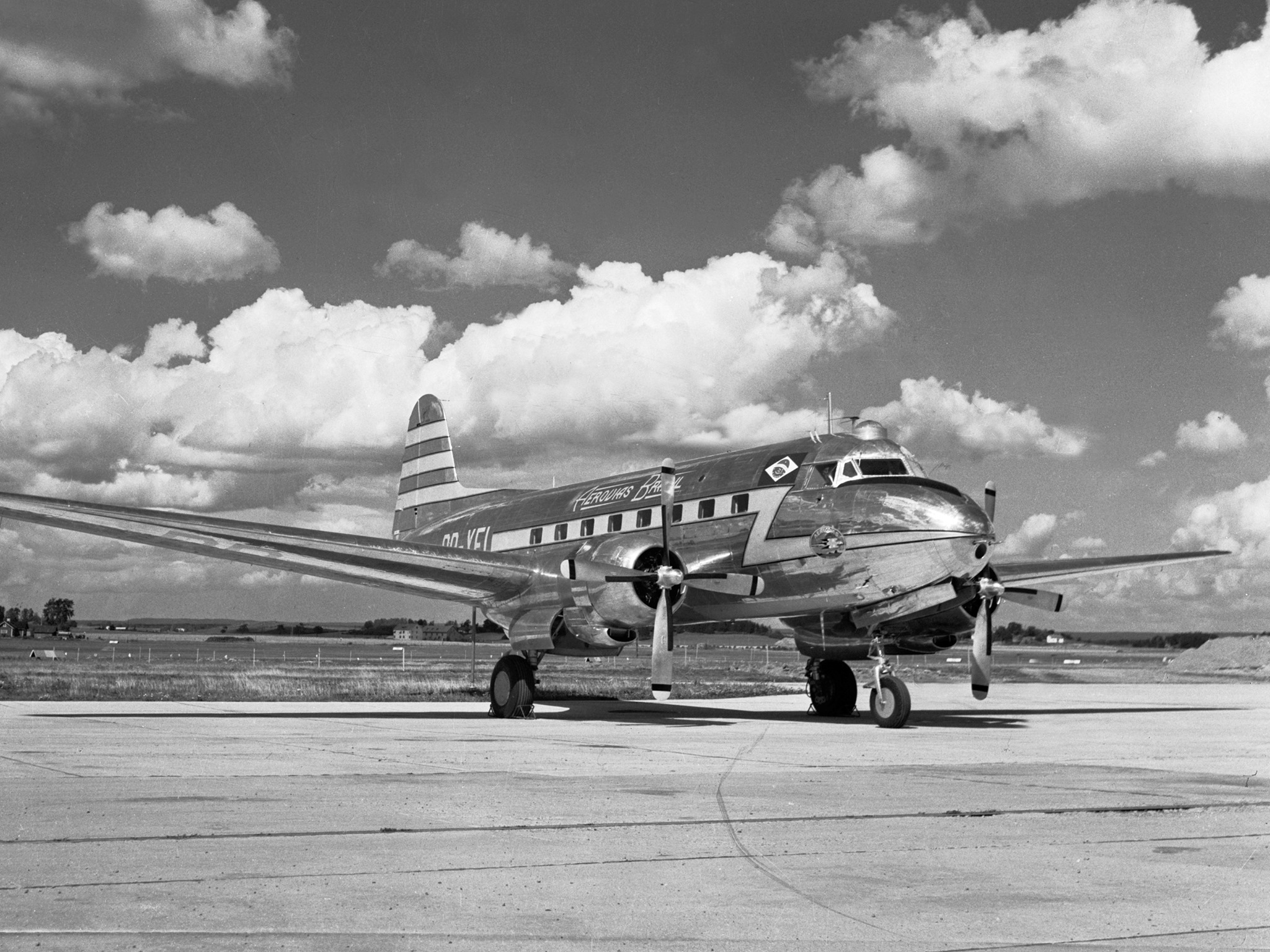
Work began on developing the Scandia as a proposed successor to the Douglas DC-3. The aircraft was to have similar characteristics to the DC-3 – twin engines and short to medium range. What resulted from Saab’s design process was an aircraft that looked very similar to Douglas’ famed airliner, only with tricycle landing gear. Other subtle differences were visible throughout the Saab 90’s airframe, including a different vertical stabilizer design. After the first flight of the Scandia, pitching the aircraft to potential buyers proved to be somewhat of a difficult task. A multitude of surplus DC-3s were available on the aircraft market, and this aircraft was already a proven commodity. Nevertheless, Saab continued to push their Scandia.
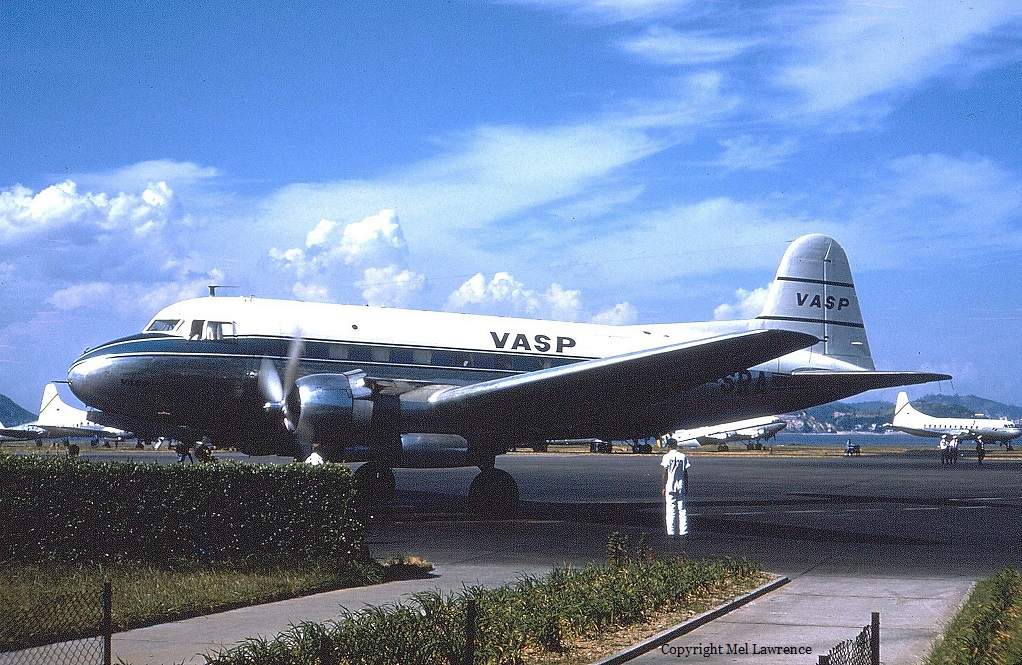
The Saab 90 had a crew of 3, plus a cabin attendant. A capacity of 24 to 32 passengers could be carried on flights that ranged up to 1,430 nautical miles. Two Pratt & Whitney R-2180-E Twin Wasp E 14-cylinder radial engines powered the Scandia. With additional water injection, the R-2180s could produce 1,825 horsepower each. Saab 90s had a maximum airspeed of 280 miles per hour, but typically cruised at 210. The Scandia had a service ceiling of 24,600 feet. Between 1946 and 1954, Saab only built 18 airframes of the model 90A. A Saab 90B was proposed, but was never developed further. Saab’s Scandia was operated by Brazilian Airliner VASP, the Scandinavian Airlines System (SAS), and Sweden’s Aktiebolaget Aerotransport (ABA). Of the 18 Saab 90s manufactured, only one remains intact today. 90A Scandia PP-SQR is on display outdoors, located at the Eduardo André Matarazzo Museum of Weapons, Vehicles, and Machines in Bebedouro, Brazil.
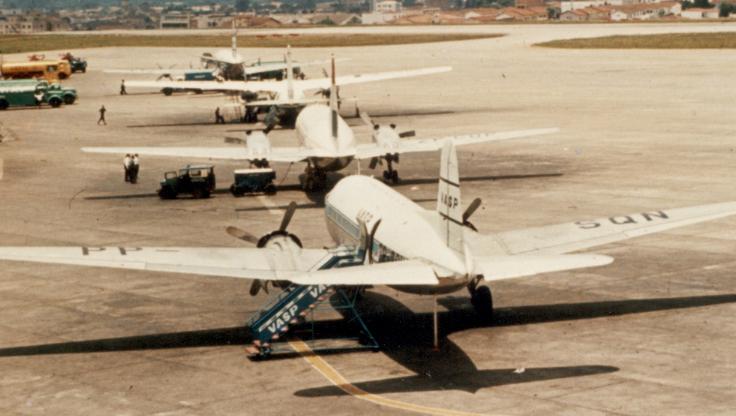
VASP Scandia PP-SQN (nearest) at São Paulo Congonhas airport in 1965