
(Image credit: VAN)
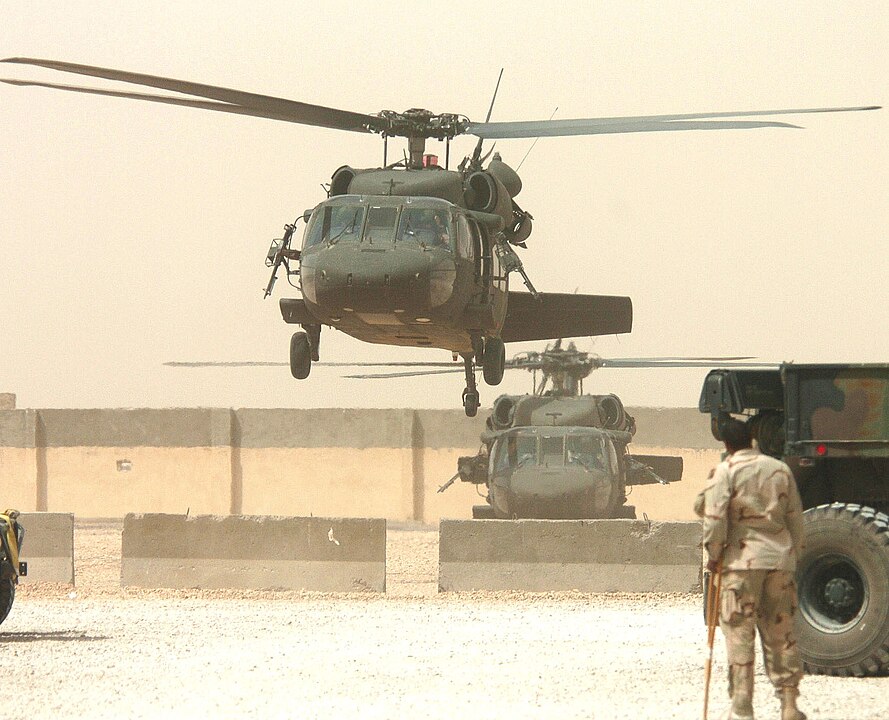
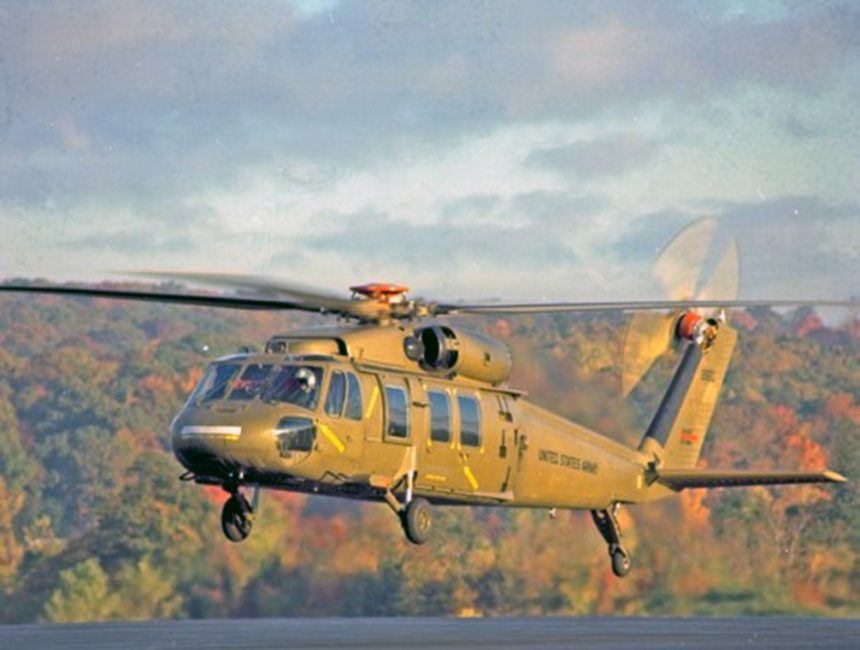
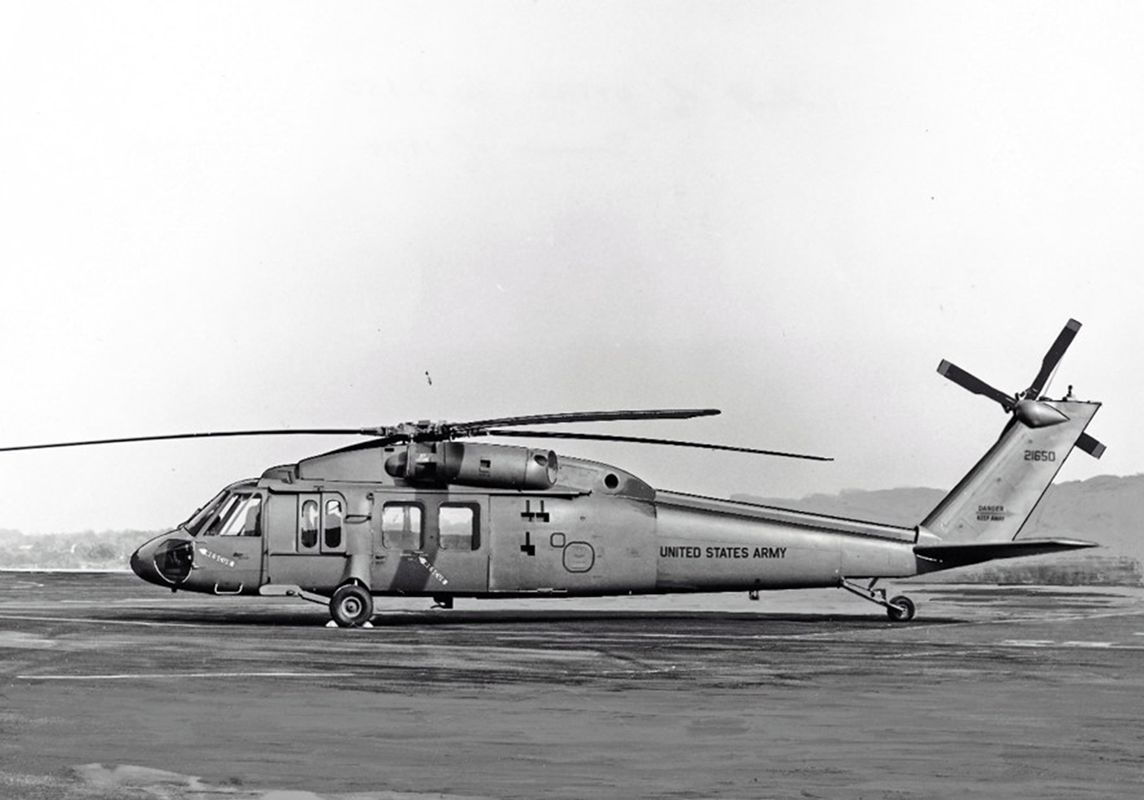
On this day in aviation history, 51 years ago (October 17, 1974), the Sikorsky YUH-60A made its first flight. This prototype medium-lift helicopter would go on to evolve into one of the most recognizable and capable rotorcraft in modern military aviation—the UH-60 Black Hawk. The first prototype, YUH-60A (serial 73-21650), took to the air from Sikorsky’s facility in Stratford, Connecticut, with Chief Pilot James Wright and Project Test Pilot John Dixson at the controls. Designated internally by Sikorsky as the Model S-70, the YUH-60A was developed to meet the U.S. Army’s Utility Tactical Transport Aircraft System (UTTAS) requirements. Initiated in 1972, the UTTAS program sought a new generation of utility helicopters to replace the aging Bell UH-1 Iroquois. The competition narrowed to two contenders: the Sikorsky YUH-60A and the Boeing Vertol YUH-61. Following an extensive “fly-off” evaluation in 1976, Sikorsky’s design was declared the winner. In 1979, the production version entered U.S. Army service as the UH-60 Black Hawk, named after the renowned Native American leader of the Sauk tribe.
The UH-60M variant, now the standard production model, is operated by a crew of two pilots and two crew chiefs or gunners. It is powered by two General Electric T700-GE-701C/D turboshaft engines, each delivering 1,902 shaft horsepower. The Black Hawk can cruise at 175 mph, reach a top speed of 183 mph, and has a combat range of 320 nautical miles with a service ceiling of 19,000 feet. For armament, the Black Hawk typically mounts either M240 machine guns, M134 miniguns, or .50-caliber GAU-19 Gatling guns in its door positions. Four hardpoints under the stub wings allow for rockets, missiles, or additional gun pods, and the helicopter can also be equipped with the VOLCANO minefield dispersal system for battlefield support missions.
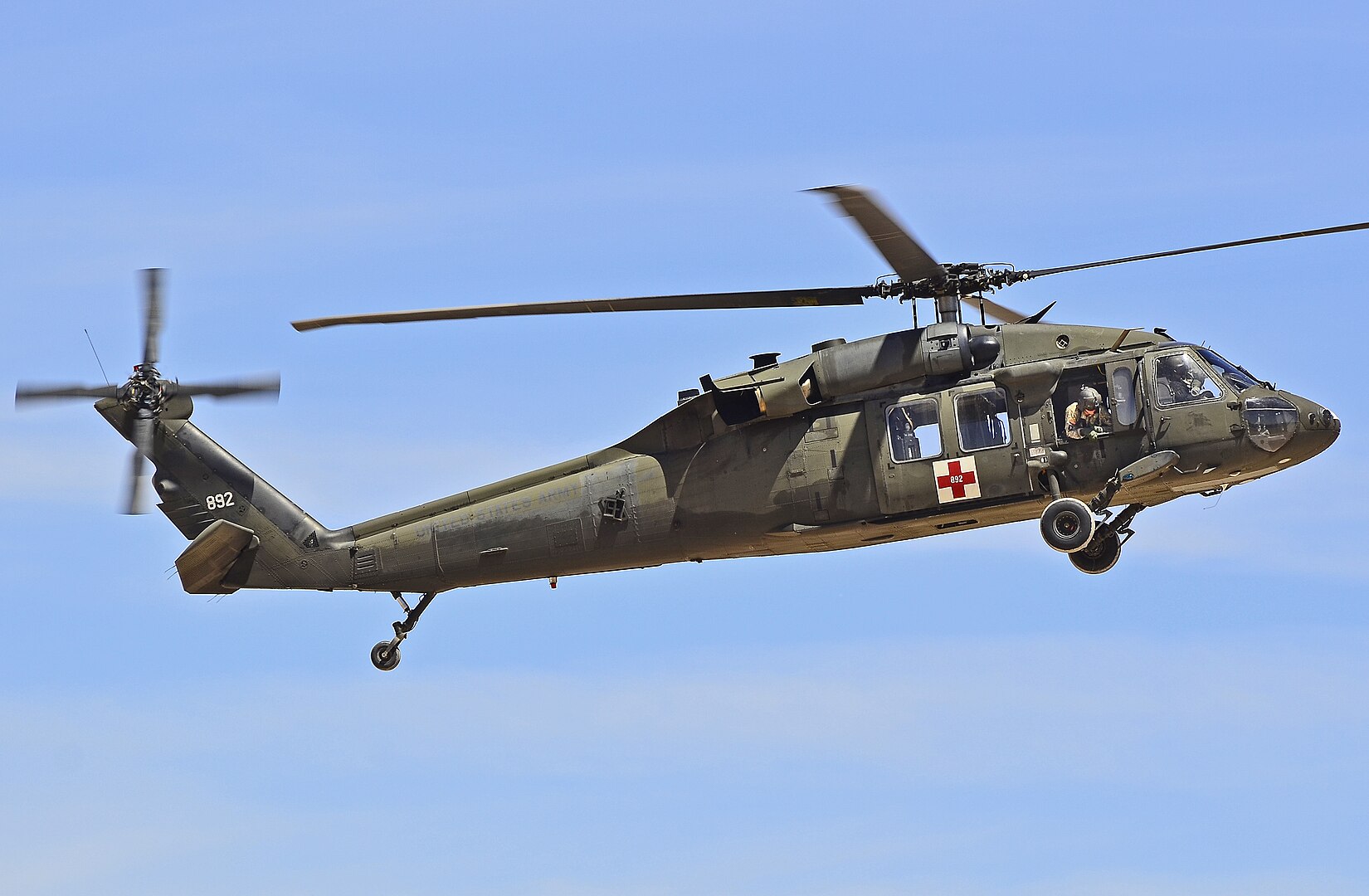
Since the prototype’s maiden flight in 1974, Sikorsky has produced more than 5,000 UH-60s. The Black Hawk has become the foundation for numerous derivatives, including the SH-60 Seahawk, HH-60 Pave Hawk, MH-60 Jayhawk, the Mitsubishi H-60 (produced under license in Japan), and the civilian S-70 series. Today, the UH-60 remains in widespread service with the U.S. Army and military forces around the world, including those of South Korea, Japan, and Colombia—continuing a legacy of versatility and reliability that began more than half a century ago.