





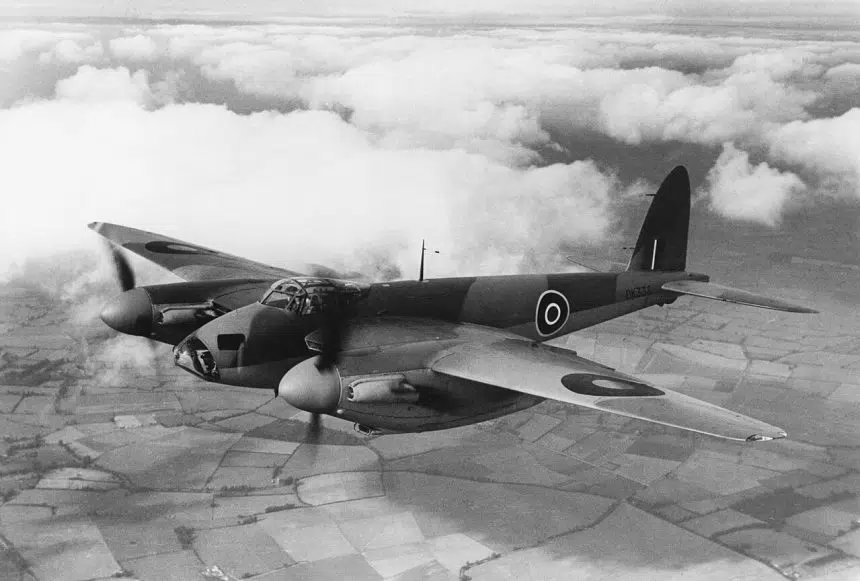

On this day in aviation history, 85 years ago (September 17, 1941), the de Havilland DH.98 Mosquito flew its first operational sortie. An unarmed PR Mk I, W4055, conducted a photographic reconnaissance mission during which it encountered three Messerschmitt Bf 109 fighters at 23,000 feet. Rather than fighting back, the Mosquito relied on its exceptional speed to evade its pursuers. The Mosquito had been conceived around the controversial idea that a bomber could dispense with defensive armament and instead rely on speed and maneuverability for survival. de Havilland also constructed much of the aircraft from wood, reducing its dependence on strategically important aluminum and steel. The prototype first flew on November 25, 1940, and its impressive performance soon demonstrated the potential of the unconventional concept.

Photographic reconnaissance became one of the Mosquito’s earliest operational roles. The PR Mk I carried cameras instead of weapons, allowing its two-man crew to photograph enemy territory while using speed and altitude to avoid interception. The September 17 mission provided an early demonstration of exactly what de Havilland had envisioned. The Mosquito subsequently developed into one of World War II’s most versatile aircraft, serving as a bomber, night fighter, fighter-bomber, pathfinder, maritime strike aircraft, and reconnaissance platform. The Mosquito PR Mk I was powered by two Rolls-Royce Merlin 21 engines and could reach a maximum speed of 382 mph. It cruised at approximately 255 mph, had a range of 2,180 nautical miles, and a service ceiling of 35,000 feet. Its rate of climb was approximately 2,850 feet per minute. Unlike later fighter and strike versions of the Mosquito, the PR Mk I carried no defensive armament, depending entirely on its performance to escape enemy aircraft.
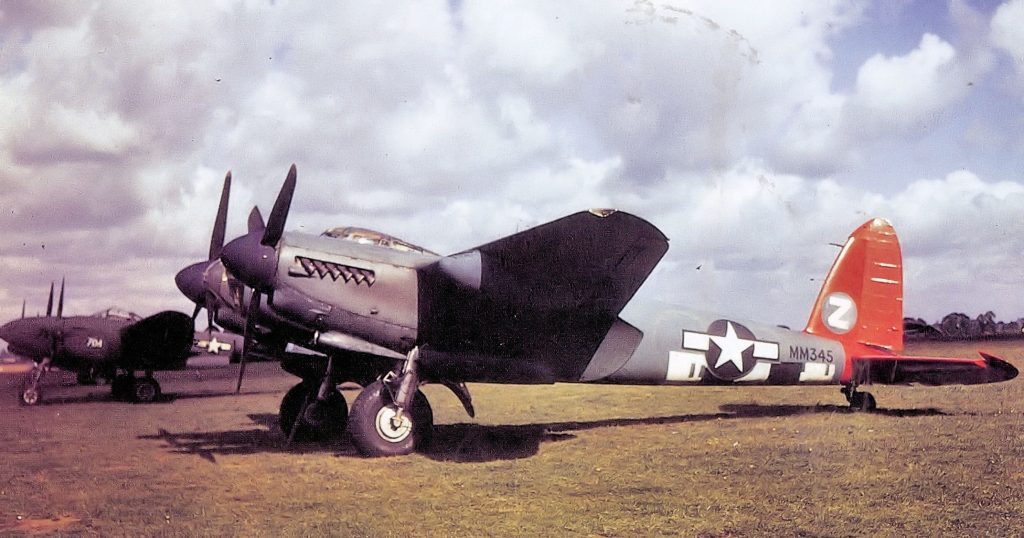




I built a Mosquito from a 1/48 scale Monogram mode kitl when I was a teen. One of my most favotite aircraft.
Very interesting, thanks.
My father flew these in the war with Met flight and pathfinder force.
In 1954 or 55 I saw and inspected around 12 Mosquito aircraft at Branston aerodrome just outside Derby. The aircraft were being serviced and repainted and any guns were removed. I was told they were being shipped to Canada for the Forestry service there. I was a 15/16 Yr old school boy at the time.
With all the interest in WW2 aircraft now I wondered what happened to them.Do you know?