


(Image credit: VAN)
On this day in aviation history, 61 years ago (March 23, 1965), Gemini III was launched into space. Gemini III was the first crewed mission in NASA’s Project Gemini program. This program allowed NASA to develop space travel techniques that could be used to support the Apollo missions, which planned to land astronauts on the Moon. At the same time, Gemini allowed the United States to catch up to the Soviet Union in the “Space Race,” as it had fallen behind in the earlier years. Gemini allowed NASA to prove astronaut and spacecraft endurance of up to 14 days, longer than the 8 days required to make a round-trip to the Moon.

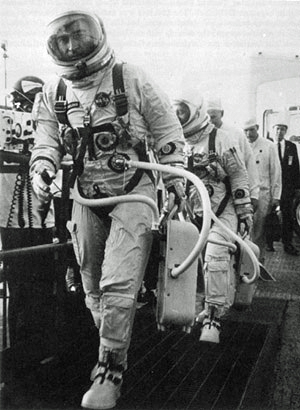
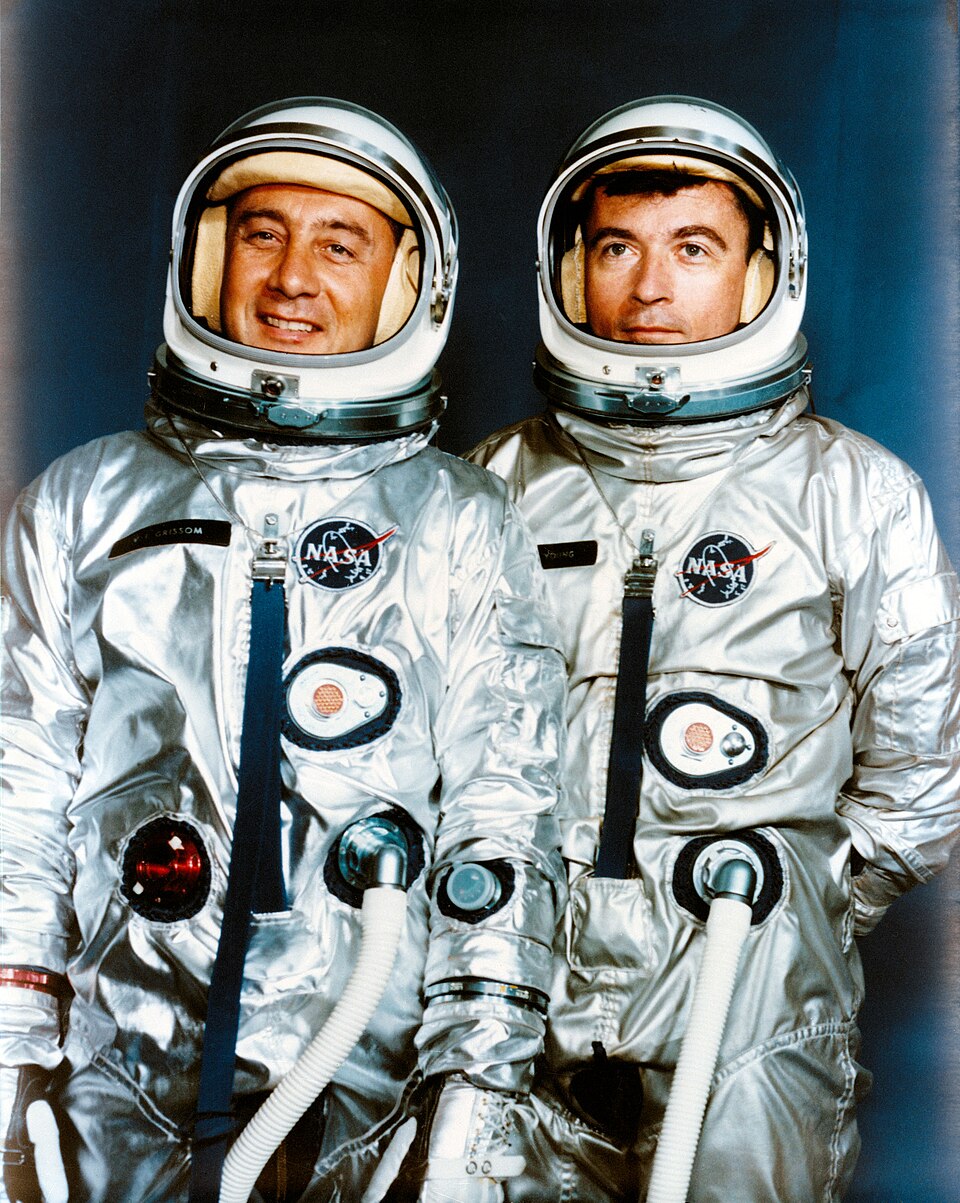
Gemini III’s crew consisted of Command Pilot Virgil I. “Gus” Grissom and Pilot John W. Young. Their callsign for the mission was Molly Brown. The objective of Gemini III was to test spacecraft maneuverability, crucial data required for future Moon flights. A Gemini SC3 capsule built by McDonnell was employed for the mission, weighing 7,136 pounds at the time of liftoff. Gemini III was the final crewed flight to be controlled from Cape Kennedy Air Force Station in Florida. After this flight, mission control functions were moved to the new control facility at the Manned Spacecraft Center in Houston, Texas.
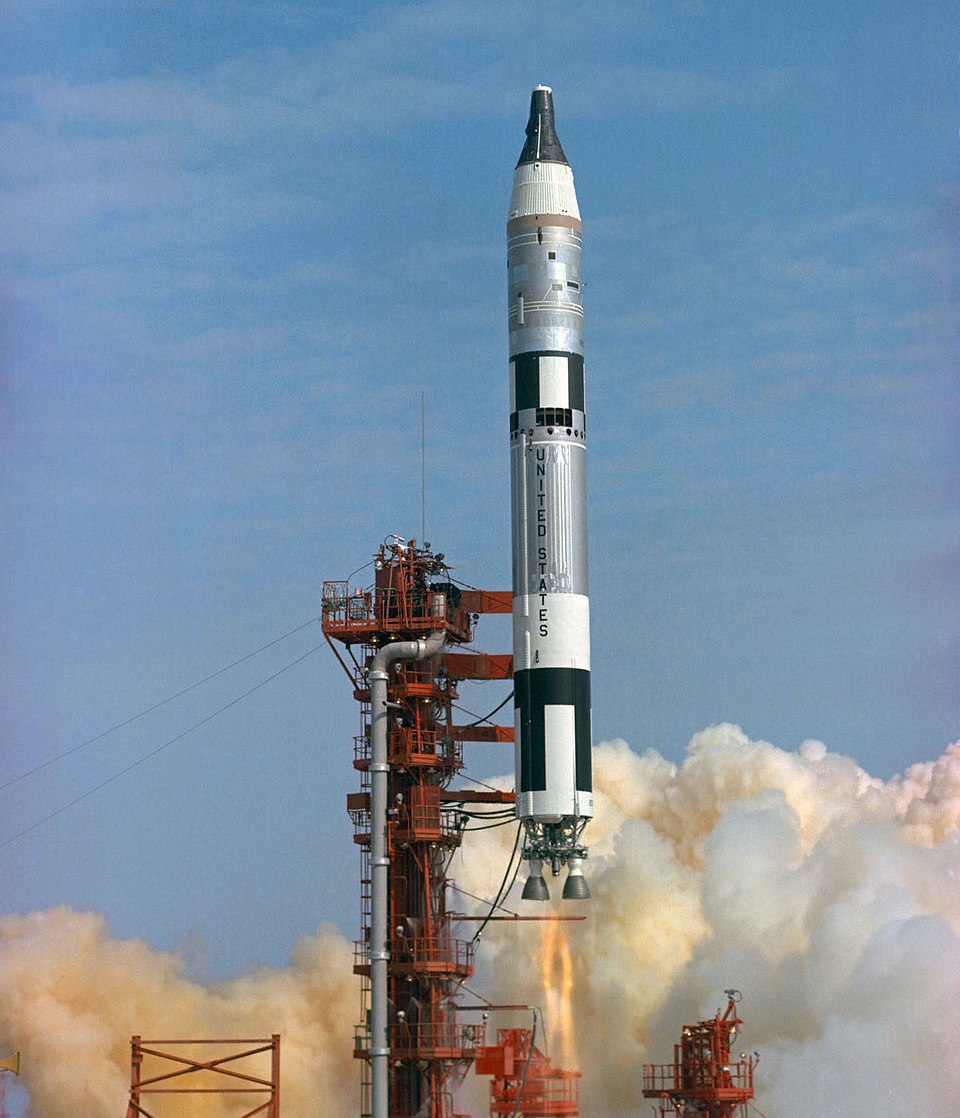
The McDonnell Gemini SC3 capsule, Molly Brown, lifted off at 14:24:00 UTC on March 23, 1965. Powering the spacecraft was a Titan II GLV rocket, s/n 62-12558, which provided 430,000 pounds of thrust with its first stage, and 100,000 pounds with its second stage. The Gemini III mission lasted for 4 hours, 52 minutes, 31 seconds, while making 3 orbits and traveling 69,518 nautical miles. Grissom and Young splashed down at 19:16:31 UTC on the 23rd, and were picked up by an HH-52A and carried to the USS Intrepid. The crew opted to remain in their capsule due to an unexpectedly short re-entry and positional shift that caused some stress to the crew. Despite the rough landing, the mission was a success.