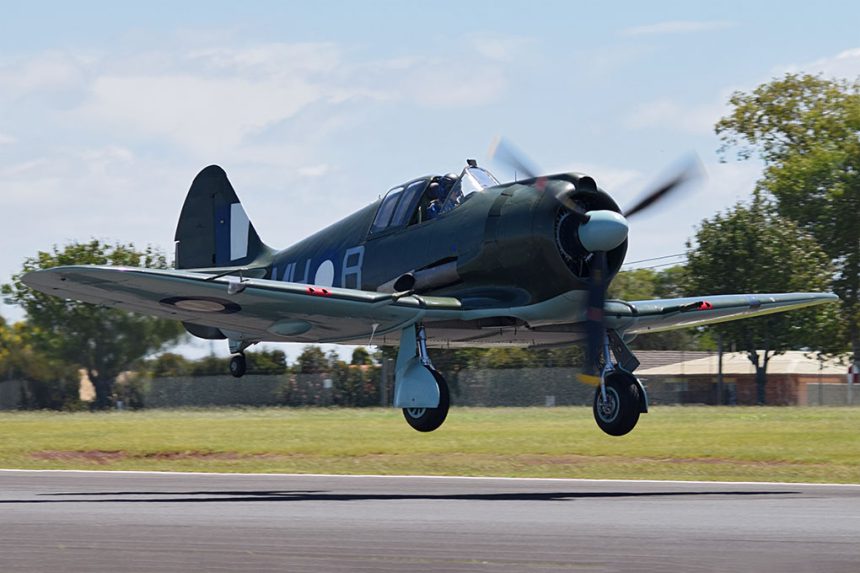

This article was originally written by John Parker for Warbirds Online’s Facebook page and is republished by Vintage Aviation News as part of an ongoing cooperative arrangement between the two websites. On March 15, one of Australia’s most historically significant wartime aircraft returned to the air. The CAC Boomerang A46-54, an example of the only fighter aircraft designed and built in Australia during the Second World War, has flown again for the first time in 81 years. The aircraft completed its long-awaited return to flight at Toowoomba Wellcamp Airport in Queensland, marking the culmination of decades of restoration work led by Greg Batts of Combat Aircraft Constructions, based at Archerfield near Brisbane. For the small but dedicated community preserving Australia’s aviation heritage, the moment represented far more than a successful test flight. It was the realization of a restoration effort that had been underway for more than four decades.
The Final Steps to Flight
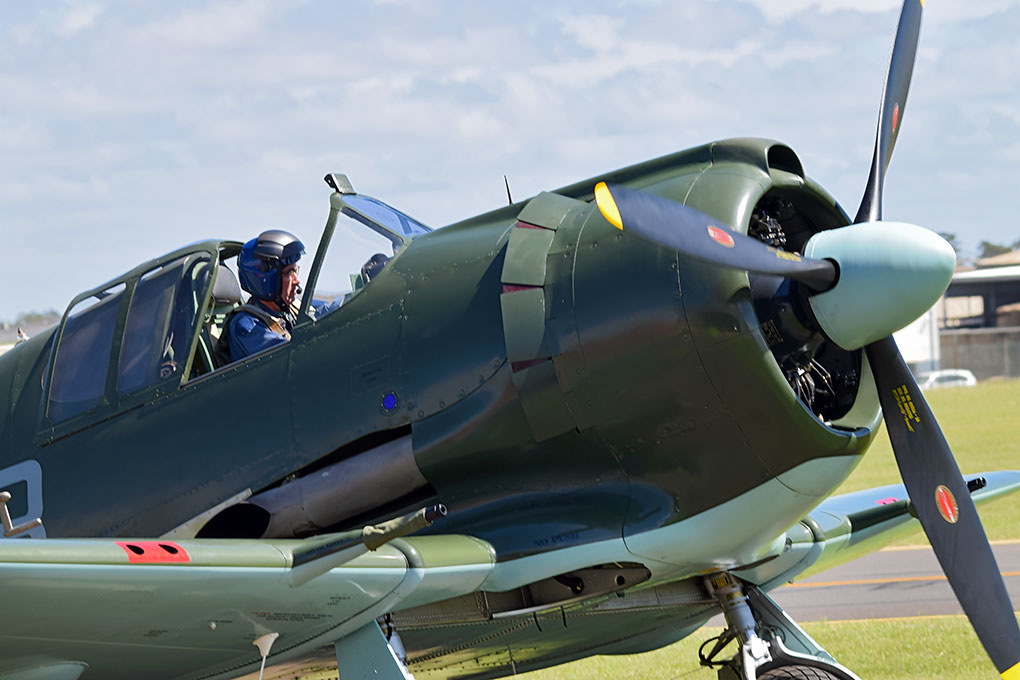
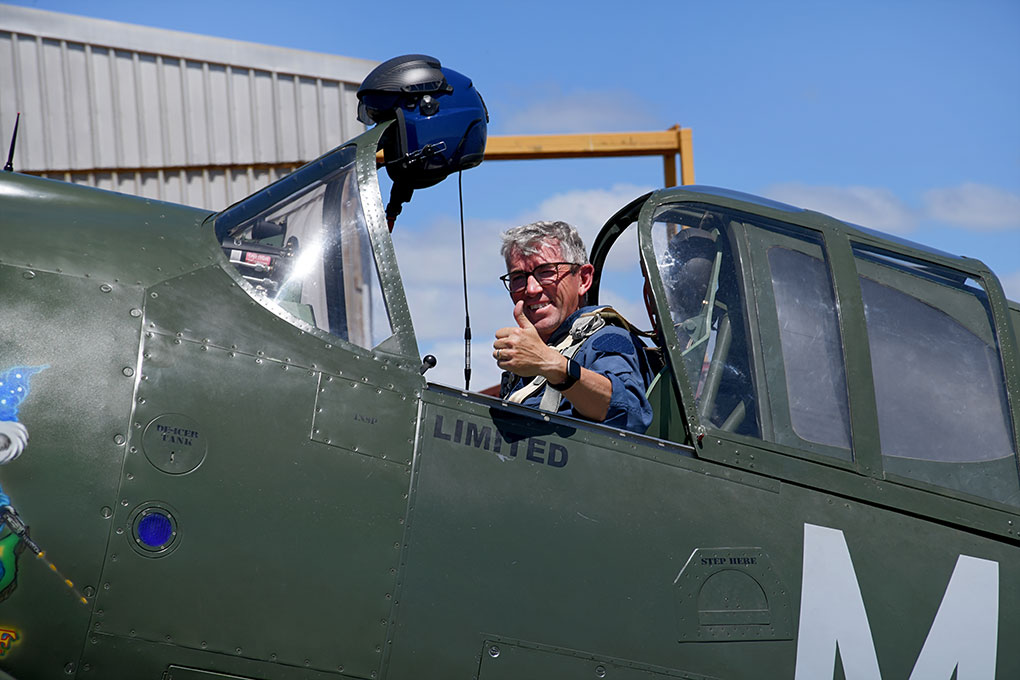
The last phase of preparation for A46-54 took place at the Aerotec Qld engineering facility in Toowoomba, where the aircraft was moved in September 2022 for final assembly, inspections, and flight test preparation. As is often the case with historic aircraft restorations approaching completion, the final push toward flight involved an extensive series of inspections, paperwork approvals, and system testing. A number of technical issues emerged during this stage and required careful resolution before the aircraft could be cleared to fly. In the weeks leading up to the flight, engineers completed a series of engine runs and systems checks that ultimately confirmed the aircraft was ready to begin its flight test program. Test pilot Scott Taberner arrived several days before the flight and carried out taxi trials and familiarization work with the aircraft alongside Batts and the Aerotec engineering team led by Wayne Milburn.
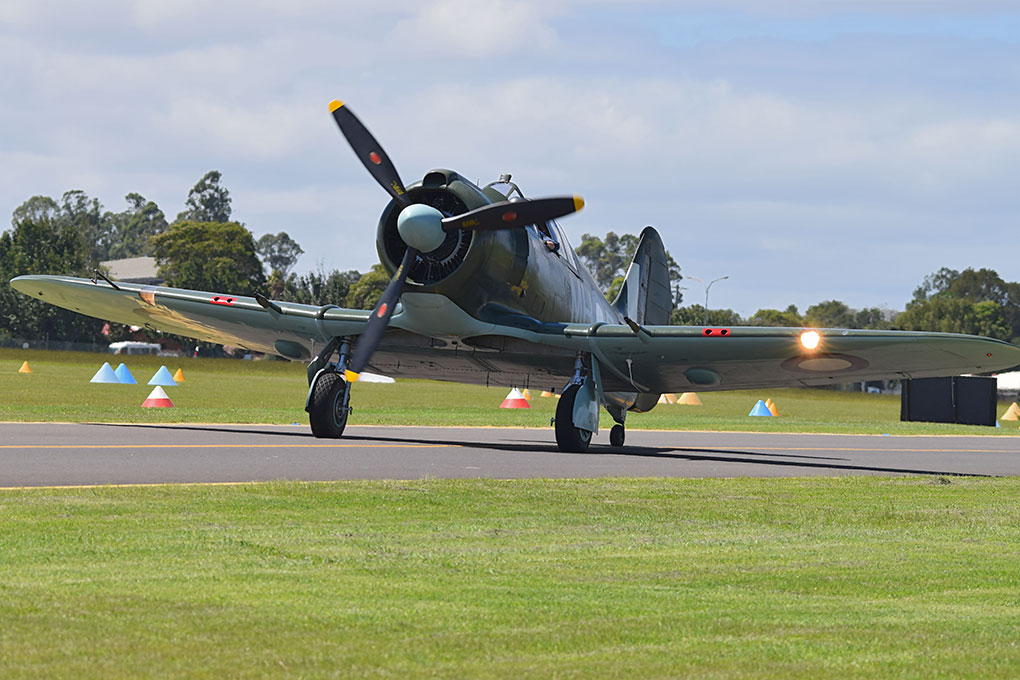
The weather initially threatened to delay the event. Strong winds across the airfield raised doubts about whether conditions would be suitable for a first flight. As the morning progressed, however, the winds eased enough for the team to proceed. Following final checks, Taberner taxied the Boomerang to the runway and lifted off smoothly, returning the aircraft to the skies for the first time since the Second World War. The initial flight lasted approximately 40 minutes, during which the aircraft completed a series of basic manoeuvres and systems checks, performed ten circuits of the airfield, and concluded with a low pass before returning safely to land. Scott was very happy with the test flight and commented on the smooth performance of the Boomerang. He went on to say that the aircraft handled extremely well and its “hands-off” flying was neutral and the best he had encountered in a Boomerang. When he came back to the hangar, his comment to Greg and Wayne was, “It’s beautiful, don’t touch a thing”. A46-54 has now completed several hours of flight testing, and its performance has proven to be above expectations.
A Restoration Spanning Decades
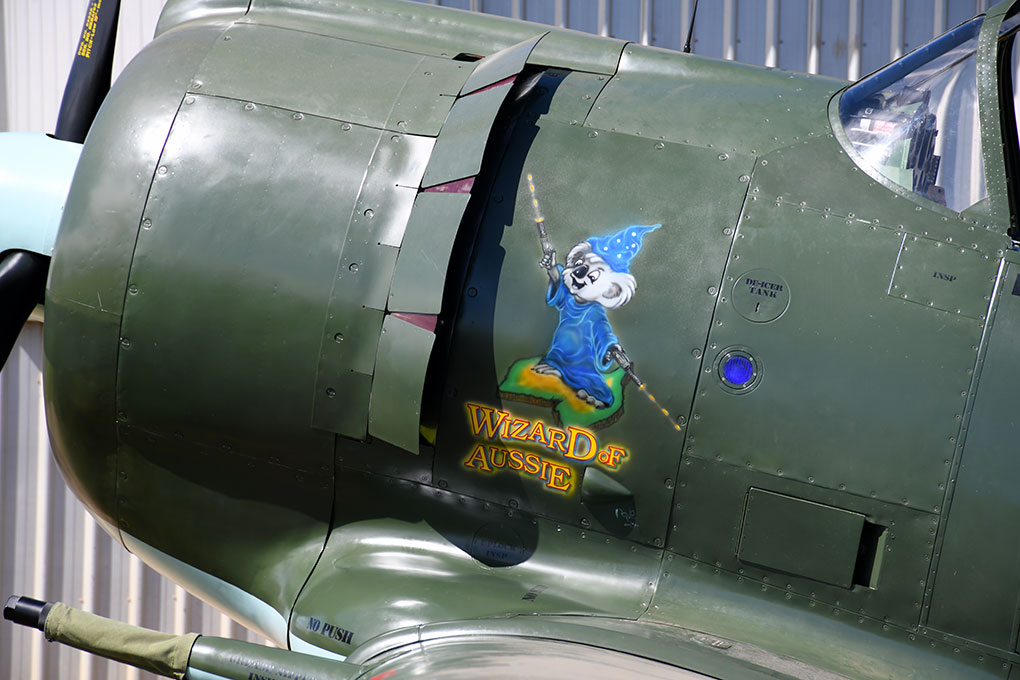
The return of A46-54 to the air represents the culmination of an extraordinary restoration journey that began when Greg Batts acquired the remains of the aircraft in 1984. At the time, little remained of the once-proud fighter beyond surviving structural elements. Over the following decades, Batts gradually rebuilt the aircraft at his workshop in Archerfield, developing a reputation as one of the world’s foremost specialists in the restoration of CAC Boomerangs. The aircraft slowly evolved from scattered remnants into a fully rebuilt airframe, constructed as faithfully as possible to its original wartime configuration. Wherever possible, original components were incorporated into the restoration. The aircraft is powered by a Commonwealth Aircraft Corporation license-built Pratt & Whitney R-1830 Twin Wasp 14-cylinder radial engine, producing approximately 1,200 horsepower.
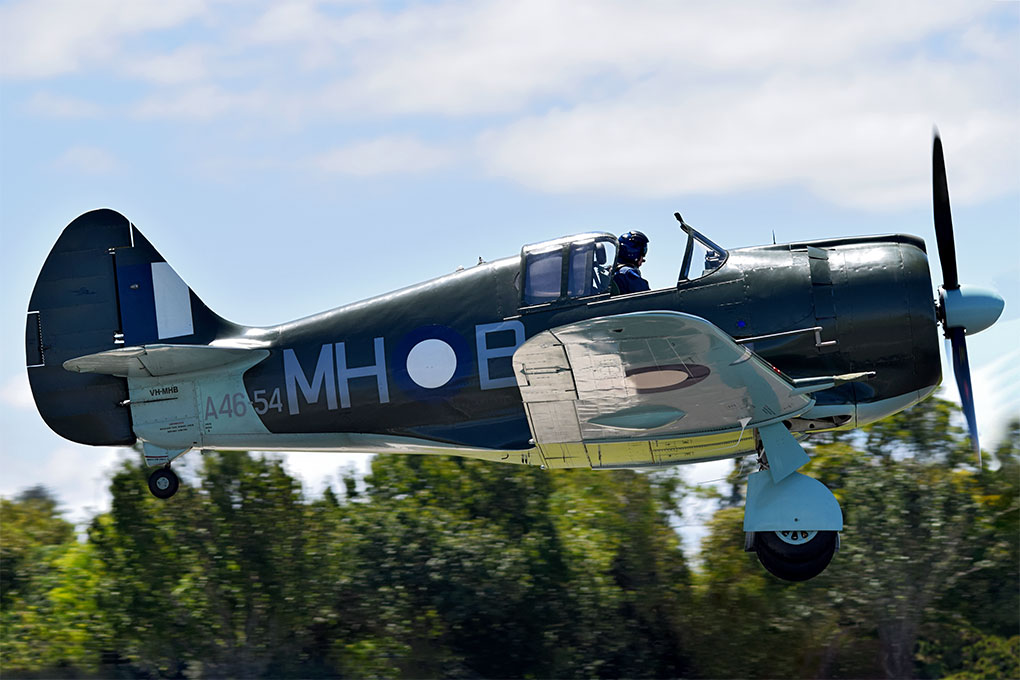
Other components required more creative solutions. The outer wing panels, for example, were manufactured entirely from scratch, while the wing center section was adapted from similar components used on the North American Harvard trainer. The Harvard and the CAC Wirraway, Australia’s wartime trainer, share design lineage that made such adaptations possible. The result is a superbly executed restoration of CAC CA-12 Boomerang A46-54, showcasing Greg Batts’ decades of dedication and his meticulous commitment to preserving the aircraft’s original wartime appearance and authentic structure.
Australia’s Wartime Fighter
The CAC Boomerang holds a unique place in aviation history. Designed during the early months of the Pacific War, it was developed as an emergency measure to provide Australia with a domestically produced fighter in case Allied aircraft supplies became unavailable. Although the Boomerang was not intended to compete directly with high-performance enemy fighters, it proved highly effective in army cooperation, reconnaissance, and close support roles, particularly in the rugged environments of the South West Pacific. A total of 250 Boomerangs were built between 1942 and 1945.
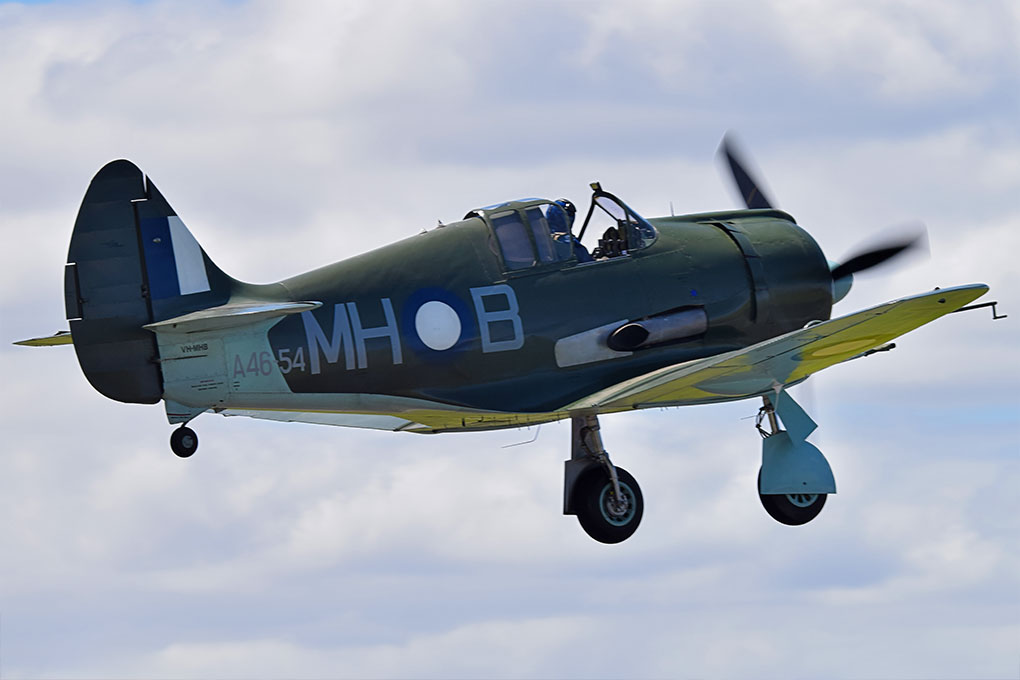
Aircraft A46-54 was constructed by the Commonwealth Aircraft Corporation in Melbourne and first flew in March 1943. During its wartime career, the aircraft served with No. 83 Squadron of the Royal Australian Air Force, operating from Strathpine in Queensland. Historical records reveal several interesting episodes in the aircraft’s service life. In August 1943, the aircraft was scrambled to intercept what was believed to be a Japanese aircraft reported over Moreton Bay, while in June 1945, it participated in a naval cooperation exercise simulating an attack on HMS Wakeful. Like many wartime aircraft, A46-54 survived the war only to be placed into storage and eventually to be sold for scrap in 1955.
Saved From the Scrap Heap
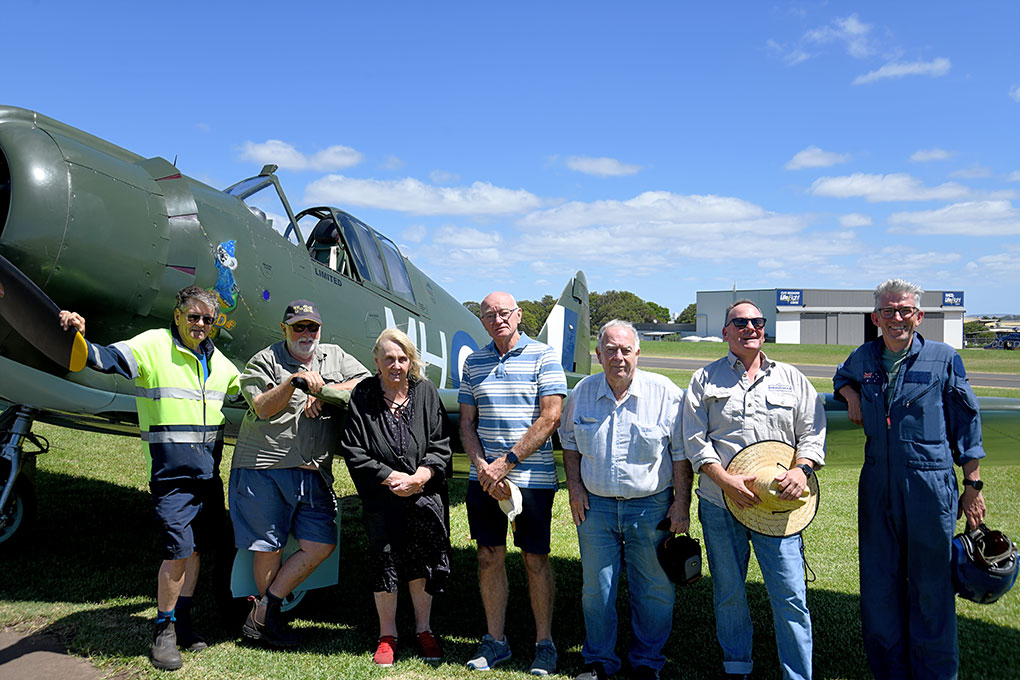
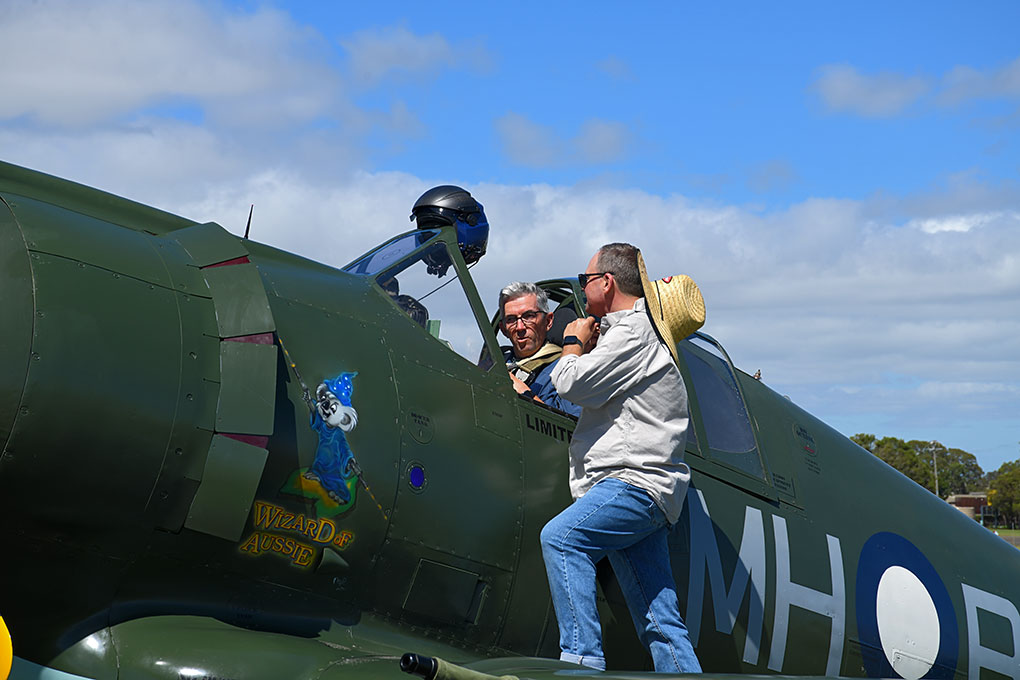
The aircraft’s survival was largely due to the recovery of fuselage remains that eventually passed into the hands of collectors and restorers. Those remains ultimately came into the possession of Greg Batts, who began the long process of reconstructing the aircraft into a complete airworthy machine. Greg is a highly respected restorer of warbirds, but his name is especially linked with the CAC Boomerang, the first Australian-designed and Australian-built fighter aircraft. Today, the aircraft carries the Australian civil registration VH-MHB, and the Boomerang is expected to be based at Caboolture, Queensland, where it will participate in airshows and aviation events around Australia.
A Major Achievement for Australian Aviation Heritage
The successful return of A46-54 to flight represents an important moment for the preservation of Australia’s aviation history. Only a small number of CAC Boomerangs survive today, and even fewer have been restored to flying condition. With the successful completion of its first flights, A46-54 now joins that select group, once again representing the aircraft that symbolized Australia’s wartime ingenuity and determination. For Greg Batts and the many people who have supported the project over the years, seeing the Boomerang lift into the Queensland sky again was the culmination of a lifetime’s work. After more than eight decades, CAC Boomerang A46-54 is flying once again. For more about Warbirds Online Australia, visit www.warbirdsonline.com.au.