
(Image credit: VAN)
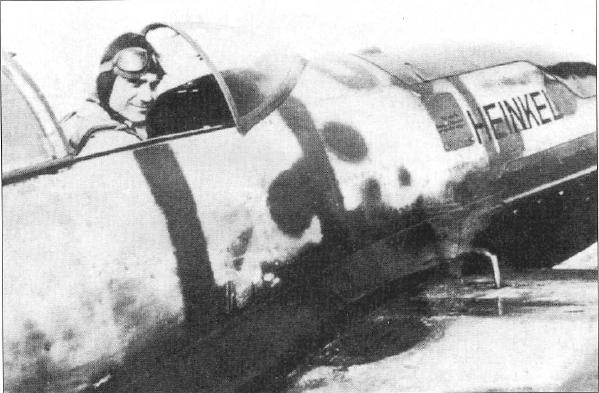
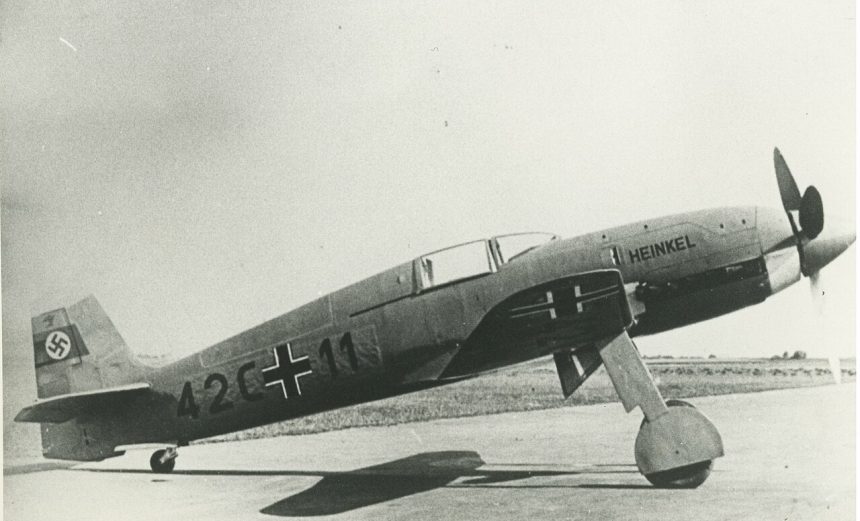
On this day in aviation history, 87 years ago (March 30, 1939), a new world airspeed record was set with the Heinkel He 100. Ernst Heinkel Flugzeugwerke GmbH test pilot Hans Dieterle was at the controls of the German prototype fighter for the record-setting flight. Dieterle entered the 3-kilometer test course, near the factory’s airfield at Oranienberg, Germany, at 5:25 p.m. What followed would be an aggressive attempt at setting a new Fédération Aéronautique Internationale (FAI) world speed record.
Hans Dieterle flew the course, all-out in the He 100, a fighter design that showed promise for the German Luftwaffe. After completing two runs of the course, in both directions, within 14 minutes, Dieterle landed. He was confident in his completion of the mission, confidently rolling back the He 100’s canopy with gusto upon parking and completing a series of three handsprings on terra firma. After the FAI officials ran the numbers, his shattering of the world airspeed record was confirmed. Dieterle and the Heinkel attained an average airspeed of 746.66 km/h (463.953 mph) over the course. Only 14.464 seconds were required for the He 100 to cover the timed section.
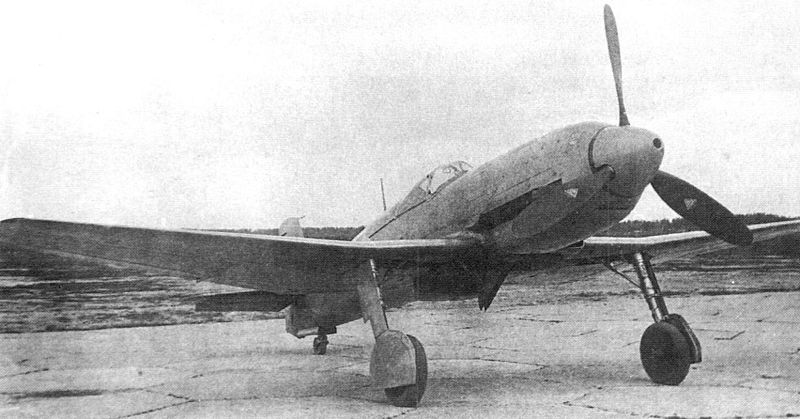
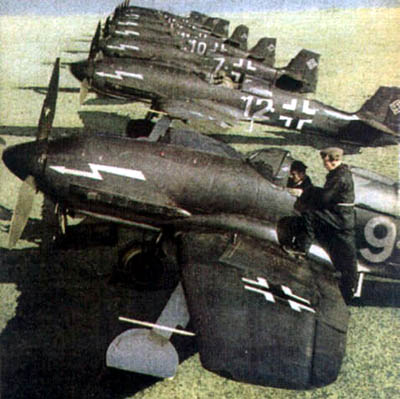
For his successful completion of the world airspeed breaking mission, Hans Dieterle was promoted to Flight Captain. At the time, he was the youngest pilot to hold that rank in the German Luftwaffe. Dieterle’s airspeed record would stand for just under one month. On April 26, 1939, Fritz Wendel flew the Messerschmitt prototype Me 209 V1 to an airspeed of 755.14 km/h (469.22 mph). Like Dieterle’s airspeed record, the He 100 would be overshadowed as World War Two progressed. The pre-war fighter design had proven its speed, but despite the construction of 19 prototypes, the He 100 was not ordered into production. The major reason for the He 100 not making it to production is not officially documented. It has been assumed that the Luftwaffe rejected the Heinkel to focus single-seat fighter development on the Messerschmitt Bf 109.
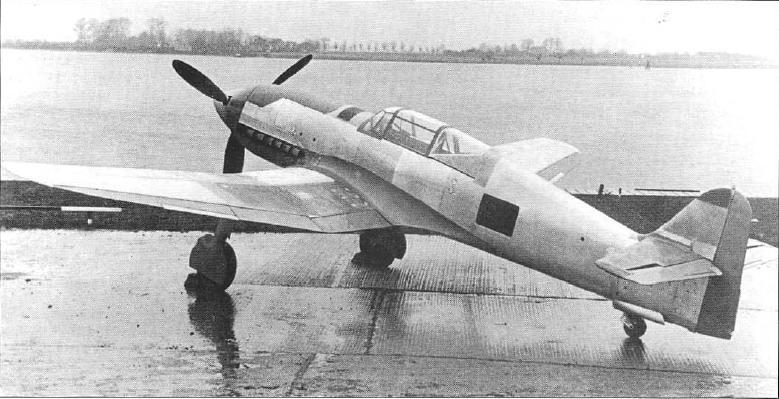
The Heinkel He 100 was powered by a 1,175-horsepower Daimler-Benz DB 601M liquid-cooled V12 engine. In addition to its proven blistering top speed of over 745 km/h (460 mph), the He 100 could cruise easily at 552 km/h (343 mph). The aircraft had a range of 550 nautical miles, a service ceiling of 36,000 feet, and could climb to 20,000 feet in 7.8 minutes. Heinkel armed the He 100 with a 7.92 millimeter MG 17 firing through the propeller hub, and two more MG 17 machine guns in the wing roots.