





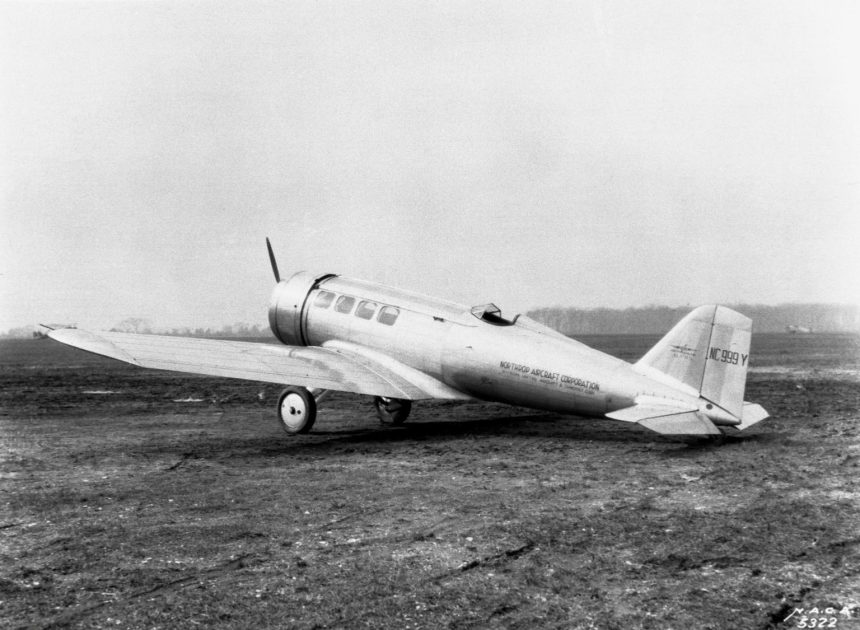

On this day in aviation history, 95 years ago (April 20, 1931), the Northrop Alpha officially entered passenger-carrying service. The Alpha was a single-engine, all-metal, low-wing monoplane that was designed as a fast mail and passenger transport aircraft. The Avion Corporation initially designed the Alpha, but fell under the Northrop Aircraft Corporation name after the company merged in 1929. The Alpha began airline service with Transcontinental & Western Air (TWA), making its inaugural flight on April 20, 1931. The flight departed from San Francisco and arrived in New York after 13 stops and just over 23 hours of travel time.
The Alpha was designed by John K. Northrop, who drew inspiration from his experience working on the Lockheed Vega. Northrop included two cutting-edge features in the new aircraft’s design: wing fillets and a multicellular stressed-skin wing. The multicellular wing had previously been used on the Douglas DC-2 and DC-3. Rubber de-icing boots were installed on the wing and empennage leading edges, making the Alpha the first commercial aircraft to use such safety technology. State-of-the-art radio and navigation equipment gave the Alpha all-weather flight capability day or night.
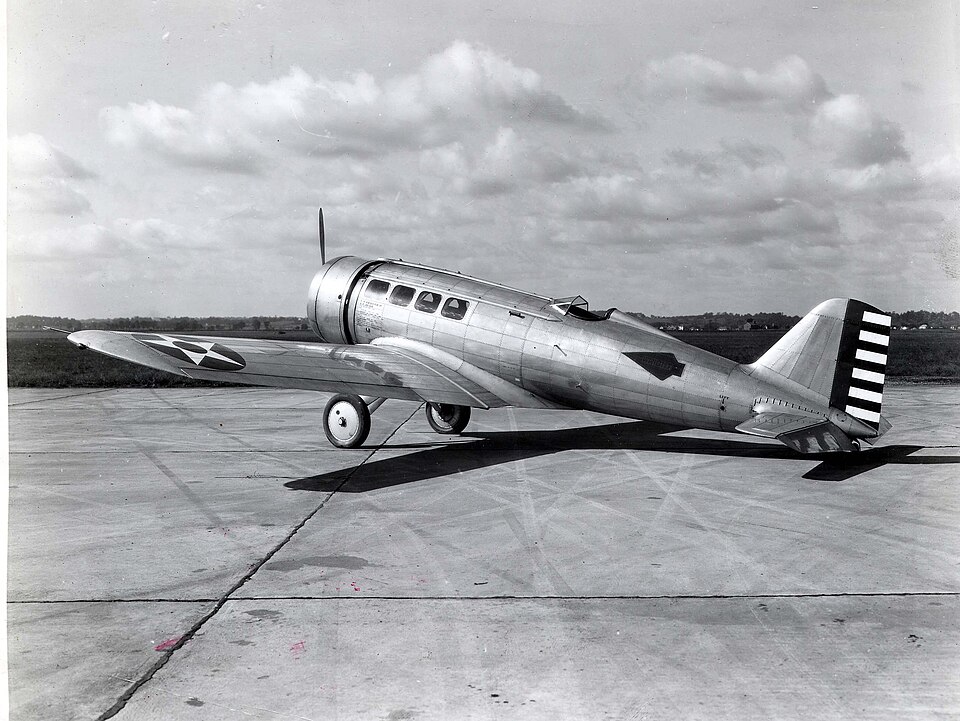
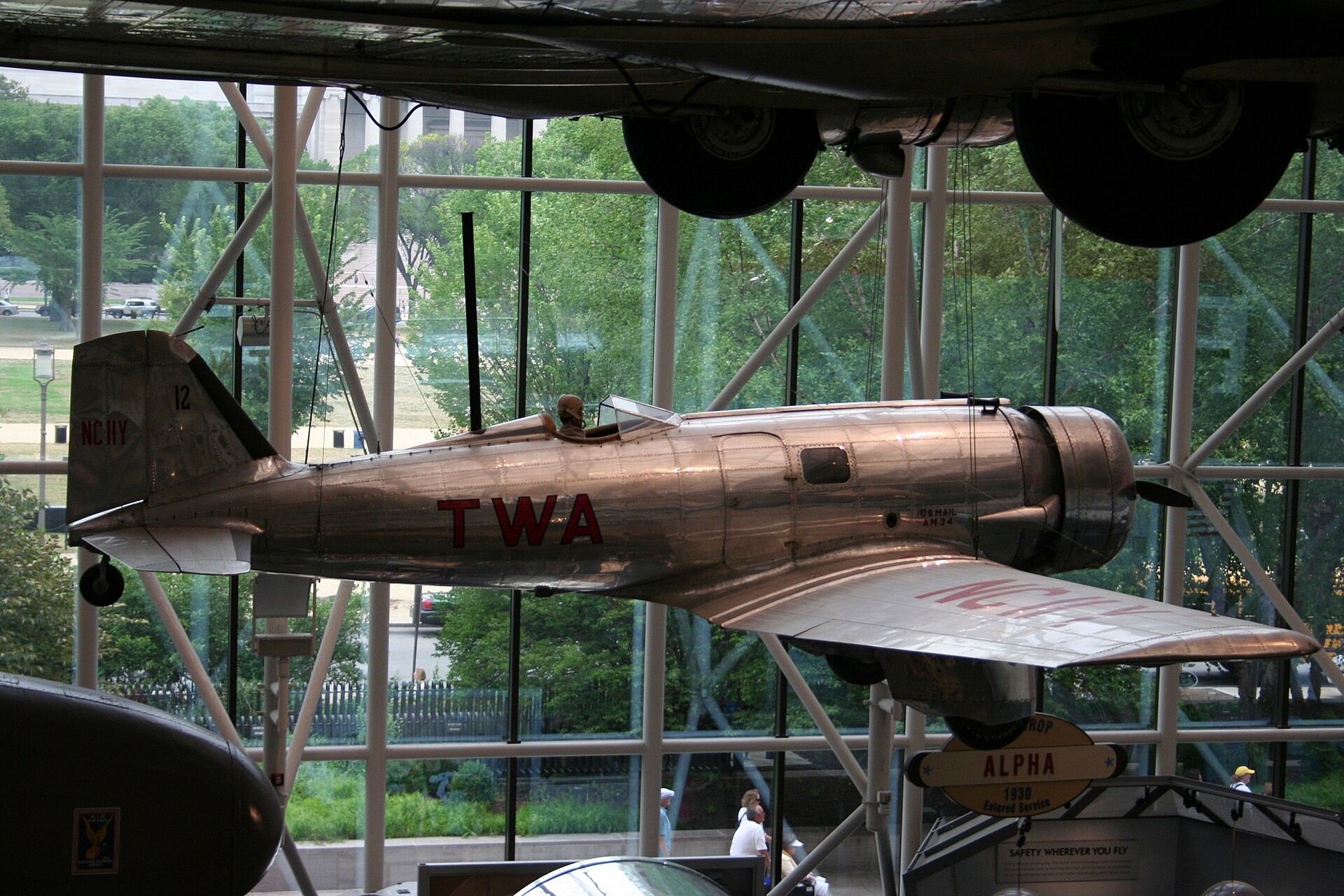
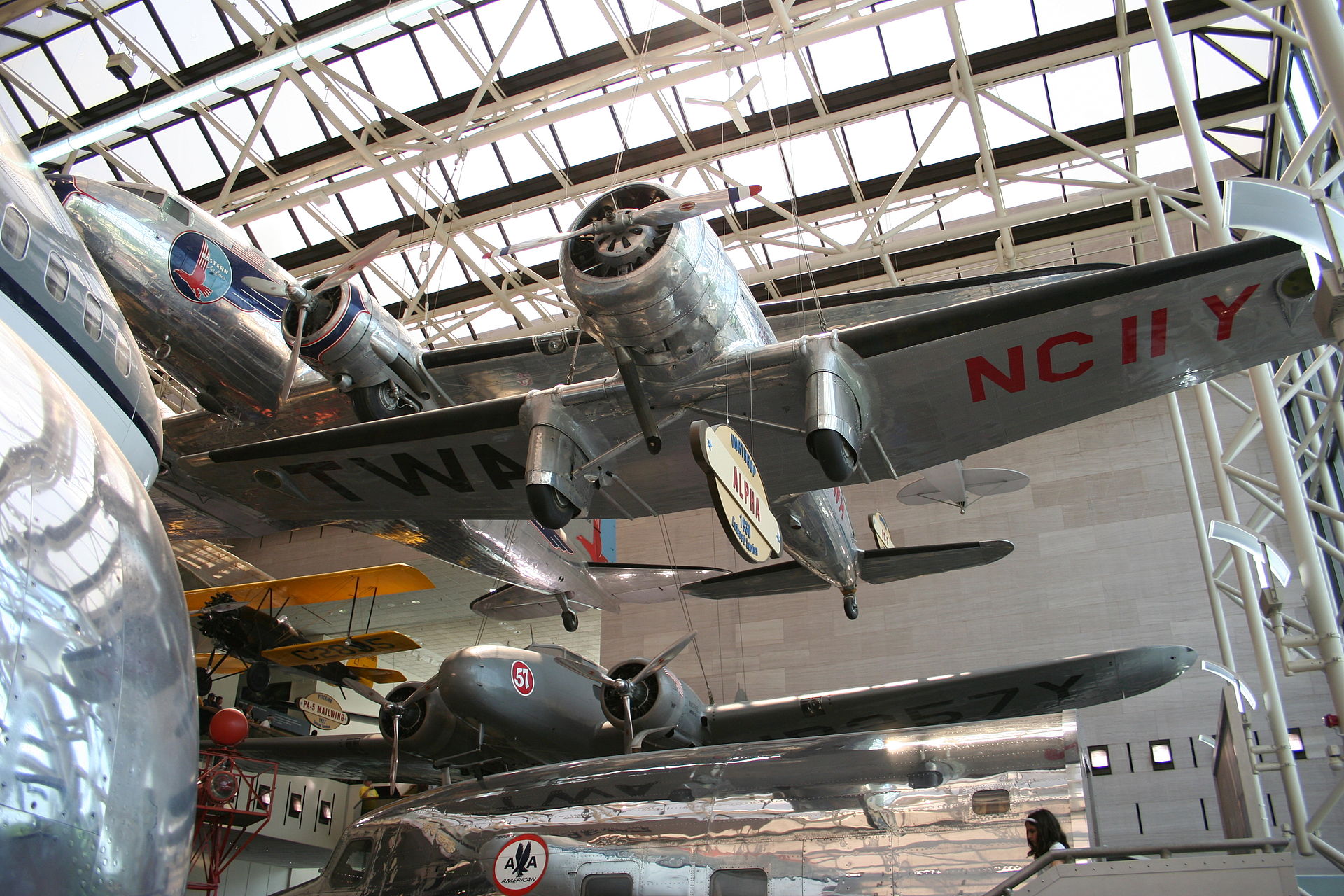
The Northrop Alpha was flown by a single pilot, and had a capacity for six passengers and 1,910 pounds of useful load. The aircraft was powered by a 420-horsepower Pratt & Whitney Wasp R-1340-SC1 radial engine and could cruise at 145 mph (maximum airspeed of 177 mph). The Alpha had a range of 1,430 nautical miles and a service ceiling of 19,300 feet. Northrop manufactured a total of 17 Alphas during the aircraft’s production run. In addition to flying with TWA, the Alpha was also employed by the US Army Air Corps as a VIP transport, designated as the C-19. The Chinese Nationalist Air Force used the aircraft as scout bombers during the Second Sino-Japanese War, via the 8th bomber group. The third Northrop Alpha built, NC11Y, was reacquired by TWA in 1975. This aircraft is now on display at the Smithsonian National Air and Space Museum’s National Mall location in Washington, DC.




“The multicellular wing had previously been used on the Douglas DC-2 and DC-3.” On the contrary, the Northrop Alpha, which entered service in 1931, was 4-5 years before the DC-1/DC-2/DC-3.