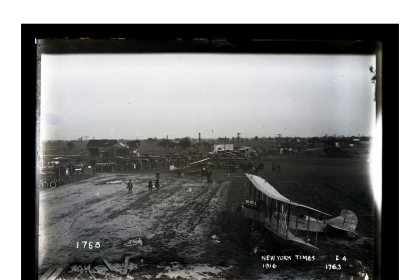
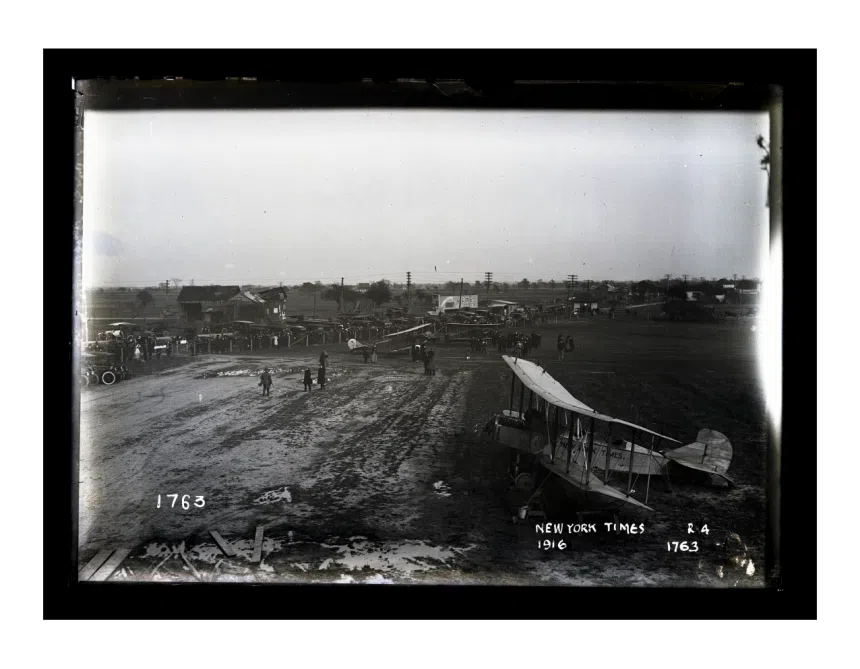

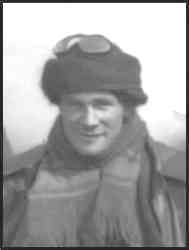
On this day in aviation history, 110 years ago (November 3, 1916), pioneering aviator Victor Carlstrom completed a historic flight from Chicago to New York City. Flying a specially modified Curtiss Model R biplane and carrying a small quantity of mail, Carlstrom completed the journey in a total flying time of eight hours, 28 minutes, and 30 seconds. The flight demonstrated the growing potential of aircraft for long-distance transportation and mail delivery. Carlstrom, a Swedish-born American aviator, had become known for his record-setting flights during aviation’s pioneering years. His Chicago–New York attempt was sponsored by The New York Times and undertaken in a specially constructed Curtiss R-7, a long-range development of the Curtiss Model R military utility aircraft. The biplane featured enlarged wings and additional fuel capacity to support the ambitious journey.
Departing Chicago on November 2, Carlstrom initially hoped to complete the entire flight without stopping. However, a fuel-system problem forced him to land at Erie, Pennsylvania, after covering 452 miles, establishing a new American nonstop distance record. He continued eastward, stopping overnight at Hammondsport, New York, before completing the journey to Governors Island the following morning. The flight helped demonstrate the practicality of long-distance airmail, although regularly scheduled U.S. airmail service would not begin until 1918. Carlstrom was killed in an aviation accident the following May. The Curtiss R-7 was powered by a Curtiss V-2-3 engine producing approximately 200 horsepower and incorporated the extended-span wings of the Model R-3 and R-6. For comparison, the standard Curtiss R-2 measured 24 feet 4 inches in length with an upper wingspan of 45 feet 11 inches. Powered by a 160-horsepower Curtiss V-X engine, the R-2 could reach approximately 86 mph and had an endurance of six hours and 42 minutes. The specially modified R-7 demonstrated substantially greater long-distance capability.
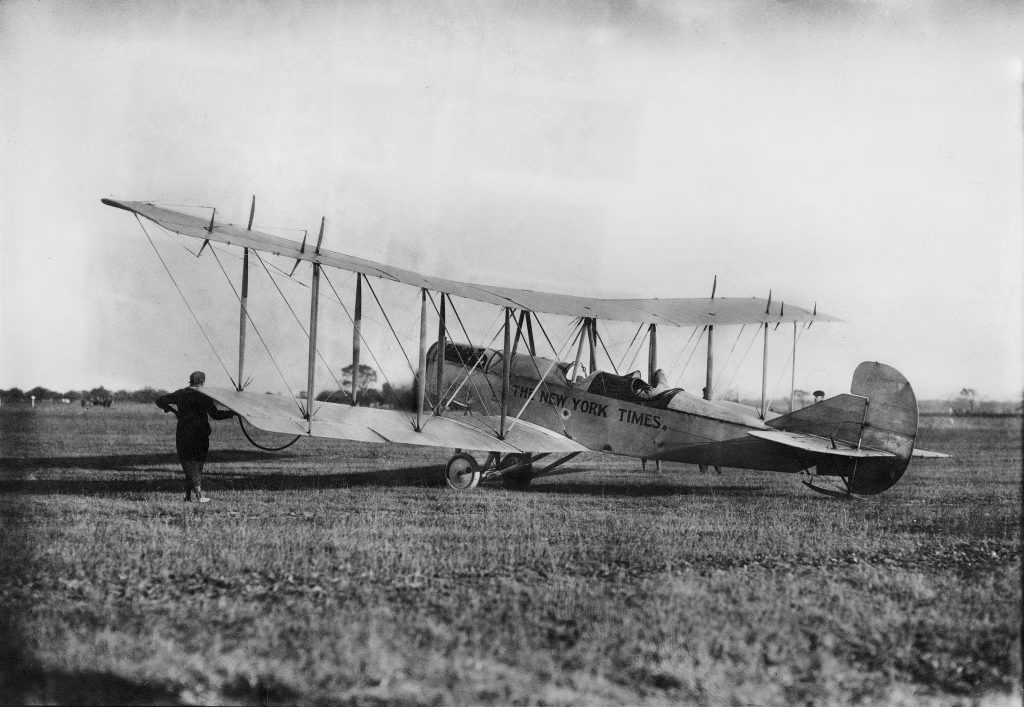
(Image credit: The New York Times)