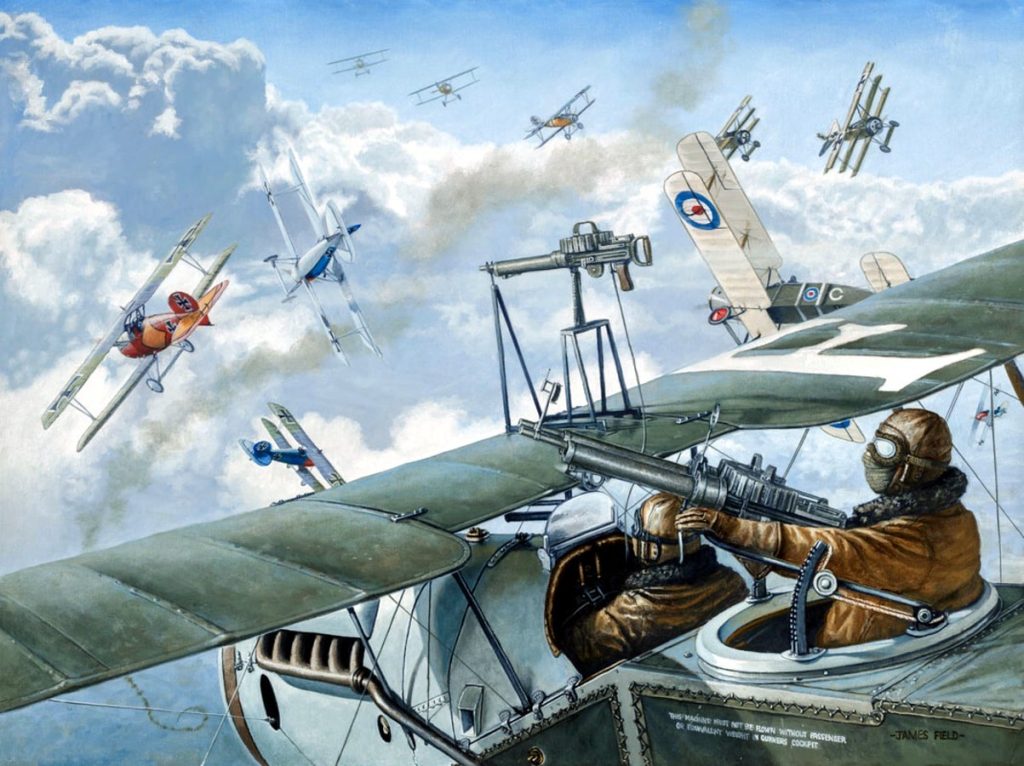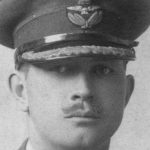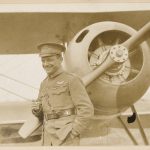
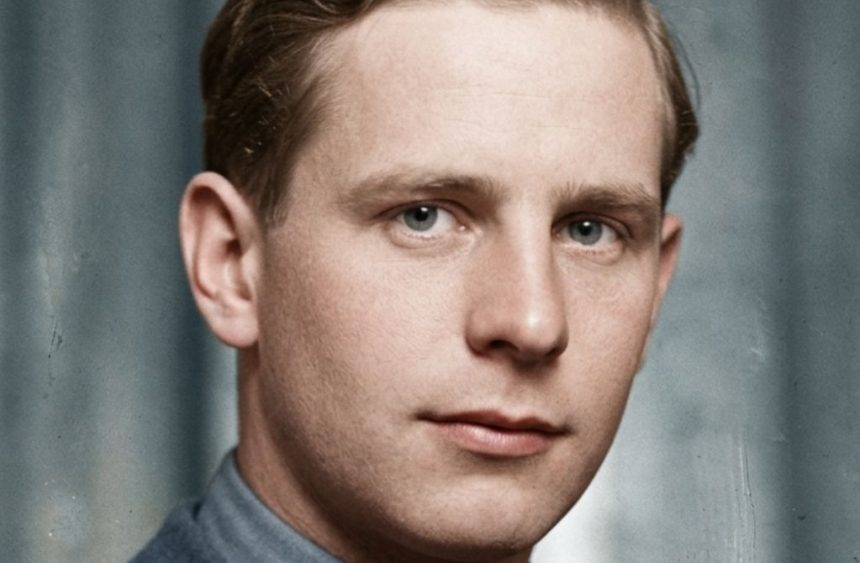

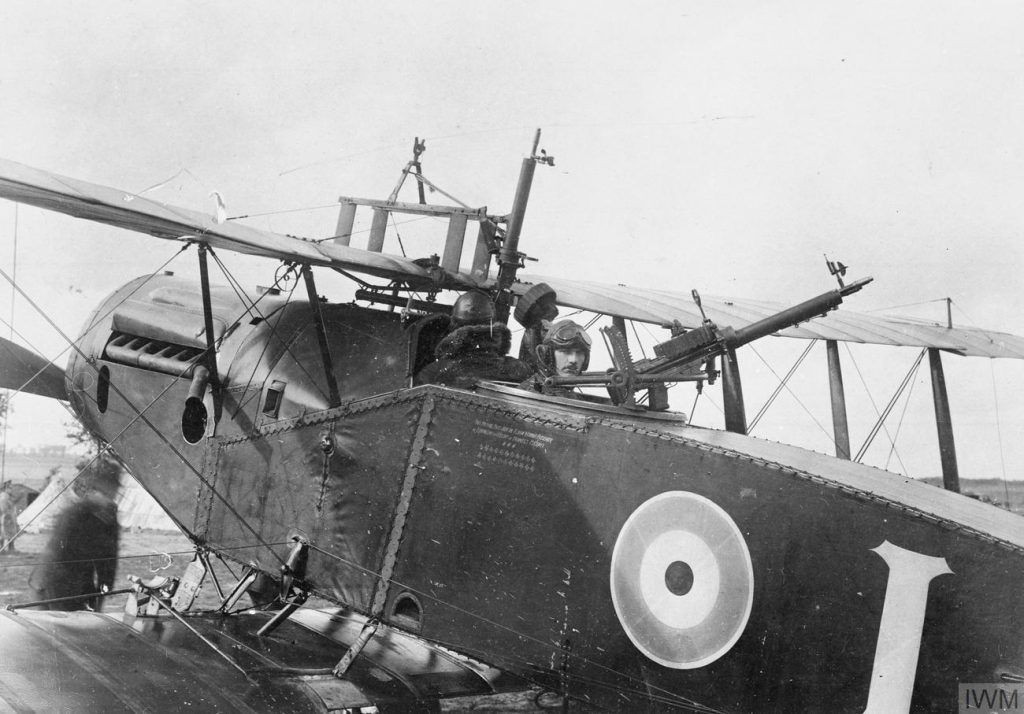
Canadian aces had a unique history in WWI, and one of them was a journalist before joining the military. Born on August 16, 1894, in Toronto, Alfred Atkey’s family left Toronto in 1906 to settle in western Canada. However, Atkey later returned to Toronto to work as a journalist for the Toronto Evening Telegram. Joining the British Army in early 1916, he went on to become the fifth-highest scoring Canadian ace. Atkey became part of the 2/24th Battalion of the London Regiment and was sent to France in June 1916. On October 19, 1916, he joined the Royal Flying Corps as a probationary Second Lieutenant. By September 1917, he was a bomber pilot with No. 18 Squadron, flying the D.H.4, and went on to become one of the highest-scoring two-seater pilots of WWI. Alfred Atkey’s first confirmed victory came on February 4, 1918, when he shot down two Siemens-Schuckert D.III aircraft in a short time. He claimed his third victory on March 15, followed by a fourth on March 16. By destroying two aircraft on March 25, he officially became an ace. Further, he shot down three more aircraft in April, bringing his personal score to nine. In May 1918, Alfred Atkey took charge of “A” flight in 22 Squadron. He switched from the D.H.4 to the Bristol F.2b, and chose Lieutenant Charles Gass, the highest scoring WWI observer ace, as his gunner and observer. On May 7, Atkey and Gass participated in a historic dogfight near Arras, called the “Two Against Twenty.” They were joined by their wingman pair, John Gurdon and Anthony Thornton, to fight against 20 German scout aircraft.
Ace Journey of Alfred Atkey
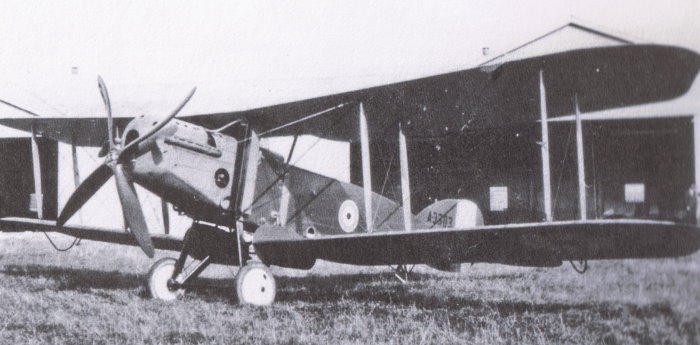
In this battle, Alfred Atkey and Gass shot down five enemy planes while Gurdon and Thornton shot down three. Two days later, on May 9, Atkey and Gass repeated the feat by again shooting down five enemy aircraft in one day. The following day, May 10, Atkey became a flight commander, promoted to the temporary rank of captain. Together, between May 7 and June 2, Atkey and Gass shot down 29 enemy aircraft, with 27 in May and 2 in June. During their time together, at one instance, their Bristol Fighter was badly damaged, and Gass had to crawl onto the lower wing to balance the aircraft so Atkey could fly it back to base. After this, Atkey was assigned back to the Home Establishment in England. For his efforts, Alfred Atkey was awarded the Military Cross, with a citation, “For conspicuous gallantry and devotion to duty. When engaged on reconnaissance and bombing work, he attacked four scouts, one of which he shot down in flames. Shortly afterwards, he attacked four two-seater planes, one of which he brought down out of control. On two previous occasions, his formation was attacked by superior numbers of the enemy, three of whom in all were shot down out of control. He has shown exceptional ability and initiative on all occasions.” Overall, he shot down 38 enemy fighters, including 15 Pfalz D.IIIs, eight D-type aircraft, four Albatros aircraft, three each of C-type aircraft and Halberstadt Cs, two each of Siemens-Schuckert D.III and LVG Cs, and one DFW C aircraft.
The Legacy
On September 16, Alfred Atkey was awarded the Military Cross Bar, with a citation, “During recent operations, he destroyed seven enemy machines. When engaged with enemy aircraft, often far superior in numbers, he proved himself a brilliant fighting pilot and displayed dash and gallantry of a high order.” Atkey was placed on the Royal Air Force unemployed list on May 3, 1919. In 1920, he moved to the United States and lived in Brooklyn, New York. On January 23, 1924, Atkey was living in Los Angeles and working as a writer when he filed a “Declaration of Intention” to become a naturalized American citizen. In this declaration, Alfred Atkey stated he arrived in Seattle from Vancouver on the SS Princess Victoria in November 1923, and that he previously lived in North Battleford, Canada. It is unclear if Atkey became an American citizen. Atkey died in Toronto on February 10, 1971, and he is buried in Springcreek Cemetery in Mississauga, Ontario. His gravestone describes him as an officer in the Royal Canadian Air Force, but details of his later military service are unknown. In the Aces series, Alfred Atkey stands out as a Canadian citizen who demonstrated bravery and valor in WWI, flying with the Royal Flying Corps and becoming one of the top-scoring, if not the top, aces with two-seater aircraft. Read stories about more flying aces HERE.