






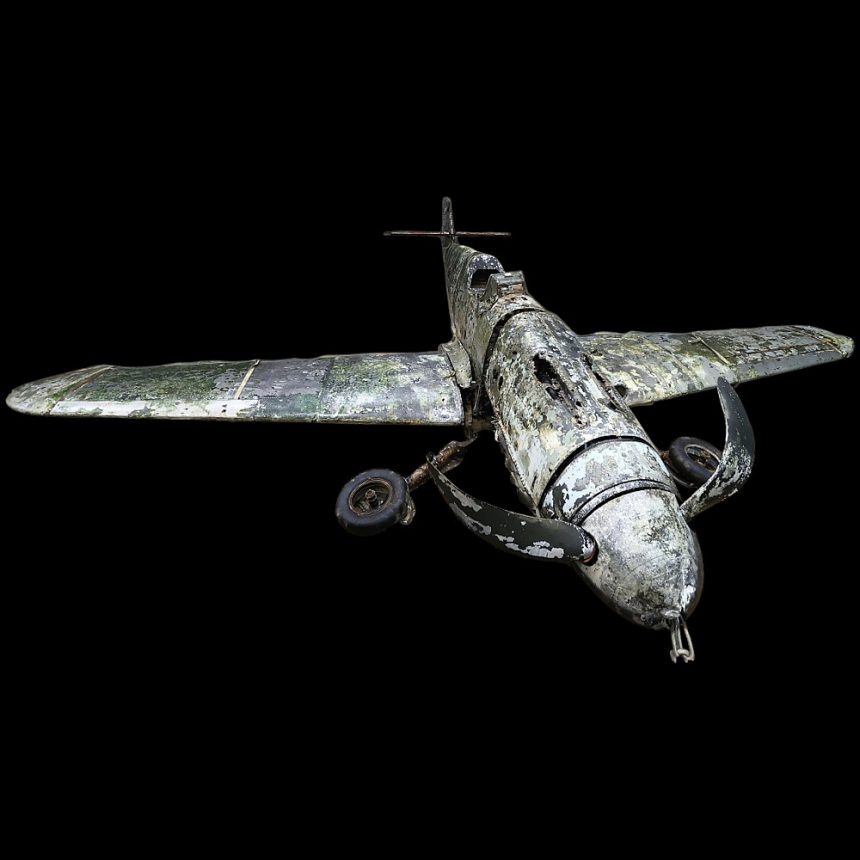

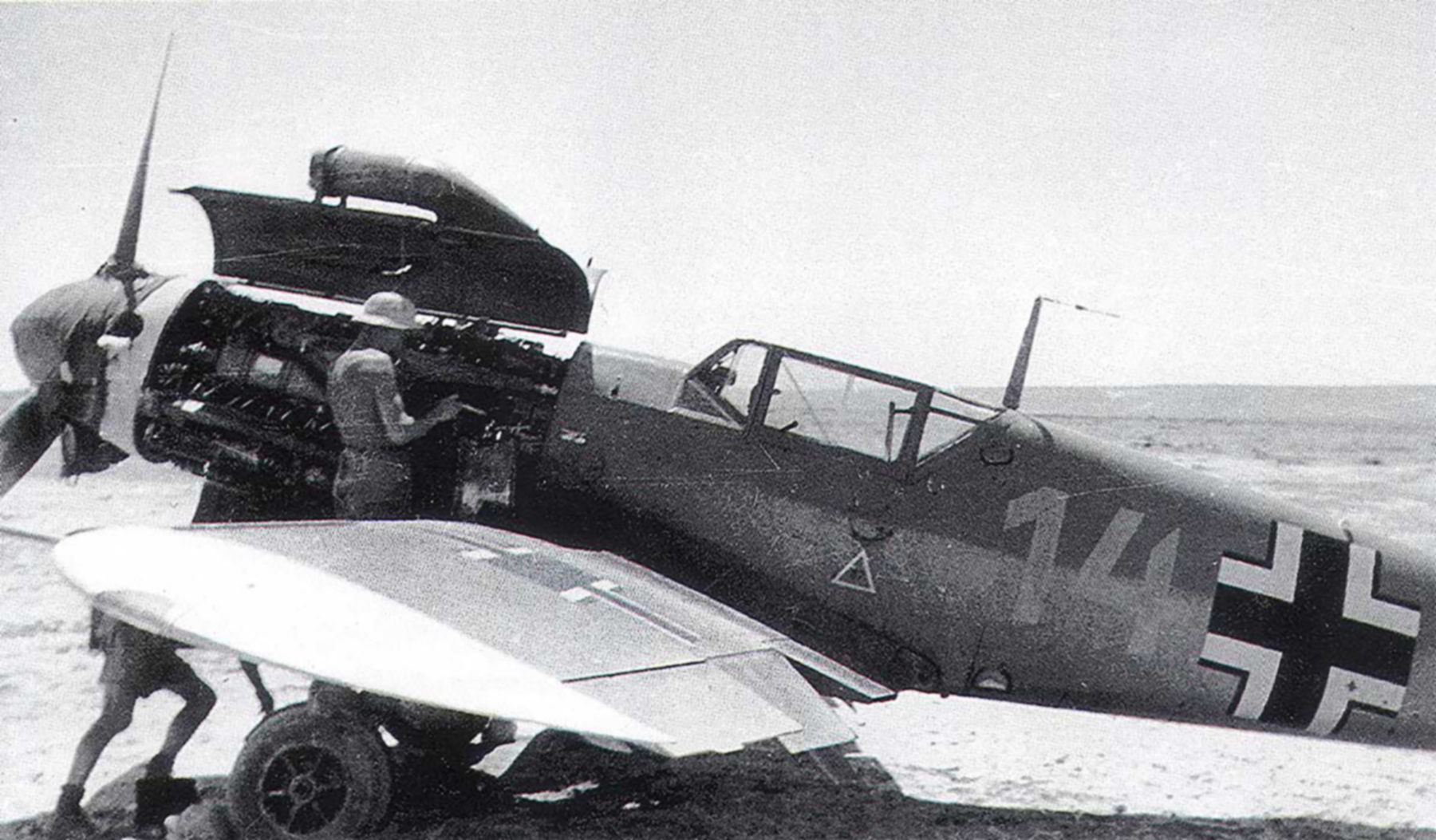
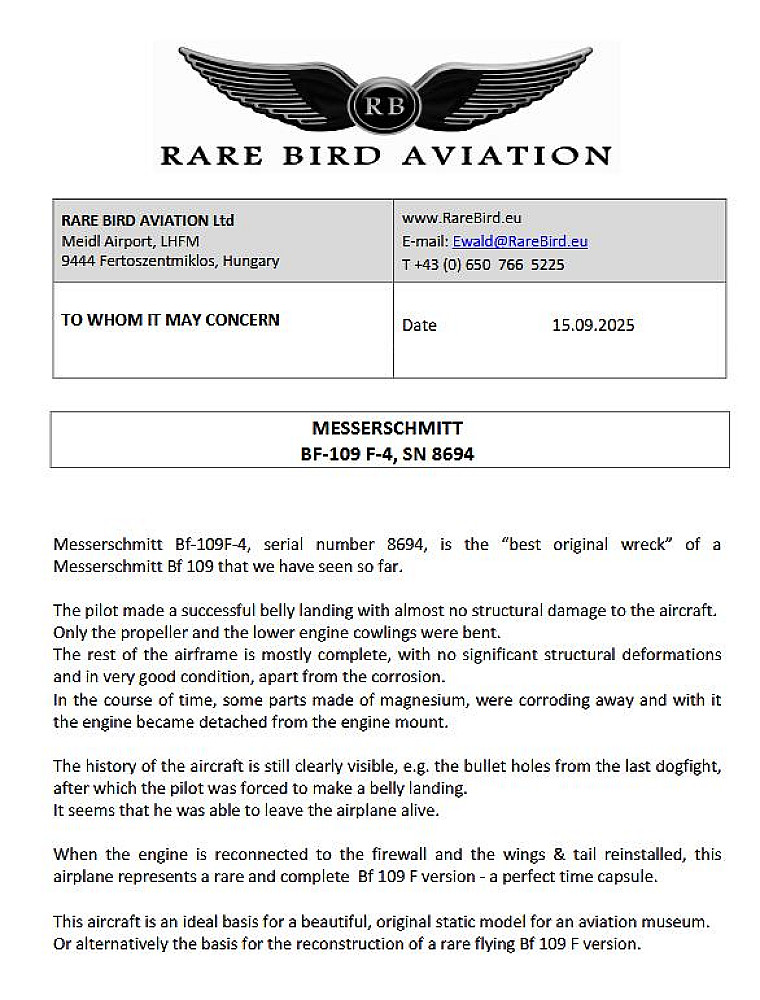
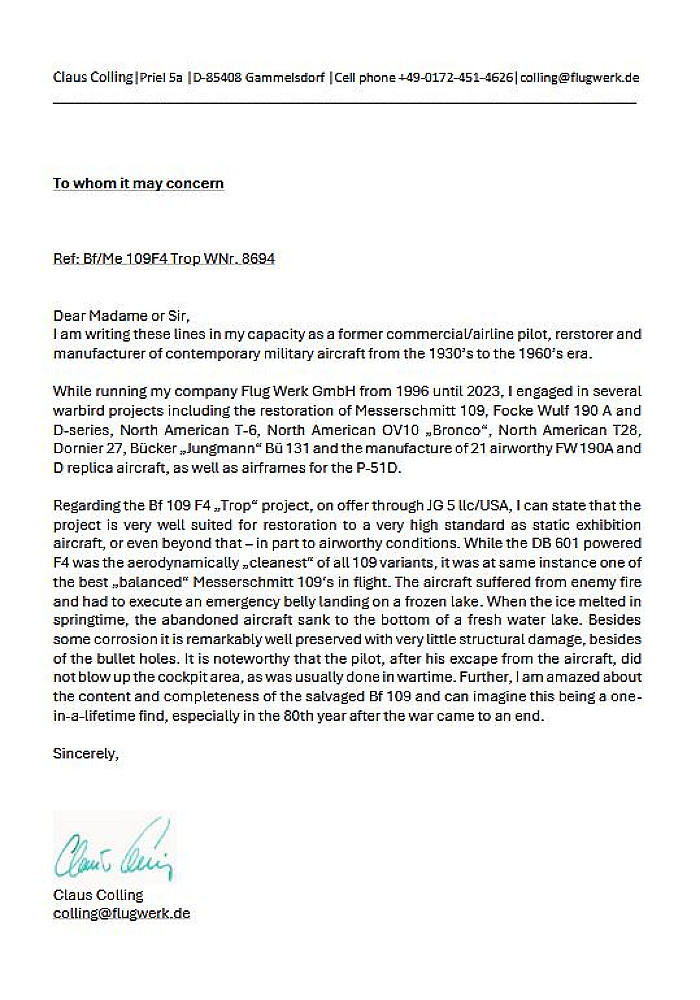
A rare 1941 Messerschmitt Bf-109F-4, Werk Number 8694, has resurfaced and is now being offered for auction through LiveAuctioneers, a global platform for art, antiques, jewelry, and collectible sales. According to LiveAuctioneers, this fighter was built by Erla in September 1941, immediately following Hans-Joachim Marseille’s famed “Star of Africa” aircraft, WNr 8693, known as Gelbe 14. Marseille claimed 158 victories against the British Commonwealth’s Desert Air Force over North Africa while flying the Messerschmitt Bf-109. Complete examples of recovered Bf 109s are extremely rare, as most salvaged aircraft are heavily damaged or destroyed. This particular airframe is unique because it was recovered in its original, intact condition, retaining much of its structure and original components.
The aircraft carries the green four-leaf clover emblem on the left side of the engine cowling, indicating that it was part of II./Jagdgeschwader 5. Its black tail number shows that it belonged to the fifth squadron (5. Staffel) of the second group. This Bf 109F-4/Trop is one of only 1,841 F-4s ever built and one of just 576 Trop variants, making it exceptionally rare. According to British aviation historian and researcher Mark Sheppard, this Bf-109F-4 was built by Erla Maschinenwerk in Leipzig, which produced a third of the total 33,000 Bf/Me 109s, between August and September 1941, with the factory-issued fuselage code SL+KW. It was later assigned to Jagdgeschwader 5 (JG 5) as Black 22. On March 18, 1943, the aircraft was damaged by Soviet flak and forced to make a belly landing on the frozen lake in Northern Russia. Sheppard has not determined which pilot was flying it, but believes the pilot was later rescued by a ski-equipped Fieseler Storch, often used to pick up downed Luftwaffe pilots from remote crash sites.
The Messerschmitt Bf-109, designed in the 1930s by Willy Messerschmitt and Robert Lusser, was a groundbreaking fighter aircraft featuring innovations such as all-metal monocoque construction, a closed canopy, retractable landing gear, and a liquid-cooled, inverted V-12 engine. The Bf 109 series became the second most-produced fighter in history, with 33,984 airframes built, and the F model is widely considered the pinnacle of the series’ aerodynamic development.
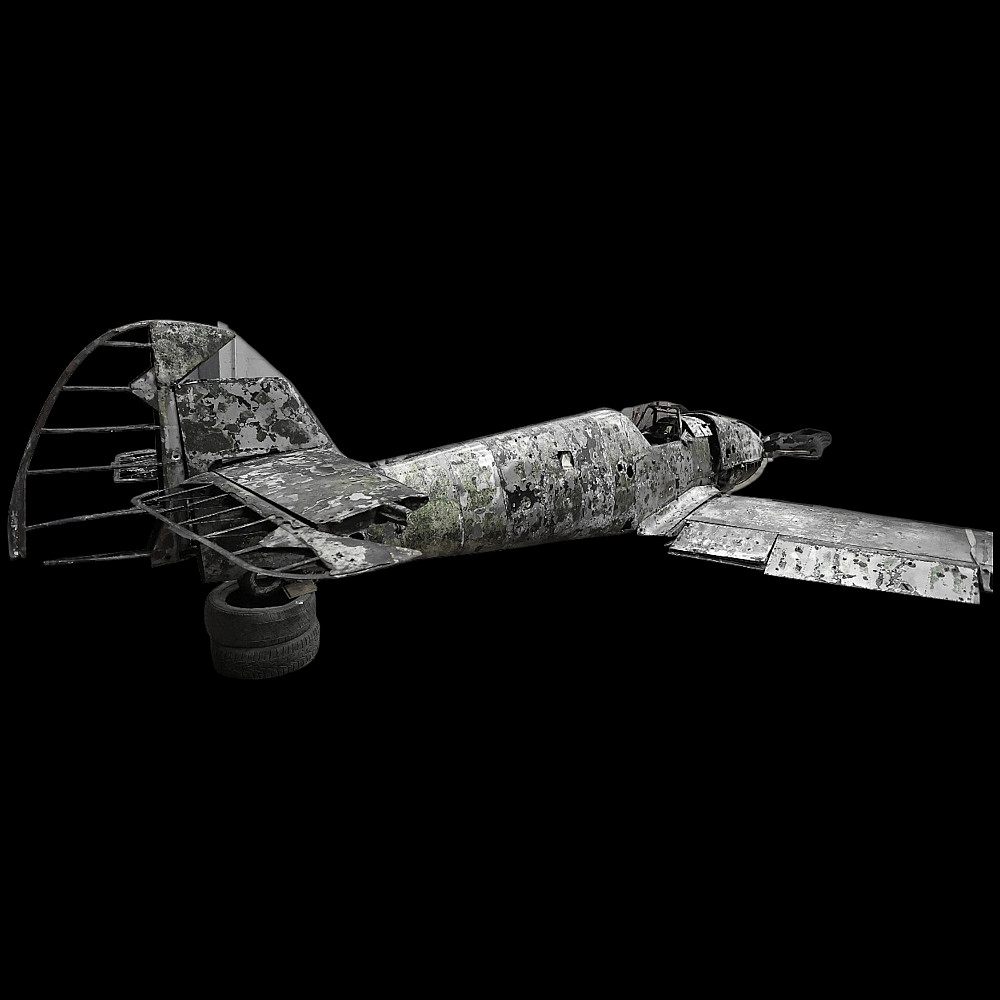
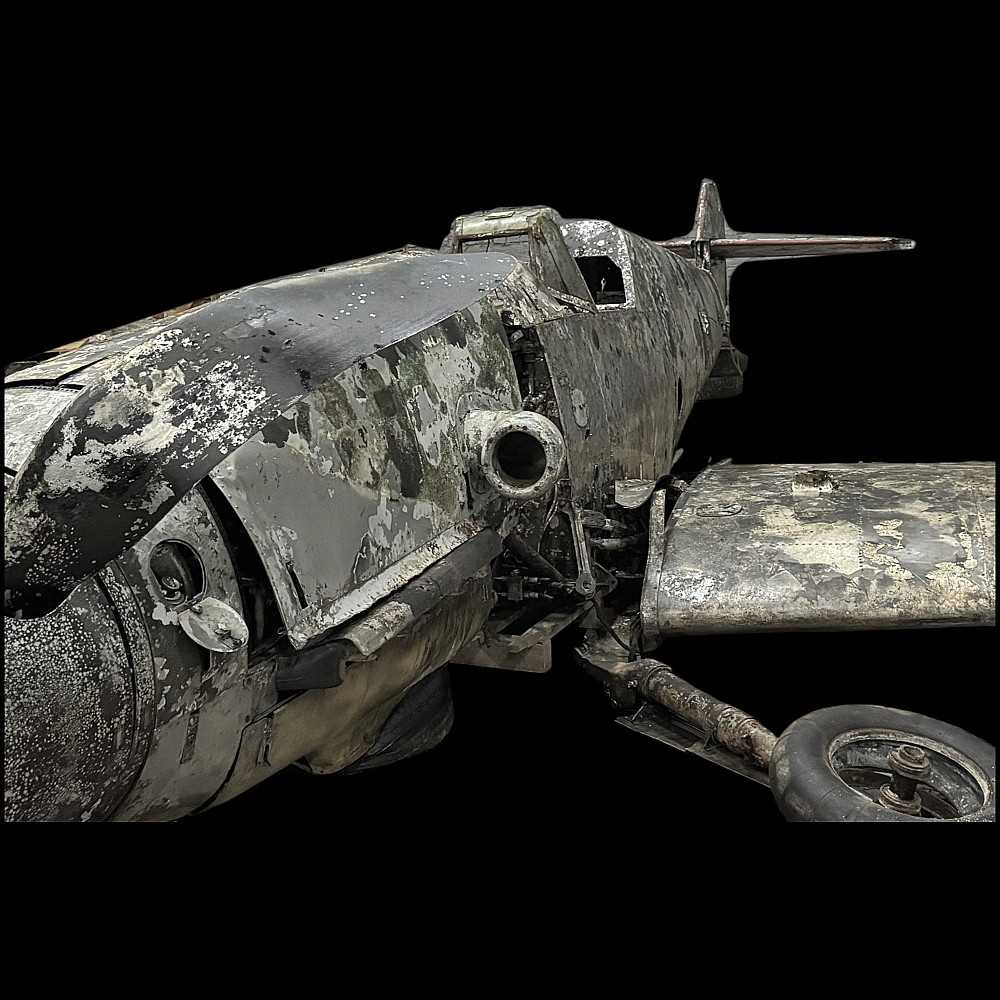
The airframe presents significant restoration potential. More than 60 percent of the original aircraft remains intact, making it suitable for a full airworthy restoration as an original, rather than a rebuilt, aircraft. Alternatively, it could be displayed as a historically accurate diorama of a WWII fighter landing on ice or snow, preserved in its recovered state. The main fuselage is intact, including the original data plate, with no crash damage, though bullet holes and corrosion are present. Minor damage occurred when the aircraft slid along ice during landing, but identification markings remain visible. The cockpit is complete and undamaged, aside from components made of Electron, while the right and left wings are structurally sound, with minor corrosion spots on the upper surfaces and slight damage to the leading edge of the left wingtip. Leading-edge slats are intact, and although some control surfaces are missing fabric, they show no structural damage. The main and tail landing gear are complete, with intact brakes and tires still holding air. Propeller blades are bent back, but the spinner and rear section remain intact. The engine is complete, with a repairable 10 cm hole in the block, and exhaust stacks and upper cowls remain undamaged, with only minor damage to the lower cowling. Electrical systems show corrosion but can be used as patterns for restoration, and all original tubing, oxygen bottles, oil, and glycol tanks remain intact. The vertical fin has partial shrapnel damage, and a partial swastika is still visible, while the horizontal stabilizer is complete.
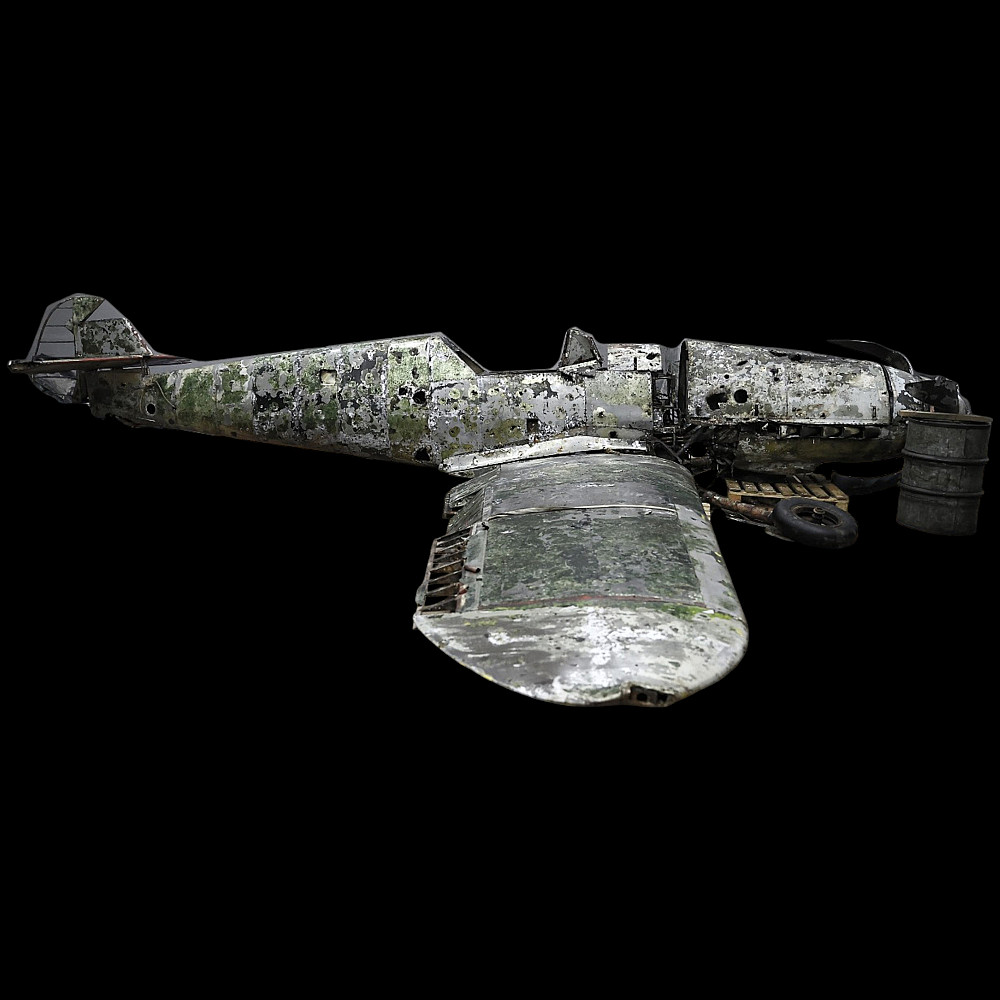
An extensive set of photographs is available for detailed evaluation of the aircraft’s condition. LiveAuctioneers supports this listing with letters from well-known restorer Claus Colling and the Warbird restoration company Rare Bird Aviation. The airframe is located within the European Union, and interested parties can request additional photos, descriptions, or arrange a viewing by contacting [email protected] or on www.liveauctioneers.com.
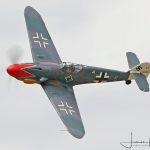
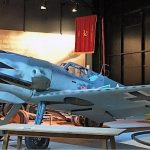
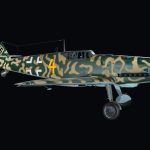
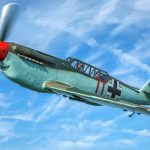
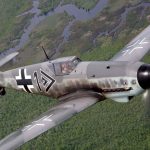










The pilots that flew the 109 loved the 109
Why start from scratch, ratisbons.com has a ready to go version that can be brought to a state of flight with just a little investment. https://www.ratisbons.com/shop/new-arrivals/new-shop-update-september-2025/messerschmitt-bf109-g.html