






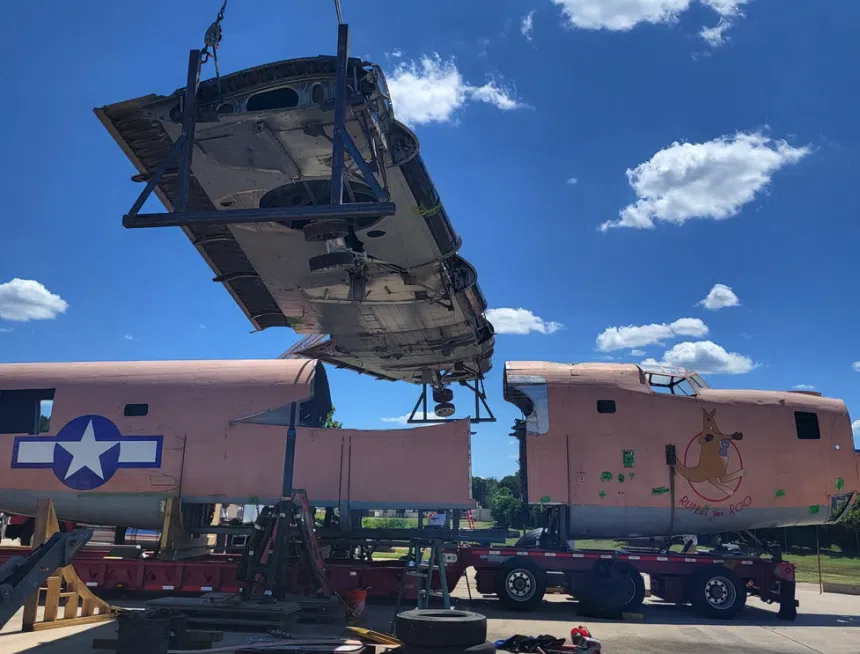

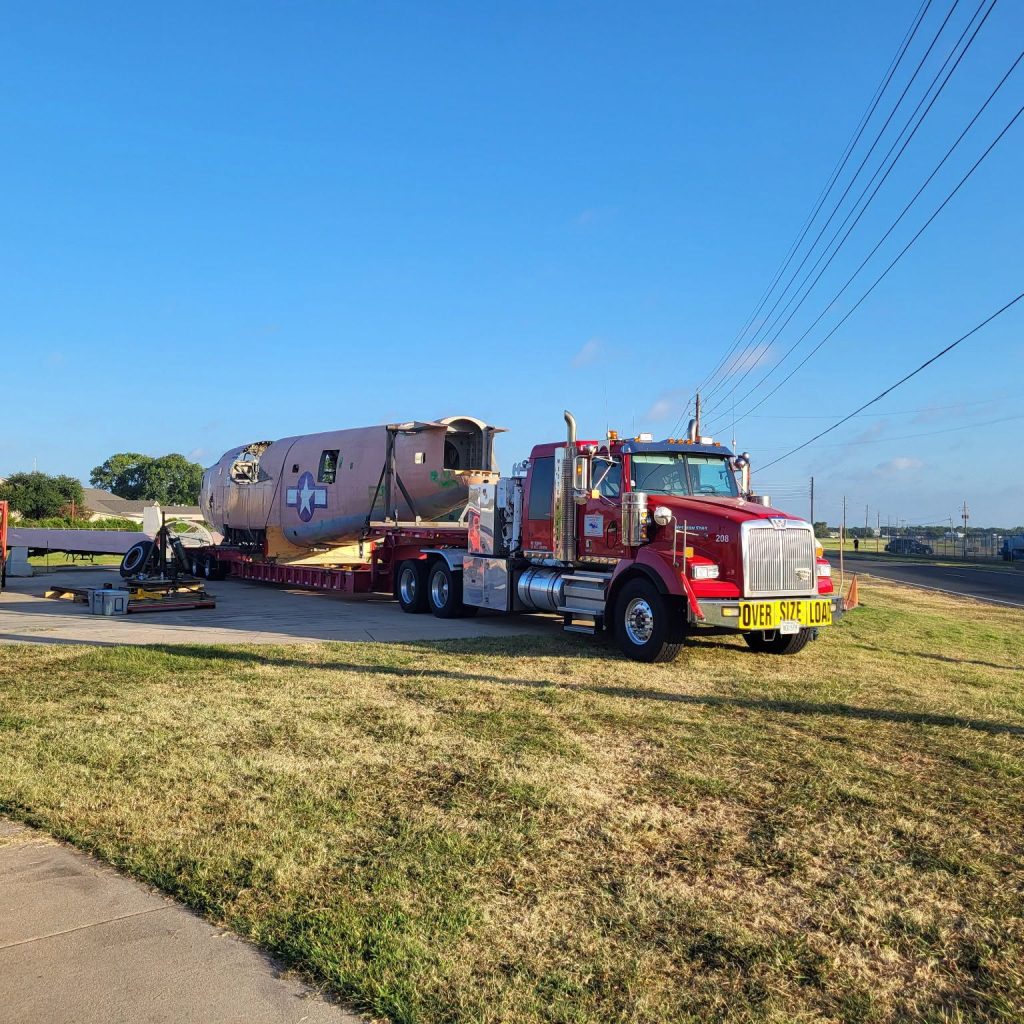
The restoration and relocation of the National Museum of the Mighty Eighth Air Force’s Consolidated B-24J Liberator has reached another important milestone. In August 2026, the aircraft’s main wing assembly was successfully separated from the fuselage, completing Phase II of the project. Following its removal, the wing assembly and other major components were transported from Barksdale Air Force Base in Louisiana to offsite facilities, where painting, conservation, and restoration work will be carried out. On August 24, the aircraft arrived at LandLocked Aviation, an aircraft refinishing specialist located at Chennault International Airport in Lake Charles, Louisiana. LandLocked Aviation provides aircraft painting and refinishing services for commercial, military, and corporate operators. Its work encompasses the entire refinishing process, from surface preparation through final painting and detailing. The company operates an FAA-certified Part 145 repair station and has facilities capable of accommodating both narrow-body and wide-body aircraft. The arrival at LandLocked Aviation begins the next stage in the Liberator’s transformation from a decades-old outdoor display into one of the centerpieces of the National Museum of the Mighty Eighth Air Force in Pooler, GA.
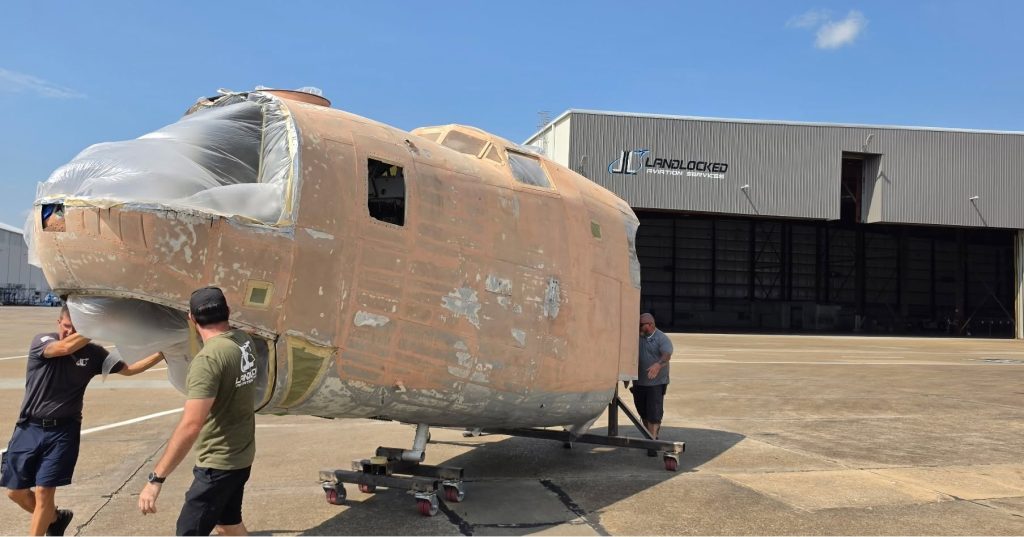
(Image credit: LandLocked Aviation Services)
Vintage Aviation News has followed the Liberator’s journey since its transfer to the National Museum of the Mighty Eighth Air Force was announced in June 2025. Restoration and disassembly officially began at Barksdale Air Force Base in early 2026, followed by the completion of Phase I and removal of all four engines. This latest milestone marks the completion of Phase II and the beginning of the aircraft’s offsite painting and restoration work.
A Rare Ford-Built Liberator
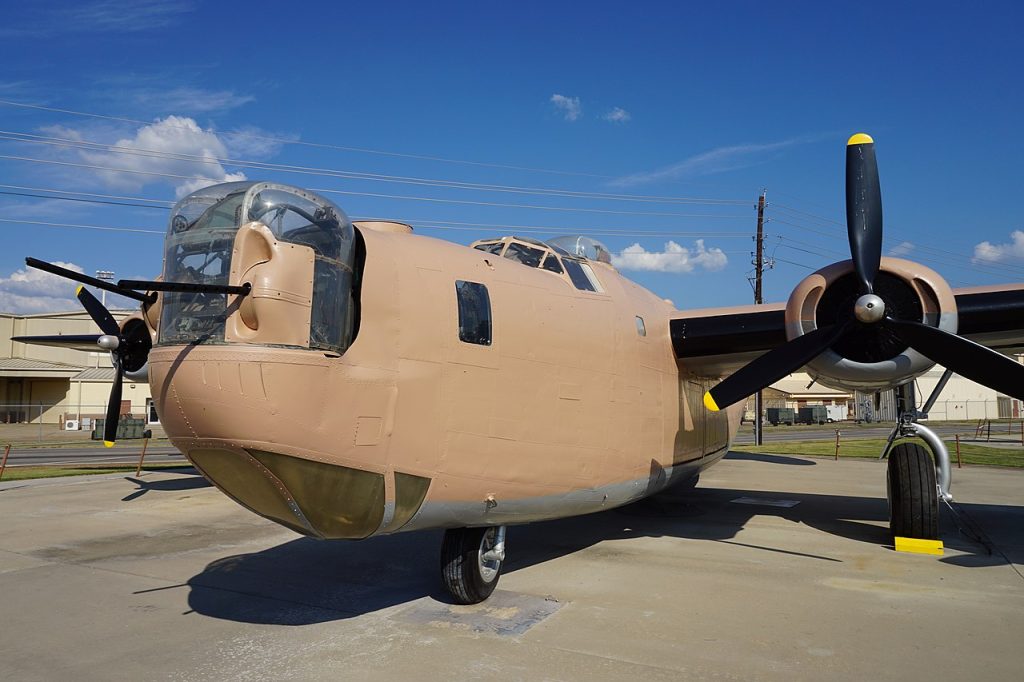
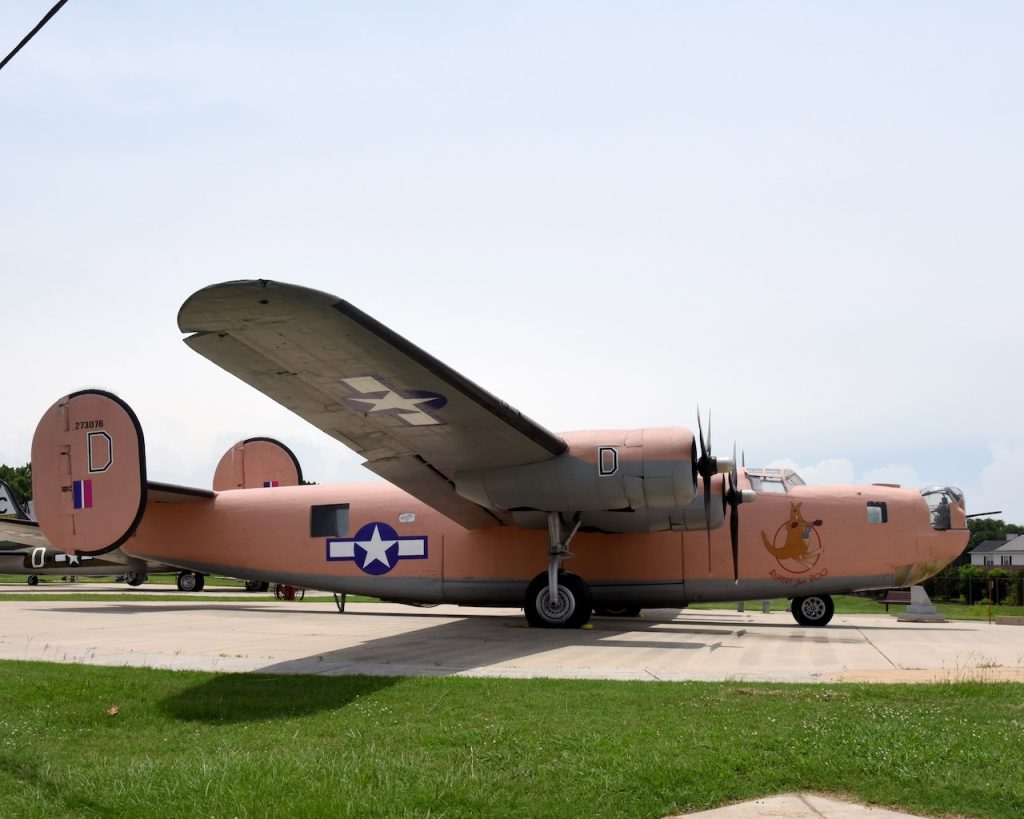
The aircraft, Consolidated B-24J-20-FO Liberator serial number 44-48781, was manufactured by Ford at the Willow Run plant in Ypsilanti, Michigan. Delivered to the U.S. Army Air Forces on August 10, 1944, the bomber is not known to have entered combat before being removed from military service in December 1945. After the war, it was transferred to the Spartan School of Aeronautics in Tulsa, Oklahoma, where it served as a ground-based instructional airframe for aircraft mechanics. That role likely contributed significantly to its survival at a time when thousands of surplus B-24s were being scrapped.
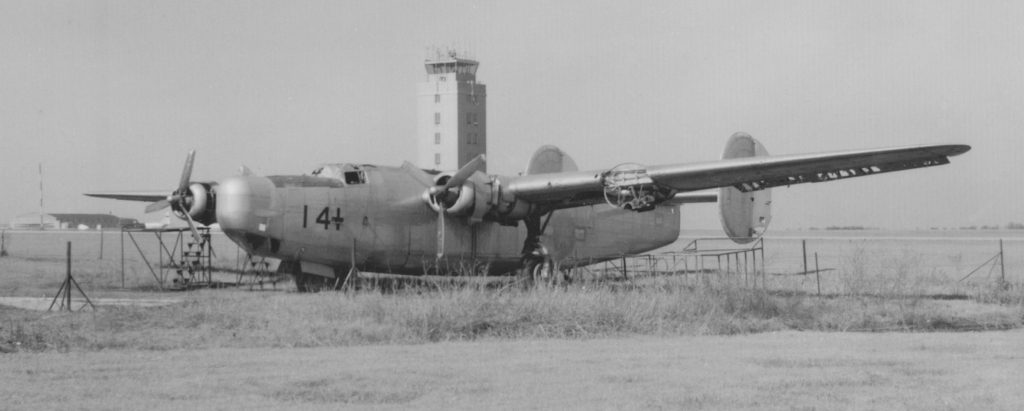
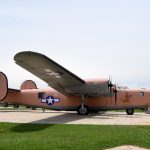
The aircraft remained exposed to the elements for many years before being relocated to Barksdale Air Force Base in 1978. Volunteers subsequently worked to stabilize and preserve the airframe for outdoor display at the Barksdale Global Power Museum. Over the years, it appeared in several different identities and paint schemes, including Laiden Maiden, Louisiana Belle II, and, most recently, Rupert the Roo II. One of only three B-24s in the National Museum of the U.S. Air Force’s historical collection, the aircraft was approved for transfer to the National Museum of the Mighty Eighth Air Force in Pooler, Georgia, in 2025. The project is being undertaken through cooperation among the Eighth Air Force, the National Museum of the U.S. Air Force, Barksdale Air Force Base, and the National Museum of the Mighty Eighth Air Force.
Restoration and Disassembly
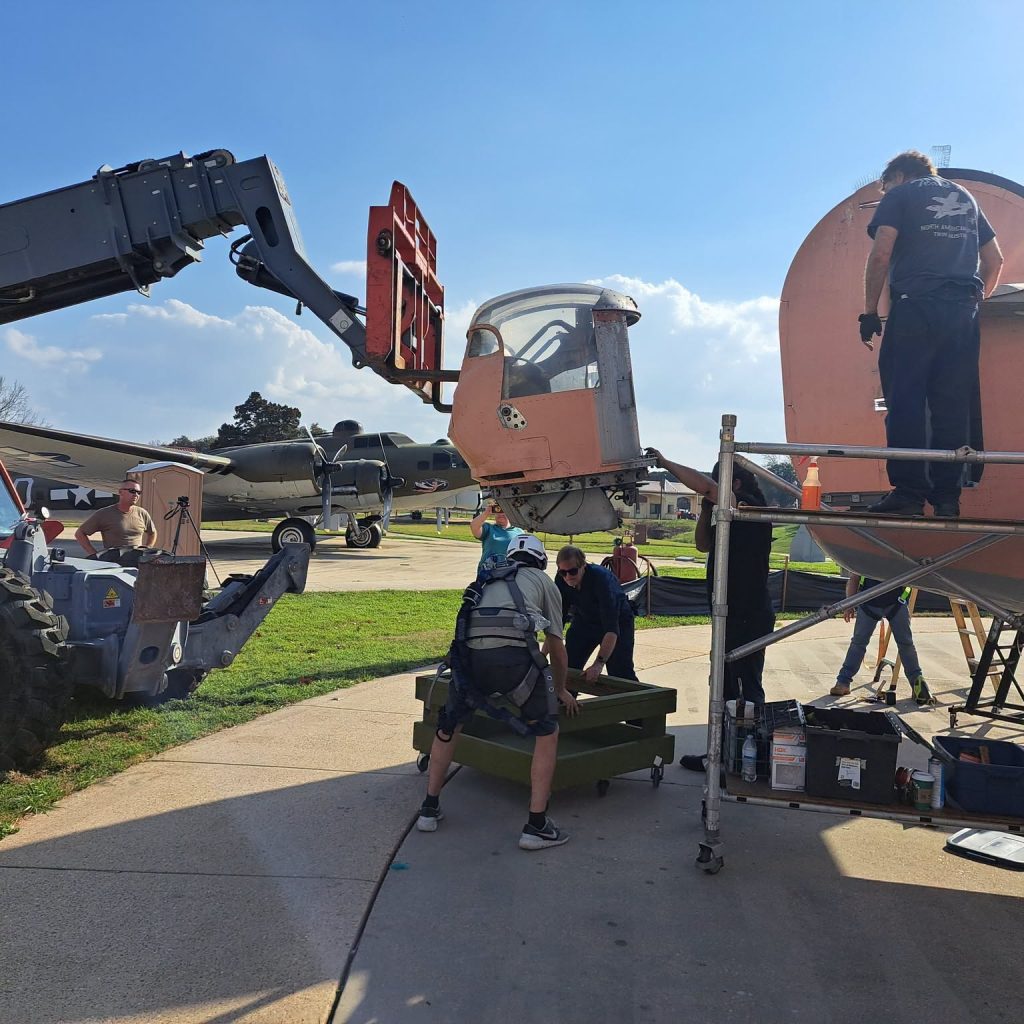
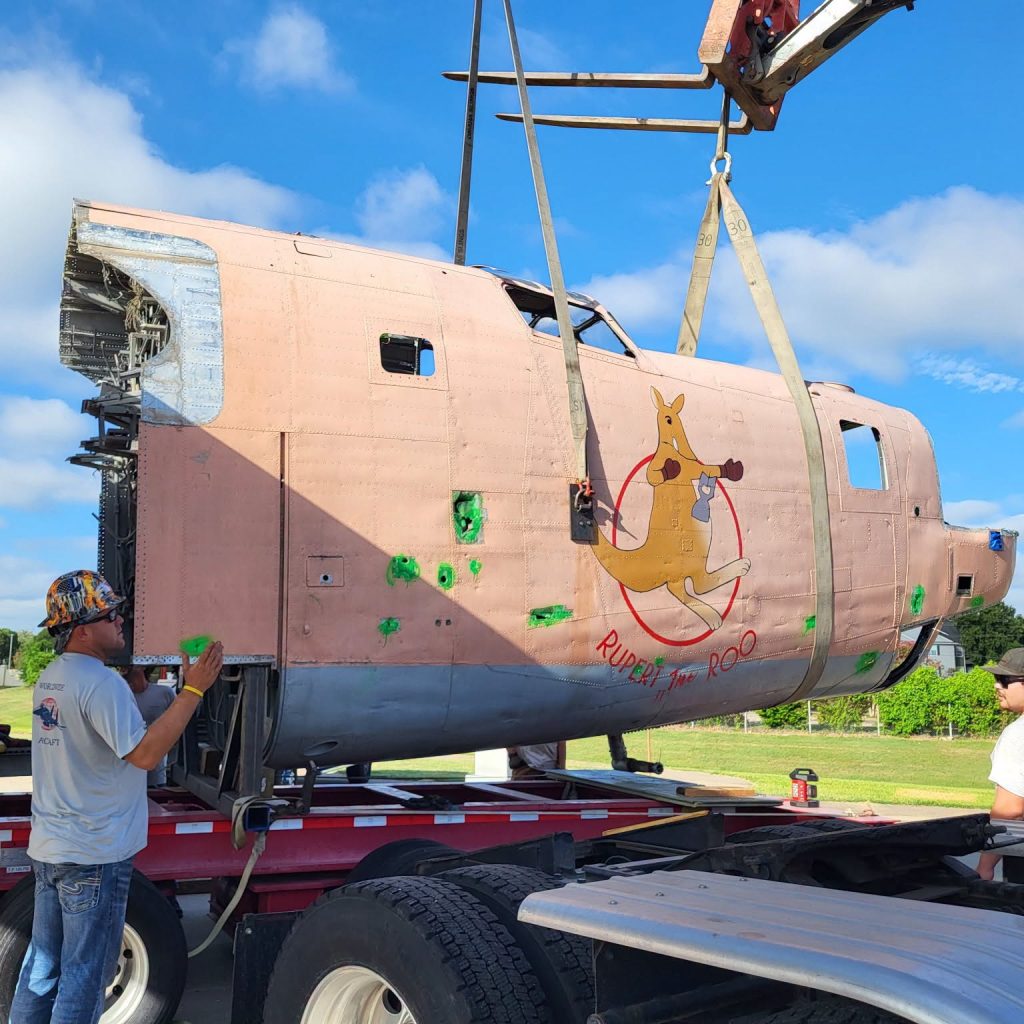
The museum announced plans to become the future home of the Liberator in June 2025. Formal restoration and removal work began at Barksdale in February 2026, when museum staff, volunteers, and project partners started documenting the aircraft and carefully disassembling its major components. During Phase I, the aircraft’s ailerons, flaps, horizontal and vertical stabilizers, turrets, propeller assemblies, and other components were cataloged and removed. All four engines were also detached and prepared for transport to specialized restoration facilities. That initial phase was completed in May. Phase II focused on separating the B-24’s main wing assembly from the fuselage—a complex operation requiring the careful support, lifting, and handling of one of the largest structural sections of the bomber. With the wing successfully removed and the components transported from Barksdale, work can now proceed on the airframe’s surface preparation, painting, conservation, and restoration.
(Image credit: National Museum of the Mighty Eighth Air Force)
Reuniting the Eighth Air Force’s Heavy Bombers
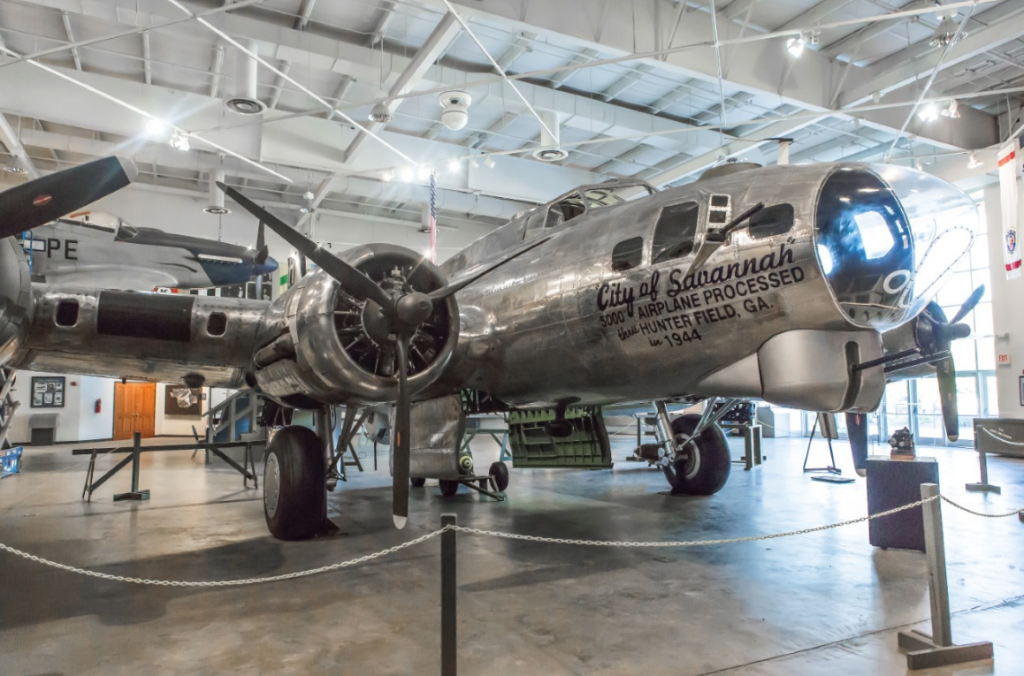
Once the restoration and relocation are complete, the B-24 will be installed alongside the museum’s Boeing B-17 Flying Fortress, City of Savannah. Placing the two bombers together will allow the museum to present a more complete account of the aircraft and crews that carried out the Eighth Air Force’s daylight strategic bombing campaign over occupied Europe during WWII. While the B-17 remains the aircraft most closely associated with the Eighth Air Force, the B-24 played an equally important role. Liberators operated with the Eighth Air Force’s Second Air Division from bases across East Anglia, striking aircraft factories, oil facilities, transportation networks, and other strategic targets deep inside enemy territory.
More than 18,000 B-24s were produced during WWII, making the Liberator the most-produced American military aircraft in history. Its high-aspect-ratio Davis wing, long range, and substantial payload allowed the type to undertake strategic bombing, maritime patrol, reconnaissance, transport, and special-operations missions in every major theater of the war.
(Image credit: National Museum of the Mighty Eighth Air Force)
The restoration and future display form part of the museum’s Maximum Effort expansion campaign, which will create new galleries and educational spaces. The museum currently projects that the Liberator will reach Pooler in early spring 2027, although additional work will be required before it can be placed on public exhibition. With Phase II now complete and the aircraft delivered to LandLocked Aviation, the rare Liberator has taken another significant step toward its future home—and toward being displayed alongside the other heavy bomber with which it helped carry the strategic air war over Europe. (National Museum of the Mighty Eighth Air Force, LandLocked Aviation)
(Image credit: National Museum of the Mighty Eighth Air Force)










Glad to see another Lib being preserved for all to see. My grandfather was a flight engineer on one in the 15AF (450BG, 722 BS). They’ve always held a special place in my heart for bringing him home safely.
Being born in 1943 to a USAAF pilot who flew ‘Libs for 3 yrs including 51 mission credits with the 15th AF in Italy, I ‘grew up’ with with this a/c
I was part of a crew of four who in February of 1980 traveled from Barksdale to Davis Monthan to retrieve four engines (From C-47 types) and useful items from Consolidated (T-29 and C-131) aircraft for this B-24.
A Great Aeroplane, although not quite as famous as the B17.
I read that some 1,900 Served in the R.A.F: in the Middle East – Raids on Italy and Southern Europe; in the Far East – for the Asian Campaign; and with Coastal Command – Convoy Protection and Reconnaissance Duties.
A Dependable Work Horse, and one with a great range of action; and, of course, Piloted by No Lesser Personage as James Stewart.
Great to see this B-24 get the love and attention that it deserves. Looking forward to watching the progress of the restoration.
Craig
Site Admin & Historian
450thbg.com
G’day to all fellow warbird lovers,
firstly,the Lib operated in Pacific theatre as well as all the above.My dad(RAAF) an air frame fitter, was stationed in the Top End,Northern Territory,from ’43 on.A story he once told was of overloaded Libs struggling to get unstuck and more than one crashing at takeoff.Stories you don’t usually hear.He was proud to have given blood to one survivor(less common type);direct,arm to arm,to send him on his journey to Sydney.Of course we’ll never know if he made it. At some stage in Victoria I think there was a resto on an (RAAF) Liberator.Have not heard of that in awhile though.
Keep up the great work;I for one really appreciate it!
Cheers from DownUnder,Rob.
I meant to ask…the nose name;Rupert the Roo. Did this plane have an Aussie connection somewhere,maybe?