







By Randy Malmstrom
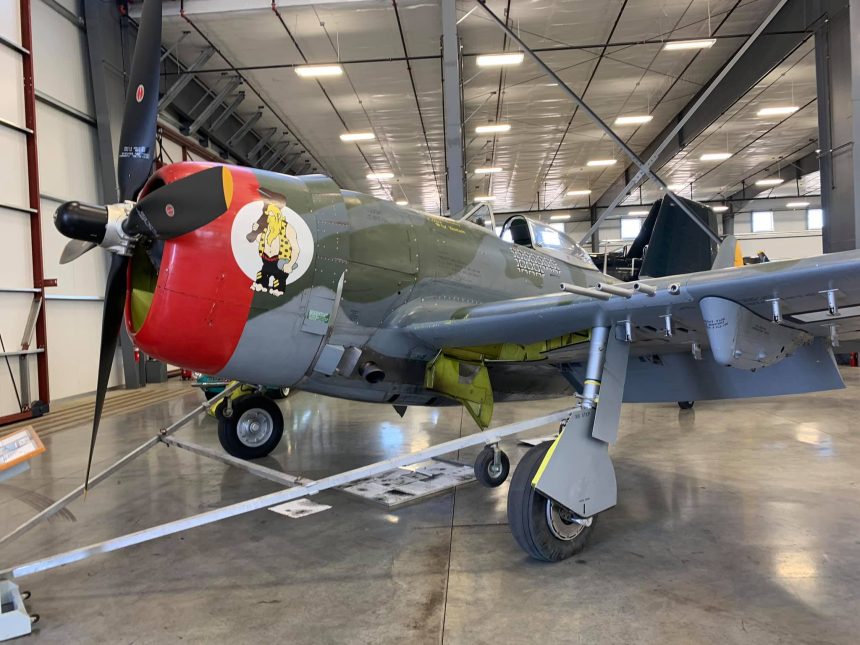
Republic P-47D-40-RA Thunderbolt, #44-90471 (this is not the original WWII veteran “Hairless Joe“). This particular airworthy aircraft was built in 1944 at the Republic plant in Evansville, Indiana, and delivered to the U.S. Army Air Forces as s/n #44-90471. It went to the Fuerza Aérea del Perú (FAP – Peruvian Air Force) and served as FAP-114. (In 1929, an independent air force, the Cuerpo de Aviación del Perú (CAP), had been formed, and by 1941 or shortly thereafter, the CAP received about 60 American aircraft under the Lend-Lease agreement with the United States, and after Peru signed the Rio Treaty in 1947, more U.S. aircraft were delivered, including P-47Ds).

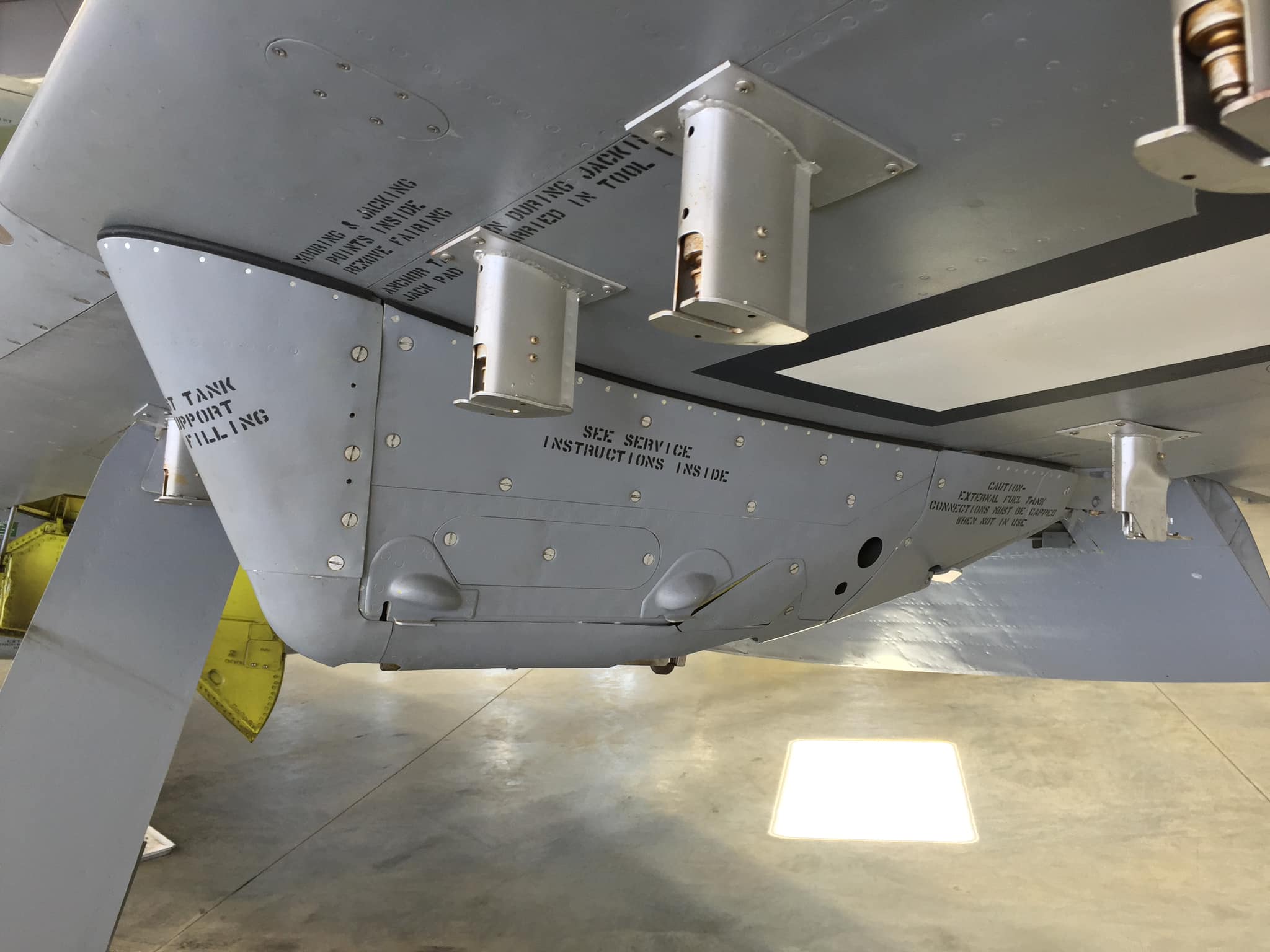
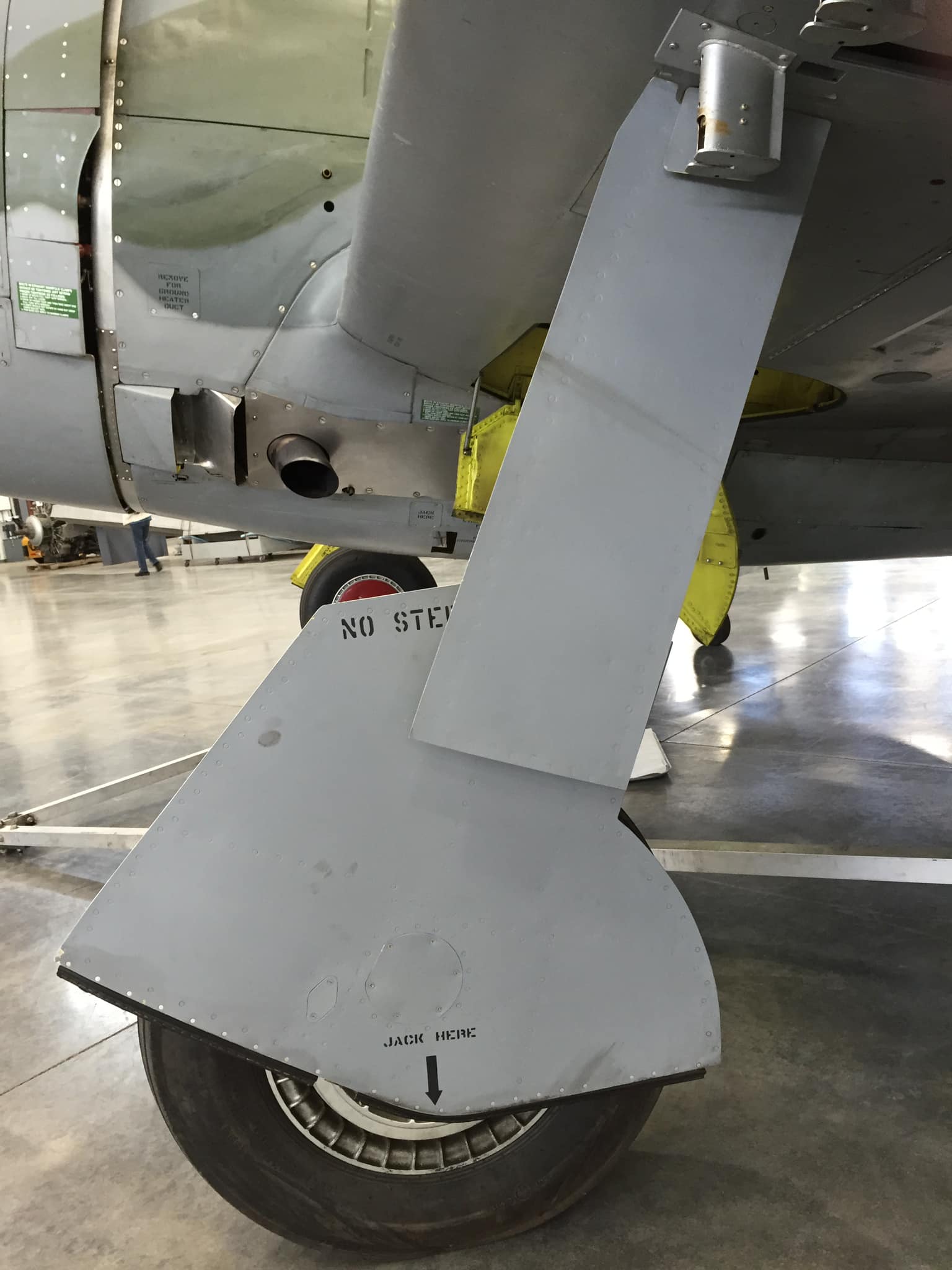
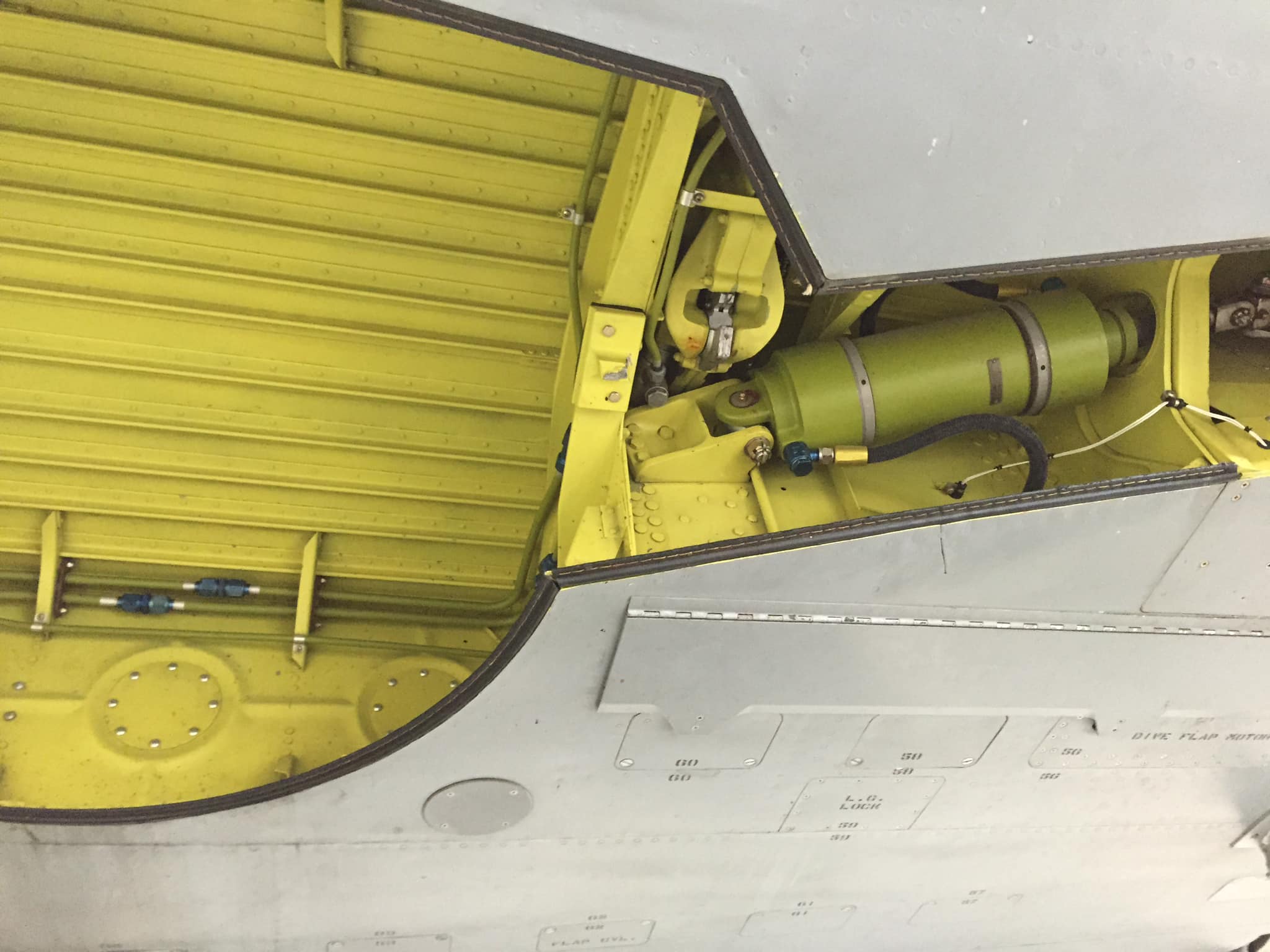
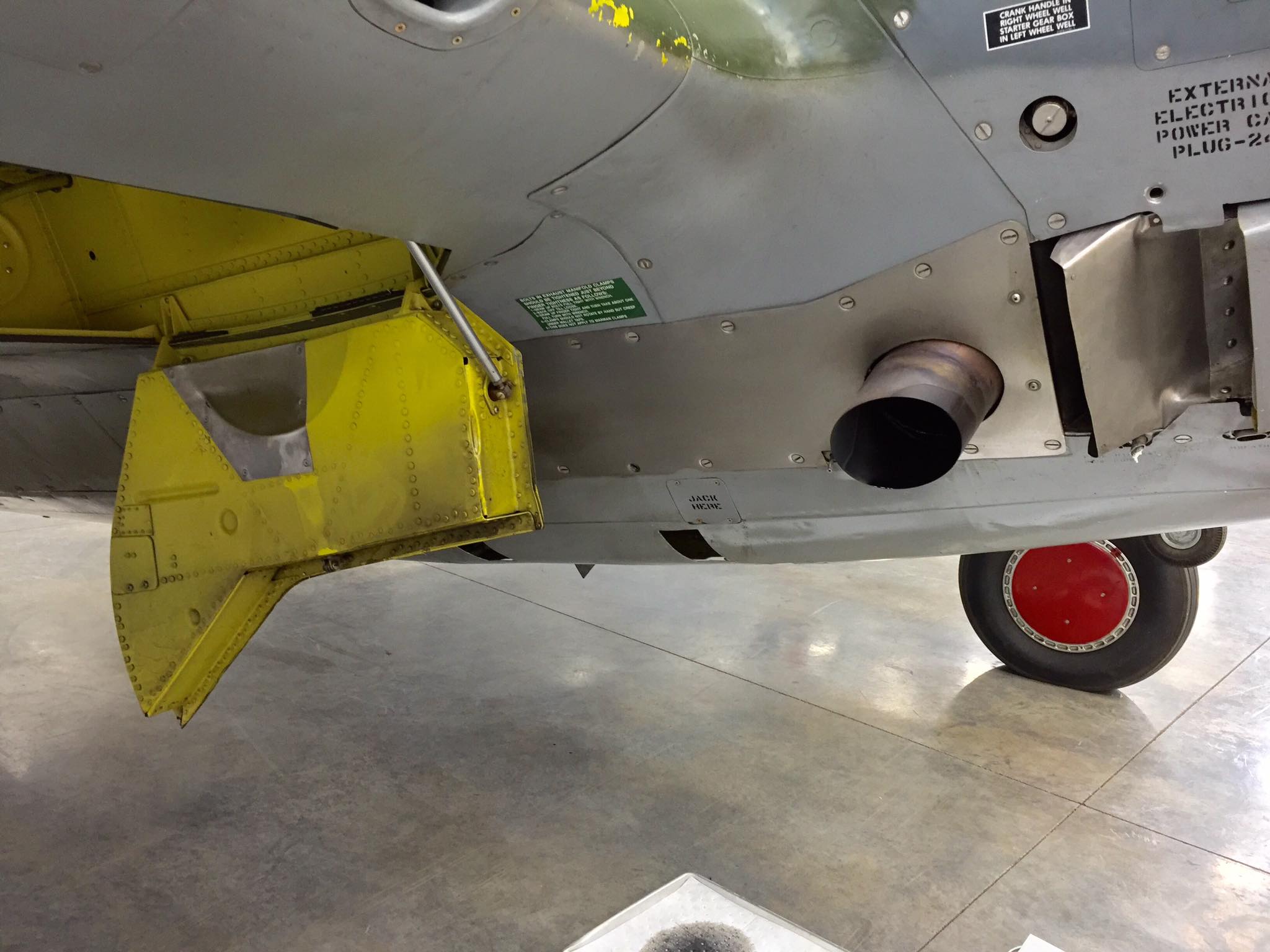

The Rio Treaty (1947) was an agreement binding the republics of the Western Hemisphere together in a mutual defense system. Also called the Rio Pact or the Inter-American Treaty of Reciprocal Assistance, the treaty became effective on December 3, 1948, when two-thirds of the member states had ratified it; the Peruvian Air Force was the surviving entity. After being struck, this aircraft had a history of ownership. Among other things, the aircraft sat behind the 56th Fighter Group Restaurant on Republic Airport in East Farmingdale, New York, in the 1980s (see photo), and then it sat partially disassembled for a time at the National Warplane Museum in Geneseo, New York; and was leased to Air Heritage Inc. of Beaver Falls, PA where restoration to airworthiness was started; and in April 1995, it was delivered to Henry J. “Butch” Schroeder and it first flew there in June 1997.

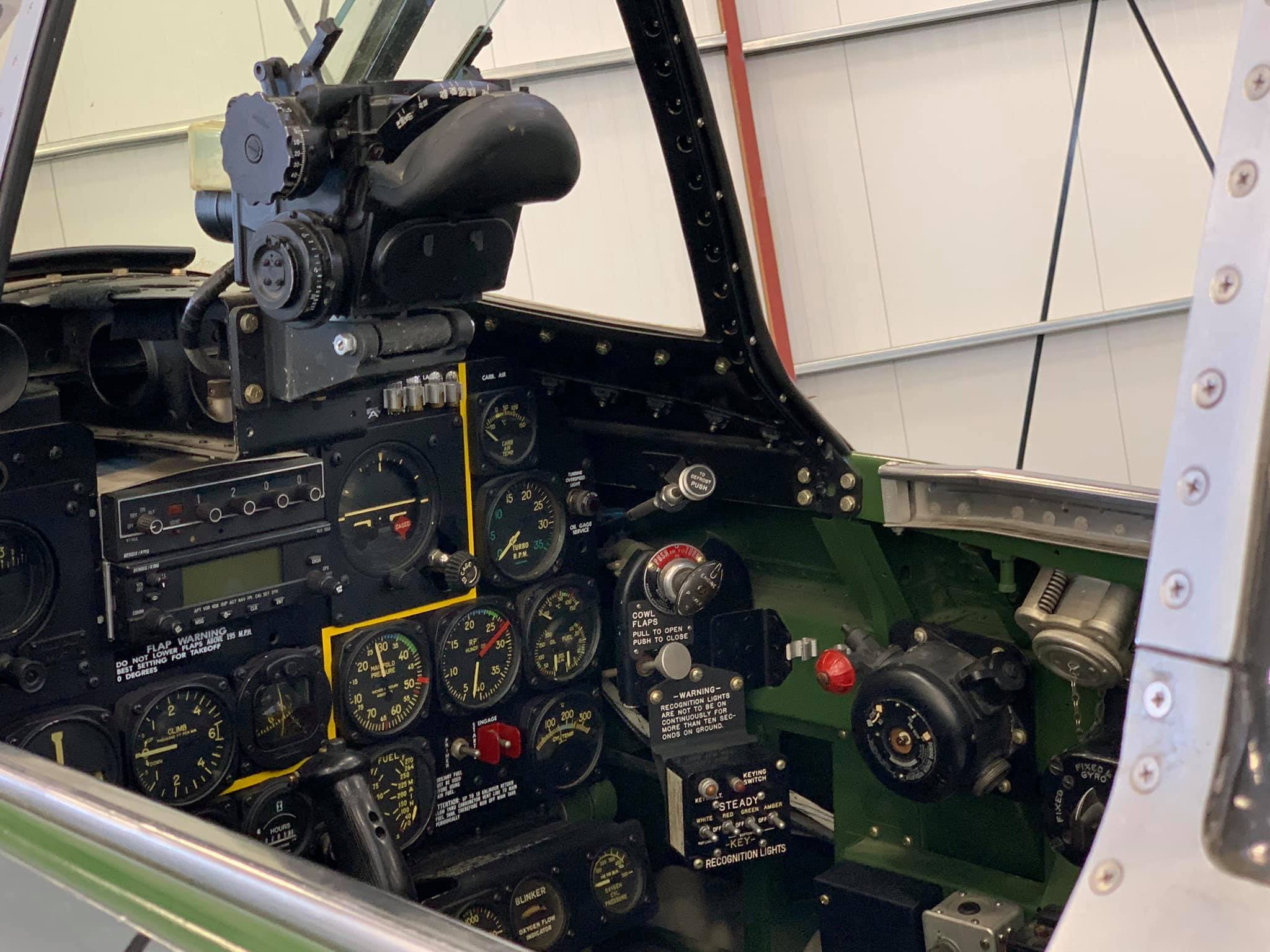
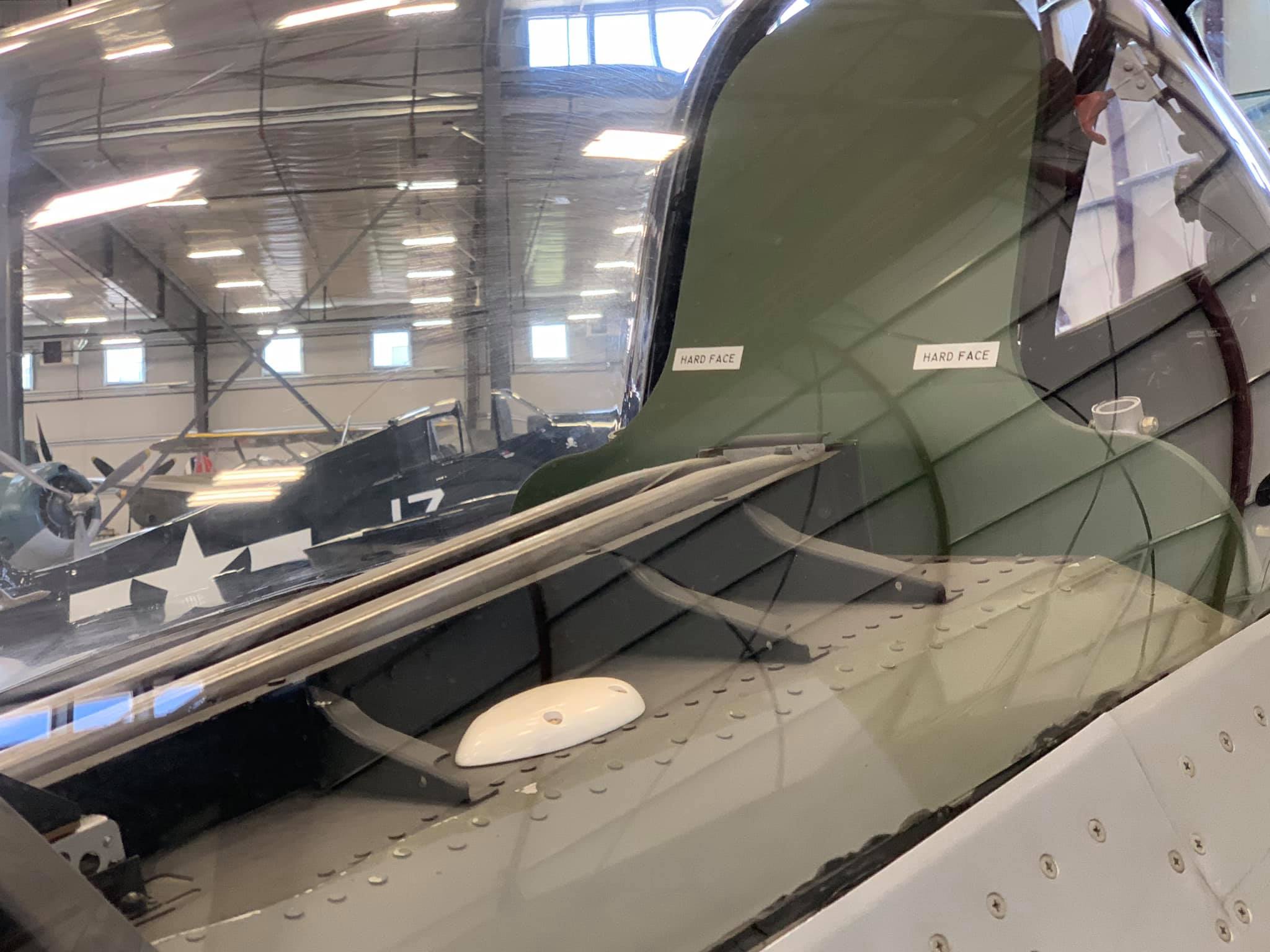
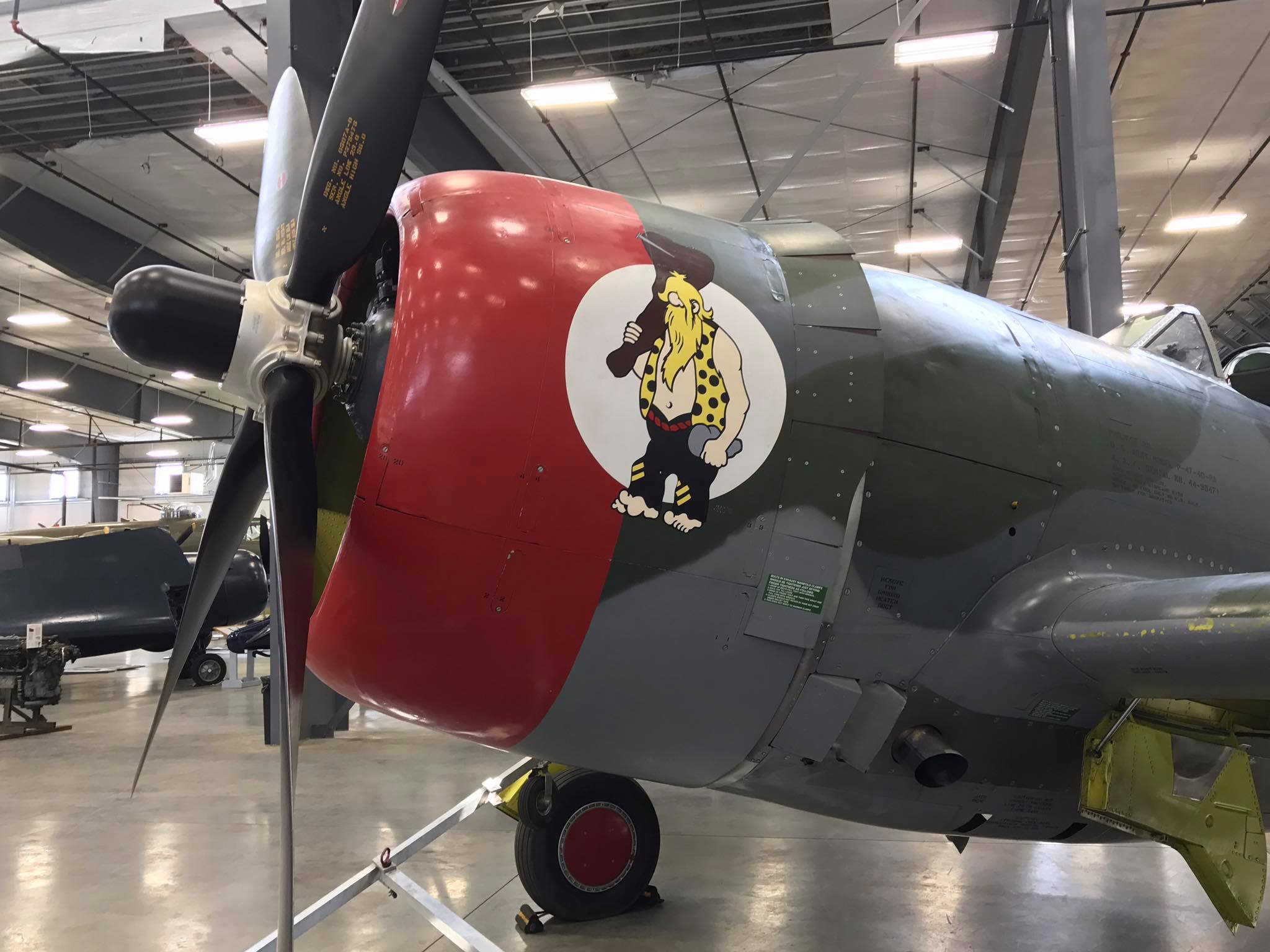
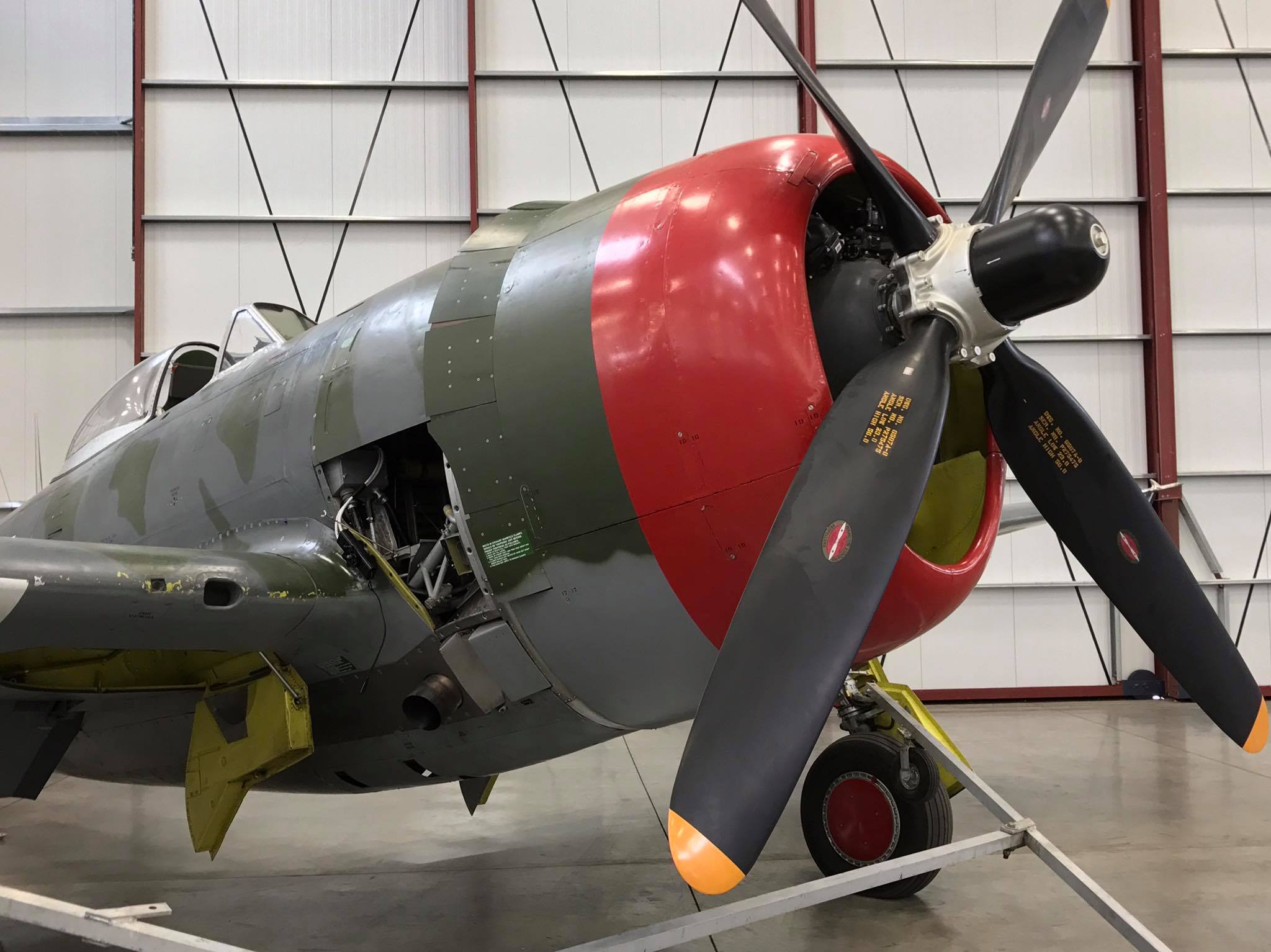
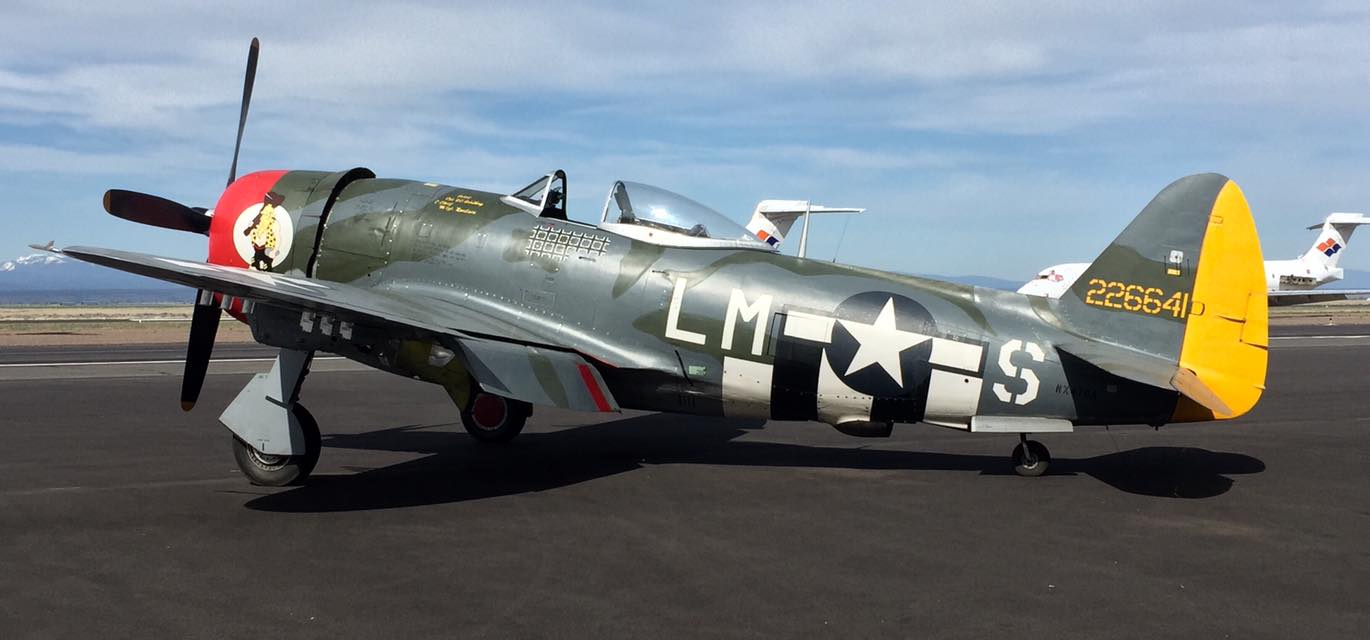
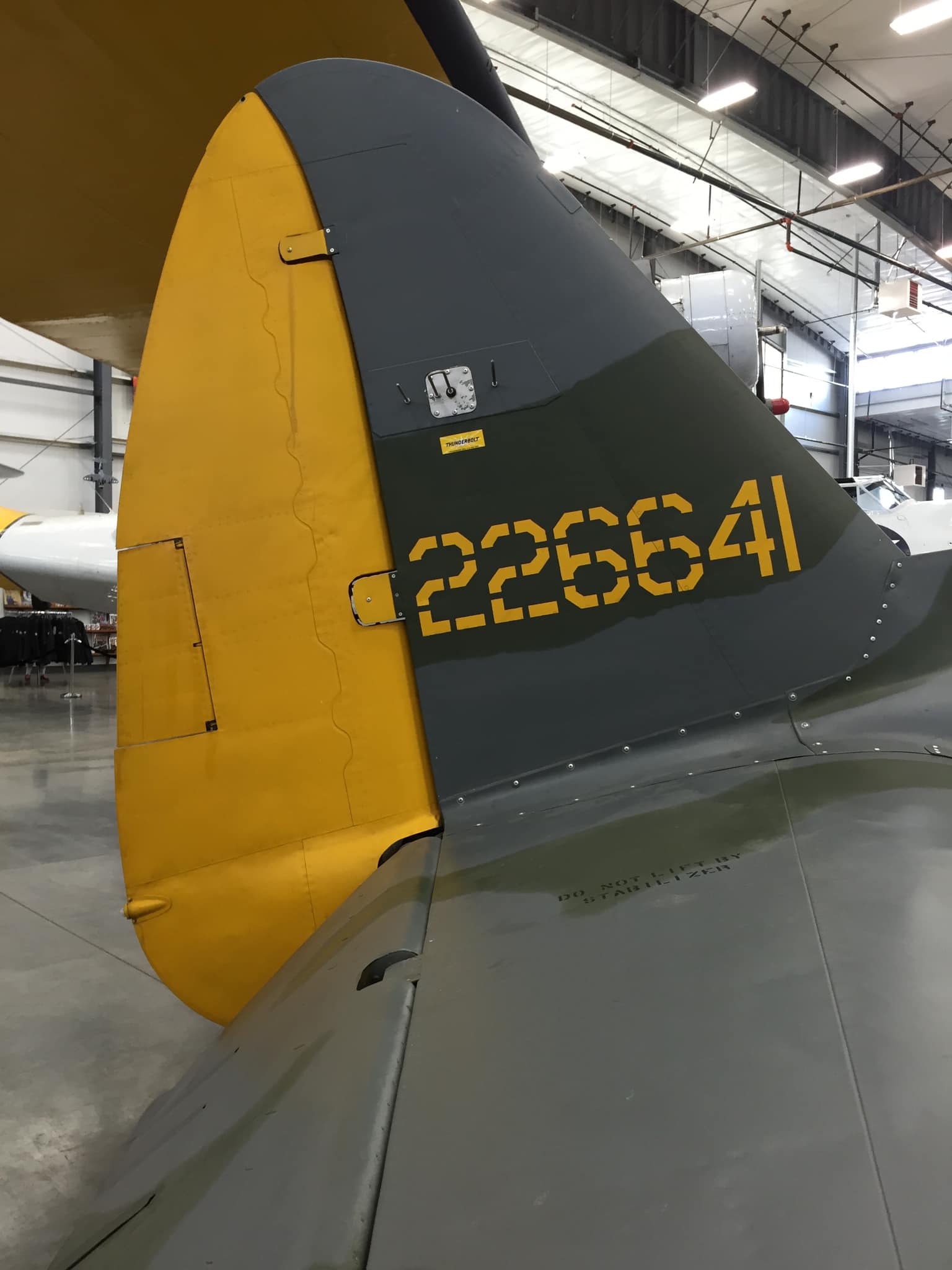
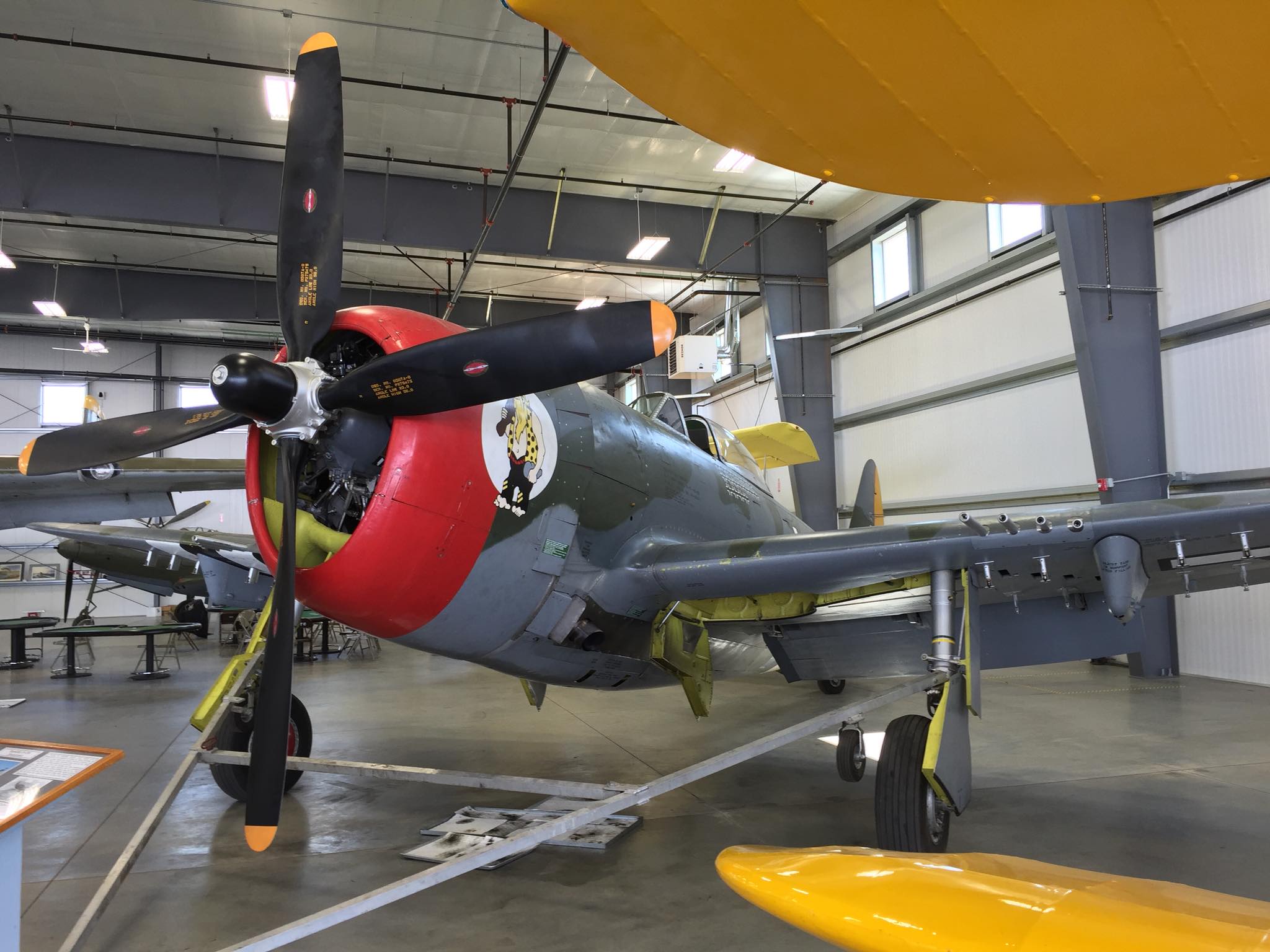
It is restored as P-47D-25RE, s/n 42-26641 “Hairless Joe” (from the cartoon strip “Li’l Abner” and who was a club-wielding, modern Cro-Magnon Man who frequently made good on his oft-repeated threat: “Ah’ll bash yore haid in!“), coded “LM-S” of Col. David C. Schilling, Commanding Officer and Assistant Director of Intelligence of the 56th Fighter Group (“Zemke’s Wolfpack“), 62nd Fighter Squadron, Eighth Air Force, who flew that aircraft from July 1944 to January 1945 out of Boxted, England. (The 56th is credited with more ace pilots than any other Eighth Air Force Fighter Group and also destroyed more enemy aircraft in air combat than any other. Francis “Gabby” Gabreski and Robert Johnson, the Eighth Air Force’s top aces, were both with the 56th, as was Col. Hubert A. “Hub” Zemke, who, along with Schilling, was one of the group’s commanding officers). Painted in Dark Sea Green and Dark Green on the upper surfaces, neutral grey undersurfaces, red nose band, yellow rudder, black/white invasion stripes around the wings and rear fuselage, yellow serial number on the tail fin, and white codes on the fuselage. It is part of the Erickson Aircraft Collection in Madras, Oregon, where most of the aircraft are airworthy. My photos and YouTube flight clips.

My cousin’s P-47 gun camera footage from WWII:
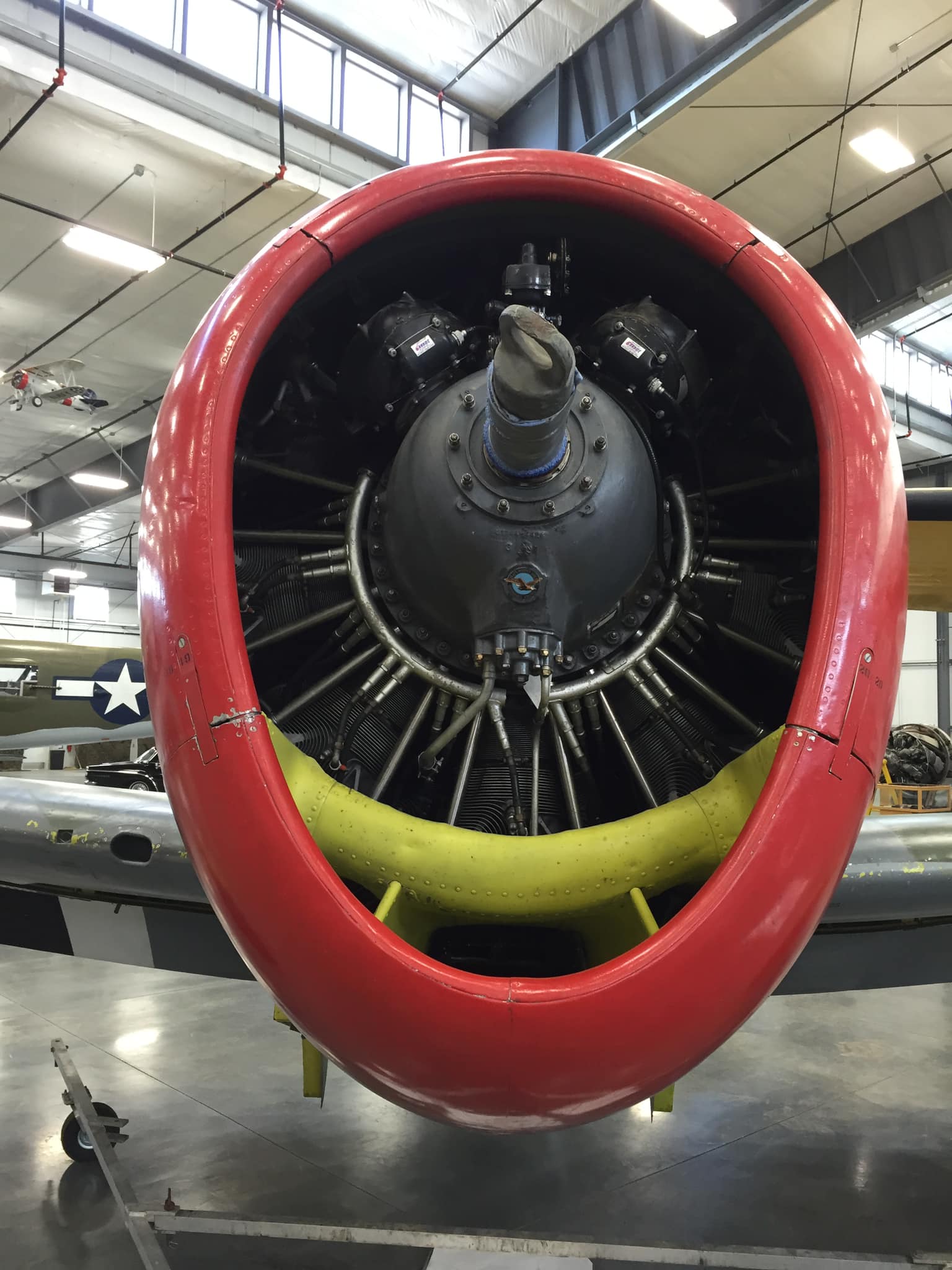
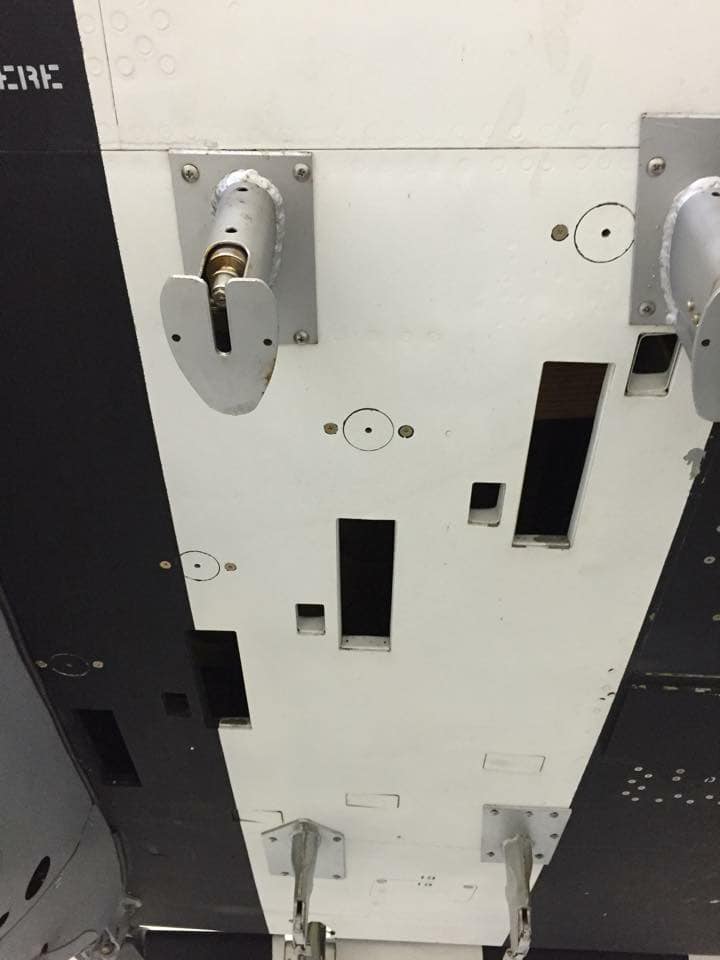
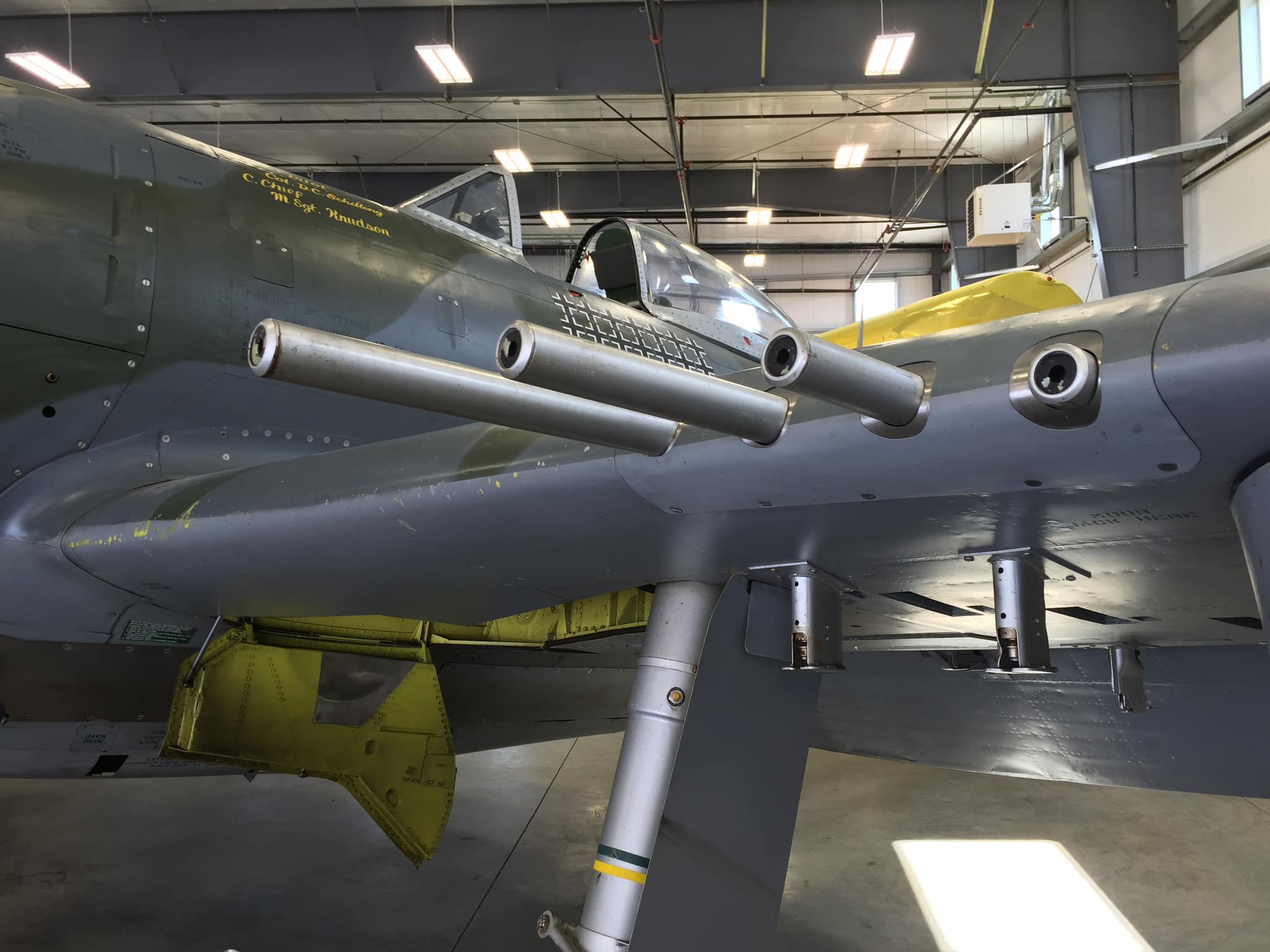
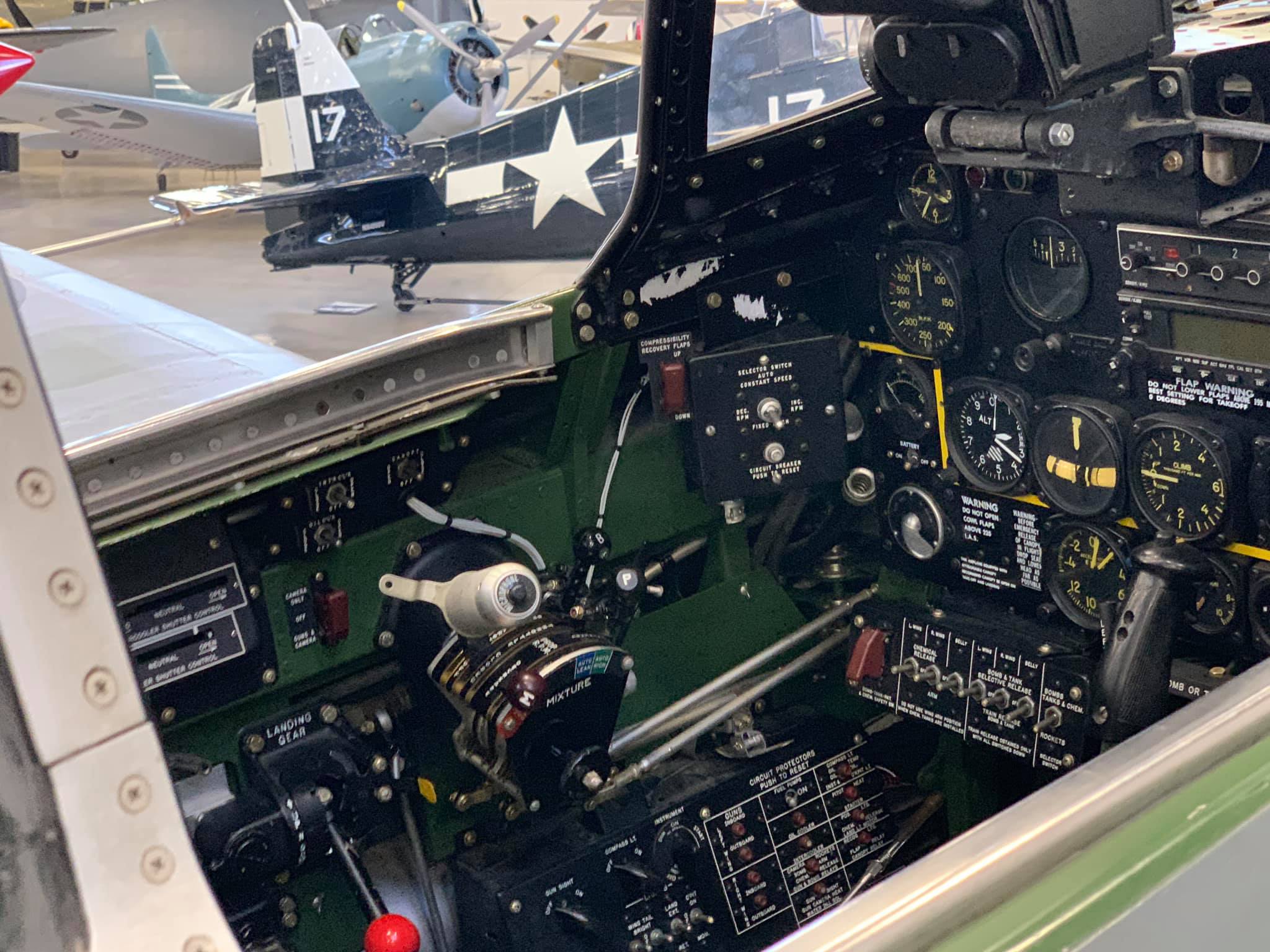
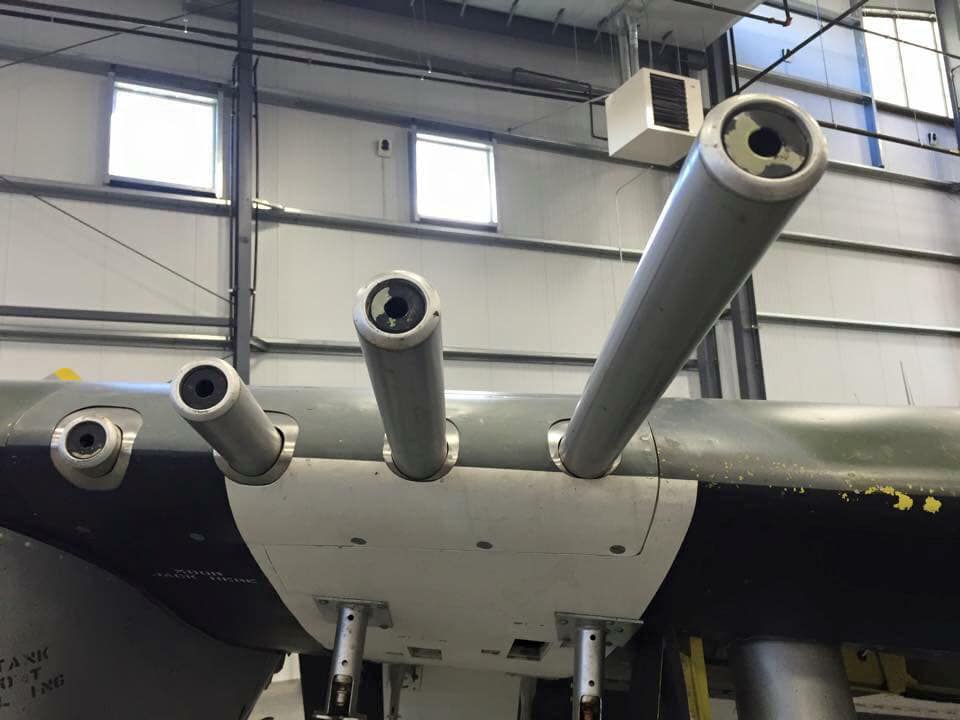
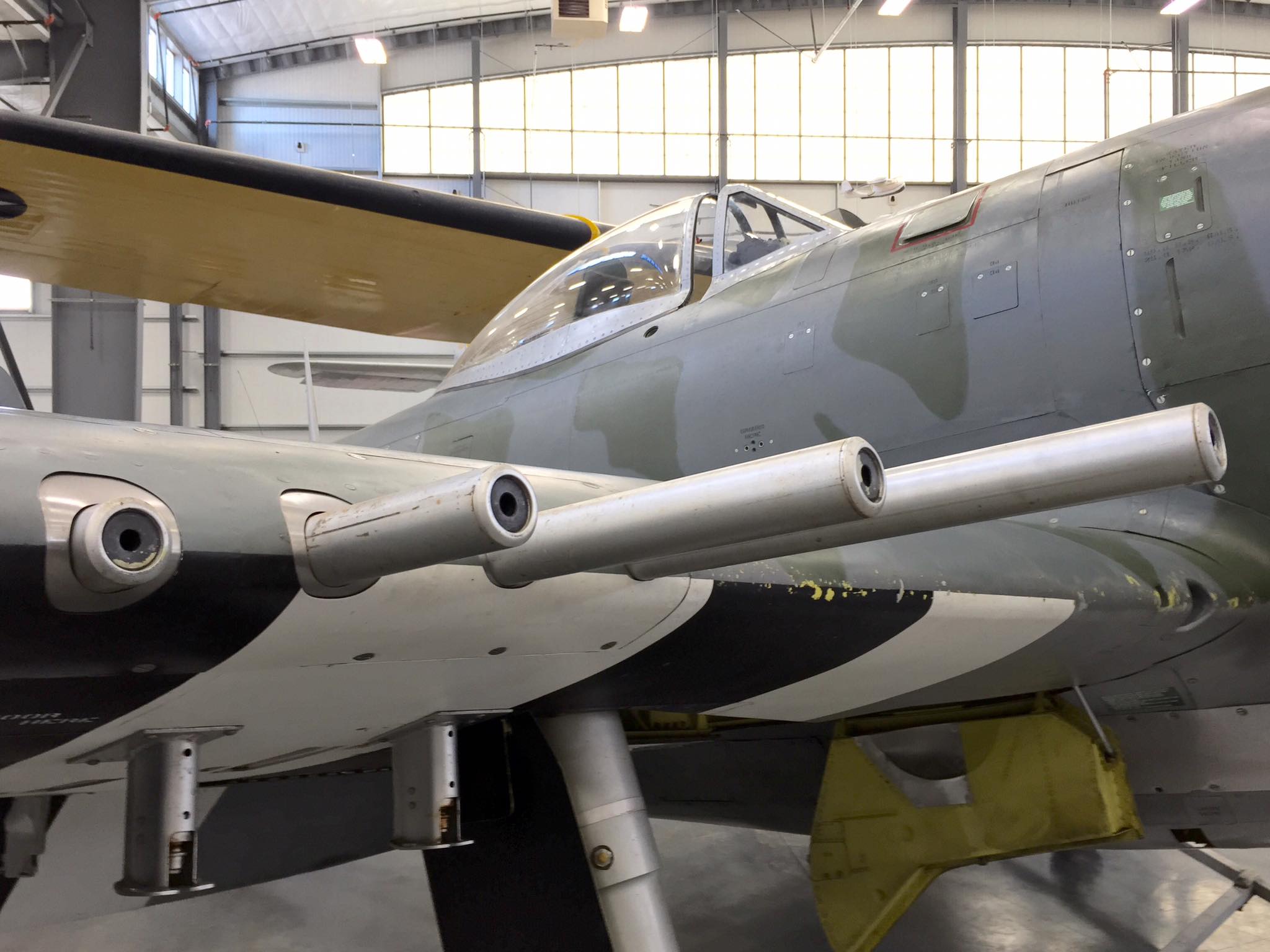
The P-47D was fitted with a Pratt & Whitney R-2800-59 18-cylinder engine. It was armed with eight Browning .50 cal. machine guns (four in each wing) with stainless steel cooling jackets on the gun barrels, staggered due to the placement of the ammunition belts. It could carry up to 2,500 lbs. of ordnance or 5-in. unguided missiles mounted on wing rails. The landing gear telescopes in and out nine inches, saving space in the wings. It has a windscreen heater tube that leads from the right side of the front of the engine.

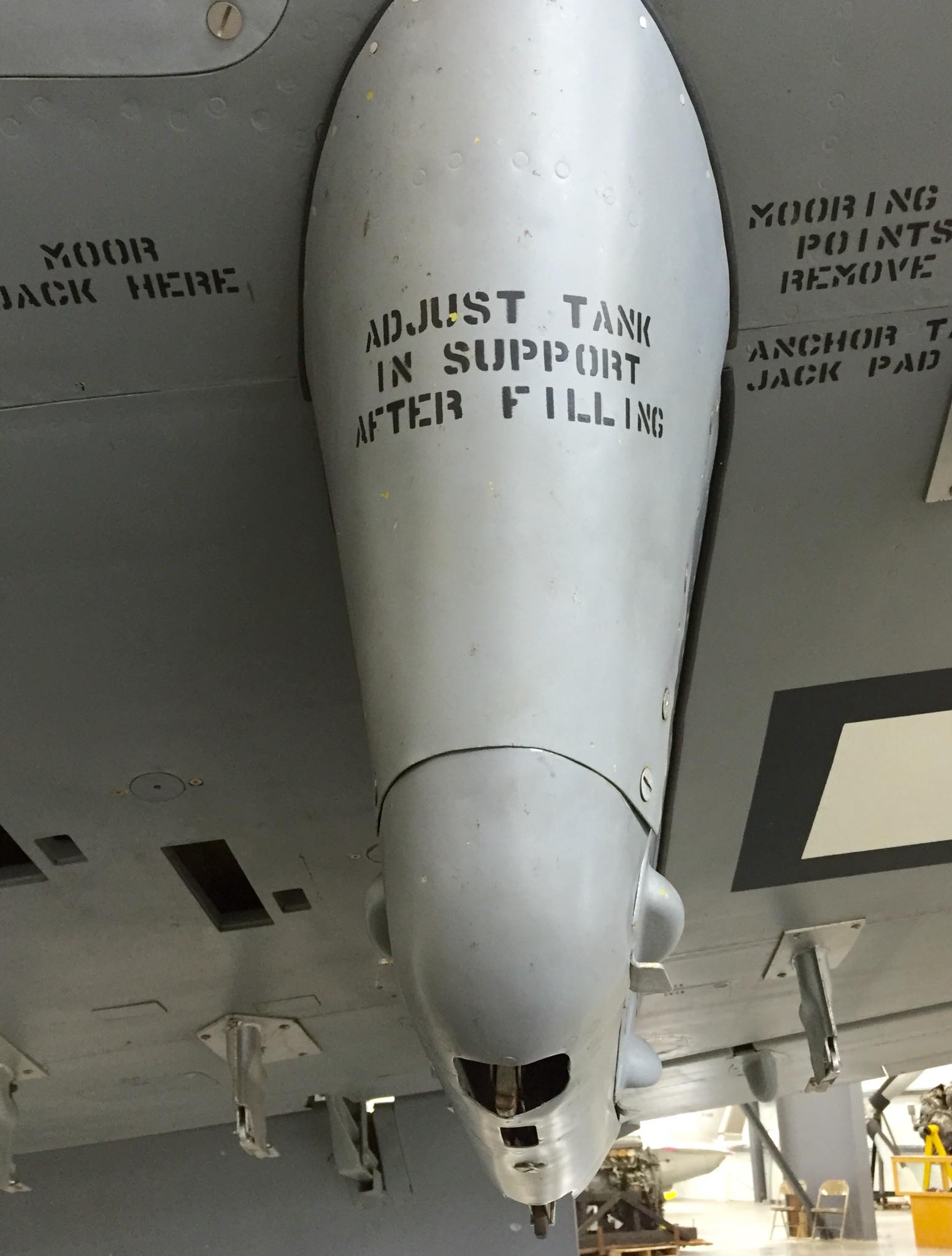
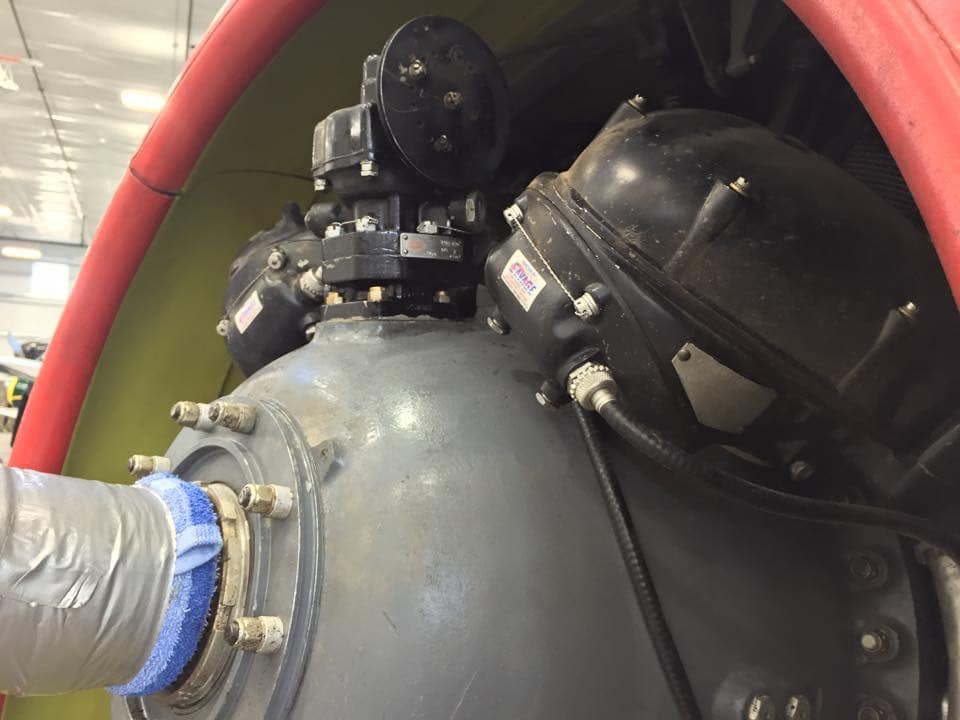
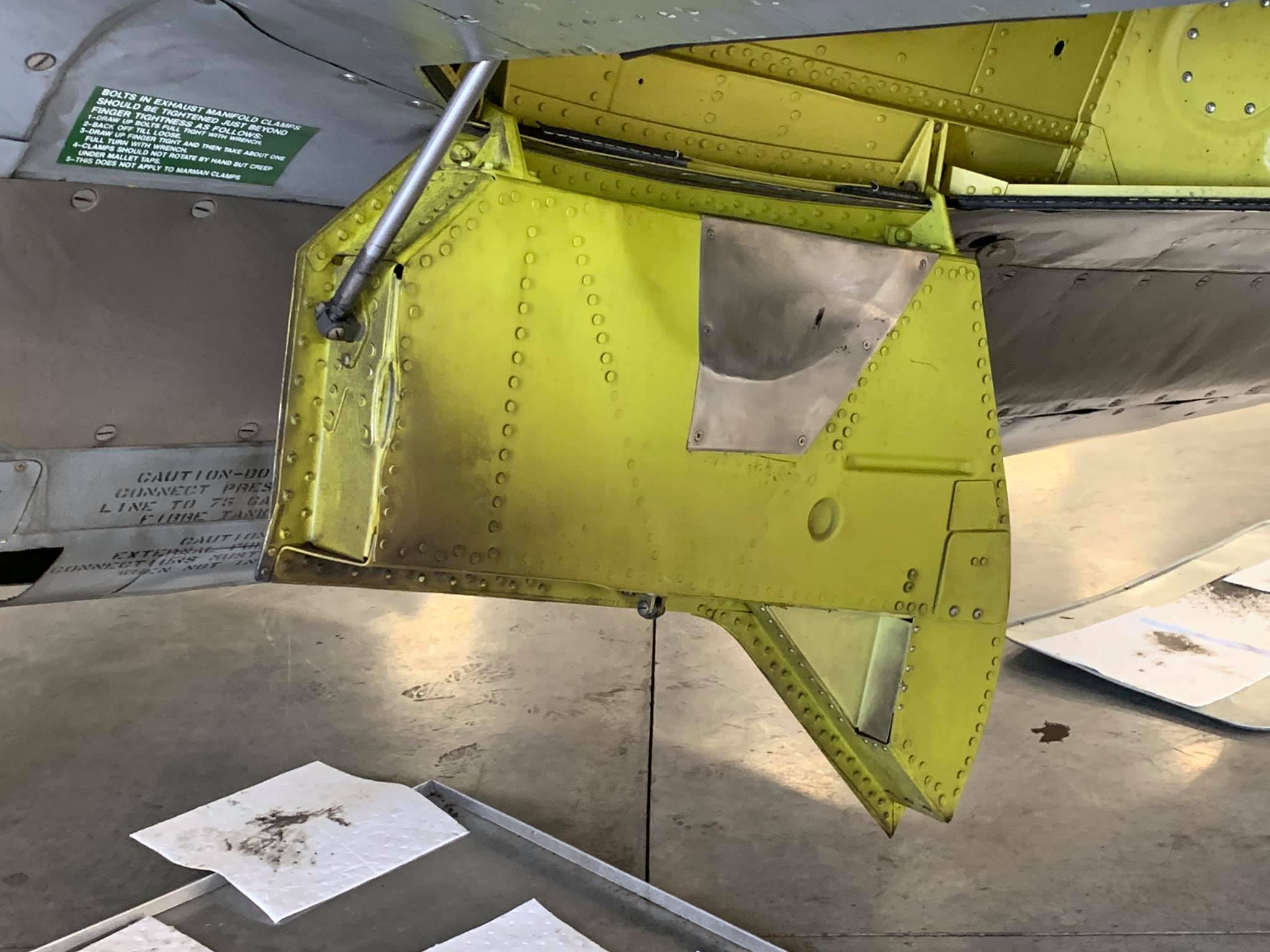
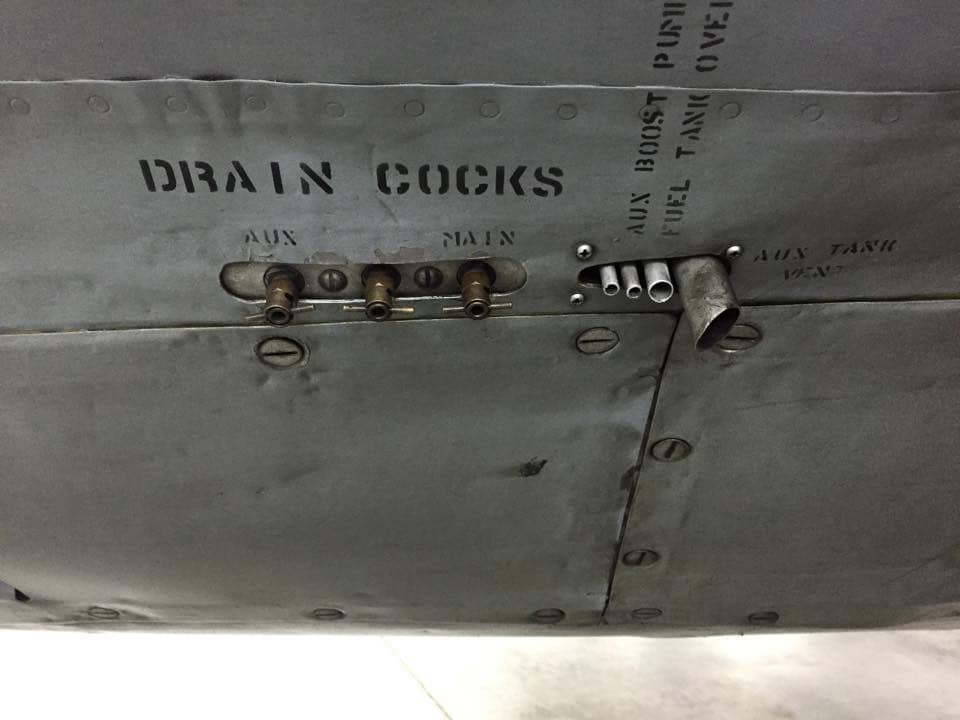
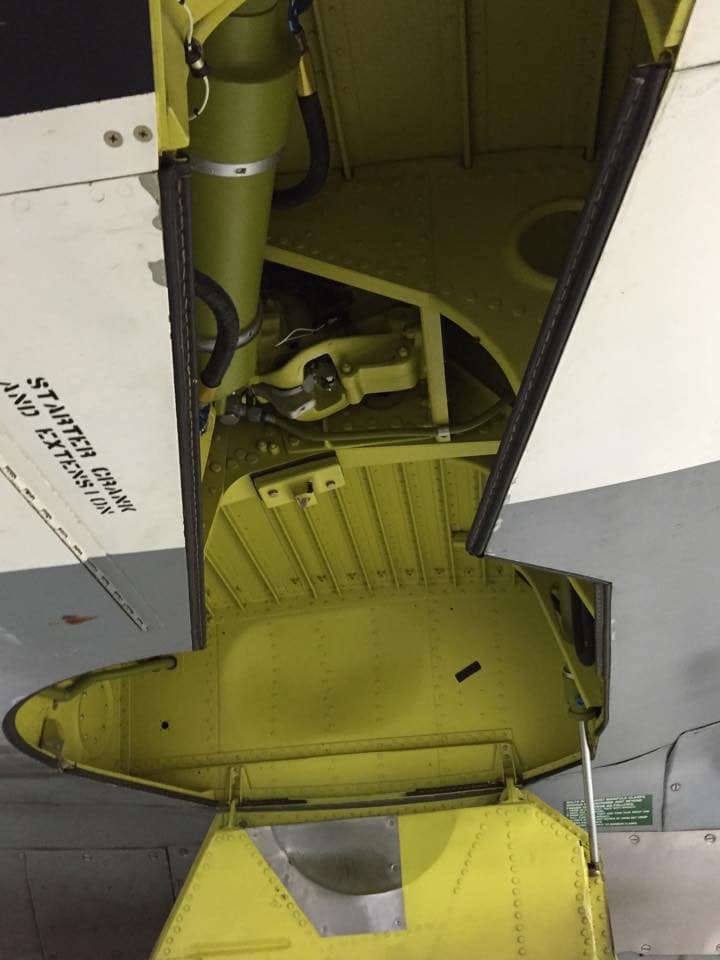
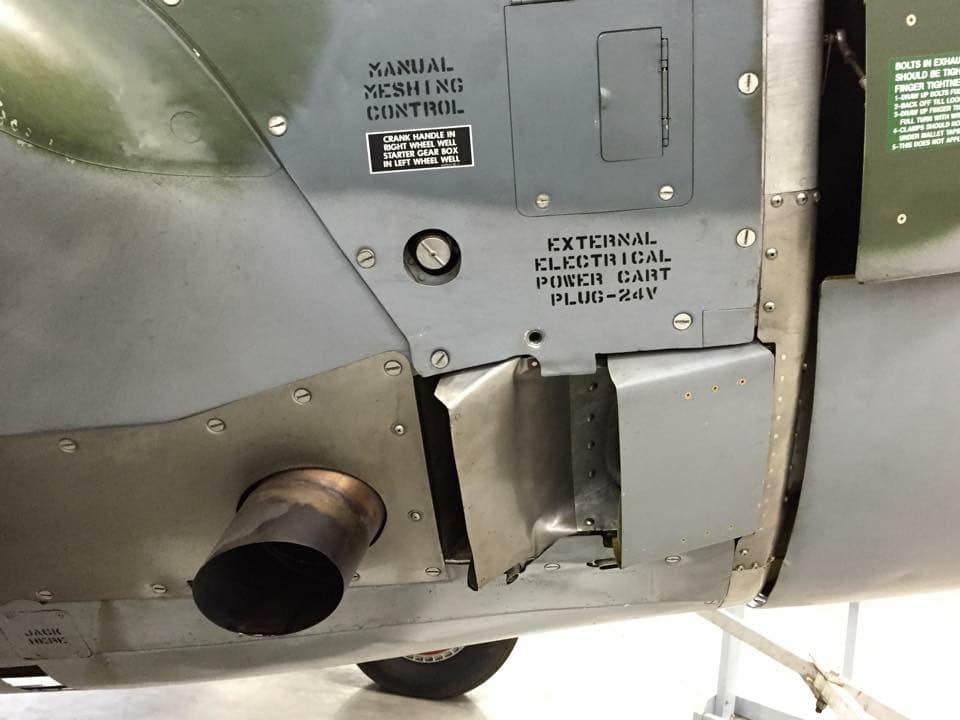
Powerplant: a Pratt & Whitney R-2800 Double Wasp radial engine (engine blowback on the port side wheel well cover was greater than on the starboard side due to prop wash). Late in WWII, many U.S. fighters were fitted with an AN/APS-13 UHF tail warning radar system that had a post and loop fixture on the tail fin and a warning light (on the cowl) and bell (next to the pilot). The system could detect aircraft in a narrow arc up to 2,500 ft. behind the aircraft, but below about 4,000 ft. it had a tendency to pick up ground reports, setting off the alarm; it could also not detect friend from foe.

About the author: 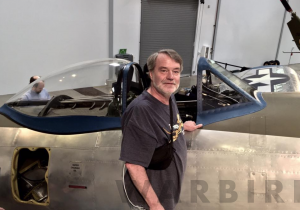 Randy Malmstrom grew up in a family steeped in aviation culture. His father, Bob, was still a cadet in training with the USAAF at the end of WWII but did serve in Germany during the U.S. occupation in the immediate post-war period, where he had the opportunity to fly in a wide variety of types that flew in WWII. After returning to the States, Bob became a multi-engine aircraft sales manager and, as such, flew a wide variety of aircraft; Randy frequently accompanied him on these flights. Furthermore, Randy’s cousin, Einar Axel Malmstrom, flew P-47 Thunderbolts with the 356th FG from RAF Martlesham Heath. He was commanding this unit at the time he was shot down over France on April 24th, 1944, spending the rest of the war as a prisoner of war. Following his repatriation at war’s end, Einar continued his military service, attaining the rank of Colonel. He was serving as Deputy Wing Commander of the 407th Strategic Fighter Wing at Great Falls AFB, MT, at the time of his death in a T-33 training accident on August 21, 1954. The base was renamed in his honor in October 1955 and continues to serve in the present USAF as home to the 341st Missile Wing. Randy’s innate interest in history in general, and aviation history in particular, plus his educational background and passion for WWII warbirds, led him down his current path of capturing detailed aircraft walk-around photos and in-depth airframe histories, recording a precise description of a particular aircraft in all aspects.
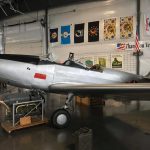
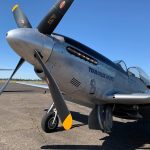
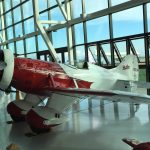

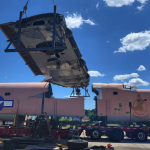



The color scheme on this P-47 is Sea Gray, and Dark Green over Neutral Gray.