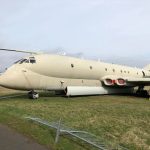


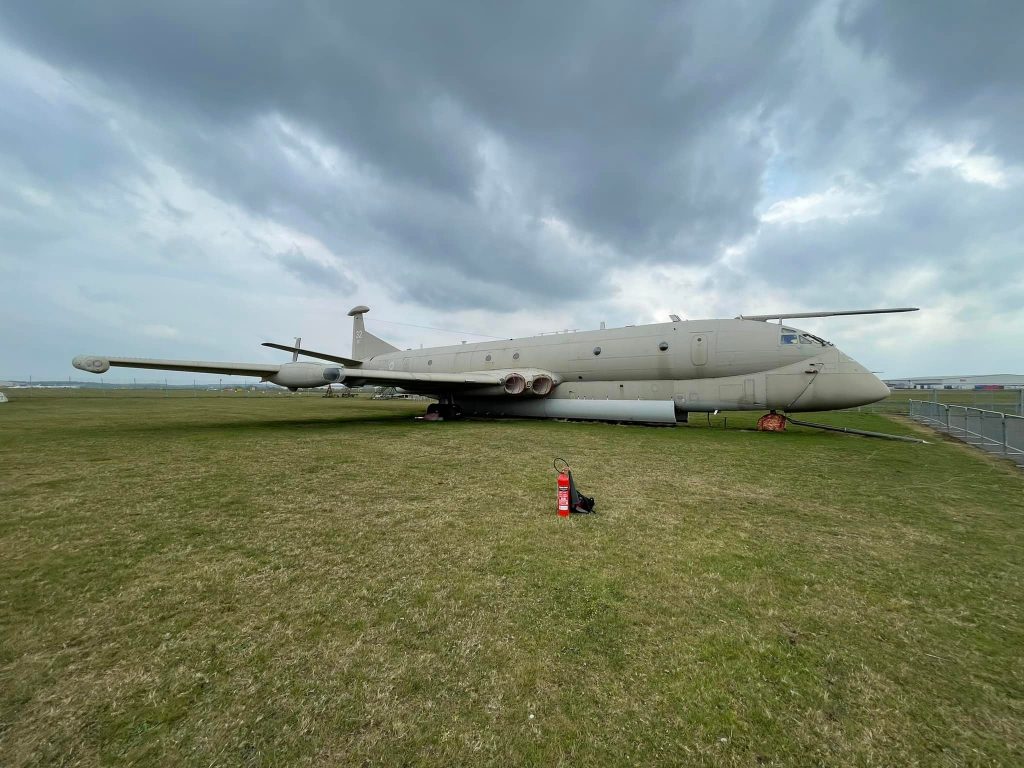
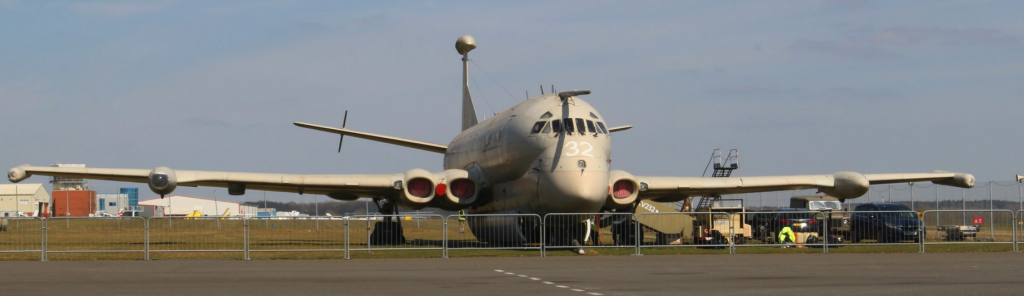
The effort to save historic Hawker Siddeley Nimrod MR.2 XV232 has entered a critical new phase, with volunteers preparing for the complex dismantling and relocation of the Falklands War veteran from Coventry Airport to the RAF Manston History Museum. Although fundraising efforts have attracted encouraging support, significant engineering, logistical, and financial challenges remain. The campaign to preserve Hawker Siddeley Nimrod MR.2 XV232, affectionately known as The Mighty Hunter, continues to make progress as the Nimrod Preservation Group prepares for one of the most demanding phases of the aircraft’s preservation: dismantling the large maritime patrol aircraft and transporting it to a new home at the RAF Manston History Museum in Kent, England. The volunteer-led organization has been working to secure the aircraft’s future following the closure of Coventry Airport, where XV232 has been maintained and displayed for more than a decade.
As previously reported by Vintage Aviation News in November 2025, “Nimrod Preservation Group Announces Urgent Plans for XV232 ‘The Mighty Hunter’”, the aircraft’s future became uncertain when the group received notice that operations at Coventry Airport would have to cease. The announcement prompted an urgent search for a suitable new location and a practical solution to preserve one of the few remaining examples of Britain’s iconic maritime reconnaissance aircraft. Since that initial announcement, the preservation effort has evolved considerably. Following detailed engineering assessments, the group abandoned the possibility of a one-time ferry flight and committed instead to a controlled relocation by road. In partnership with the RAF Manston History Museum, volunteers are now planning the careful removal of major aircraft components, including the Rolls-Royce Spey engines, tail assembly, and wings, before the airframe can be transported and eventually reassembled. The project has also entered a crucial fundraising period. In its latest appeal, the group thanked supporters for raising more than £2,300 while emphasizing that considerably more assistance is required to complete the relocation and secure the aircraft’s long-term future.
A Falklands War Veteran Worth Preserving
Built in 1969, XV232 is a Hawker Siddeley Nimrod MR.2, a maritime patrol and reconnaissance aircraft developed from the de Havilland Comet jet airliner. Powered by four Rolls-Royce Spey turbofan engines, the Nimrod became a cornerstone of the Royal Air Force’s maritime surveillance, anti-submarine warfare, and long-range reconnaissance capabilities during the Cold War and beyond. XV232 is particularly significant because of its operational service during the 1982 Falklands War. During the conflict, the aircraft completed an extraordinary long-range reconnaissance mission, covering 8,453 miles (13,609 kilometers) in 18 hours and 50 minutes while monitoring the South Atlantic for Argentine naval activity. Supported by aerial refueling, the flight established a remarkable endurance and distance record for a reconnaissance mission. Following its retirement from RAF service, XV232 arrived at Coventry Airport in 2010, where a dedicated team of volunteers worked to preserve the aircraft in running condition. Many members of the group brought firsthand experience from their years serving with or maintaining the Nimrod fleet. For years, the preservation team offered public visits and engine-running demonstrations, allowing enthusiasts to experience the sights and sounds of an aircraft type that had once played a central role in Britain’s maritime defense. However, the planned closure of Coventry Airport presented an immediate threat to the aircraft’s future. Without a suitable location and the resources to move it, XV232 faced the possibility of being dismantled for disposal rather than preservation.

From an Emergency Appeal to a Relocation Plan
When the preservation group first announced the threat to XV232 in November 2025, several options remained under consideration. These included moving the aircraft by road, attempting a final ferry flight, or, if no practical alternative could be found, dismantling the aircraft for scrap while retaining historically significant components. The possibility of flying XV232 to its new home initially attracted considerable interest. However, returning a retired military aircraft to an airworthy condition, even for a single flight, would require extensive technical inspections, regulatory approvals, and substantial financial resources. By May 2026, detailed assessments had established that a ferry flight was not feasible. The group therefore redirected its efforts toward moving the aircraft by road, an approach that would require major disassembly but offered a more realistic path to preservation. Working with the RAF Manston History Museum, the organization developed a plan to relocate XV232 from Coventry to Kent, where the aircraft could eventually be reassembled and preserved for future generations. The first stage involved preparing to reposition the aircraft within Coventry Airport to provide better access for the engineering and dismantling work. However, a planned move was postponed in June following an incident involving an unrelated aircraft project at the airport. Although XV232 was not involved, the group decided to review the arrangements before proceeding. Despite the setback, volunteers continued preparing specialist equipment, reviewing technical documentation, and coordinating the engineering requirements for the eventual move.
The Engineering Challenge of Dismantling a Nimrod
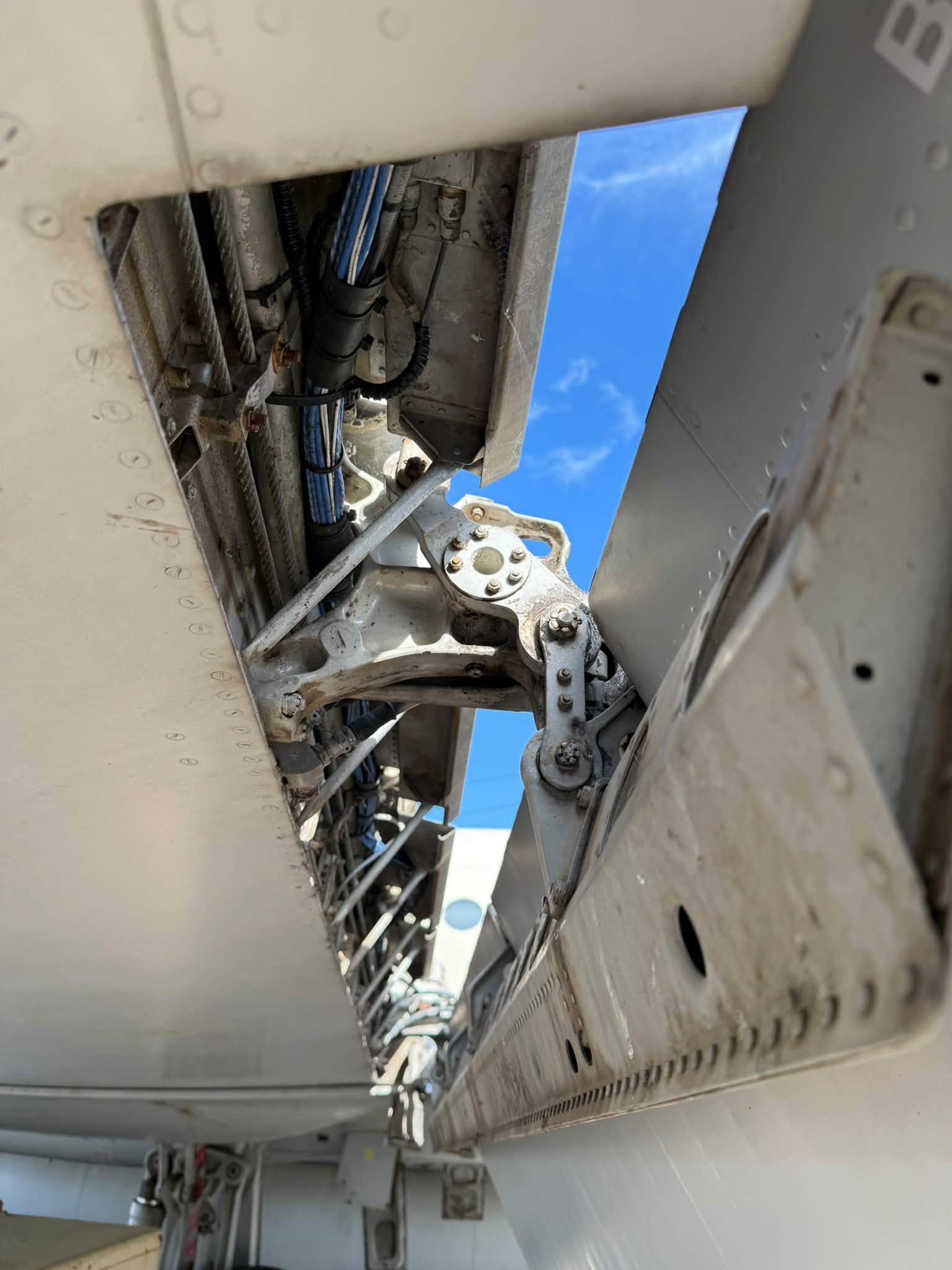
In an August 18, 2026, update titled “Planning the Big Lifts – The Next Engineering Challenge for XV232”, the Nimrod Preservation Group outlined the complexity of preparing such a large aircraft for transportation. Unlike dismantling an aircraft destined for scrap, the project requires each major component to be removed in a controlled manner, preserving its structural integrity and allowing for eventual reassembly. One of the most immediate challenges involves removing the aircraft’s four Rolls-Royce Spey engines. According to the group, preliminary work on the No. 4 engine has already progressed, but several important tasks remain before the engine can be safely extracted. These include removing the constant-speed drive unit and generator, identifying and labeling large electrical connections, and preparing the equipment required to support and lower the engine. The operation is complicated by the geometry of the Nimrod’s engine installation. A Spey engine cannot simply be lowered vertically from the airframe. Instead, it must be carefully controlled and rotated during removal to clear the surrounding structure without causing damage. The preservation team has evaluated an available engine spreader bar and is investigating additional certified lifting equipment, including block-and-tackle arrangements, to provide greater control during the operation. Former Nimrod engineers and Rolls-Royce Spey specialists are also being consulted to provide technical knowledge and help identify suitable tooling. These preparations illustrate the challenges faced by volunteer preservation organizations when working with large, complex military aircraft. Even when the necessary expertise is available, specialized lifting equipment, structural supports, and professional contractors can represent substantial expenses.

(Image credit: Nimrod Preservation Group)
Why the Order of Disassembly Matters
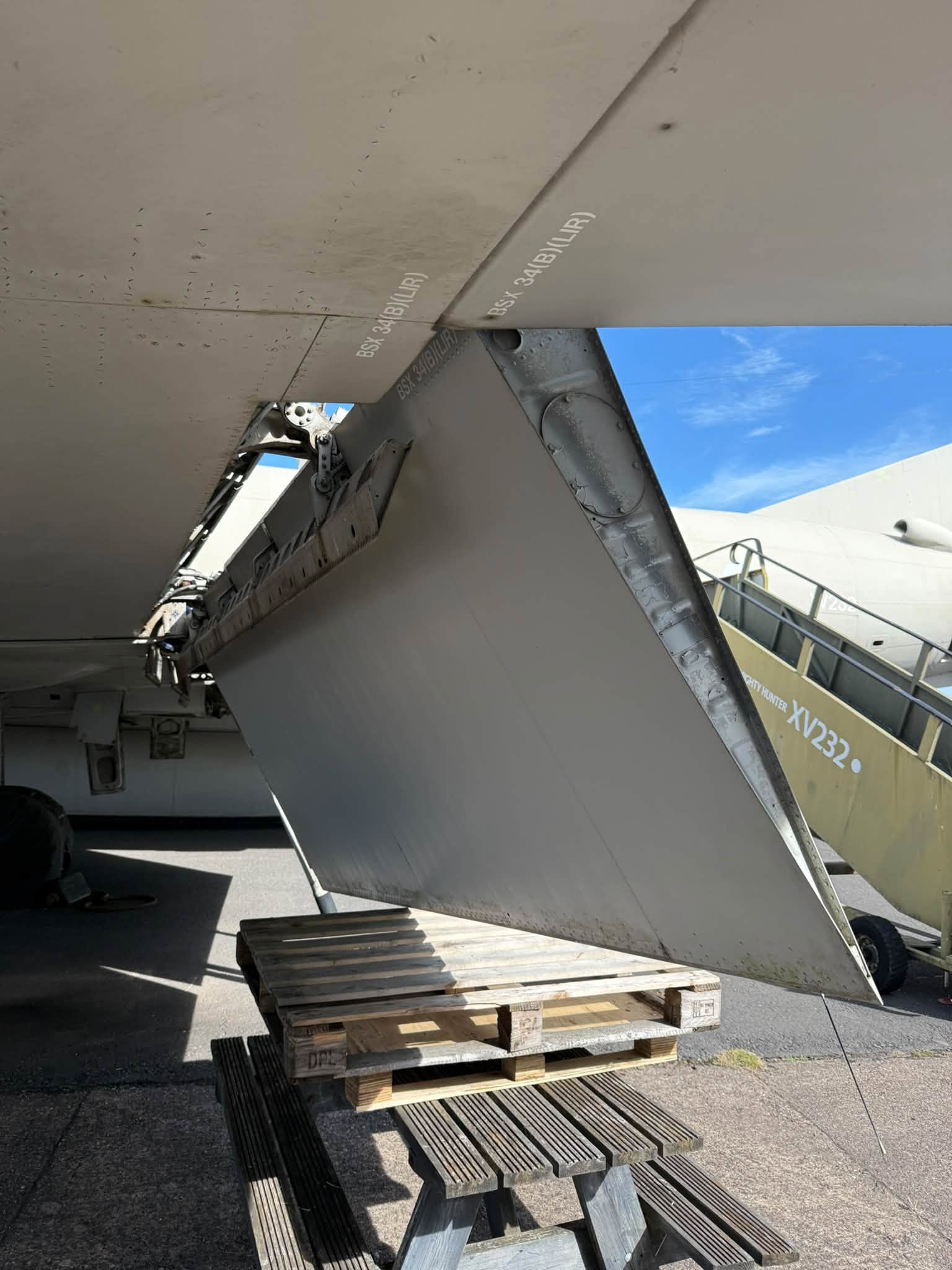
Beyond removing the engines, the preservation team must carefully determine the sequence in which the Nimrod’s other major structures can be detached. Particular attention is being given to the tail assembly, including the vertical fin, horizontal stabilizers, and associated fairings. Engineers are considering removing these components before detaching the wings. The reason is aircraft stability. Removing major structural components changes the airframe’s weight distribution and its response to external forces, particularly wind. If the wings were removed while the substantial tail assembly remained in place, the aircraft could become unstable, creating unnecessary risks for personnel and equipment. The team is therefore reviewing original Nimrod engineering drawings to establish suitable support arrangements for the fuselage during disassembly. Specially designed cradles will be required to support the aircraft once its major components have been removed and it can no longer rely on its conventional undercarriage configuration. The group is investigating whether existing Nimrod support cradles can be located or whether new structures will need to be manufactured. Work involving the elevated tail assembly will also require appropriately qualified contractors and specialized access equipment. While the preservation project relies heavily on volunteers, the group recognizes that certain operations must be undertaken by professionals with the necessary certifications and experience. These engineering decisions will influence not only the safety of the dismantling process but also the cost and timetable of the entire relocation. The preservation team has emphasized that the objective is not simply to take the aircraft apart, but to ensure that every major component can be safely transported, preserved, and ultimately reassembled at Manston. The longer-term ambition is to restore as much of the aircraft’s functionality as practicable once it reaches its new home.

Fundraising Remains Essential to the Aircraft’s Future
While the engineering preparations continue, the financial requirements of the project remain considerable. In its latest fundraising update, titled “Thank You – Over £2,300 Raised, But XV232 Still Needs Your Help”, the Nimrod Preservation Group reported that supporters had contributed more than £2,300 toward the preservation effort. Although the amount represents encouraging support from the aviation community, the relocation of an aircraft as large and complex as the Nimrod requires substantial additional funding. Expenses include specialist lifting equipment, certified contractors, cranes, transport vehicles, fabricated support cradles, insurance, and the materials needed to protect aircraft components during dismantling and transportation. The project must also account for the work required after XV232 arrives at the RAF Manston History Museum, including unloading, reassembly, restoration, and preparations for eventual public display. Unlike an aircraft being dismantled for disposal, XV232 must be handled with particular care. Components that might otherwise be cut apart or discarded must instead be removed in a manner that preserves their condition and allows them to be reinstalled. The group continues to appeal for financial donations, practical assistance, and support from organizations that may be able to provide specialist equipment or services. For supporters wishing to contribute, information about the preservation campaign and donation opportunities is available through the group’s official website, www.xv232.com.
Volunteers and Specialist Knowledge
The preservation of XV232 has always depended upon the commitment of volunteers, many of whom have direct experience working with the Nimrod during its RAF service. As the project moves into the disassembly and relocation phase, that experience has become increasingly valuable. The group is seeking assistance from former Nimrod aircrew and groundcrew, aerospace engineers, technicians, and individuals with experience in aircraft structures, avionics, and propulsion systems. The specialized nature of the Nimrod means that original technical knowledge and maintenance experience can play an important role in avoiding damage during dismantling. The group is particularly interested in hearing from individuals familiar with the Rolls-Royce Spey engines, the aircraft’s structural systems, and the equipment traditionally used to support and maintain the Nimrod fleet. While some tasks can be undertaken by experienced volunteers, others will require professional contractors and equipment operators. The project represents a collaboration between the preservation group, the RAF Manston History Museum, aviation specialists, and supporters who share the goal of saving one of Britain’s surviving maritime patrol aircraft. Those interested in contributing technical expertise can find further information through the group’s volunteer opportunities page.

A New Chapter at RAF Manston
The planned relocation to the RAF Manston History Museum offers XV232 the prospect of a permanent home where its operational history can continue to be shared with the public. Located in Kent, the museum preserves the aviation heritage of the former RAF Manston airfield and the wider history of British military aviation. The partnership with the Nimrod Preservation Group is intended to provide a long-term future for the aircraft, including restoration, educational activities, and opportunities for public engagement. Once the aircraft has been transported and reassembled, the preservation team hopes to restore as much functionality as practicable, although the precise scope of that work will depend on the aircraft’s condition, available resources, and the technical challenges encountered. For now, public access to XV232, onboard tours, and engine-running demonstrations remain suspended while preparations for the relocation continue. The group’s immediate priority is to complete the engineering planning, secure the necessary funding and equipment, and undertake the controlled disassembly required for transportation. The work ahead is considerable, but the progress made since the initial emergency announcement in November 2025 demonstrates the determination of the volunteers to protect the aircraft. XV232 is more than a surviving example of a Cold War maritime patrol aircraft. Its service during the Falklands War, including its record-setting reconnaissance mission, gives it a particularly important place in British aviation history. Preserving The Mighty Hunter will also help safeguard the knowledge and experiences of the generations of RAF personnel who operated and maintained the Nimrod throughout its service life. With engineering preparations advancing and fundraising continuing, the Nimrod Preservation Group faces one of its greatest challenges. Successfully dismantling, transporting, and reassembling XV232 will require considerable coordination and financial support, but it offers the opportunity to preserve a historically significant aircraft that might otherwise have been lost. For further information about the project or to support the preservation campaign, visit www.xv232.com.
Sources: Nimrod Preservation Group XV232 CIC, August 18, 2026 engineering update and subsequent fundraising appeal; Vintage Aviation News, “Nimrod Preservation Group Announces Urgent Plans for XV232 ‘The Mighty Hunter,’” November 25, 2025.