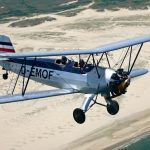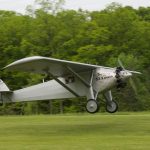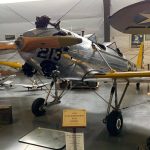
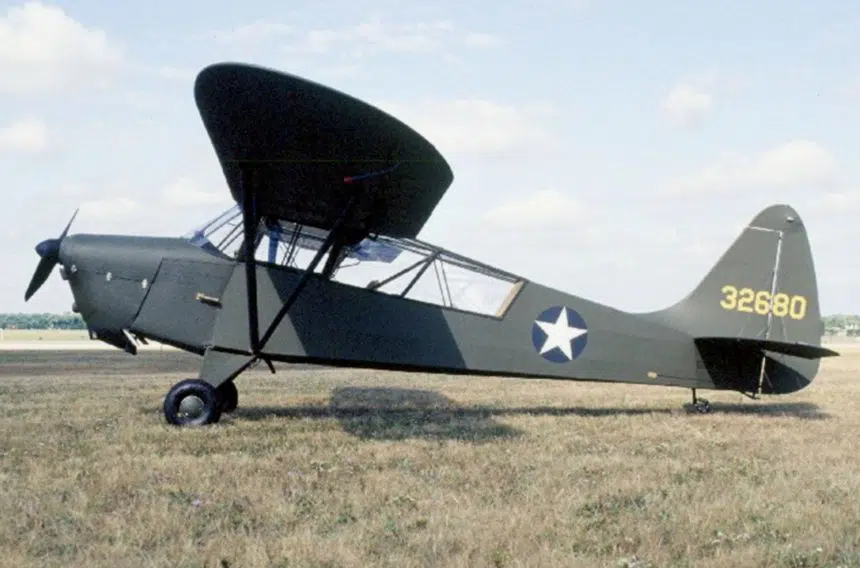

Interstate Aircraft and Engineering Corporation was a small American aircraft manufacturer. It operated from April 1937 to 1945 and was based in El Segundo, California. First called Interstate Engineering, the company changed its name to the Interstate Aircraft and Engineering Corporation around July 1937. The company built a new aircraft plant next to Los Angeles Municipal Airport and began operations there that same month. In August 1938, Don P. Smith became the president, and by mid-1939, the company had 100 employees. In a 1940 court case, the National Labor Relations Board ruled against the company. It ordered the company to stop discriminating against employees who joined the United Automobile Workers union. A few months later, the company created the Cadet, a two-seat monoplane, with production starting in July. The Model S-1B was updated to the XO-63, later renamed the XL-6. The US Army Air Forces received a total of 259 XO-63/L-6/L-8 series aircraft. The company planned to produce 900 aircraft each year.

The increase was partly due to the “Fabri-Clip” invention, which allowed workers to attach the fabric covering of airplanes much faster than before. The company also built a trainer for the US Navy, finishing it just nine months after starting with the first designs. Additionally, the company made bomb shackles, machine gun and cannon chargers, hydraulic actuators, and other aircraft parts. There were plans for a larger version of the Cadet with side-by-side seating and a small four-seat twin-engine airplane that was said to be the “world’s smallest.” By November 1941, the company employed 22 deaf and mute workers. In 1945, Interstate manufactured over 700 light aircraft. That year, it sold its aircraft line to the Harlow Aircraft Company because it decided to focus on making appliances. The next year, the company changed its name to Interstate Engineering to match its new business focus. However, in a few years, Interstate started making helicopter fuselages for United Helicopters, Inc. of Palo Alto, California. It also signed contracts with Douglas Aircraft Company, the US Navy, and the US Air Force. Interstate Engineering moved to Anaheim, California, in the mid-1950s.

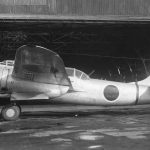
Figgie International acquired the company in 1967, and then Engles Urso Capital Corporation bought it in 1996. In 1945, Harlow Aircraft sold the manufacturing rights for the Cadet aircraft to Call Aircraft Company in Afton, Wyoming. In the 1960s, Arctic Aircraft purchased these rights and now makes an upgraded version called the Arctic Tern. During its existence, Interstate made 574 Cadets and 195 TDRs. The Interstate Cadet was also known for its role in the attack on Pearl Harbor. Aviator Cornelia Fort was giving a training lesson in an Interstate Cadet near Honolulu. While flying, she spotted a Japanese military aircraft. Her Cadet came under fire, and she had to maneuver to avoid the incoming attack. It made her aircraft one of the first American planes attacked during the raid on Pearl Harbor. The Interstate TDR was an assault drone developed for the US Navy during WWII. It was a remotely controlled, twin-engine plane built to drop bombs or torpedoes on enemy targets. It used an early television link for remote guidance and was used in the Pacific Theater. It made it one of the first operational combat drones in military history. Read more Forgotten Factories articles HERE.