
Guarding the Gate: RAF Lakenheath’s F-100D Super Sabre Rededicated After Restoration

RAF Lakenheath formally rededicated its F-100D Super Sabre static display on November 7, 2025, marking the completion of a years-long restoration project. As the first aircraft type flown by the 48th Fighter Wing upon its arrival in the UK, the Super Sabre has long stood guard at the base’s main gate, symbolizing both the wing’s Cold War heritage and its enduring commitment to preserving aviation history.

Moreno Aguiari
Moreno Aguiari
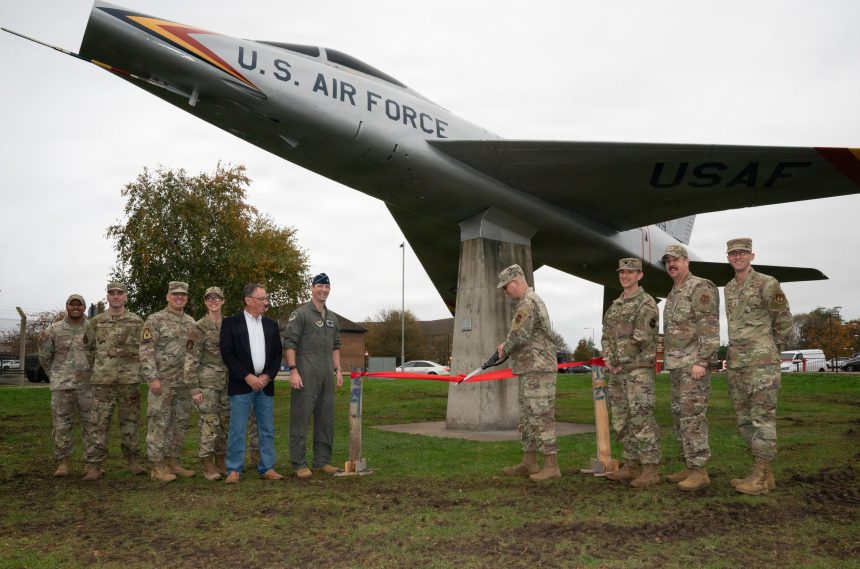
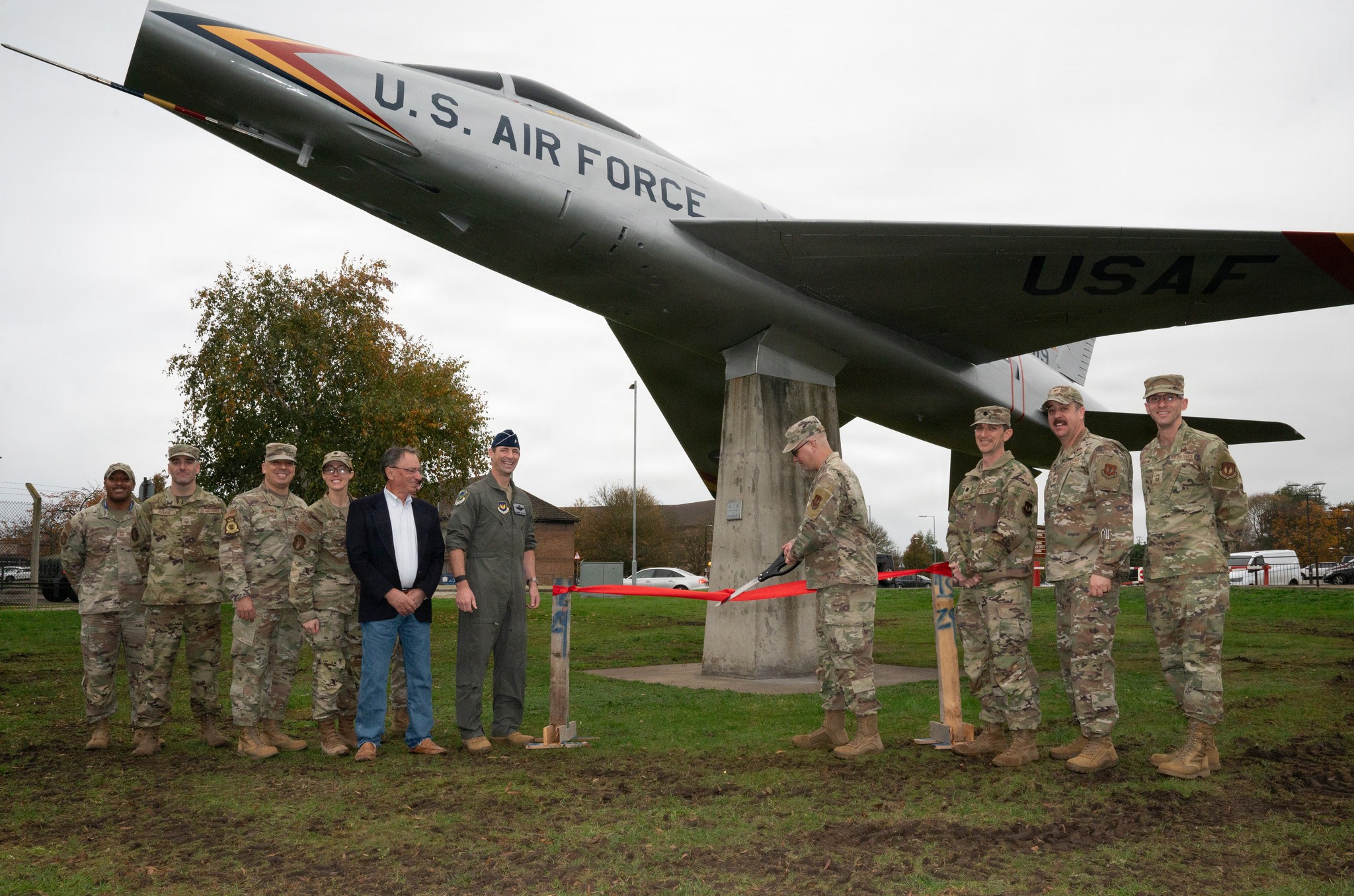
U.S. Air Force Brig. Gen. Jack Arthaud, 48th Fighter Wing commander, cuts a ribbon for the unveiling of the F-100D Super Sabre aircraft static display restoration at RAF Lakenheath, England, Nov. 7, 2025. The ceremony followed the display's month-long restoration, returning it to its original three stripe paint scheme representing the three original squadrons. (U.S. Air Force photo by Airman 1st Class Rilynn Jacobs)
AirCorps Restorations

The RAF Lakenheath F-100D Super Sabre static display was formally rededicated during a ribbon-cutting ceremony on November 7, 2025, following the completion of an extensive restoration project. The effort underscores the base’s ongoing commitment to preserving both the physical condition of the display and the important history it represents. “The restoration was years in the making,” said Airman 1st Class Maxim Popov, a contracting specialist with the 48th Fighter Wing Contracting Squadron. “This restoration is important to the base because it signifies our continued movement toward a bigger and brighter future while also paying homage to where we came from.”
F 100D Super Sabre RAF Lakeheath
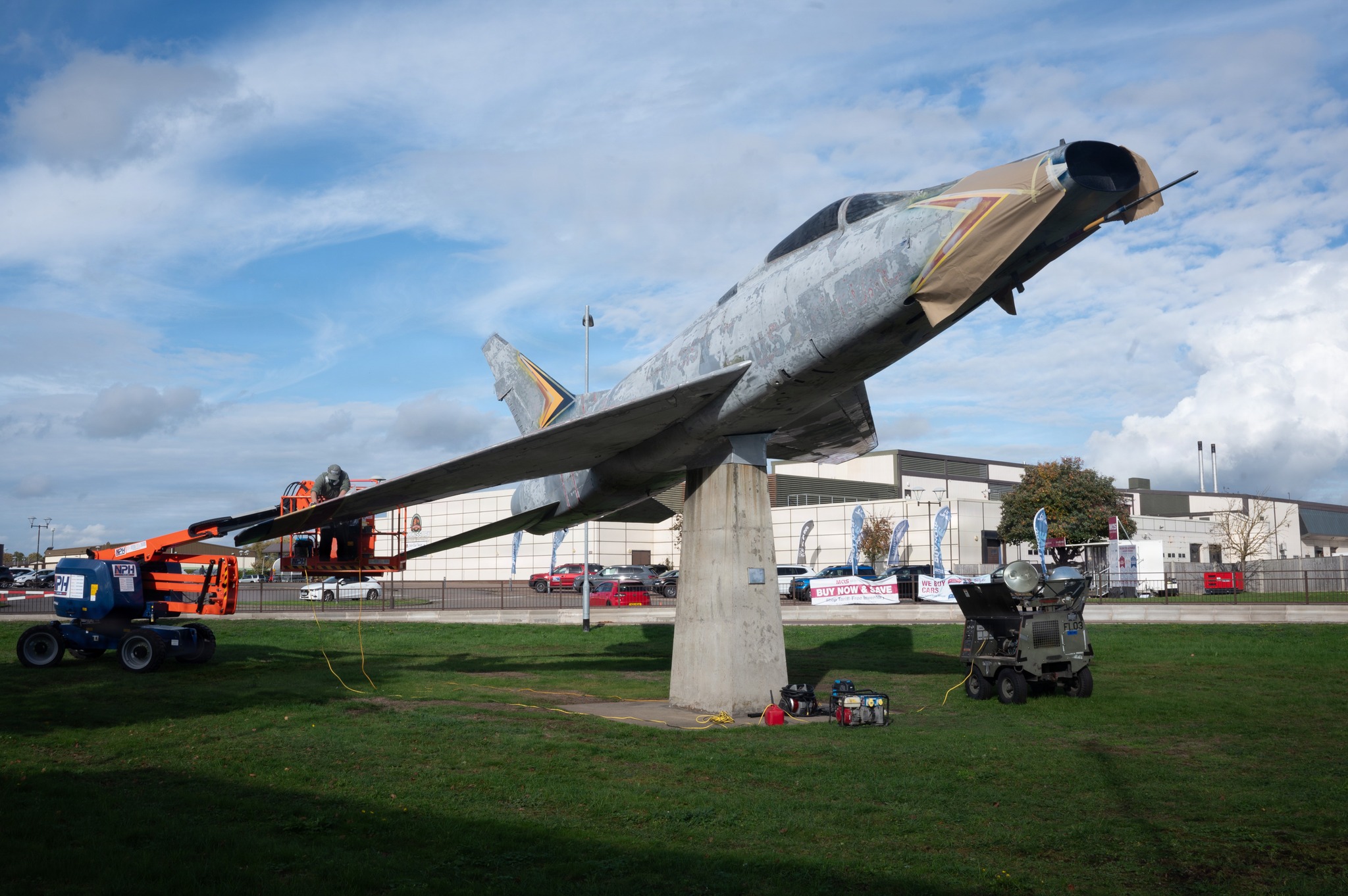
The F-100D Super Sabre static display receives restoration work at RAF Lakenheath, England, Oct. 22, 2025. The display, which debuted in 1977, was restored to preserve its condition and further commemorate its longstanding history at the base. (U.S. Air Force photo by Airman 1st Class Rilynn Jacobs)

The aircraft on display is a North American F-100D-15-NA Super Sabre (serial number 54-2269), mounted on a permanent stand just inside Brandon Gate at RAF Lakenheath. Originally delivered to the French Air Force, the aircraft later returned to U.S. control and was ultimately placed on display at what is now known as Wings of Liberty Memorial Park. Over the years, it has worn several identities, first painted as F-100D 55-4048 and later as 56-3319, an aircraft assigned to the 492nd Tactical Fighter Squadron. The original 56-3319 was lost in an accident on March 18, 1969, when it crashed approximately 50 kilometers south-southeast of Wheelus Air Base, Libya. The pilot successfully ejected and survived.
1280px F 100 Gate Guard RAF Lakenheath
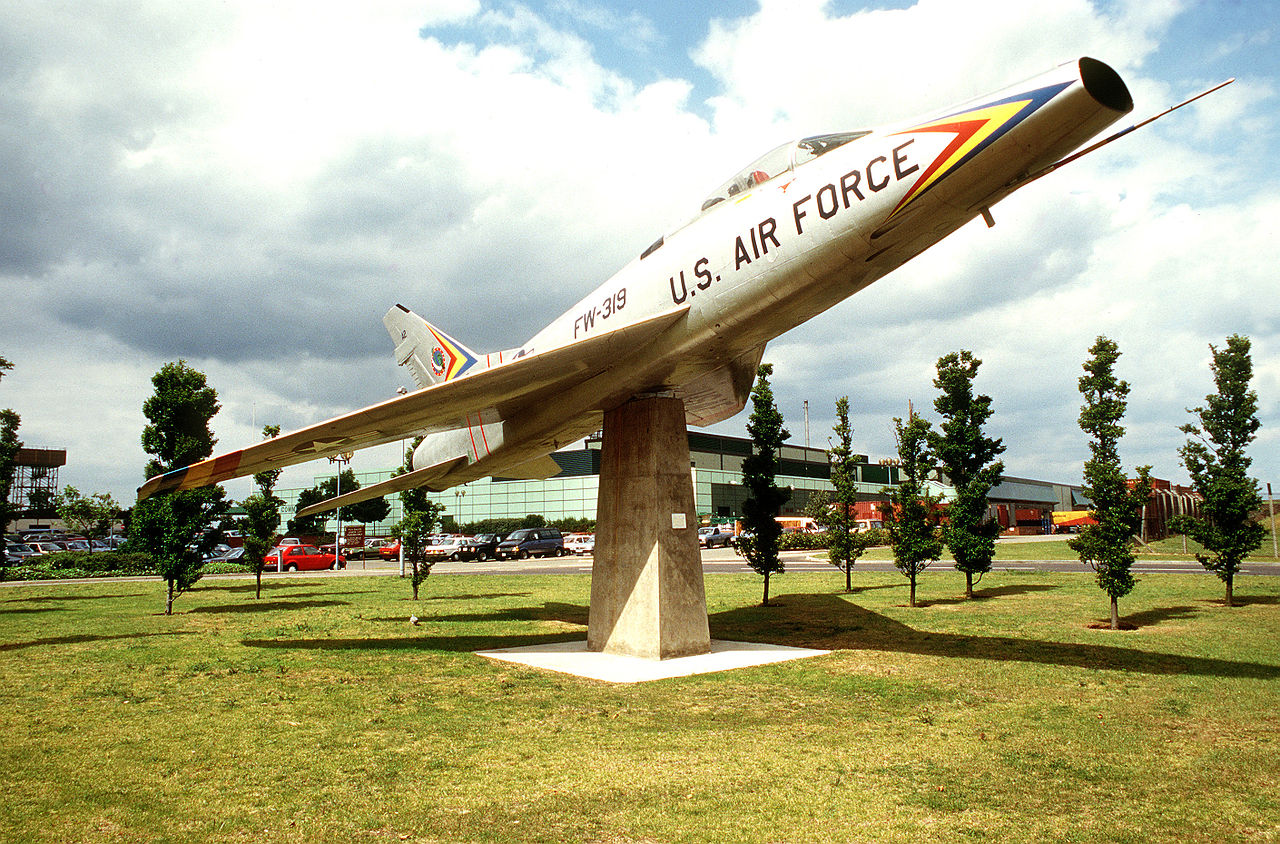
A photo of the Super Sabre from the late 90s. Photo by 1st Class William C. Gatch, USAF

The 48th Fighter Wing, composed of three fighter squadrons, first operated the F-100D in France beginning in 1956. When the wing relocated to RAF Lakenheath in January 1960, it continued flying the Super Sabre until 1972. As the first aircraft type to arrive at the base, the F-100D was later selected to stand guard at the installation’s main gate. Throughout the recent restoration, the aircraft retained markings reflecting its early service period, highlighting both its French and U.S. Air Force heritage.
N.A. F 100D 56 3410 48 TFW COLT 18.09.65 edited 2
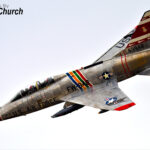
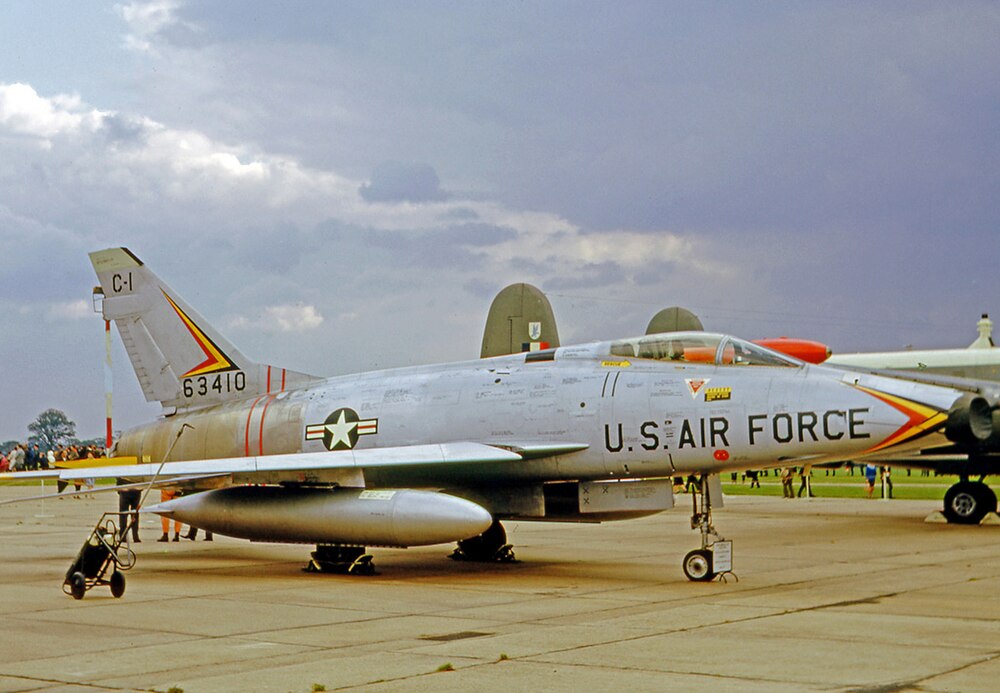
North American F-100F Super Sabre, 56-3890, in natural aluminum finish with 48th TFW tri-colour chevron, 1966.

“They used to train at Chaumont-Semoutiers Air Force Base, but later came here to RAF Lakenheath,” said Jeffrey McGovern, historian for the 48th Fighter Wing. “There were three squadrons, which is what the three colored stripes on the aircraft represent. For almost a decade and a half it was marked with a fictional tail number. Around 1990, it was decided to attribute the aircraft to one of our actual airplanes, so it was marked as a 492nd Squadron jet, believed to have been the commander’s aircraft around 1963.” When the F-100s first arrived from France, they were finished in natural metal with bright individual squadron markings. These were later replaced by a standardized tri-color chevron—blue, yellow, and red—on the tail and nose, still over bare metal. Around 1966–67, the aircraft transitioned to a subdued Southeast Asia green-based camouflage scheme, and squadron markings were removed. By 1970, individual squadron identities returned, first through large tail codes—LR, LS, or LT—followed shortly by the addition of colored fin tips.
F 100D Super Sabre RAF Lakeheath 2
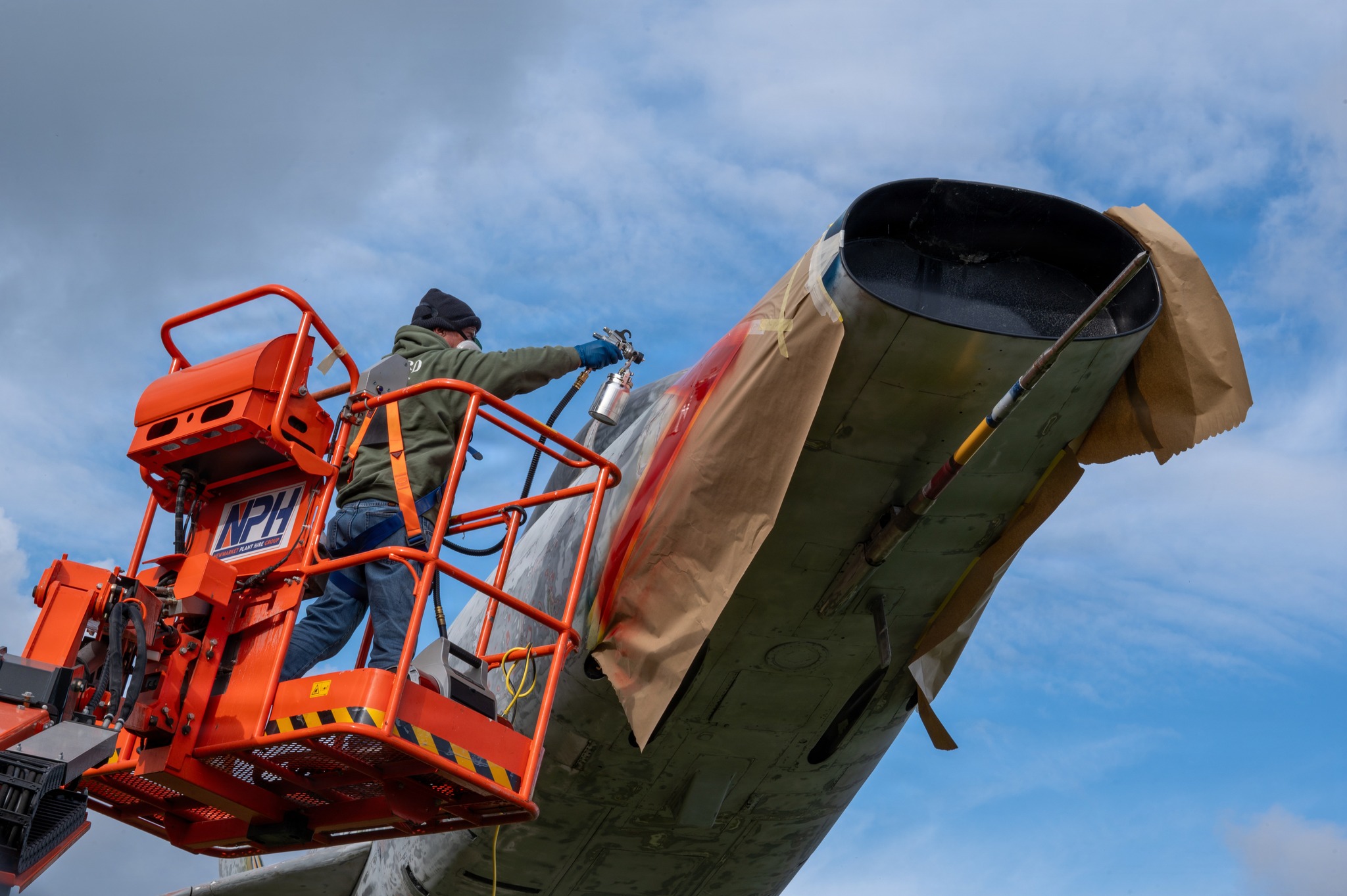
Gordon Ponsford, conservation and restoration contractor, spraypaints the nose of the F-100 Super Sabre static display at RAF Lakenheath, England, Oct. 22, 2025. It had been nearly a decade since the display had received any recorded restoration. (U.S. Air Force photo by Airman 1st Class Rilynn Jacobs)
F 100D Super Sabre RAF Lakeheath 7 scaled
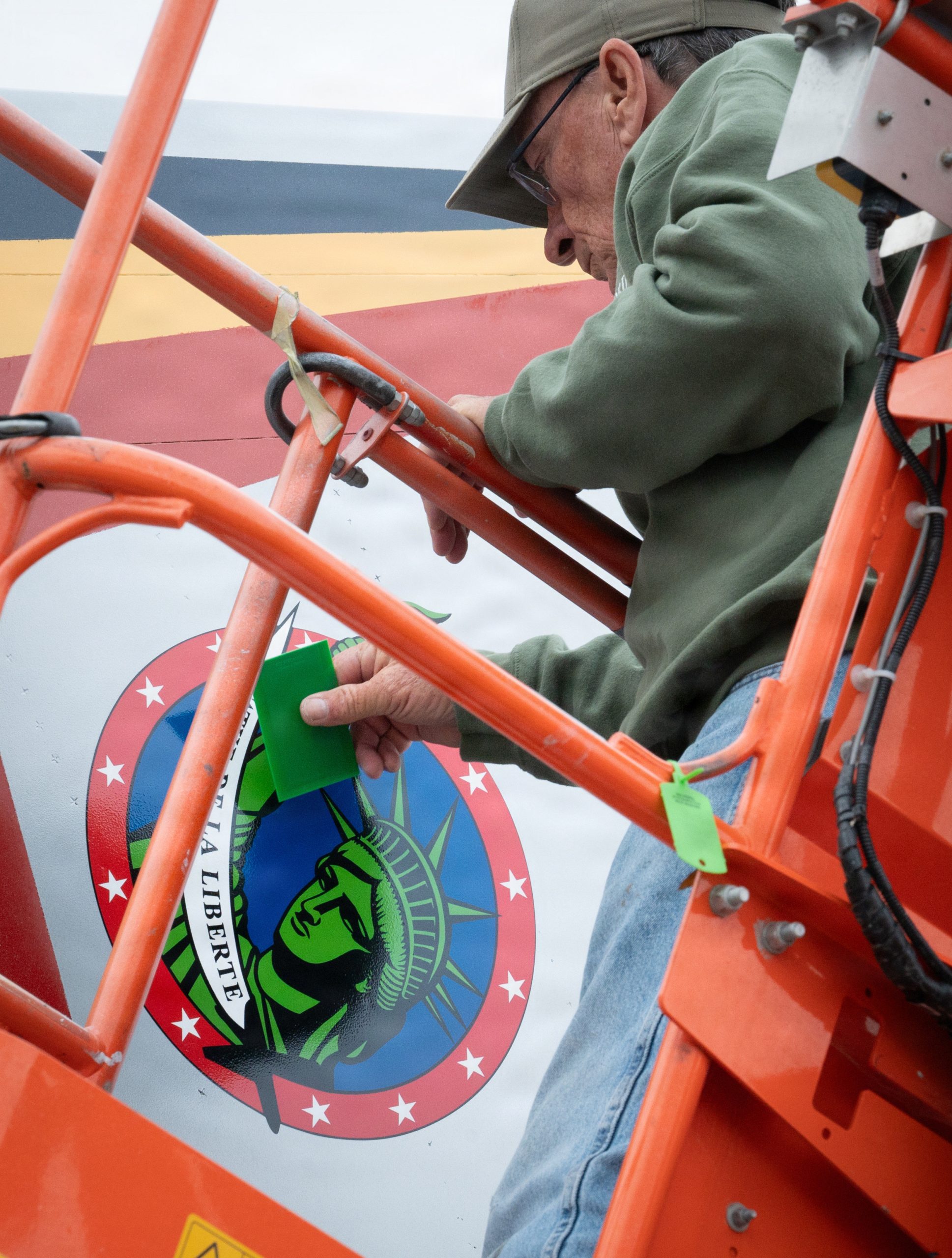
Gordon Ponsford, conservation and restoration contractor, applies the Liberty Wing emblem to the F-100D Super Sabre aircraft static display at RAF Lakenheath, England, Nov. 5, 2025. The emblem was applied to the display as a finishing touch to the restoration of the display to symbolize the relationship of the aircraft that arrived from France in 1960. (U.S. Air Force photo by Airman 1st Class Rilynn Jacobs)

Airmen from the 48th Contracting Squadron and the 48th Equipment Maintenance Squadron marked the completion of the restoration with a ribbon-cutting ceremony. During the event, several participants were presented coins by Chief Master Sgt. Peter Martinez, command chief of the 48th Fighter Wing. “This is my first base and my first contract that I carried from start to finish,” Popov said. “When I was given the opportunity to work on this static display, I saw it as a great honor. That aircraft is the first thing people see when they arrive on base and the last thing they see when they leave.”
F 100D Super Sabre RAF Lakeheath 3
U.S. Air Force Brig. Gen. Jack Arthaud, 48th Fighter Wing commander, cuts a ribbon for the unveiling of the F-100D Super Sabre aircraft static display restoration at RAF Lakenheath, England, Nov. 7, 2025. The ceremony followed the display’s month-long restoration, returning it to its original three stripe paint scheme representing the three original squadrons. (U.S. Air Force photo by Airman 1st Class Rilynn Jacobs)
Platinum B 729
Share This Article
Follow:
Born in Milan, Italy, Moreno moved to the U.S. in 1999 to pursue a career as a commercial pilot. His aviation passion began early, inspired by his uncle, an F-104 Starfighter Crew Chief, and his father, a military traffic controller. Childhood adventures included camping outside military bases and watching planes at Aeroporto Linate. In 1999, he relocated to Atlanta, Georgia, to obtain his commercial pilot license, a move that became permanent. With 24 years in the U.S., he now flies full-time for a Part 91 business aviation company in Atlanta. He is actively involved with the Commemorative Air Force, the D-Day Squadron, and other aviation organizations. He enjoys life with his supportive wife and three wonderful children.