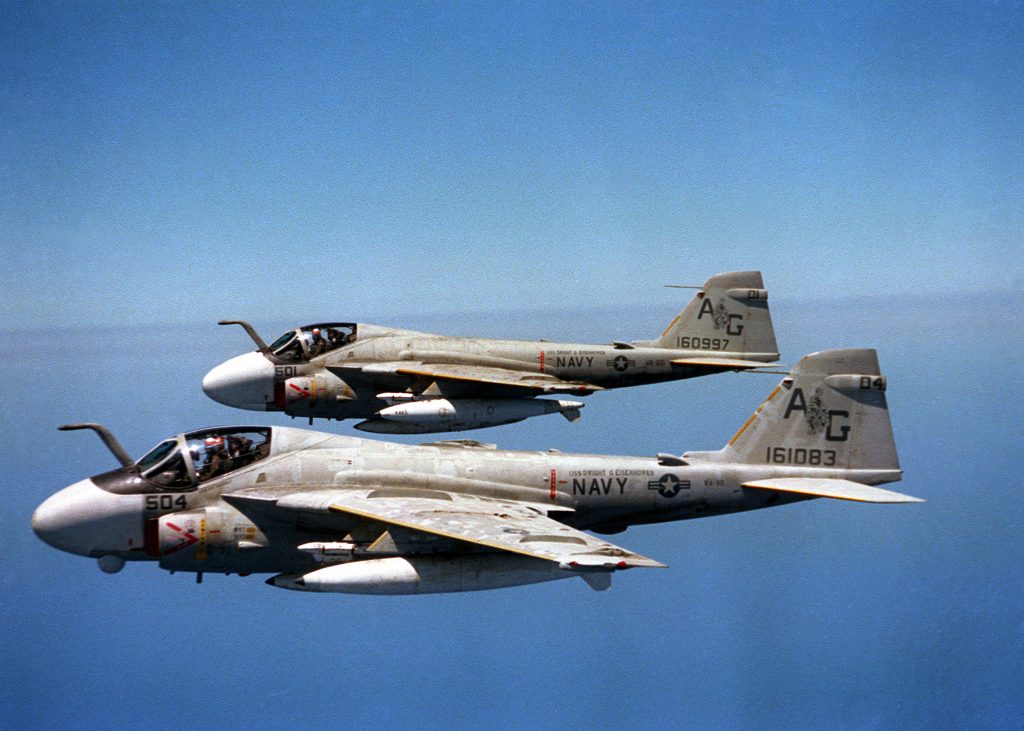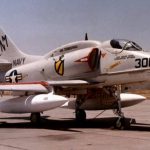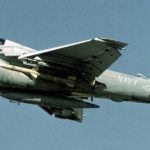
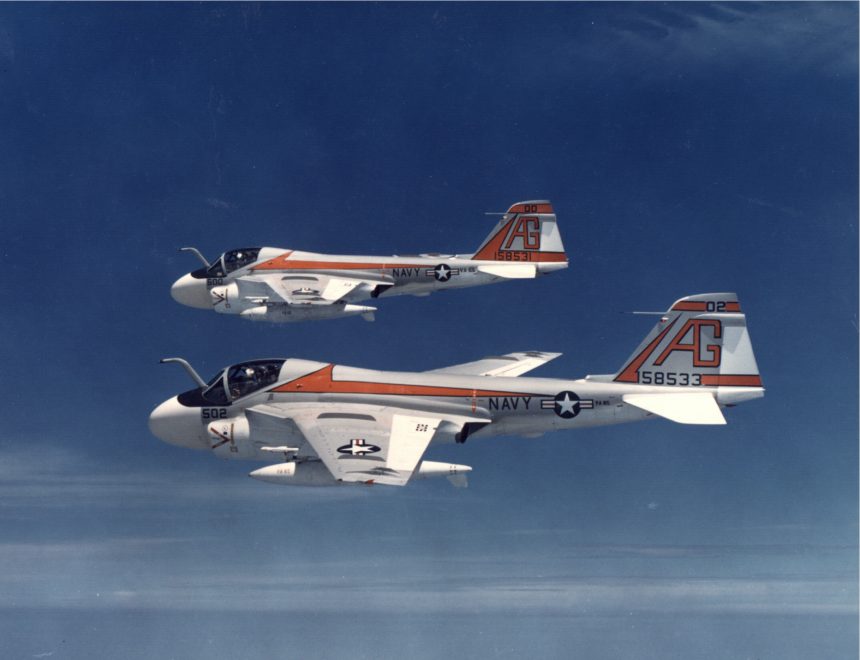

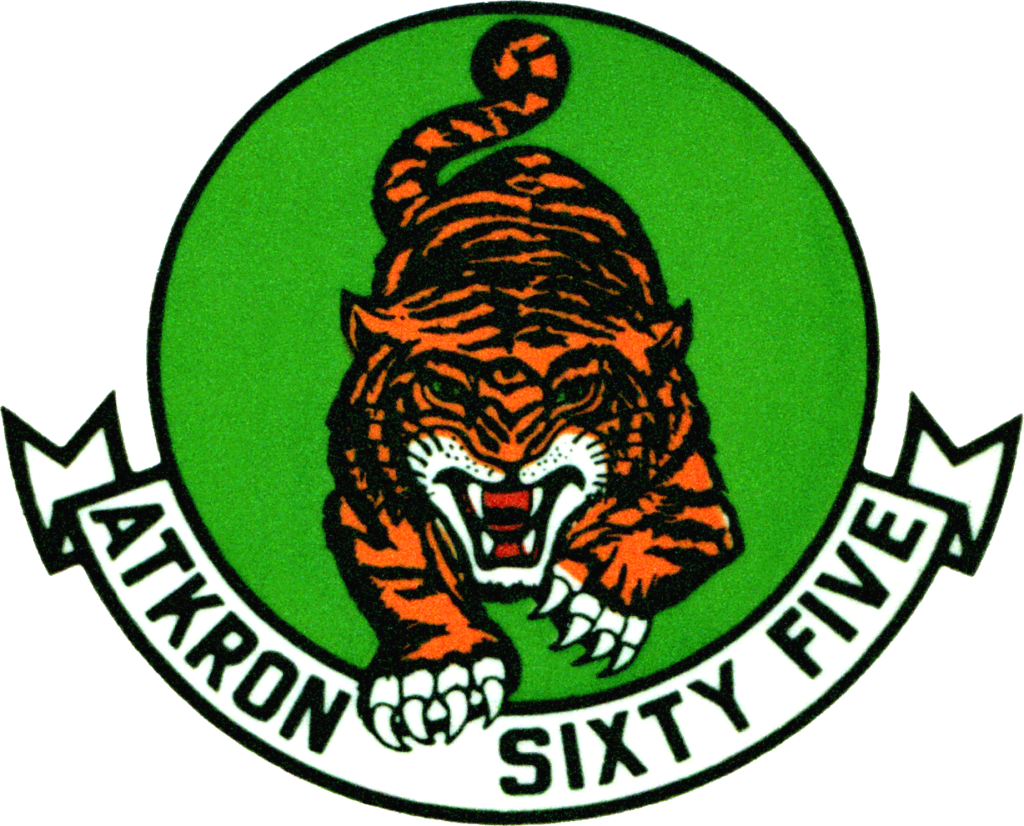
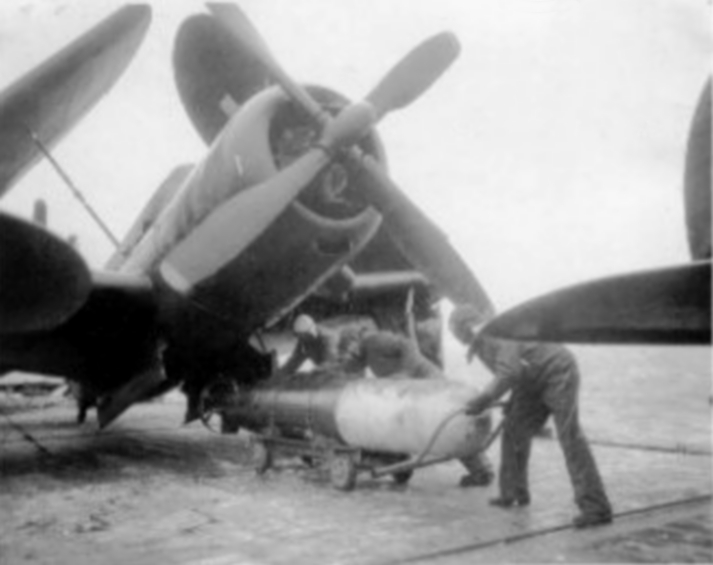
Few US Navy squadrons had as long a history as Attack Squadron 65 (VA-65). Known as the World Famous Fighting Tigers, the squadron served during the early Cold War, the Vietnam War, crises in the Middle East, and Operation Desert Storm before being disbanded in 1993. Attack Squadron 65 operated many attack aircraft, starting with the A-1 Skyraider and later the A-6 Intruder, and became one of the last medium attack squadrons to fly the Intruder. The squadron was established as Torpedo Squadron 74 (VT-74) in 1945, shortly after WWII. It was created to join the air group on the USS Midway, a newly commissioned aircraft carrier. The squadron started its shakedown cruise on November 7, 1945. At that time, the squadron flew the SB2C Helldiver, which had the nickname “The Beast” because it was hard to handle. This reputation led to the squadron’s first insignia, which showed a beast riding a torpedo. In 1946, the Navy redesignated VT-74 to Attack Squadron 2B (VA-2B) as part of a reorganization of its aviation units. The squadron honed its attack role and adopted a new logo featuring a medieval knight, symbolizing power and strength. In 1948, the squadron became VA-25. During Operation CAMID III that same year, it provided close air support for amphibious landings. It was also the first attack squadron in the Atlantic Fleet to fire the Tiny Tim rockets. The squadron chose the tiger insignia in 1950 when it was called VA-25. The image was of a tiger facing forward, with the focus on its eyes, teeth, and claws. When the squadron changed its name to Attack Squadron 65 on July 1, 1959, it kept the tiger insignia. The tiger became an important part of the squadron’s identity, leading to the nickname “The World Famous Fighting Tigers.”
During the early Cold War, Attack Squadron 65 was involved in important US Navy operations. In June 1961, the squadron had just four hours’ notice before deploying on the USS Intrepid to the Caribbean. This was in response to the assassination of the Dominican dictator Rafael Trujillo and the unrest that followed in the Dominican Republic. In 1962, Attack Squadron 65 joined the first cruise of the USS Enterprise, the world’s first nuclear-powered aircraft carrier. Shortly after returning from the Mediterranean, the squadron deployed on the Enterprise again, this time to the Caribbean during the Cuban Missile Crisis. They helped enforce a naval quarantine of Cuba as the United States faced the threat of Soviet nuclear missiles being placed on the island. Attack Squadron 65 participated in Operation Sea Orbit in 1964. During this mission, the USS Enterprise and other nuclear-powered ships traveled around the world. The deployment showed that the Navy could operate globally without depending on traditional fuel supplies. In 1966, the Fighting Tigers joined the Vietnam War and conducted their first combat mission on June 15 while flying from the USS Constellation. The squadron’s A-6A Intruders were especially useful because they could fly in bad weather and at night. On July 1, Attack Squadron 65 planes worked with other Carrier Air Wing 15 aircraft to attack and sink three North Vietnamese patrol boats that were approaching the USS Coontz. The A-6’s ability to fly in all types of weather became very important later that year.
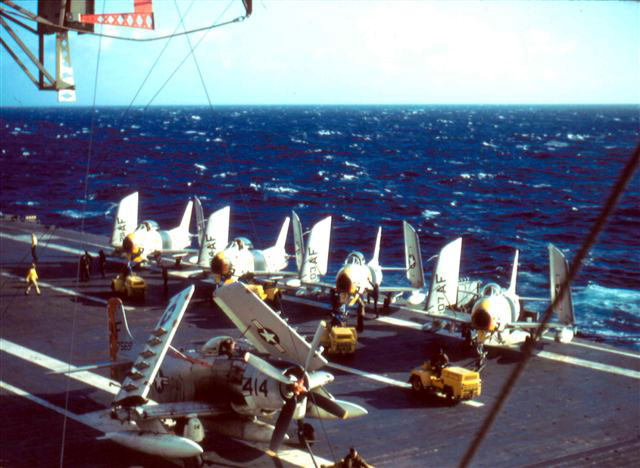
From October 25 to 31, the Attack Squadron 65 A-6As flew 37% of all Yankee Team sorties against North Vietnam. VA-65’s deployment to Vietnam was disrupted by a serious accident in the US Navy. On July 29, 1967, a fire broke out on the USS Forrestal, causing deaths and injuries among squadron members. After the carrier left combat operations, Attack Squadron 65 sent a team to the USS Constellation to support another A-6 squadron for the rest of the 1967 deployment. The Fighting Tigers continued their operations around the world in the following decades. In 1969, VA-65 served on the USS Kitty Hawk in the Sea of Japan after North Korean forces shot down a US Navy EC-121 reconnaissance plane. In 1970, the squadron deployed on the USS Independence near Israel during a crisis in Jordan and a series of airline hijackings. The Yom Kippur War in 1973 led to another deployment in the Middle East. Attack Squadron 65 provided fuel support for fighter planes that were escorting Secretary of State Henry Kissinger’s mission to Israel. The squadron also supported A-4 Skyhawks being sent from the United States to Israel. In 1974, the squadron operated again near the eastern Mediterranean after a coup in Cyprus and the death of the American ambassador. VA-65 took part in NATO exercises in the North Atlantic and worked with the British carrier HMS Ark Royal. The squadron’s responsibilities continued into the 1980s. In April 1980, Attack Squadron 65 was on board the USS Dwight D. Eisenhower in the Indian Ocean due to the Iranian hostage crisis. The deployment lasted 246 days at sea, with only one five-day stop at a port.
In 1982, the squadron helped evacuate American and foreign civilians from Beirut during the Lebanese Civil War. Three years later, VA-65 and the USS Eisenhower cut a port visit in Spain short to respond to rising tensions in Lebanon. The squadron’s A-6 Intruders improved over time. In 1986, Attack Squadron 65 joined Carrier Air Wing 13 and the USS Coral Sea as part of the Coral Sea Concept. This plan allowed two A-6 squadrons to work together and share maintenance staff, reducing the number of people needed to support the aircraft. A year later, VA-65 deployed to the Mediterranean on the Coral Sea as the first A-6 squadron to use night-vision goggles, which enhanced the Intruder’s ability to conduct attacks in the dark. In 1989, Attack Squadron 65 operated near Lebanon due to worsening security, which led to the evacuation of the American Embassy. The squadron’s aircraft completed missions to support this evacuation. The Fighting Tigers took part in their last major combat operation during Operation Desert Storm in 1991. Deployed on the USS Theodore Roosevelt, VA-65 attacked targets throughout Iraq, including Iraqi forces in Kuwait and naval units. During the conflict, the squadron reported destroying 22 Iraqi naval vessels. After Desert Storm, the Tigers continued to operate and took part in Operation Provide Comfort, providing close air support over northern Iraq to help Kurdish refugees. In its final years, the squadron ended a long history in naval aviation that began with the SB2C Helldiver after WWII. Attack Squadron 65 held its disestablishment ceremony on March 26, 1993, at Naval Air Station Oceana and was officially disbanded on March 31, 1993. The World Famous Fighting Tigers began as VT-74 in 1945 and flew the A-6 Intruder for almost 50 years. They adapted to the changing needs of naval warfare. The squadron operated during critical moments of the Cold War, fought in Vietnam and Desert Storm, and became one of the Navy’s most experienced A-6 attack squadrons.