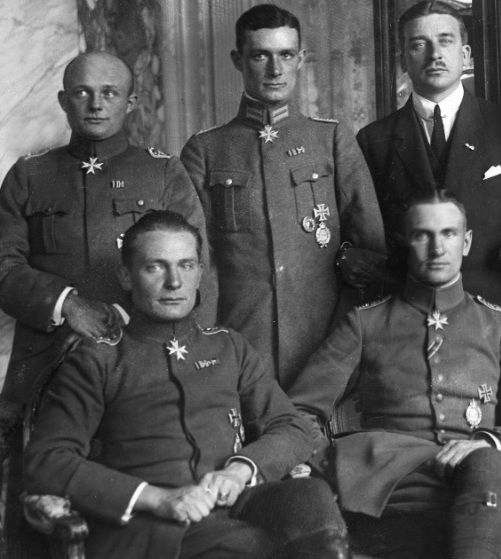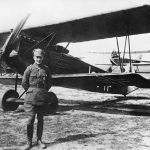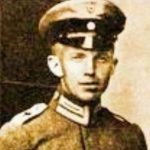
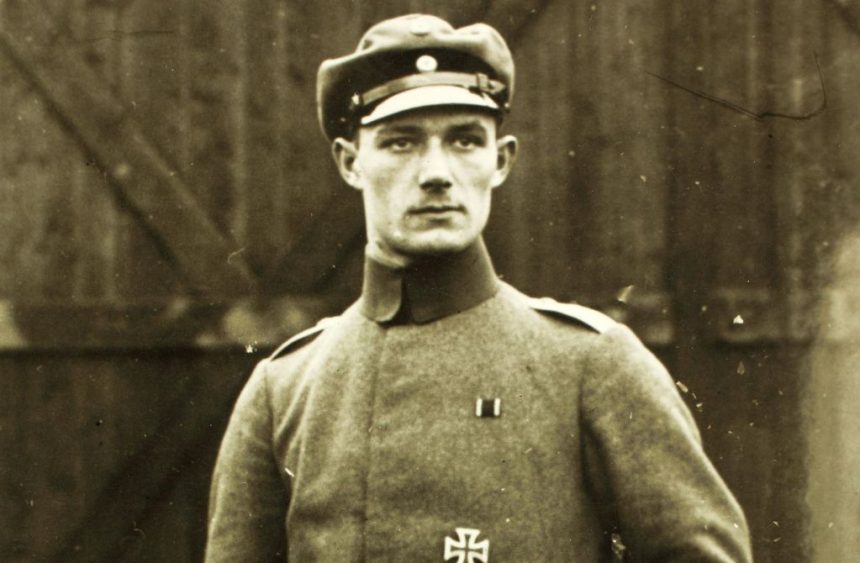

Most aces in WWI are remembered for their flying in the war, while some are remembered for their service in both world wars. But there was a WWI ace, who scored heavily in the war, later joined the Nazi Party, had a face-to-face confrontation with Adolf Hitler, and still went on to work closely with German leaders during WWII. Josef Veltjens, born on June 2, 1894, in Geldern, German Empire, joined the German army in August 1914 and was promoted to the rank of vice sergeant in no time. At the end of 1915, he joined the German Air Force. In May 1916, he joined the Flieger Abteilung 23 to fly reconnaissance missions. His talent as a reconnaissance pilot was recognized, and Josef Veltjens was transferred to Jasta 14, a fighter unit, in March 1917. He flew an Albatros D.III in this squadron.
Ace Journey of Josef Veltjens
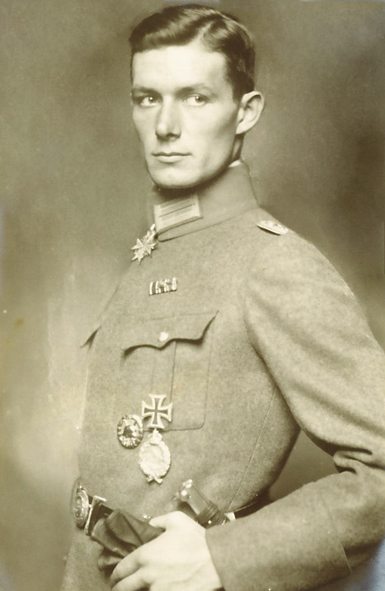
His first victory came on April 14, 1917, when Josef Veltjens shot down a SPAD aircraft, followed by three more victories in May. On June 1, 1917, after killing another SPAD, he officially became an ace. In August, Josef Veltjens was transferred to Jasta 18 at the request of its commander. This squadron was using Albatros D.Vs and Fokker Dr.1s. In this squadron, he shot down three aircraft in September, one in November, and one in February 1918, bringing his personal score to 10. In March, he was transferred to Jasta 15, which flew the Fokker D.VII. Veltjens’ planes had a barbed arrow painted on the side. In this unit, he claimed one aerial victory in April, three in May, nine in June, eight in August, and four in October, bringing his score to 35. Josef Veltjens couldn’t score any more victories till Armistice. In WWI, he was awarded the Knight’s Cross with Swords of the Order of the House of Hohenzollern and the Orden Pour le Mérite, often called “Blue Max.” Veltjens joined the Freikorps Gerstenberg after Germany’s defeat in the war. In January 1919, he commanded an armored car in Bremen and was injured three times while fighting against Spartakists (German communists). Later, Josef Veltjens worked as a merchant sailor on his ship, the Merkur. He then began to help the German Navy rearm secretly. Throughout his career, he supplied weapons to Mustafa Kemal Atatürk for Turkey and to Chiang Kai-shek for nationalist China. He joined the Nazi Party and its group called the Brownshirts in 1929 as one of the early members. However, he quickly left after a direct face-to-face confrontation with Hitler in 1931. It also led to him being blacklisted by the paramilitary of Hitler, who arrested him multiple times. Though his WWI friend, Hermann Göring, helped protect him.
WWII and Death
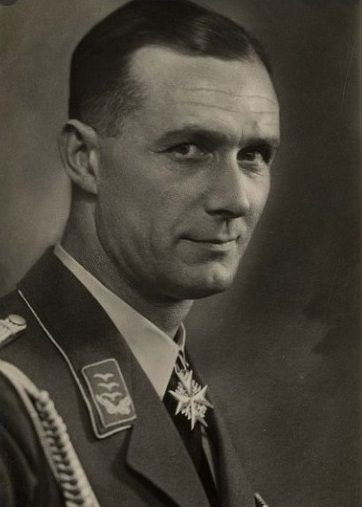
In 1935, Mussolini requested weapons from Germany for the Second Italo-Abyssinian War. Göring assigned Josef Veltjens to manage the supply. Although the UK and France were allies of Italy, they did not provide arms since they were members of the League of Nations. Before the Spanish Civil War started in March 1936, Infante Alfonso asked Josef Veltjens to help supply arms to the Nationalist generals. By late 1936, Veltjens set up a shipping company to deliver munitions, transporting large amounts of ammunition and even sending a brigade of Irish Blueshirts. In November 1939, as Finland was facing a possible attack from the Soviet Union, the Finns sought help from Josef Veltjens. They hoped he could provide weapons, since Hitler had banned direct shipments of arms from Germany to avoid upsetting the Soviet Union. Veltjens managed to deliver some arms and ammunition from various countries on very short notice. For his efforts, he was awarded the Commander Cross First Class with Swords of the Order of the White Rose of Finland. During WWII, Colonel Veltjens was Göring’s personal representative to Finland in 1940. In 1943, he died in a plane crash while flying to Rome. Göring had sent him to negotiate with Benito Mussolini about moving Italy’s gold reserves to prevent them from being captured by Allied forces. When the plane landed in Milan, the pilot learned that British fighter planes were trying to intercept them. To avoid being shot down, the pilot flew as low as possible over the Apennine mountains. However, on October 6, 1943, the aircraft crashed into a mountainside near Piacenza. Only one crew member survived; everyone else on board was killed. Josef Veltjens was first buried in Italy; later, his body was moved to Lübeck, Germany. In the Aces series, Josef Veltjens was a brave and careful ace, and his face-to-face confrontation with Hitler shows that he didn’t fear anyone and said what he wanted to. Read stories about more Aces HERE.