





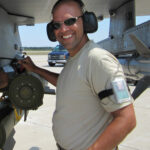

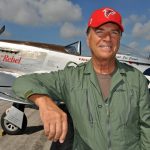
Editor’s Note: As Ben Hall approached his 93rd birthday, former Unlimited champion Chuck Lyford and famed photographer and Air Classics air racing editor Jim Larsen approached Society of Air Racing Historians President, Timothy Weinschenker, about making a presentation about Ben’s flying career, especially his contributions in warbirds and air racing, at a birthday party they were planning. It was a fortuitous decision, for Ben passed away shortly thereafter on March 12, 2016. Ben was a truly special individual who lived a life of great accomplishment in a very low-key manner that brought little attention to himself. He was a great human being who contributed a great deal to the sport of air racing and the Warbird movement in general. What follows is Tim’s presentation.
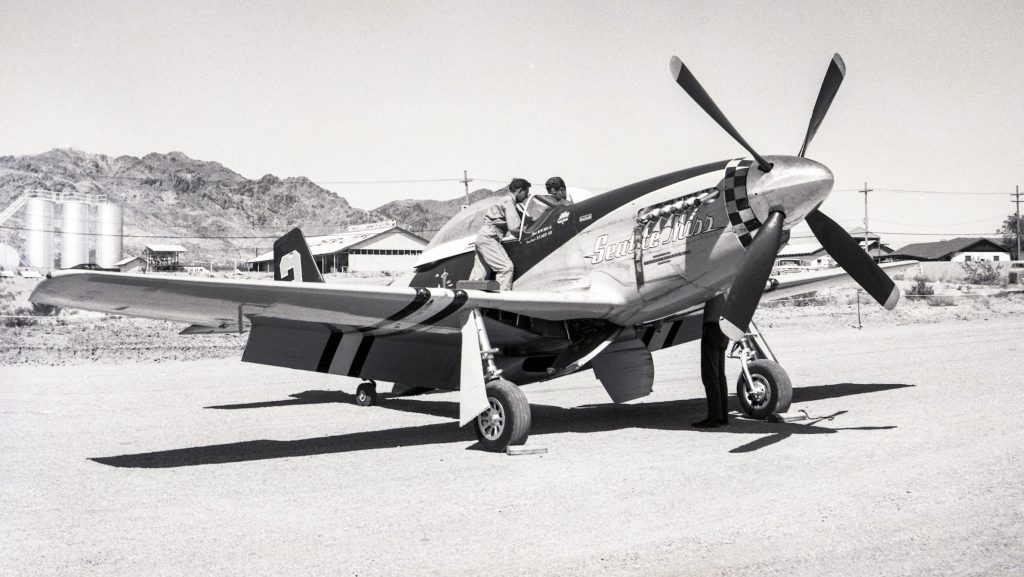
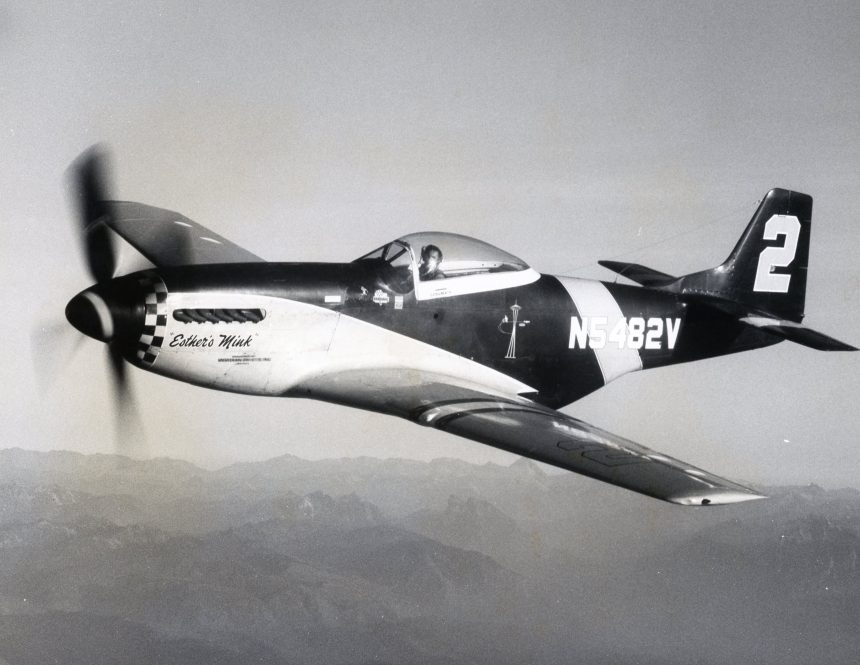
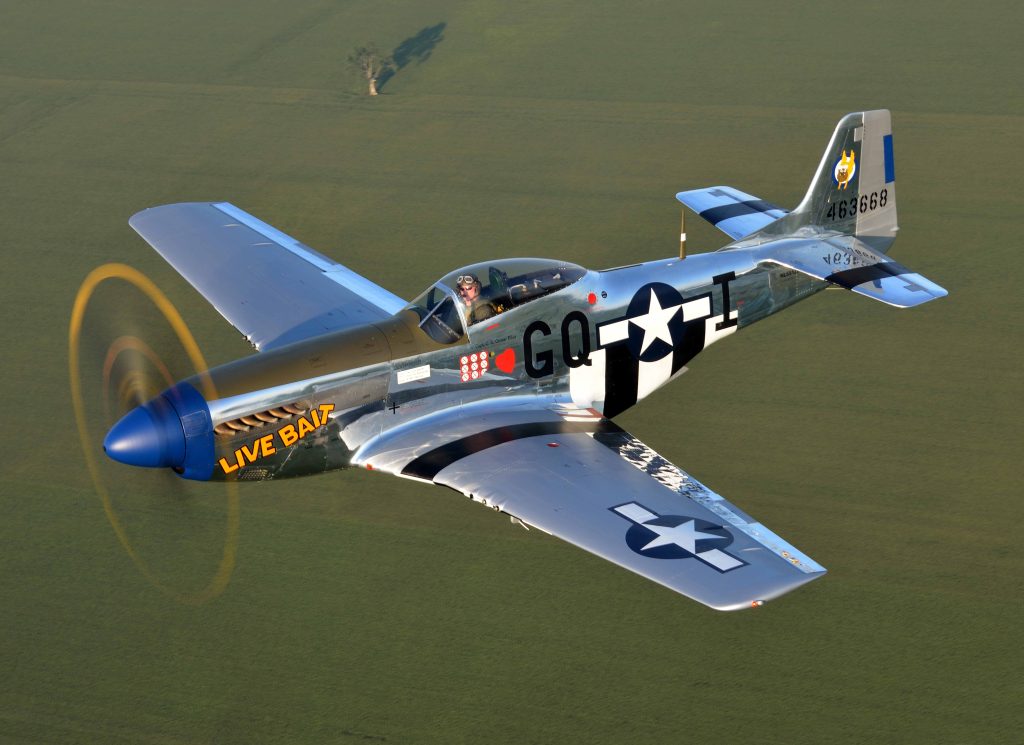
Hall served as a fighter pilot in World War II, but unfortunately, he was assigned to the Panama Canal Zone…not the ideal place for a fighter pilot! After the war, he remained in the service and transitioned into P-80 Shooting Stars. Upon leaving the service, Ben founded Meridian Pavers and developed it into a very successful business that afforded him the luxury of purchasing a Mustang, P-51D USAAF #44-73343 to be specific, to satisfy his need to pilot high-performance aircraft. Ben placed the fighter on the U.S. Register as N5482V.
Around 1959, Ben met Chuck Lyford, who was absolutely crazy about speed and high-performance airplanes. At the time, Ben was also friends with Norton Smith, an airline pilot in the Seattle area, who also owned a P-51, and they often flew together. Coincidentally, Lyford also knew Norton and managed to talk him into a ride in the Mustang. As luck would have it, the Merlin developed engine trouble that required the replacement of one of the cylinder heads. Chuck had some connections within the Seattle hydroplane community and was able to obtain a replacement and install it on Norton’s Mustang. When queried as to the bill, Chuck told Norton that, instead of money, he wanted a chance to check out in the Mustang. Norton agreed, and soon Chuck was checked out in the P-51. A few years later, Chuck purchased his own Mustang for the princely sum of $5,600… a mere $59,000 in today’s money.
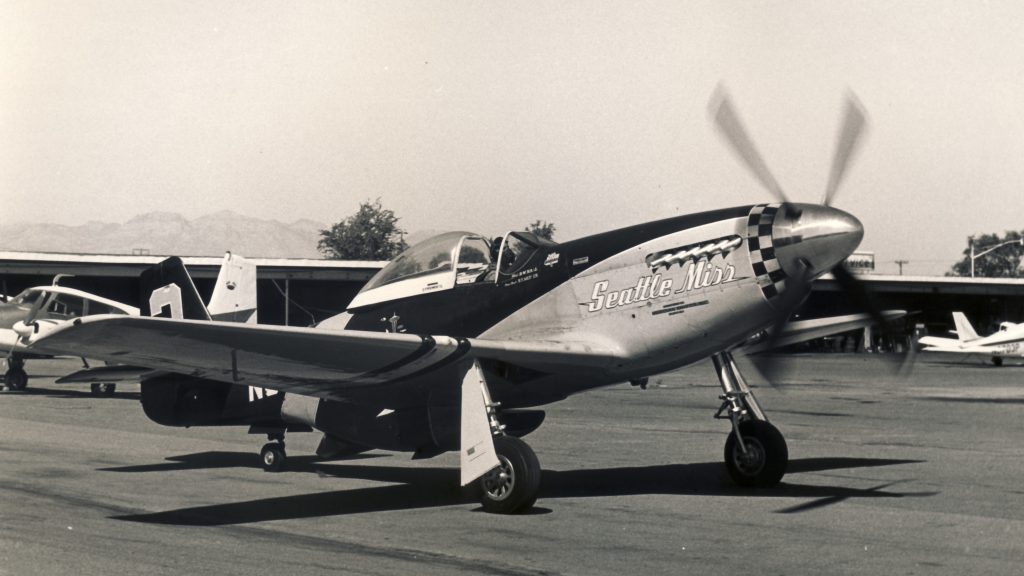
To say that Chuck was a wide-eyed young man at this point in his career is probably an understatement and it was all facilitated by Ben Hall. However, Ben’s involvement in Chuck’s flying career did not end with the acquisition of the Mustang, as Ben went on to instruct him on flying the Mustang, flying formation, and aerobatics, in the same manner that Ben was taught in the Army Air Force. For a brief period (1962-63) the pair could be found performing an aerobatic routine in their identically painted Mustangs. Shades of The Horsemen.
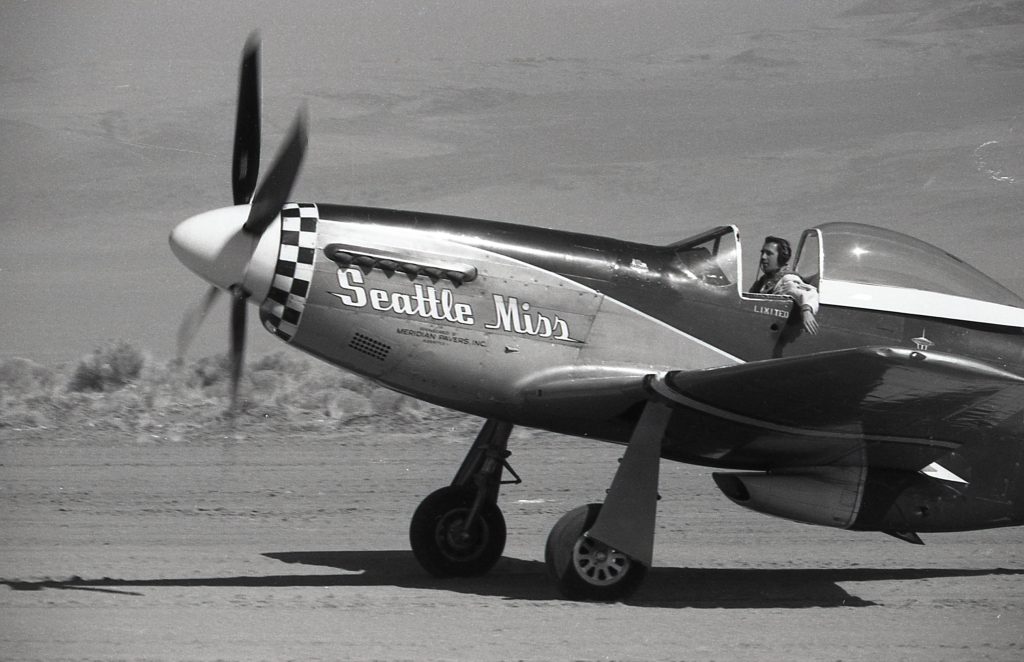
In 1964 when hydroplane racer and rancher Bill Stead, revived Unlimited class air racing in Reno, Nevada and Ben and Chuck were there. Chuck, with sponsorship from Bardahl and assistance from his hydroplane friends, entered P-51D USAAF #44-84390 (N2669D) Bardahl Special (Race 8), which was much more potent than Ben’s Seattle Miss (Race 2). Despite finishing a distant fourth to Bardahl Special (flown by Bob Love) in the championship race on September 20, Ben’s appetite for competition had been whetted and he started making plans for the 1965 season.
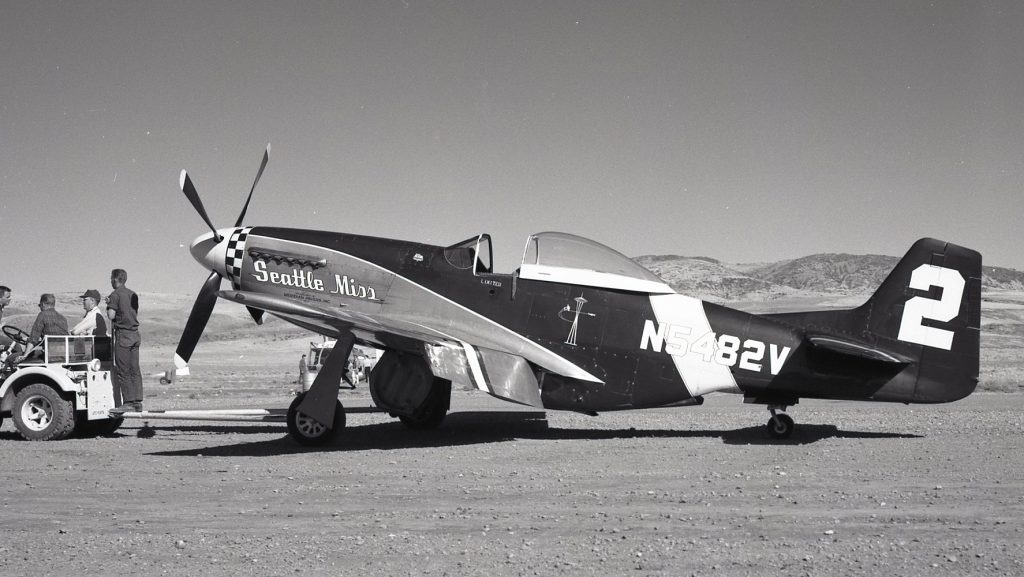
The Unlimiteds competed at three venues in 1965. The first was Fox Field in Lancaster, California, in May. In the interest of competitiveness Ben and his crew installed a water injection system in Seattle Miss to increase the power capability. Ben qualified for the Final race, but on lap six of the 15 lap event a connecting rod bolt sheared with such force that it nearly cut the crankcase in two and forced Ben to make a somewhat hairy dead-stick landing. As he would for so many pilots in the decades that followed, Ben avoided disaster thanks to the advice of pace/safety plane pilot, Bob Hoover.
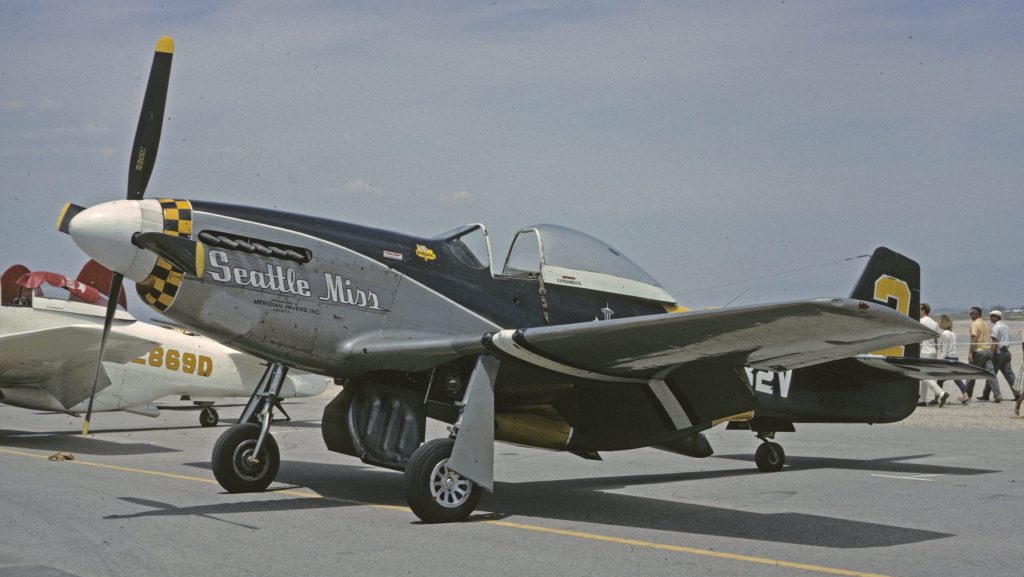
Ben was unable to get the damaged Merlin replaced in time for Reno, but did get a new engine installed in time for the races held in Las Vegas two weeks later. In the final race Ben flew Seattle Miss to a second-place finish behind none other than his good buddy, Chuck Lyford. That second-place finish motivated Ben to further enhance the performance of his Mustang for 1966. He installed an Aero Products propeller, enhanced the engine, and refined the water injection system. At the beginning of the 1966 season Seattle Miss sported a new black and yellow paint scheme, but upon arrival at Reno the name had been changed to Ester’s Mink.
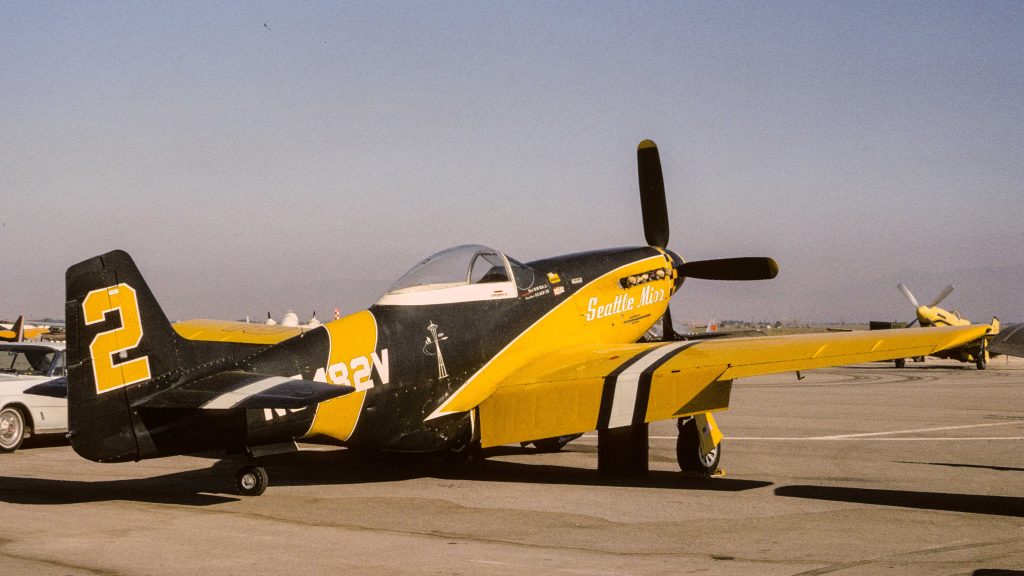
The 1966 season once again began in Lancaster, where in the final race Ben was running third behind Clay Lacy and E.D. Weiner when Clay’s prop ran away which elevated Ben to second place behind Weiner. This result would be repeated at Reno where Ben finished second behind Darryl Greenamyer in the all-conquering Bearcat. This remarkable string of second place finishes meant that Ben was awarded the 1966 Unlimited Class point championship.
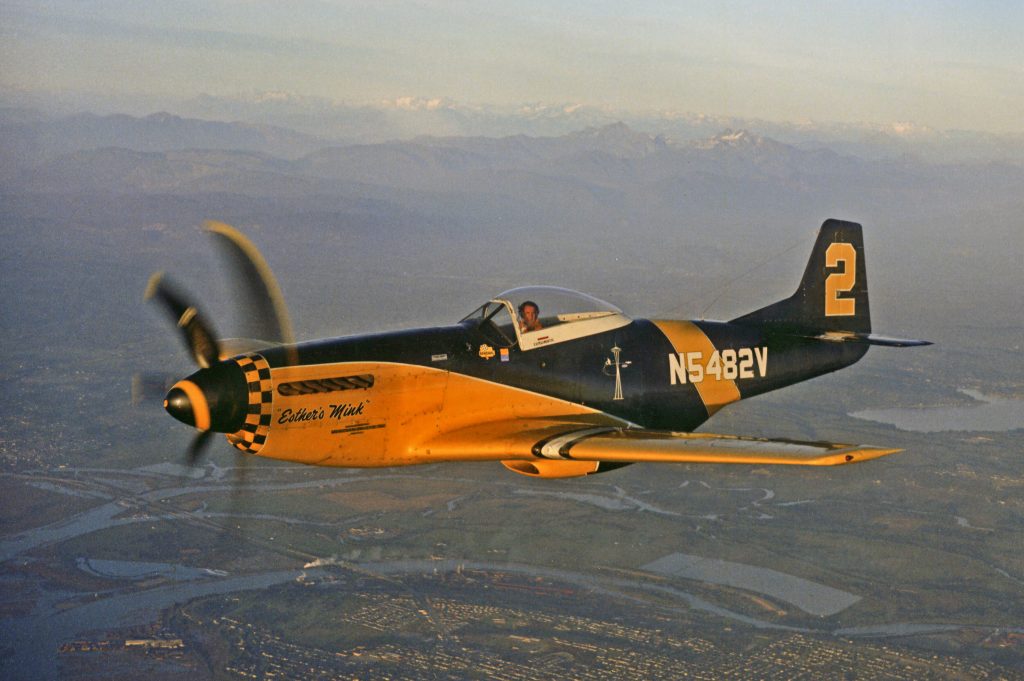
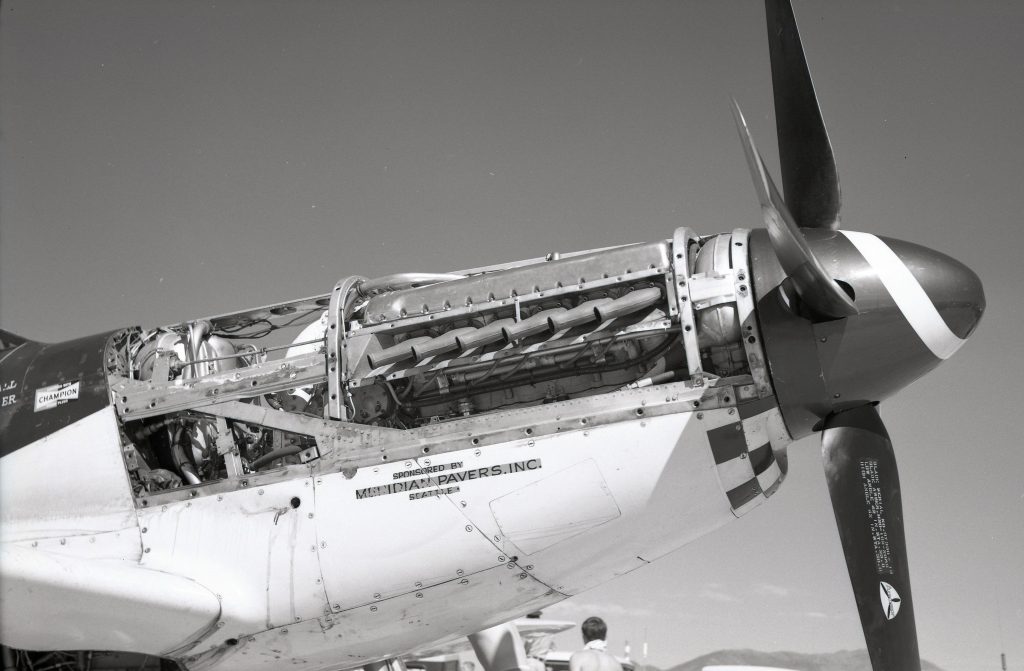
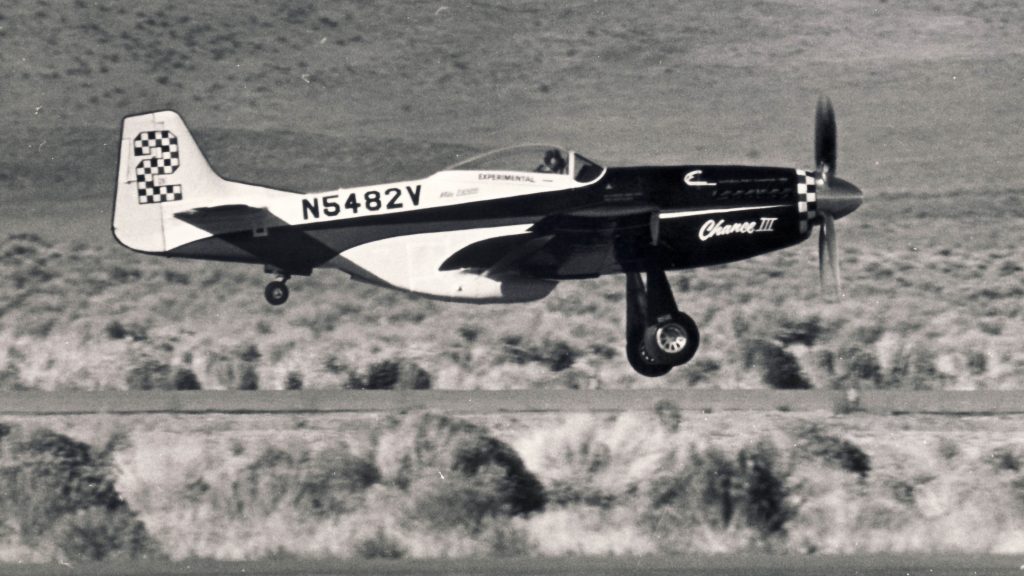
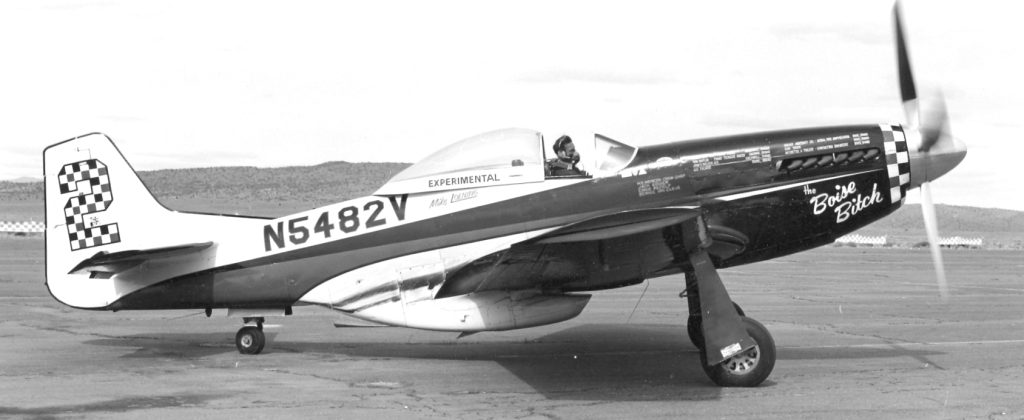
It was on this high note that Ben decided to sell his Mustang and get out of air racing for a period. Perhaps Ben’s wife, Ester, really did want a mink instead of a Mustang! The Mustang was purchased by Mike Loening who raced it from 1967-1971, under the names The Traveler (1967), Chance III (1968), The Boise Bitch (1968), and Miss Salmon River (1970-1971), retiring it from competition after a spectacular mayday and crash during the 1971 Reno Gold Unlimited Final.
Ben returned to competition in 1969, this time in the new T-6 class, which was created as an easy way to add another event to Reno for what were supposed to be stock North American T-6/SNJ trainers. A demonstration race was held in 1967, and the class was formally introduced the following year. The class was marked by close competition and some “wild and woolly” flying! In 1969, Ben would startle the racing world when he qualified his “stock” T-6G Miss Meridian Pavers at the astonishing speed of 200mph! This was a total surprise to all! He would easily gain his first championship victory with an average speed of 192mph. This result would be repeated in 1970 during the air races held in Fort Lauderdale, Florida. These victories would mark the high point of Ben’s air racing career. By 1974 Ben was out of air racing again and moved on to a new challenge…the restoration of F-86A USAF #48-178.
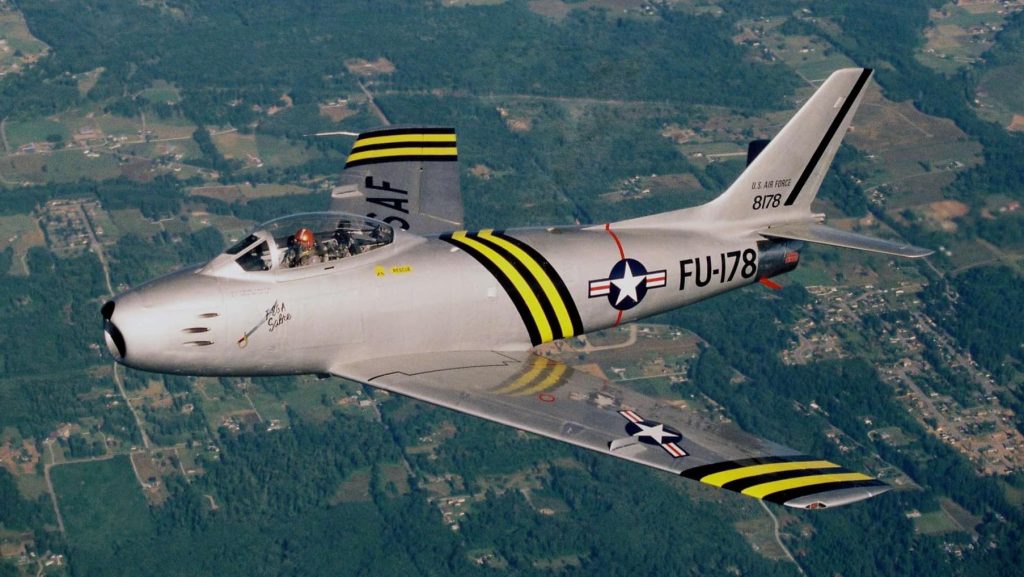
That story began in 1970 when Ben’s Seattle neighbor, Jim Larsen, learned of a somewhat rare F-86A languishing in a surplus aircraft dealer’s storage yard near Fresno, California. Ben and Jim flew to Fresno to examine the airframe and decided it was worth the effort to restore. The Sabre was purchased, and thus began a four-year restoration process that would see about 10,000 man-hours invested to return the aircraft to airworthy status. It was on February 24, 1974, that experienced Sabre pilot Paul Bennett made the first test flight of the newly restored Sabre. Ben kept the jet until 1988.
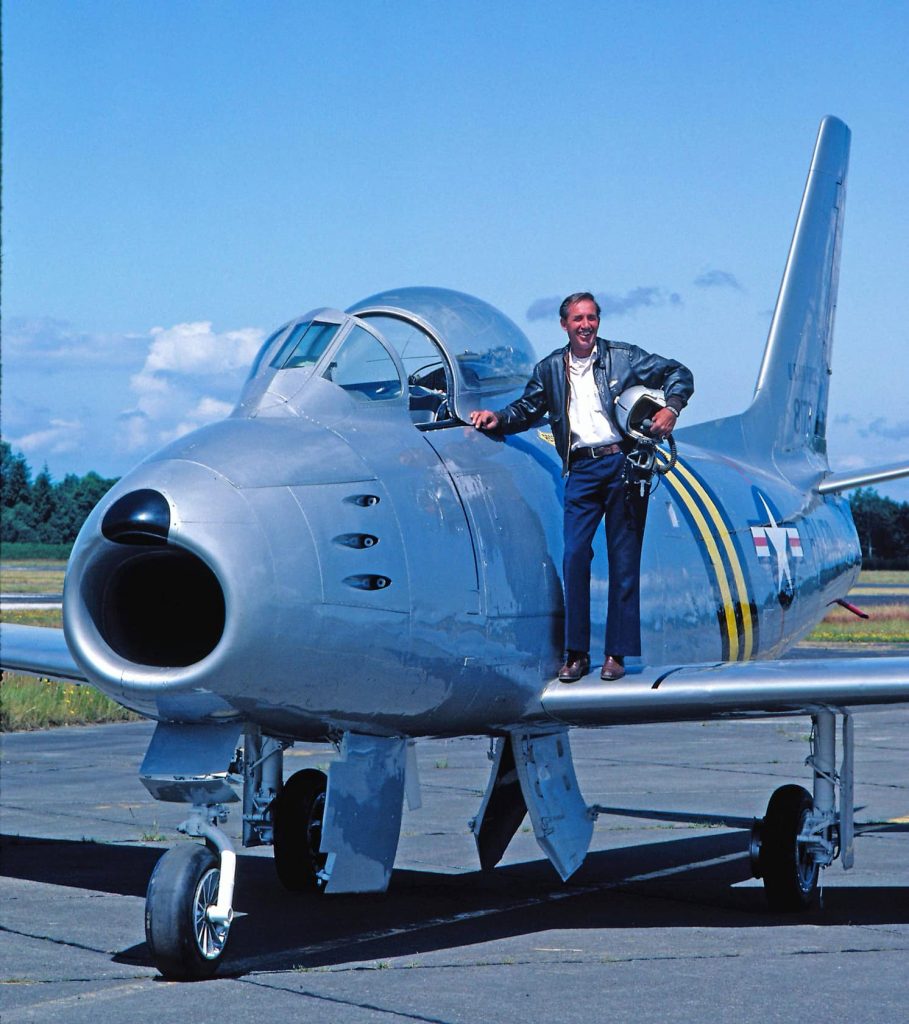
Ben Hall’s contributions to the world of aviation and the sport of air racing cannot be understated. It is the efforts and contributions of competitors and unsung heroes such as Ben Hall that are an integral part of the rich history of the world’s fastest motorsport- air racing.



I remember seeing the F-86 sitting in the scrap yard in Fresno in the mid 1960s. You could see it while driving past on highway 99.
Often wondered what became of it.
Great story!