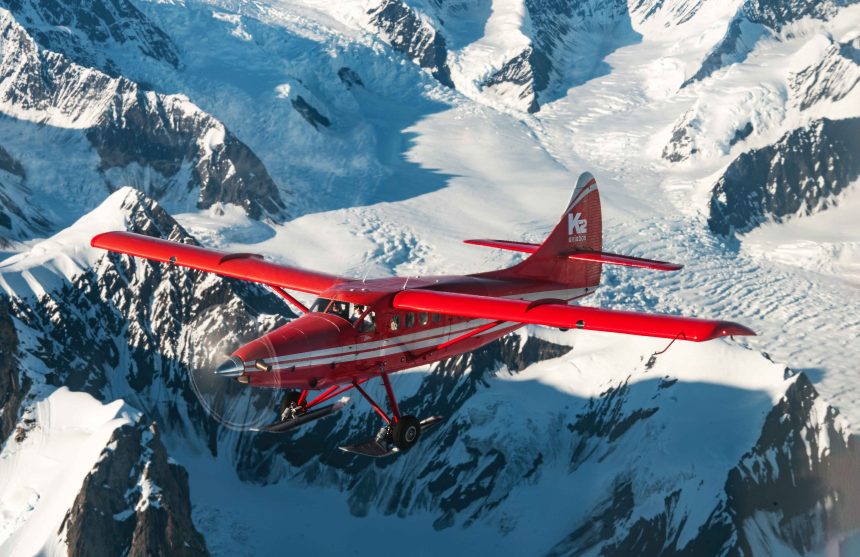

The State of Alaska is a paradise of stunning and rugged landscapes, national parks, wildlife… and airplanes. From 747s to Super Cubs, America’s 49th state is a mecca for aviation enthusiasts, and while the airplane has been a necessary tool for survival for over a century, there are hundreds of aircraft that allow tourists to see the state from the air. One of the premiere tour companies is K2 Aviation, based at Talkeetna Airport (PATK) in the village of Talkeetna, which specializes in conducting aerial tours of Denali National Park with their fleet of Cessna 185s, de Havilland Beavers and Otters, and Piper Cherokee Sixes.
From the one-hour “Denali Experience Flightseeing Tour,” which takes passengers within six miles of Denali’s summit and down through the Ruth Amphitheater and Great Gorge, to the incredible two-hour “Top of the World Tour” that offers summit views of Denali, Mount Foraker, and Mount Hunter, K2, a top-rated National Park Service concessionaire, offers a variety of tours that highlight the grandeur of Denali National Park. On July 5, 2025, the author and his wife booked the latter tour with the optional Ruth Glacier landing.
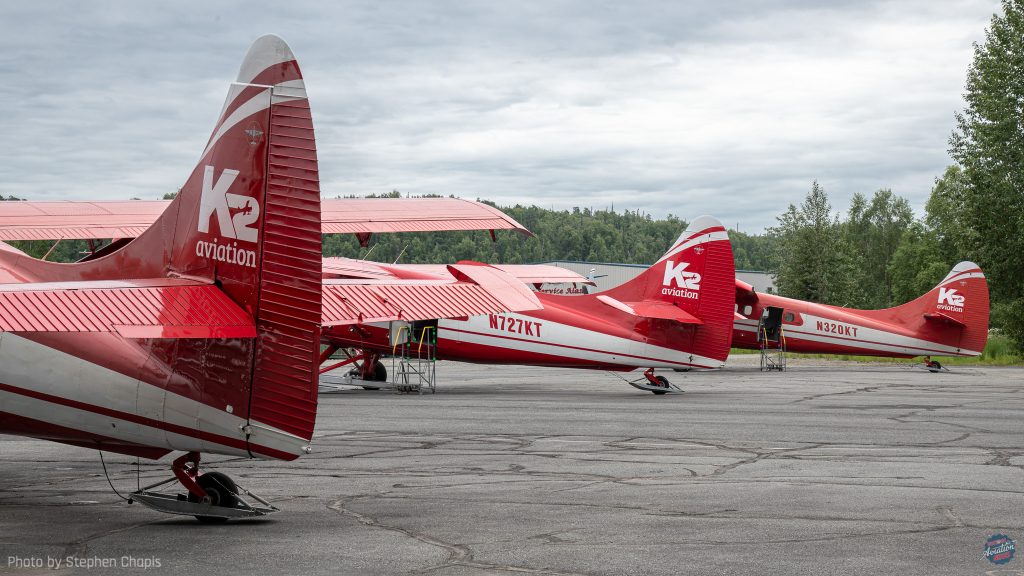
The aircraft for our flight was scheduled to be De Havilland DHC-3T Otter (s/n 73), which was delivered to Maxwell Ward’s Yellowknife-based Wardair on June 16, 1955, and registered as CF-IFP. Over the next two-and-a-half decades, it was operated by several operators in the Northwest Territories, Manitoba, and surrounding regions.
In 1982, C-FIFP was upgraded with a Polish PZL radial and later became the prototype for the 1,000-hp ASz-621R-M18 radial with a four-bladed propeller, which was certified in Canada in 1983. This engine gave the DHC-3 improved takeoff and climb profiles, and although fuel consumption was higher, this was offset by improved cruise speed and climb performance. On float-equipped Otters, the ASz allowed for shorter takeoff runs on water, which reduced wear and tear on the airframe. Throughout the 1980s and early 90s, CF-IFP remained in active commercial service under various operators, including Eagle Aviation Ltd., South Peace Services, Parsons Airways, and Points North Air Services through the 1980s and early 1990s. In 1995, it was registered to Blue Water Aviation Services, continuing operations from Silver Falls.
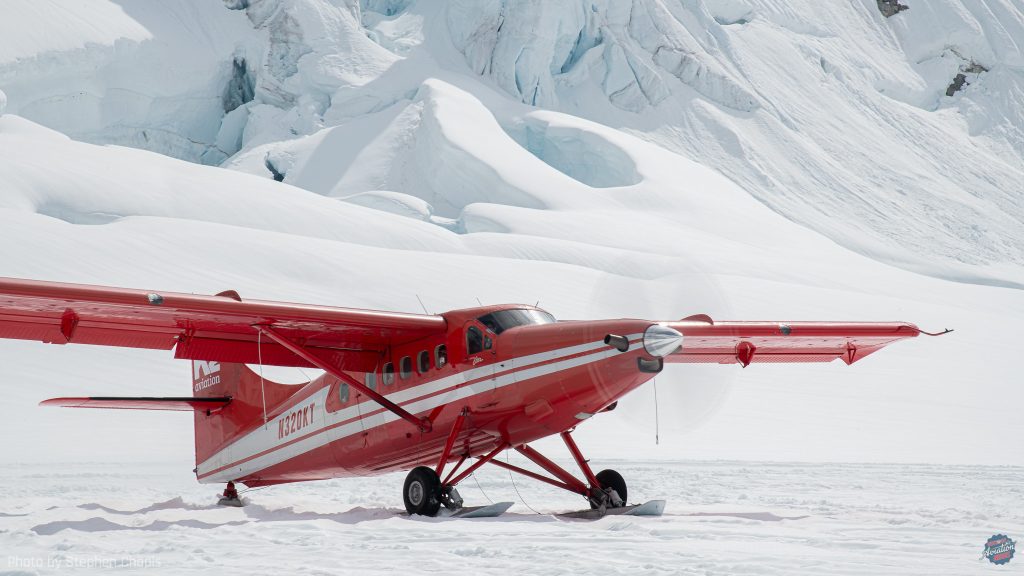
In 2008, the aircraft was purchased by Mike Schilling of Kenai, Alaska, and trucked to Geraldton, Ontario, where it was completely restored from the firewall back by Recon Air. In 2001, the aircraft was purchased by Rustair Inc., which operates Rust’s Flying Service of Anchorage and K2 Aviation in Talkeetna, and by the end of the year, the aircraft had received a Vazar PT-6A-34 turbine conversion and Rustair’s distinctive red and white livery. It was re-registered as N320KT in January 2012 and ferried to Alaska in June that year, where it joined the K2 fleet for glacier landings and sightseeing flights in Denali National Park.
Needless to say, we were excited about our upcoming 4:30 pm flight as we headed into Talkeetna’s Historic District, which is a 90-second drive from K2’s terminal, for lunch and a little sightseeing. Then, thirty minutes before our show time for the flight, we got the text: “We’re unable to fly the Top of the World Tour today. Please call our office for options.” I figured this was due to weather because it had been overcast most of the day. I was right. The conditions prevented us from reaching the summit of Denali. Our option was to take the Denali Grand Tour. This flight was scheduled to depart at the same time as our original flight and is identical to the Top of the World Tour, except we wouldn’t require oxygen because our maximum altitude would be 12,000 feet. More importantly, we would still be making the glacier landing, albeit at the pilot’s discretion. Rest assured, if you book a sightseeing flight with K2, they’ll bend over backwards to give the greatest experience possible.
We headed outside to wait with about 30 other passengers, and over the next ten minutes, three pilots came out, gathered their passengers, and headed out to their aircraft. When our pilot came out, I recognized him right away. It was Joe McAneney from the YouTube video “THE ROAD LESS TRAVELED – Alaska Aviation,” which I used to research this article. As the other three Otters were taking off in an almost mass launch, Joe gathered myself, my wife, and six other passengers for the safety briefing. Our new aircraft was DHC-3T N727KT.
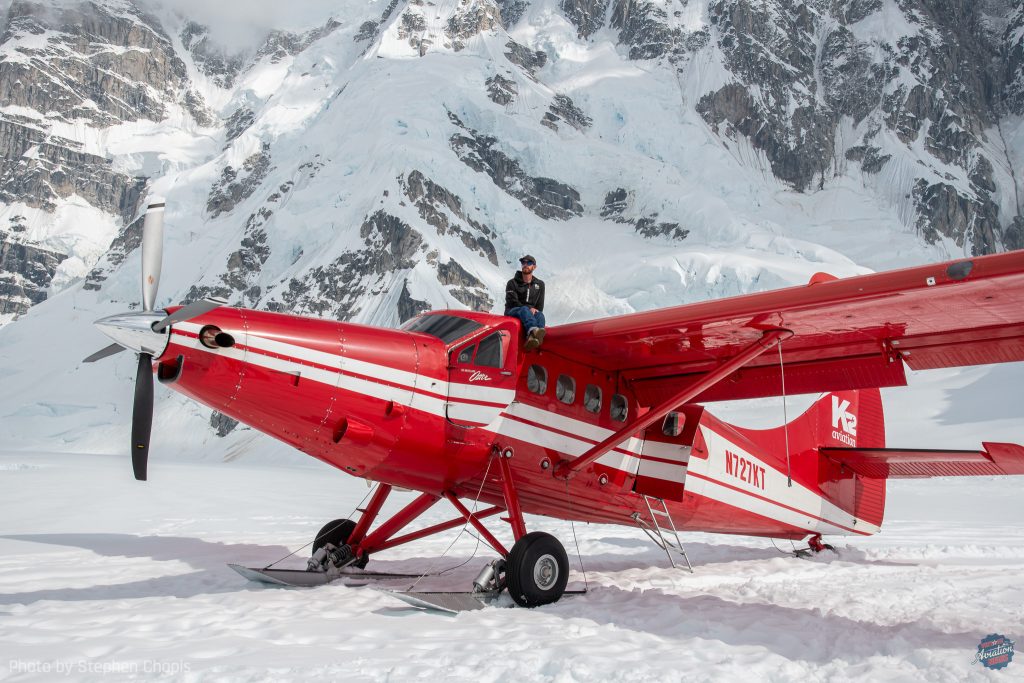
This aircraft (s/n 419) began its career with the Union of Burma Air Force (UB659) on November 28, 1961. It was retired and placed in storage in 1985. In 1989, it was one of the six Otters acquired by a buyer in Vancouver, British Columbia, but within two years it was sold to Pro Mech Air of Ketchikan, Alaska, and registered as N472PM. After several years of scheduled and charter service in Southeast Alaska, it
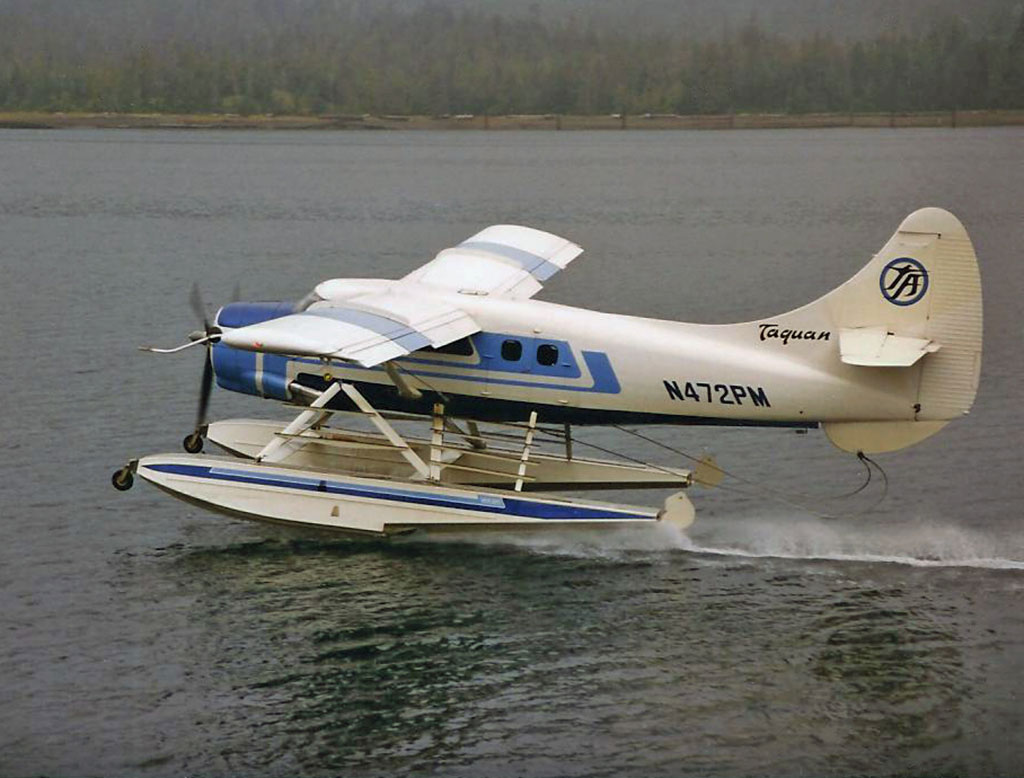
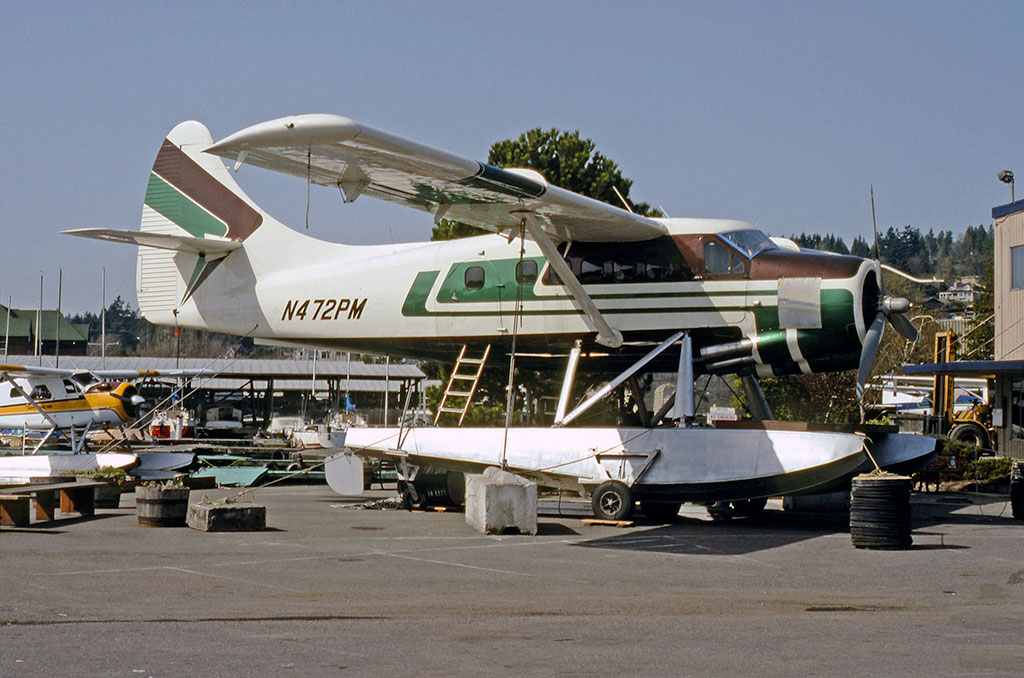
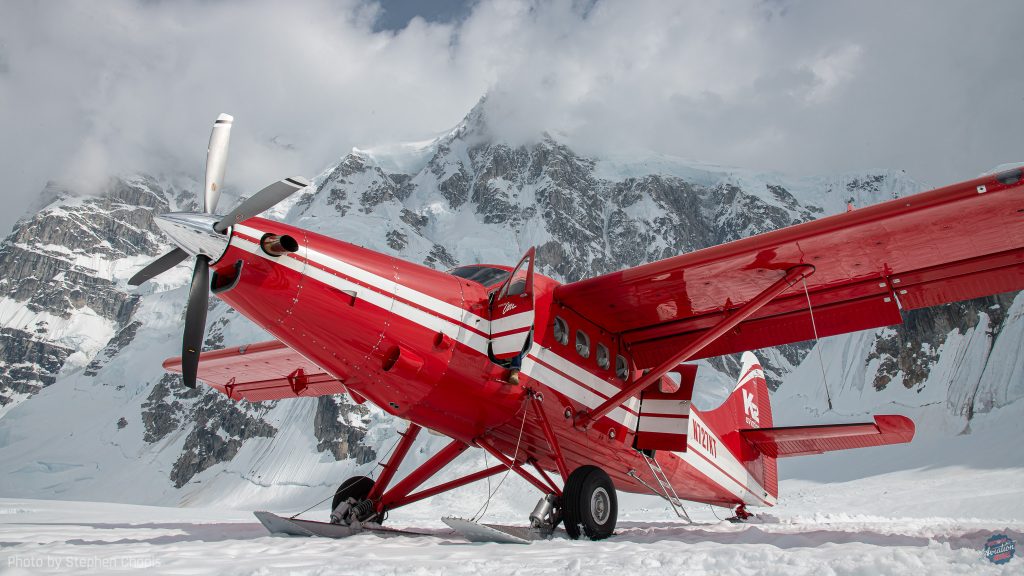
In 1995, it returned to Ketchikan when it was purchased by Taquan Air. By the early 2000s, after changes in ownership and refurbishment, the Otter was acquired by Rustair Inc., re-registered as N727KT, and assigned to K2’s base at PATK. Painted in Rust’s signature red and white livery with K2 branding, Two Seven Kilo Tango became the first turbine Otter in the K2 fleet. Operating on wheel-skis, it has flown climbers and tourists into the Alaska Range for glacier landings and flightseeing tours of Denali and surrounding peaks.
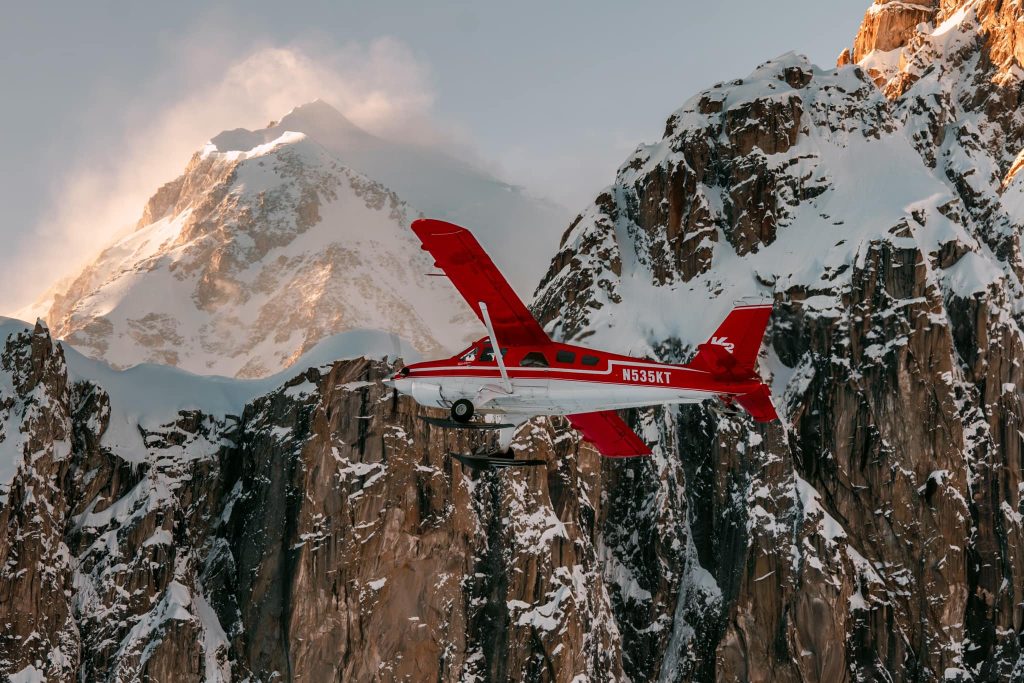
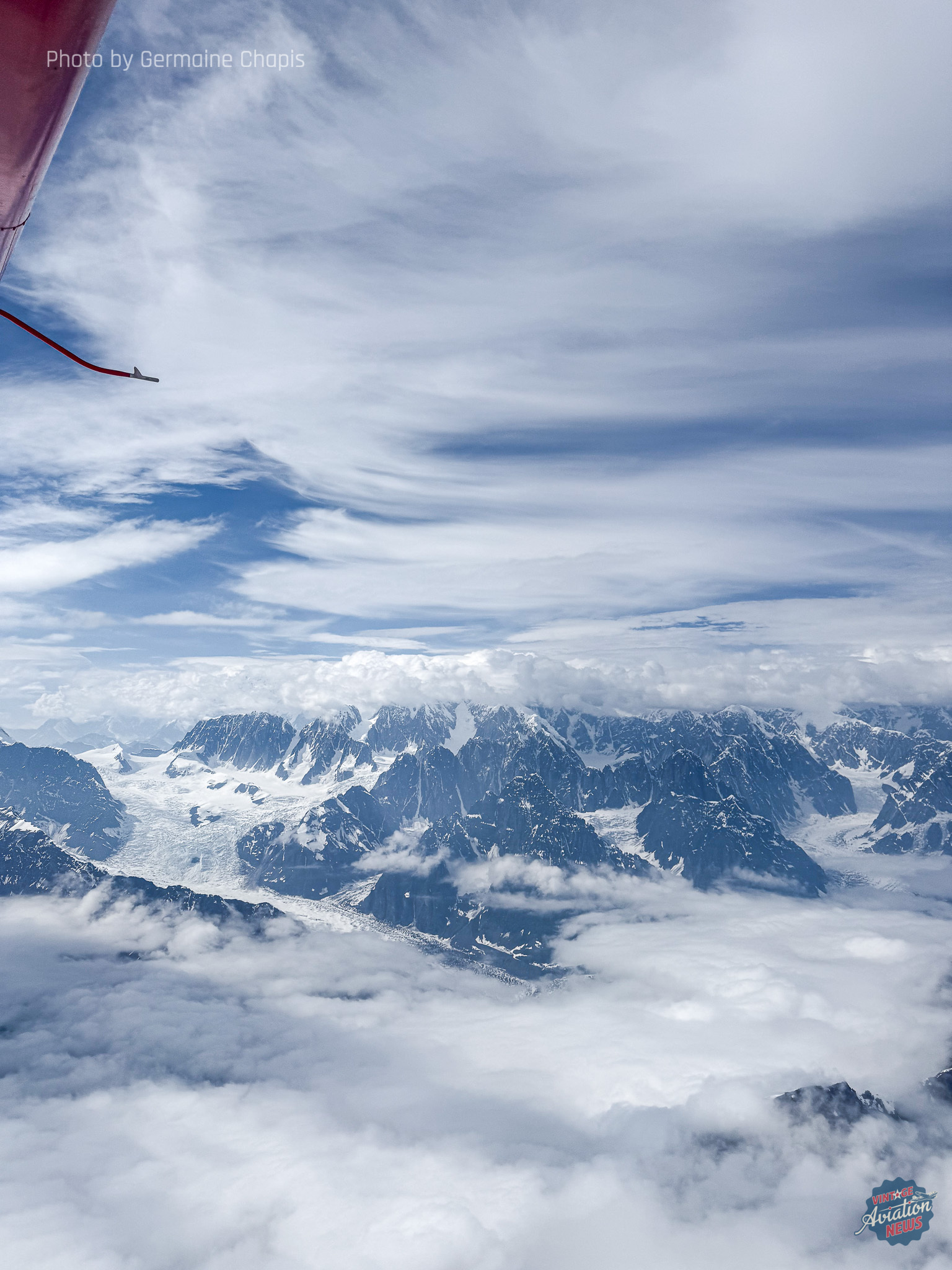
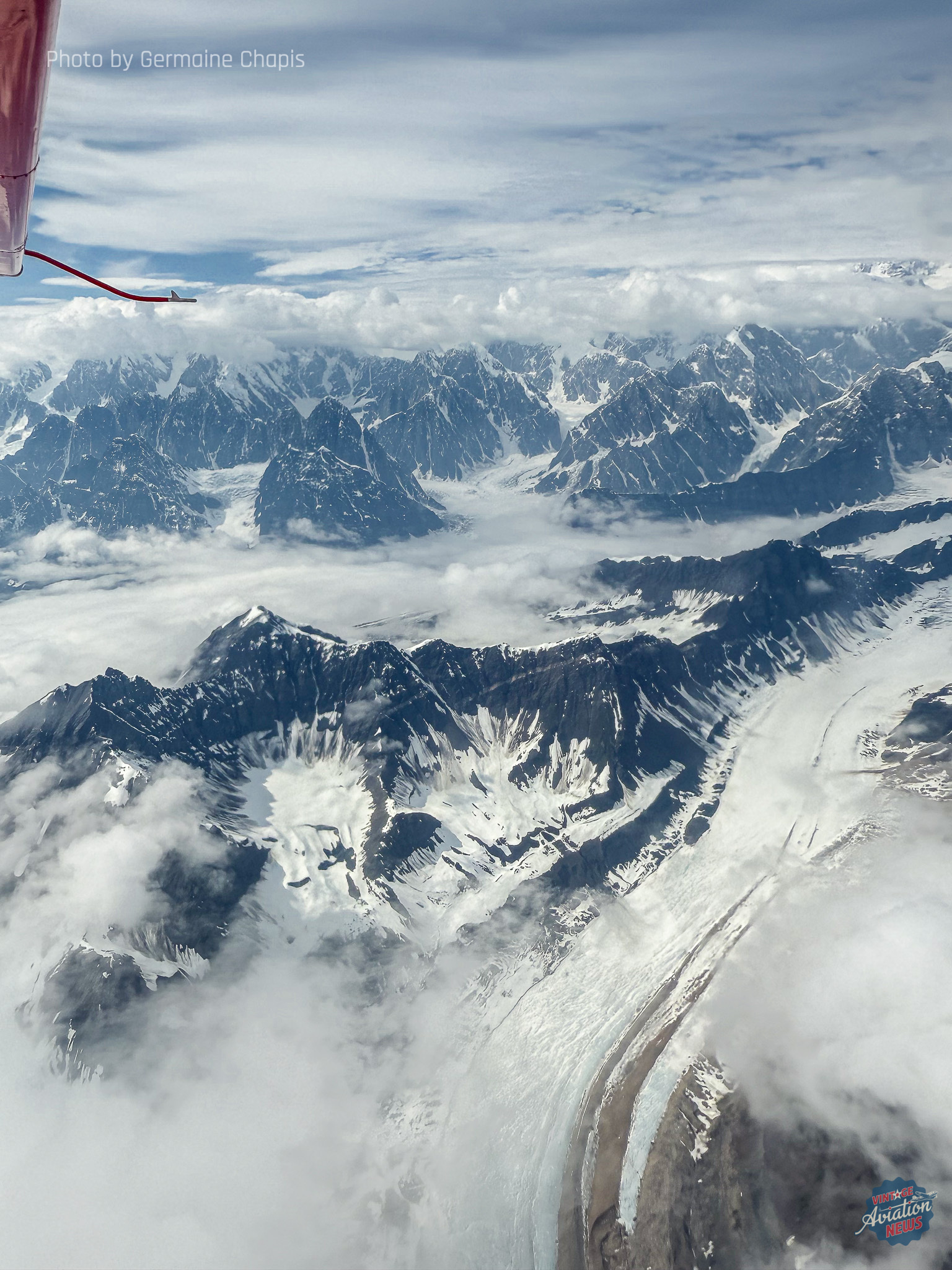
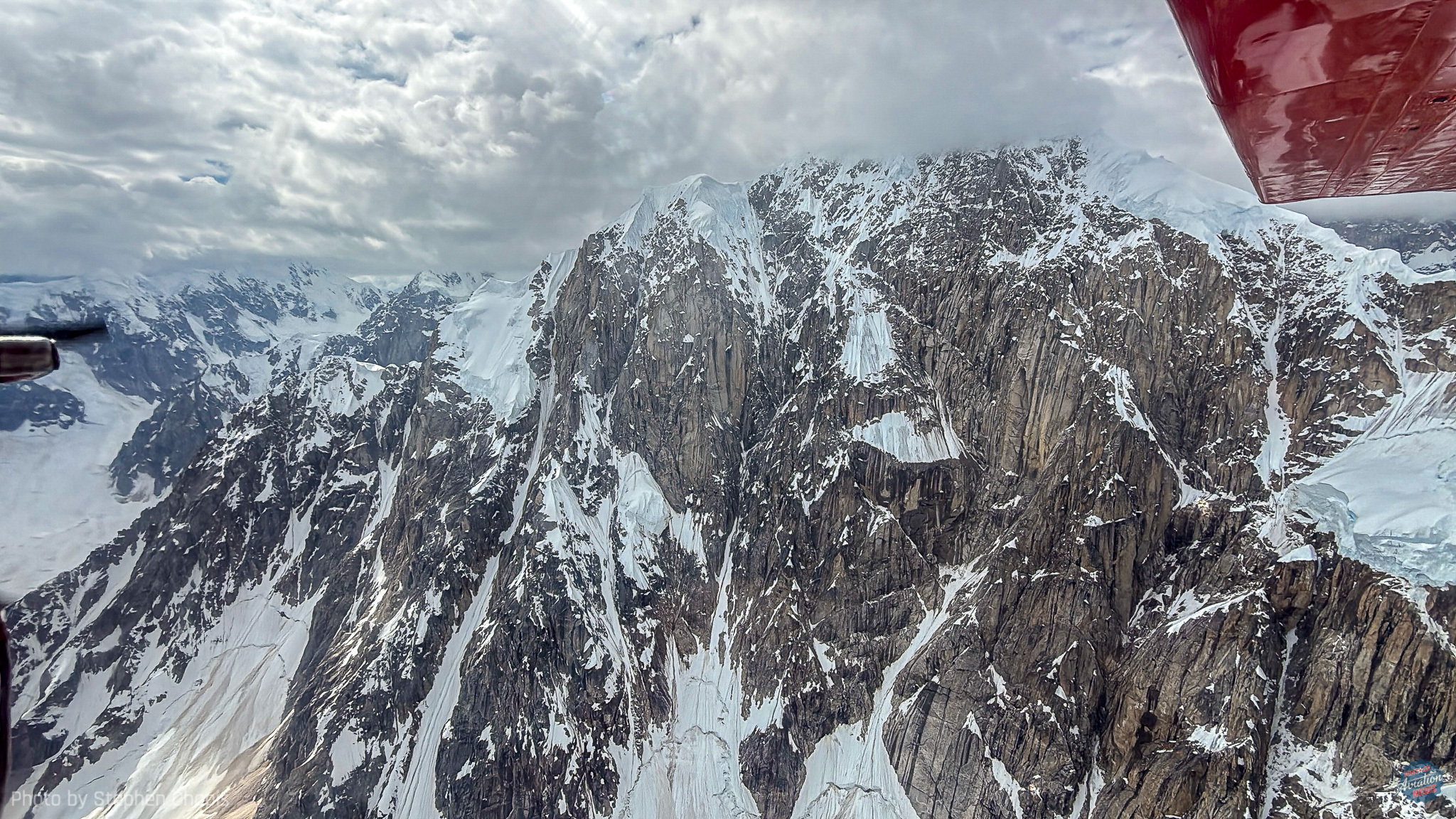
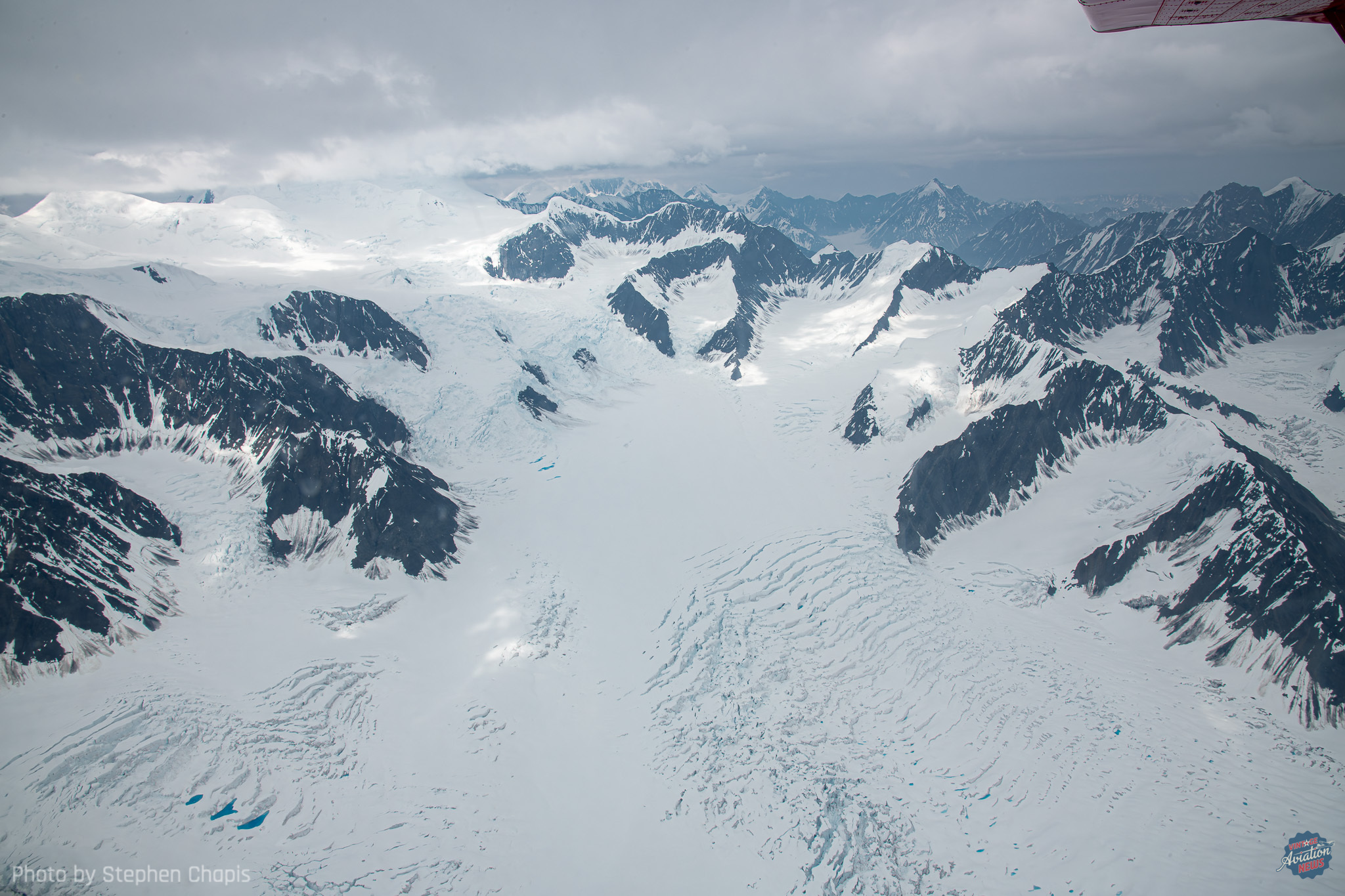
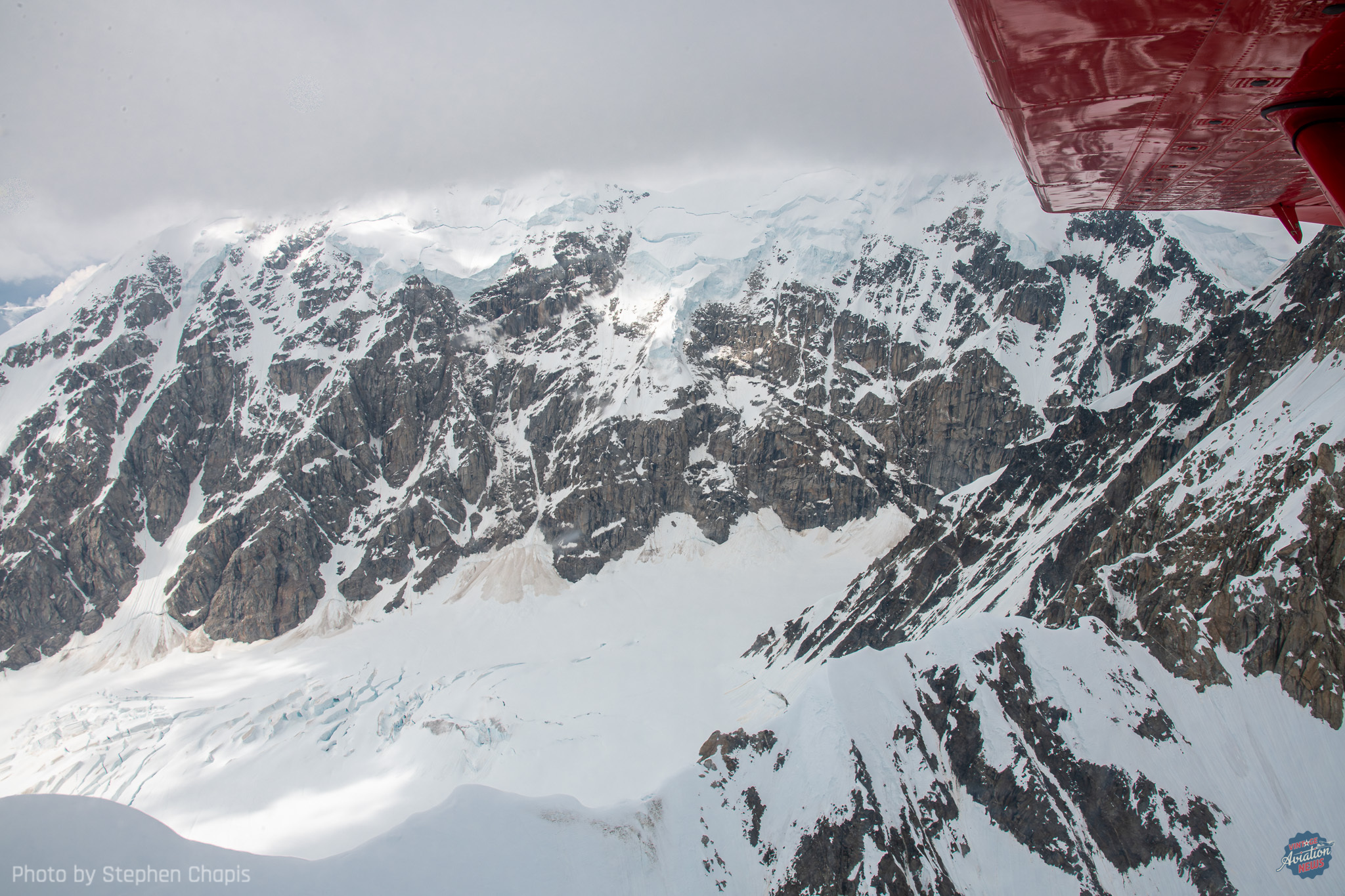
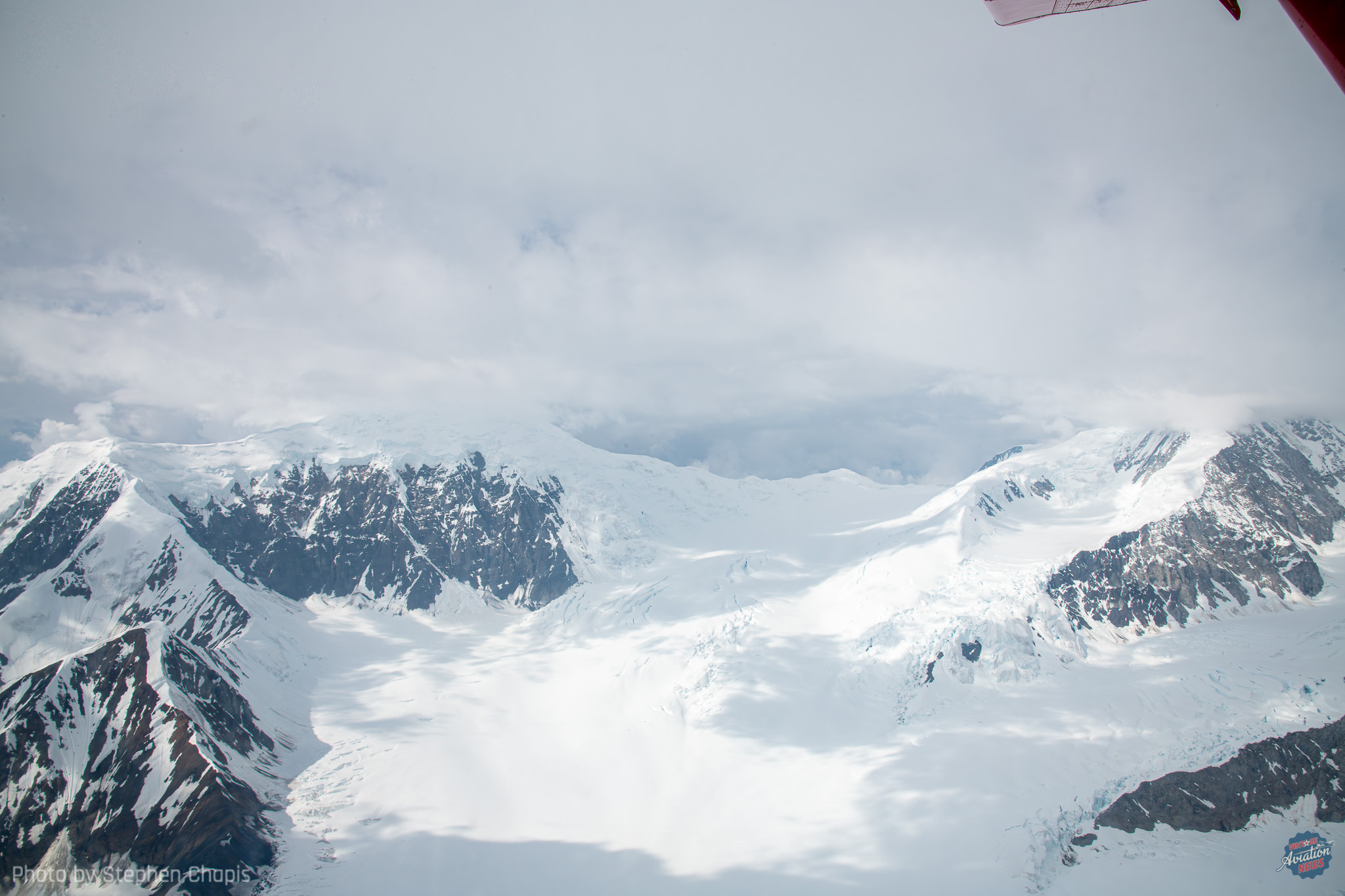
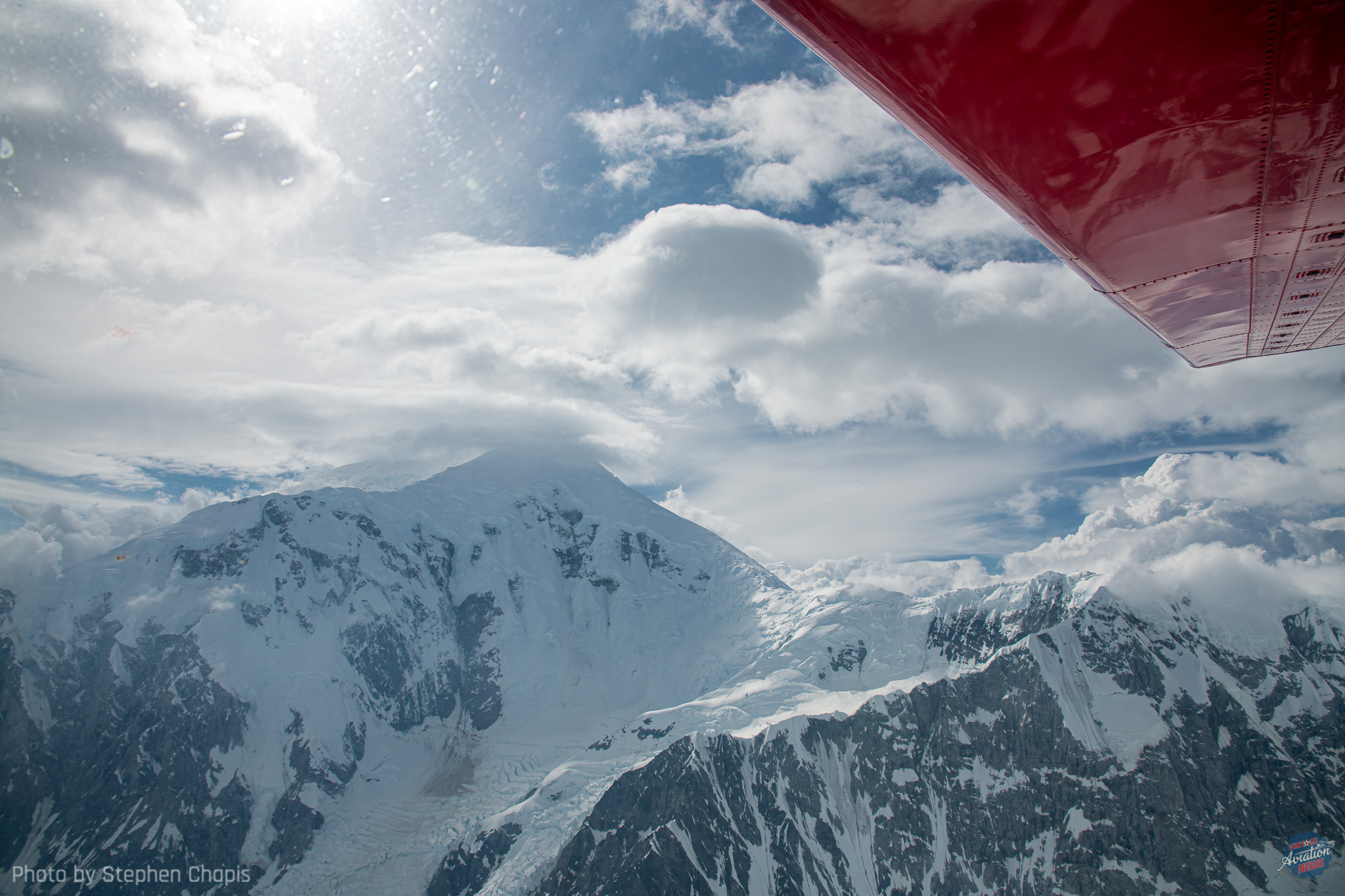
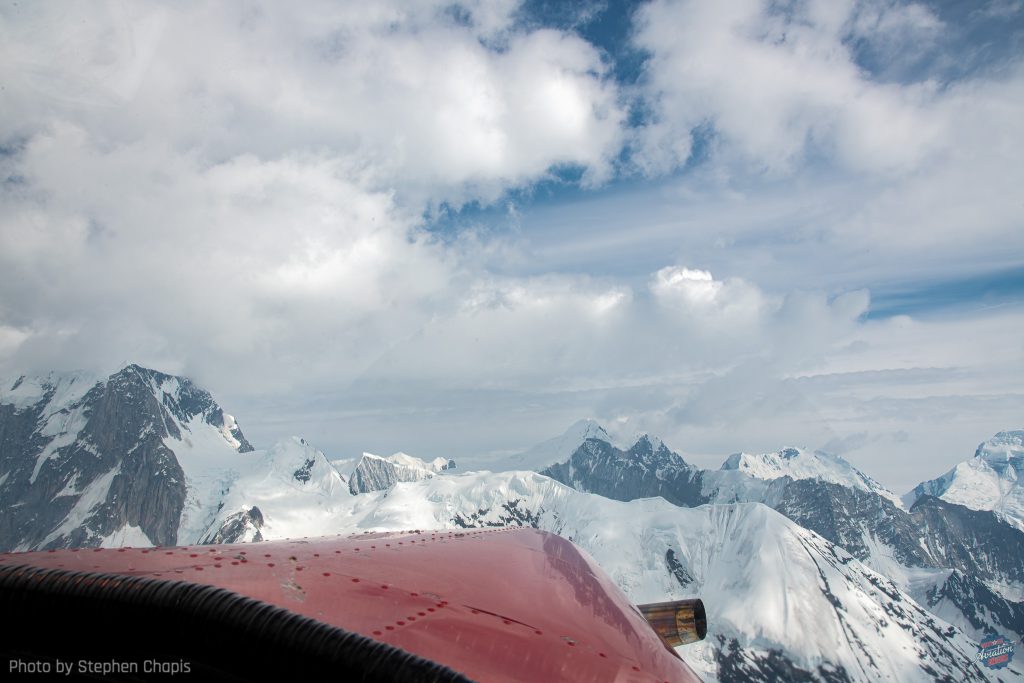
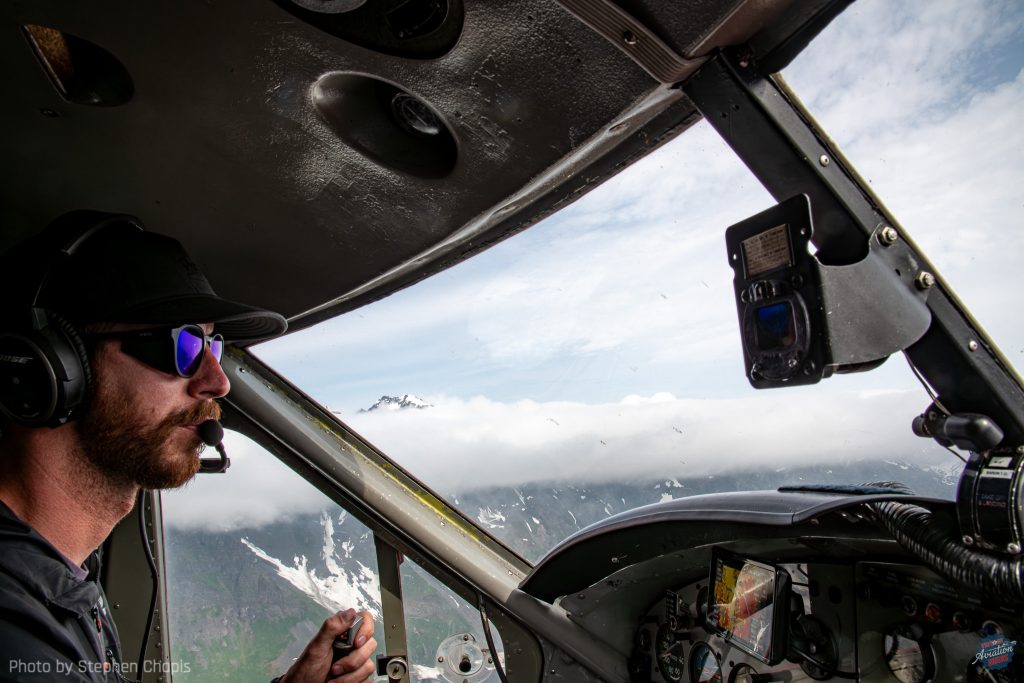
With the safety briefing complete, we boarded the aircraft through the rear door, and by the time Joe climbed in, we were all ready to go. Within minutes, Joe turned onto PATK’s Runway 19, brought the power up, and within moments N727KT simply levitated off the runway. There was no drama whatsoever, and Joe later said, “de Havilland got it right with this aircraft.” As we turned in a northerly direction, the Alaskan tundra spread out in every direction, but soon we were on top of a broken cloud layer, and suddenly we were in the middle of the snow-covered mountains of the Alaska Range. Joe recounted our route in an email a few days later, “We flew on the south side of the Alaska Range from Mount Silverthrone to the east and Mount Foraker to the west. We saw the Tokositna, Ruth, and Kahiltna Glaciers. We saw the Great Gorge including Mount Dickey which stands over 6,000′ above the Ruth Glacier of vertical granite.”

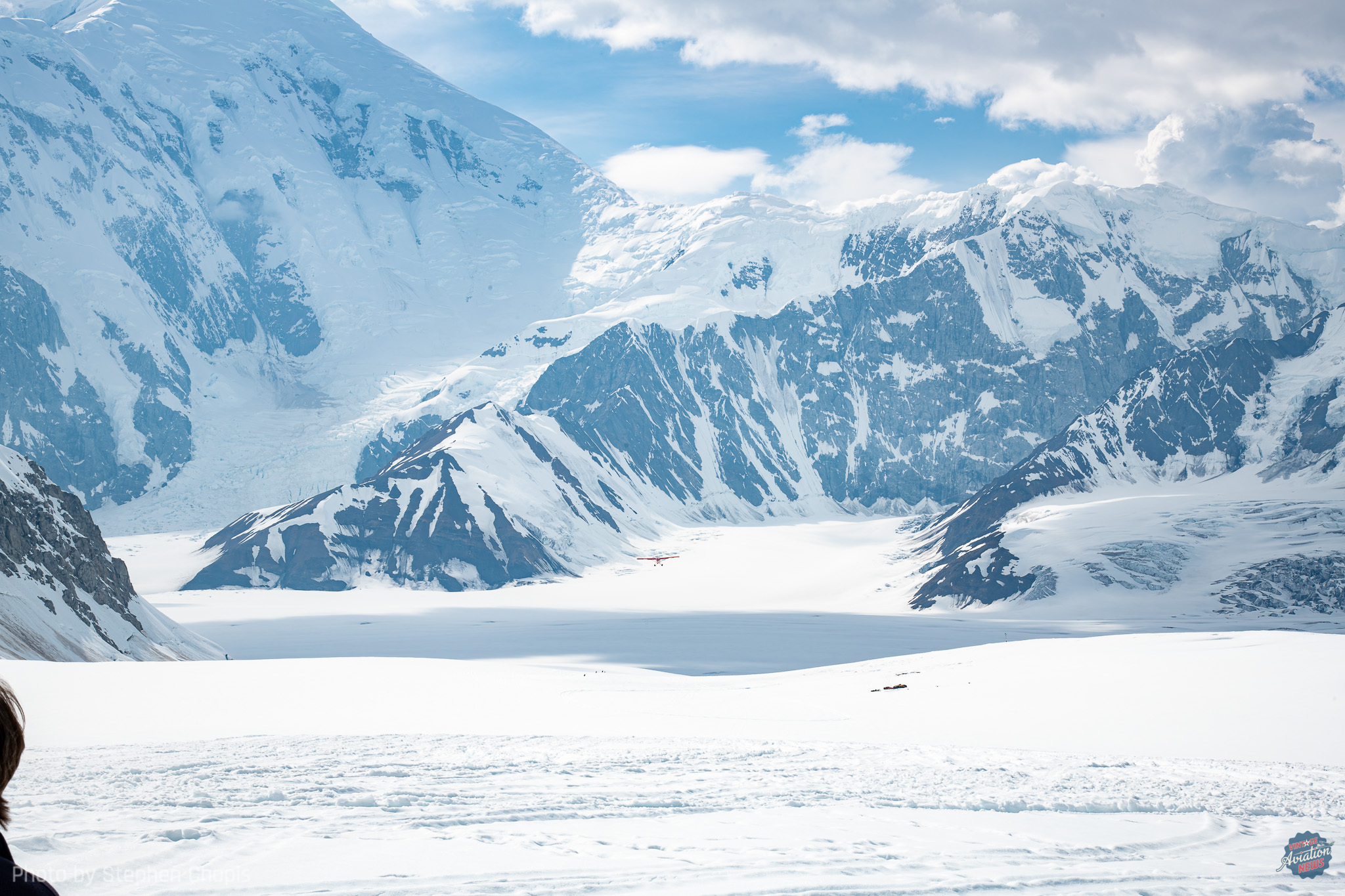
On flights that include a glacier landing, the landing takes place on the Ruth Glacier, but Joe heard pilots ahead of us reporting that reaching it was impossible due to clouds, and they were all diverting to the Denali Base Camp. Joe’s email continued, “We landed at the Upper Base Camp strip, which sits at 7,200’ MSL. This is the spot where all climbers are dropped off for doing attempts on Denali’s West Buttress route and other mountains such as Foraker and Hunter. A few weeks prior there were hundreds of climbers camped out there waiting to get off the mountain. The climbing season ends right around the end of June due to glacial melting and instability on the lower part of the route.”
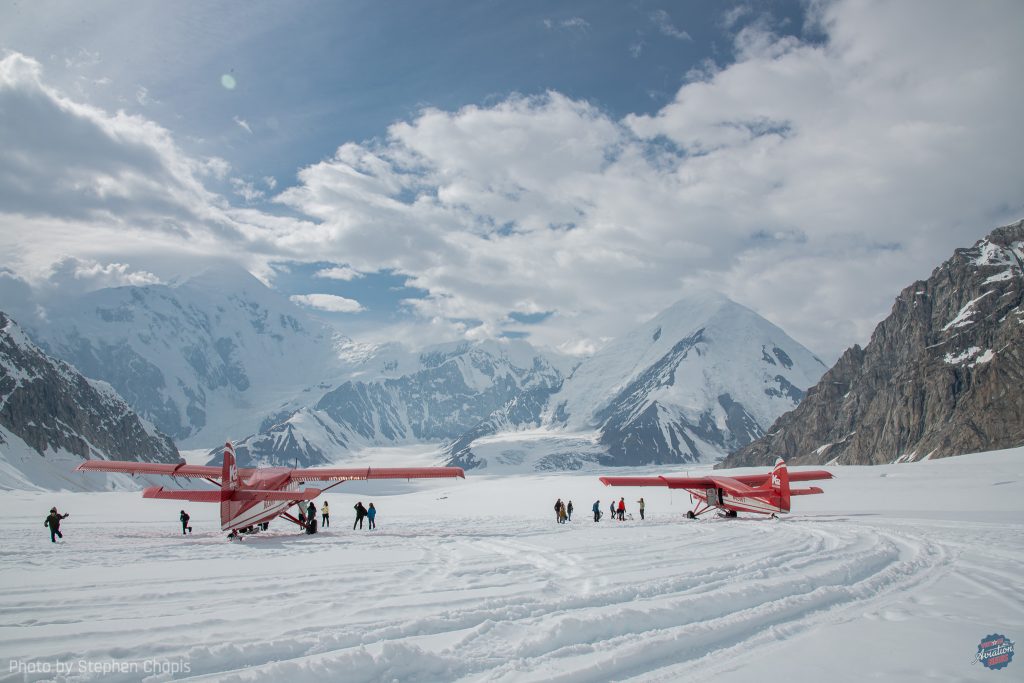
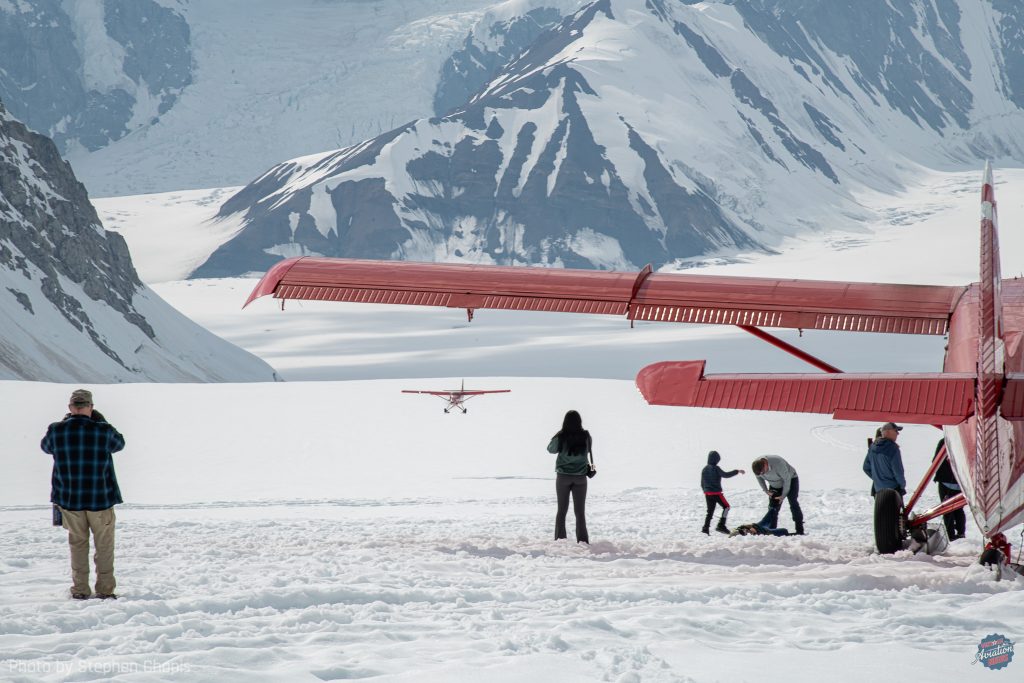
Our approach to Base Camp started with a circling descent to a southbound left base that took us between Mounts Frances and Crosson. As we turned on final, Joe lowered the skis and flew a smooth approach all the way to touchdown. Once we were on the ground, Joe kept the power up as we taxied uphill to where a pair of K2 Otters and one from Talkeetna Air Taxi were already parked. We shut down at a spot above these aircraft, and when we stepped down onto the snow, we were met with absolutely stunning scenery with Mounts Frances, Kahiltna, and Hunter towering above us. Then there was the silence. Except for the sound of the snow crunching under our feet and hushed conversations, there was no sound whatsoever. That is, until we heard a low rumble above us, and when we looked in the direction of the sound, we saw small bits of snow and ice tumbling down the side of Mount Hunter. Joe was unconcerned, so we were as well.
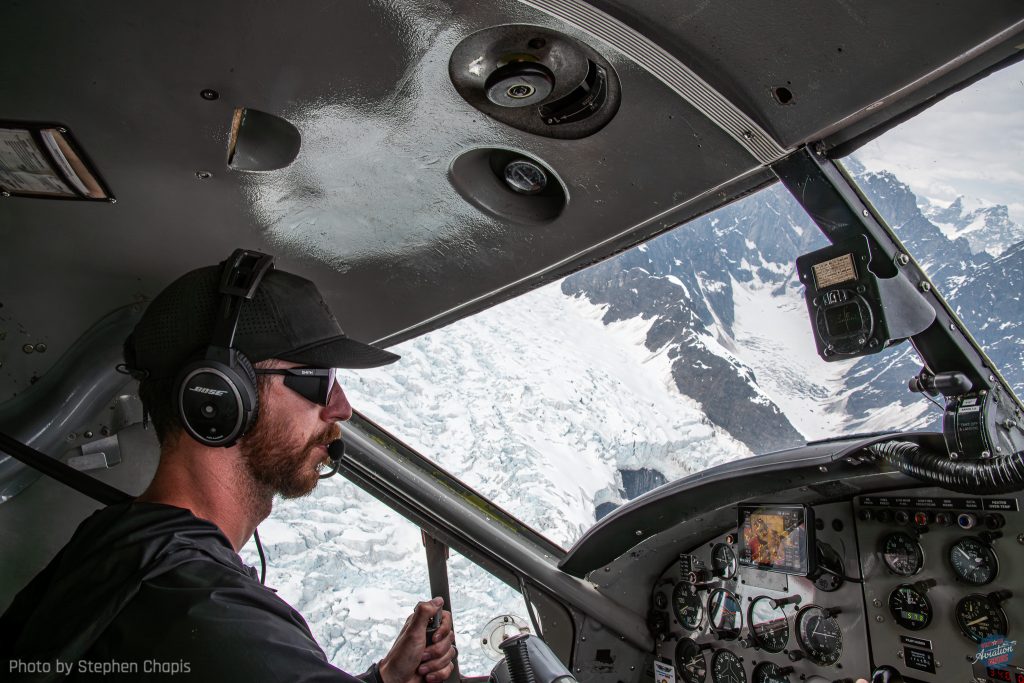
After about 20 minutes on the ground, we climbed back into the aircraft, and since I’d spoken to Joe about writing this article, I climbed into the right seat for the flight back to PATK. The takeoff was just as straightforward as the takeoff from PATK. Joe pointed the Otter downhill, advanced the throttle, and after a few bumps, we were airborne. We turned south, and after we passed Mount Providence, we turned east through a pass and continued south. We passed the Tokositna Glacier, which had an icefall and a waterfall flowing down between two mountain peaks.
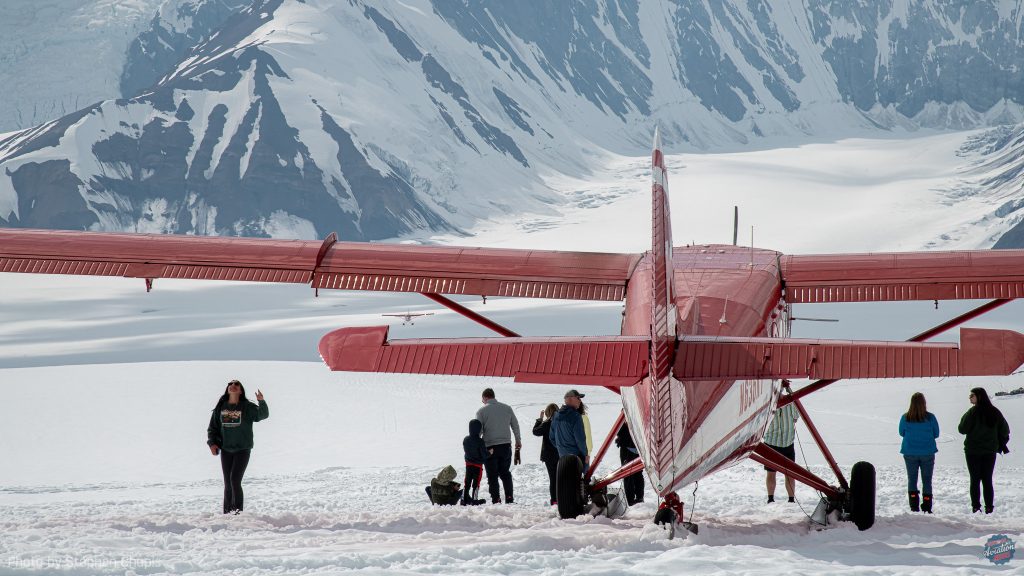
Twenty minutes later we were back on the ground, and since Joe’s day was done, we sat in the aircraft for a chat. Like so many before him, Joe felt the lure of Alaska, and once he was up here—and being an avid skier and snowboarder—he fell in love with the mountains, “I grew up in western New York, and while I’ve always liked airplanes, I never thought I’d fly them. When I came to Alaska, everyone was flying. I got the chance to fly in a small plane a few times and realized I actually wanna do this. I took my first flight lessons up in Fairbanks during my first summer in Alaska in 2010. I was 20 years old, and I fell in love with it, but I couldn’t afford it.” Joe moved to Talkeetna in 2015, and five years later he began his flight training again at PATK and earned his private in March 2021. It’s interesting to note that his instructor was Robin Spaulding, who later married his current boss, K2 Chief Pilot Riley Martin. It’s been said that aviation is a close-knit community, but it is especially true in Talkeetna—the people that Joe works with are also his friends.
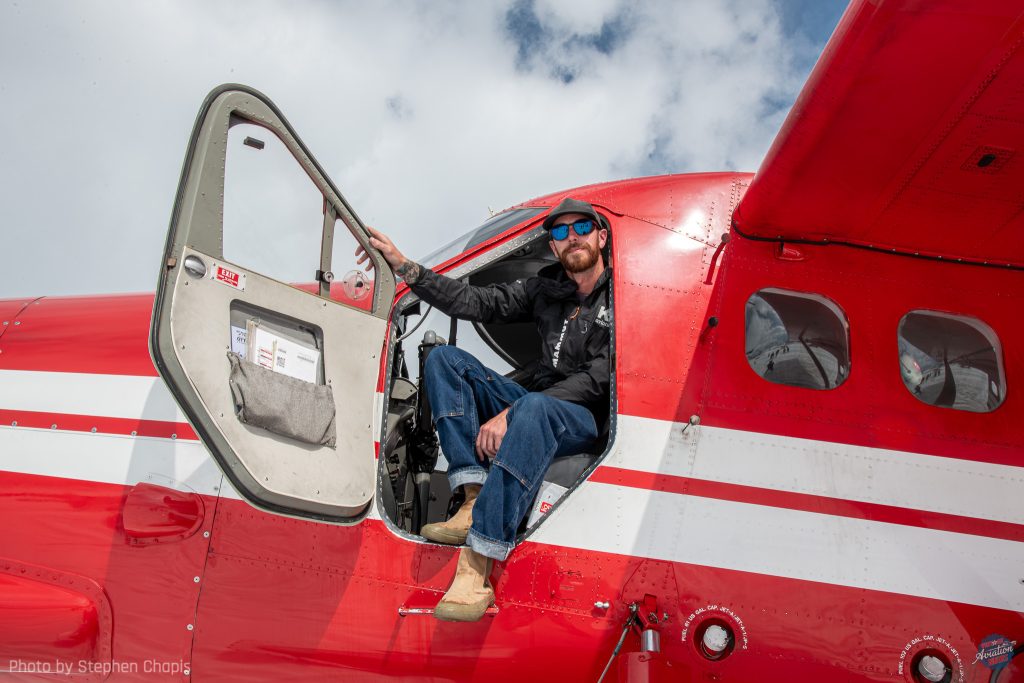
By the time Joe obtained his private, he’d moved to the “village airstrip in town” (AK44 – Talkeetna Village Strip Airport, built in 1938 and placed on the National Register of Historic Places in 2002) and quickly purchased a 1946 Cessna 120, and immersed himself in the culture and history of the airstrip and the village. Joe continued, “…the plane was parked in the yard, and I was flying every chance I could and built up a bunch of time. All my friends worked at K2, and one day one of them said, ‘You should fly for K2.’ I’d been self-employed for the last eight years, and I was like, ‘I don’t think I want a job.’ But when I really thought about it, and, you know, these planes are so cool, I started flying for them. My first summer I flew the Cherokee Six and [Cessna] 185, then the piston Beaver my second summer, and this summer I’m primarily flying the Turbine Otter.” So far this summer, Joe has logged almost 170 hours in K2’s DHC-3T aircraft, and a majority of his 1,800 hours have been logged in the heights of the Alaska Range.
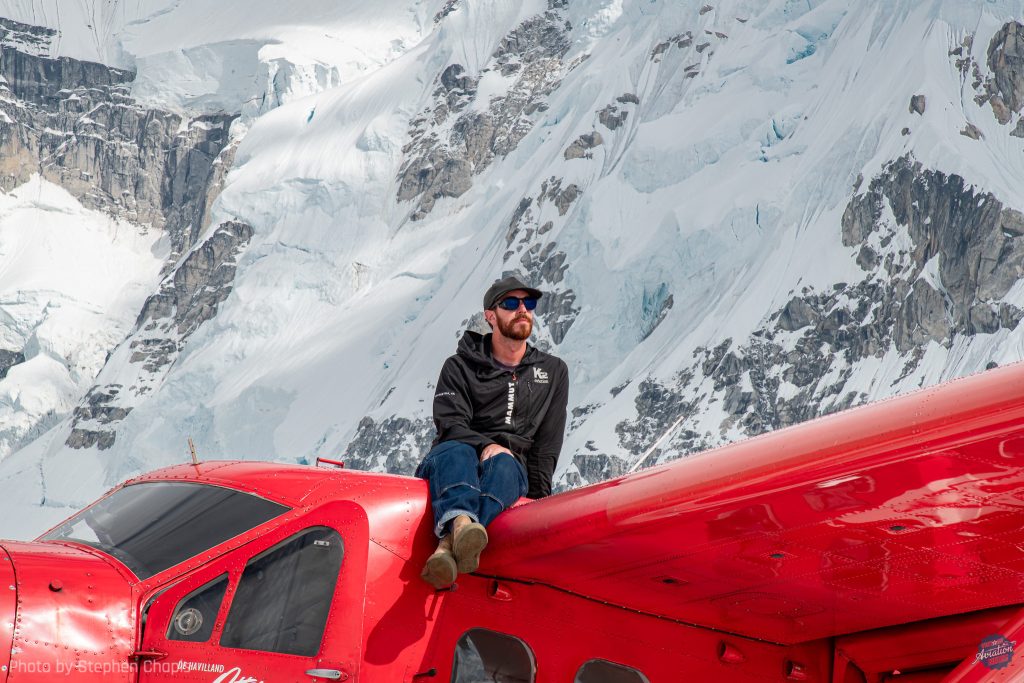
A radial-powered de Havilland Otter is already an impressive aircraft, but when fitted with a Pratt & Whitney PT6 and retractable skis, the aircraft radiates an aura of excitement and adventure. Joe talked, almost reverently, about flying these kings of mountain flying, “Getting used to the turbine engine, starting it without hurting it, was the hardest part. Once it’s running it’s hard to mess it up. It’s an amazing aircraft. It’s literally a one-finger airplane. It can take off super short and land super short, and it’ll climb very well at altitude. One of them (N320KT) has oxygen so we can take it up to 21,000 feet and it’s interesting taking a small non-pressurized aircraft up to that altitude. I’ve never been scared of heights while flying, but the first time I did that tour [Top of the World], I looked down at the north face of the mountain and I was like, ‘Okay, I’m gonna look this way, because we are high up here!’”
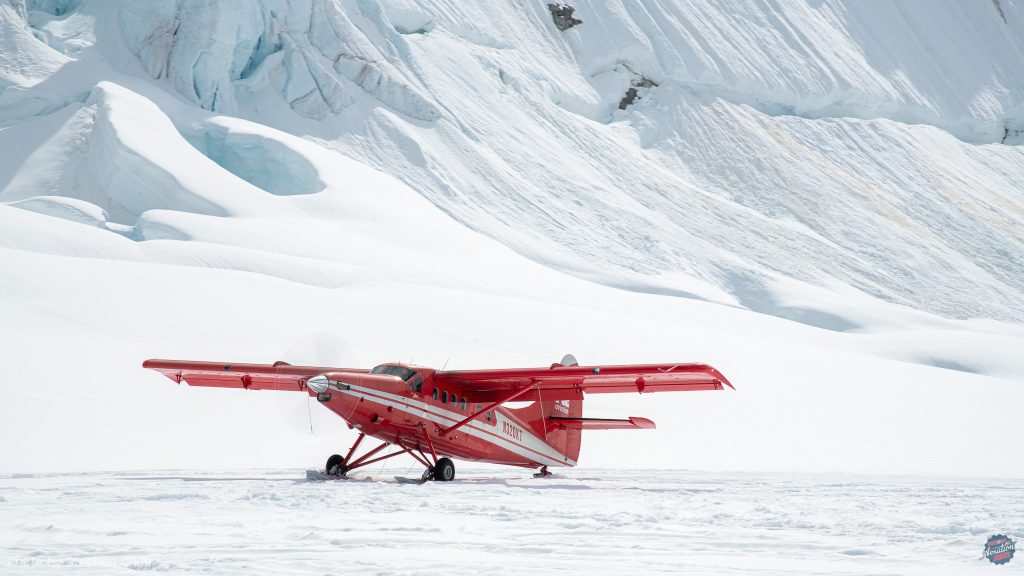
There were 466 DHC-3s manufactured by de Havilland, and Joe believes there are less than 200 still flying. A search of the FAA database indicates that there are 74 Otters registered in the United States, and 56 of those—nearly 76%—are registered in Alaska. Joe added, “I think there are more Otters based here in Talkeetna than any other airport.” When asked about what his aviation career looks like going forward, Joe scoffed and smiled, “This is it. I’ll never have another job in aviation. I’m gonna keep doing this forever because I love the people I work with, I love that mountain range, and every day [in the mountains] is a new challenge. Plus, it’s an honor and privilege, as cliché as it is, to fly these aircraft.”
It’s been 158 years since the United States purchased what the Russian Empire called “Russian America,” and today the State of Alaska lives up to its motto “The Last Frontier.” It is truly a spectacular and majestic place to live and visit. When it comes to aviation, there is no better place in the world. So, if you ever plan a trip to “The AK49,” as one local said, take the time to visit the village of Talkeetna, and while there, book a flight with K2 Aviation and witness the grandeur of the Alaska Range. It’ll be an unforgettable experience.