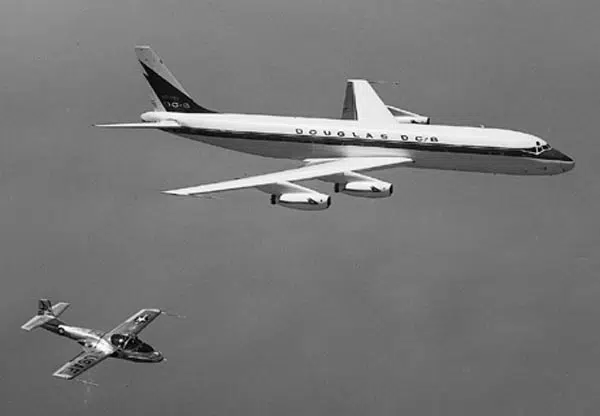
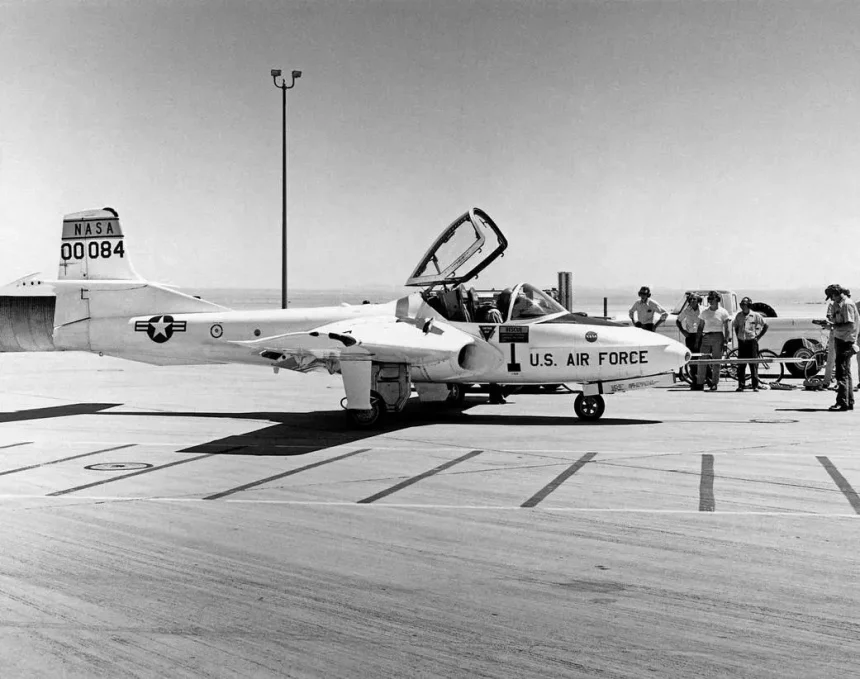

By the early 1970s, commercial aviation had entered a new phase as wide-body airliners like the Boeing 747, DC-10, and L-1011 were transforming long-haul travel. But they were also creating a problem with their wake vortices, long, invisible spirals of disturbed air. These vortices were strong enough to roll smaller aircraft beyond control during approach and landing, and it was important to measure them to understand and reduce them. At NASA’s Flight Research Center at Edwards, a small, straight-winged jet trainer that was never designed for research, the Cessna T-37B was selected to understand the wake turbulence, and it spent nearly a decade deliberately chasing the world’s largest airliners in that effort.
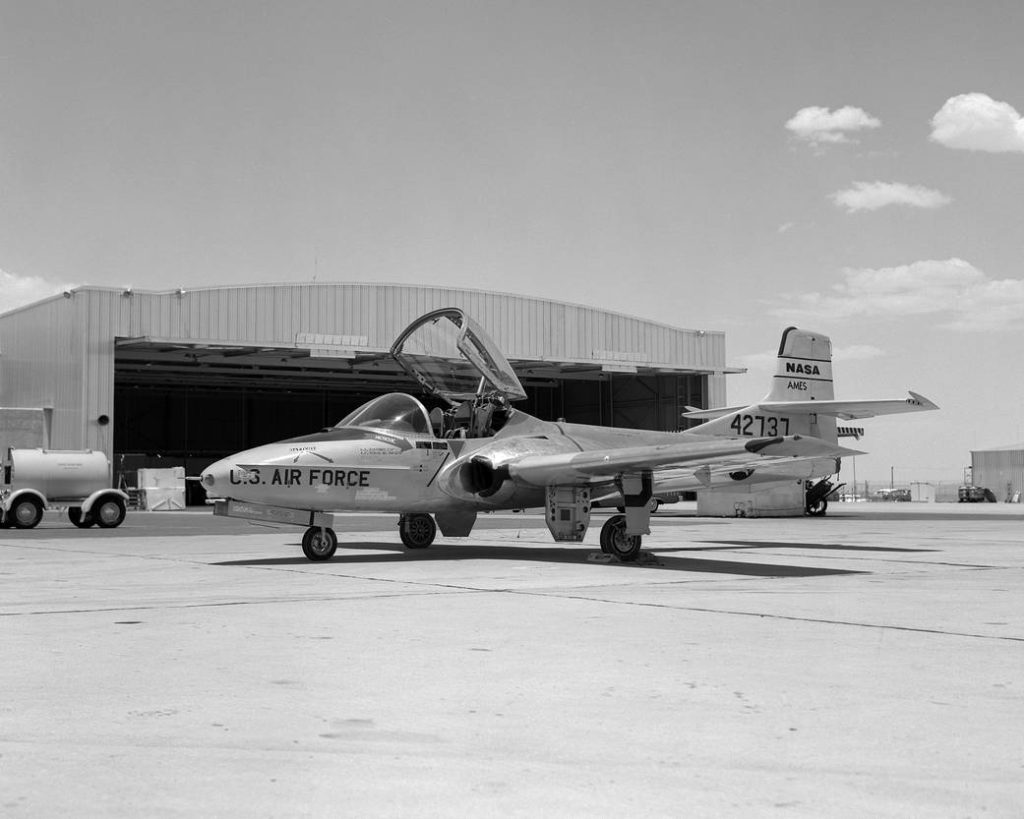
The T-37B, serial number 60-0084, entered US Air Force service in 1960 as part of the Air Training Command. In August 1974, the aircraft was transferred to NASA at Edwards and redesignated N807NA. Its selection was practical, as the T-37’s size and handling made it a reasonable stand-in for small business jets and commuter aircraft, which were most vulnerable to wake turbulence. Its twin-engine layout offered redundancy, and its predictable roll response made it suitable for measuring how much control authority remained during a wake encounter. Initially, the aircraft served as a chase plane for other research programs. But its real value emerged as a probe, which is an instrumented aircraft that could fly into another airplane’s wake and report what happened.
NASA’s experimentation to understand wake vortices had already begun before the T-37 arrived. In 1973, NASA and the Federal Aviation Administration (FAA) conducted initial tests using a Boeing 727 as the vortex generator, and those early flights proved that wake-induced rolling moments could be measured quantitatively. By the time the T-37 entered NASA’s Flight Research Center at Edwards, the experimental method had already been developed. The Boeing 727 generated a wake under approach conditions, and the T-37 needed to fly behind it at different distances and altitudes to measure roll rates, angular acceleration, and control margins. For its size, the T-37’s role was demanding, as it had to fly where airline pilots were trained not to go.
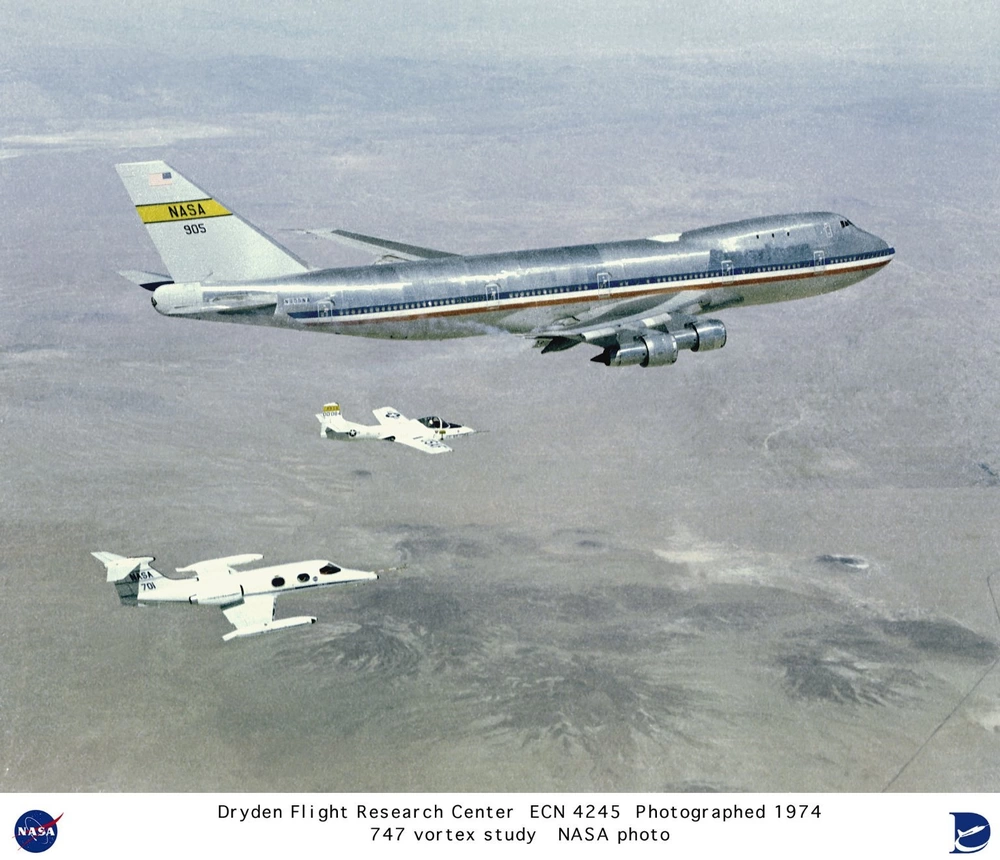
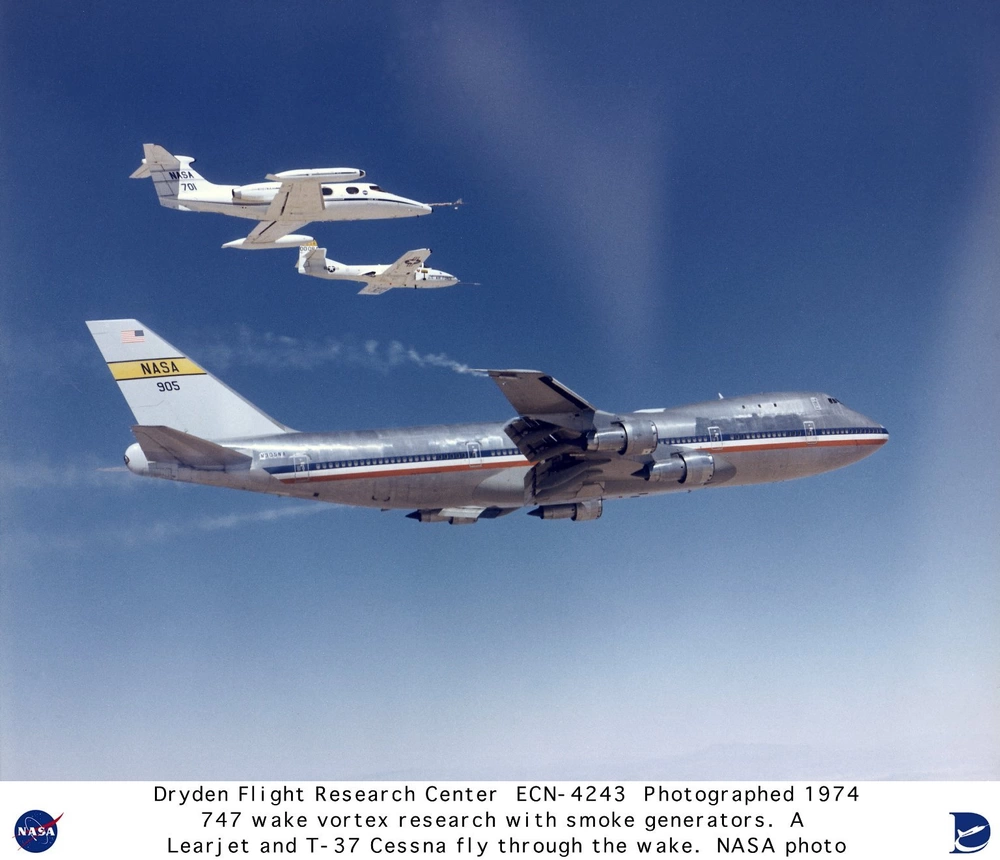
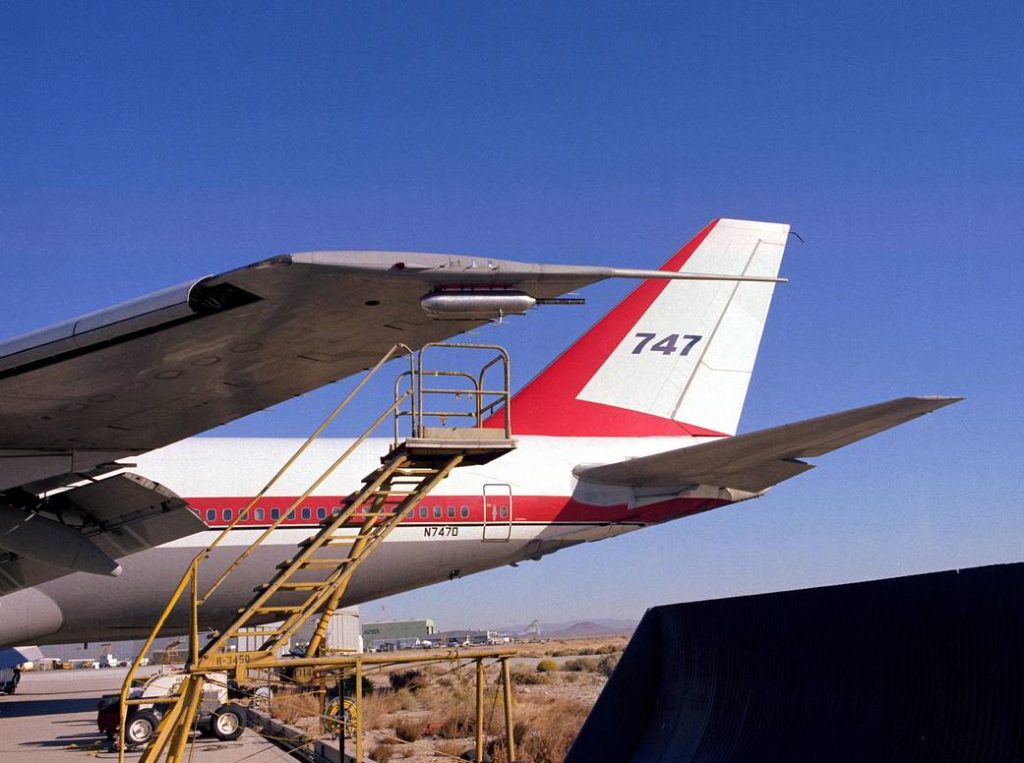
NASA’s tests began in 1974 using a Boeing 747-100 as the wake-producing aircraft. To make the vortices visible, smoke generators were fitted under the wings, drawing long white spirals in the air behind the jet as it flew approach-like profiles. The T-37 then followed, deliberately flying into those wakes again and again, at carefully measured distances. The early results were unsettling, as about three nautical miles behind the 747 in a normal landing setup, the T-37 was hit by sudden, violent rolls that pushed it beyond what its controls could handle, and the pilot could not keep the wings level. Then, NASA engineers raised two outboard spoilers on the 747 during approach. That small adjustment reshaped the wake. When the T-37 flew into it again at the same distance, the harsh rolling motion was largely gone, and the aircraft stayed controllable. The strength of the wake-induced rolling force dropped by nearly half.
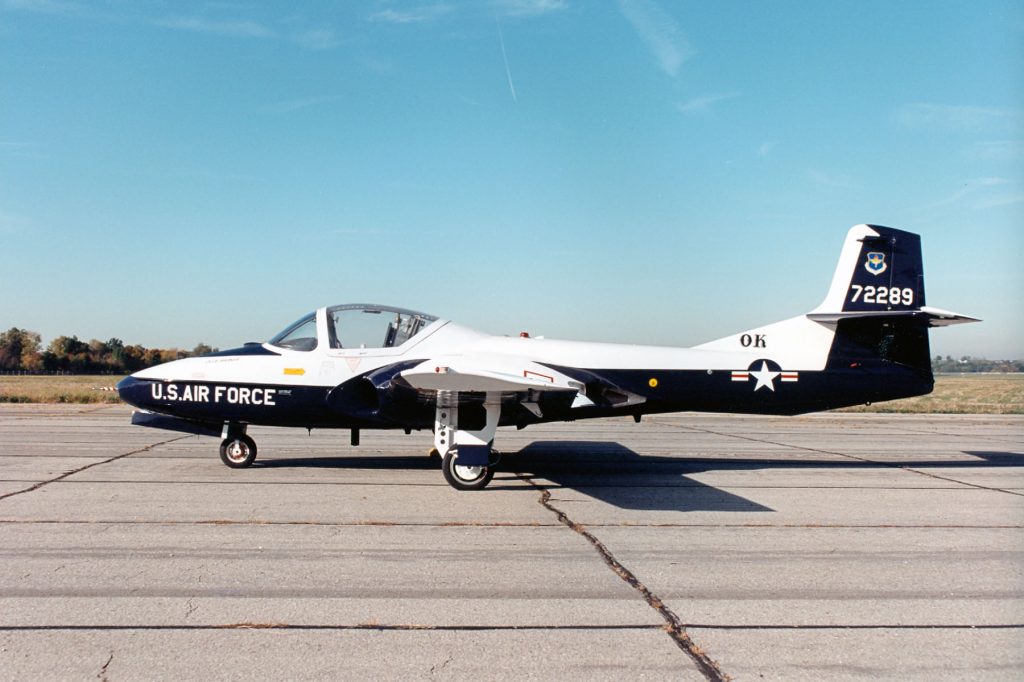
Another test looked at the 747’s flaps. When only the inboard flaps were lowered, the wake never pulled itself into one strong, twisting pair; instead, it stayed spread out and weaker. Flying behind it, the T-37 could move in closer without being thrown around. What mattered most was that nothing new had been added to the airplane. By simply changing how the existing flaps were used, engineers found a way to soften the wake and make following aircraft safer. In 1977, the testing continued with a Lockheed L-1011 TriStar. The same approach was used, using smoke-marked vortices, repeated probe passes, and careful measurements, but the results were not as satisfactory as those of the 747. With the L-1011 in its standard landing configuration, the T-37 still encountered roll upsets at distances of six nautical miles. The engineers had to deploy multiple outboard spoilers to reduce the effect, allowing controlled flight as close as two nautical miles. This test confirmed that wake behavior was aircraft-specific and solutions that worked well on one design could not be assumed to work on another without testing.
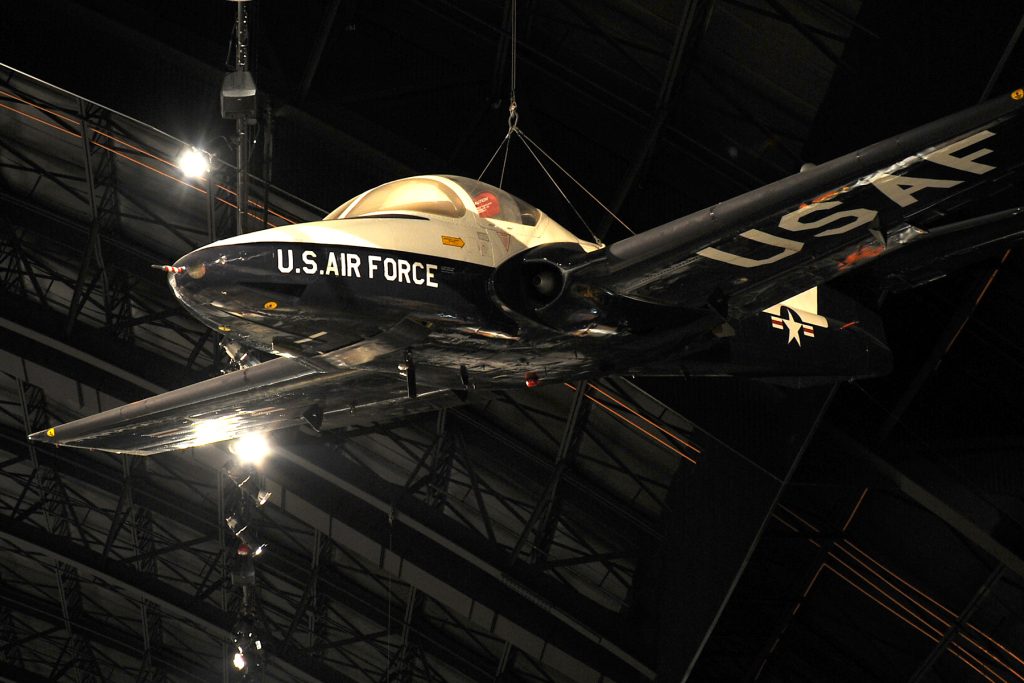
The T-37 stayed busy at Dryden into the early 1980s. It helped engineers make sense of years of data, confirm what wind-tunnel tests had predicted, and prove wake turbulence could be managed. By adjusting how large aircraft were flown, separation rules could be tightened, and airport traffic could move faster. That work ended on 8 November 1982. The T-37 was on a routine proficiency flight, and it was flown by Richard E. Gray, a highly experienced NASA test pilot with thousands of hours and decades in the cockpit. During the flight, the aircraft entered a spin and did not recover. It crashed near Edwards Air Force Base, and Gray was killed.
Gray’s loss is a reminder that many advances in aviation have come at real human cost. The Cessna T-37, which was developed to train US pilots, was never intended to change aviation rules. It helped engineers understand how wake turbulence behaves and what the safe distance between a large and a small aircraft should be. Like other aircraft in the Flight Test Files series, the T-37 went into rugged NASA testing and helped provide a safe and advanced future for aviation. Check out our previous articles HERE.