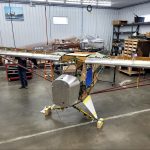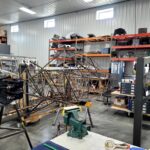

Over the past fifteen years or so, AirCorps Aviation of Bemidji, Minnesota, has earned an exceptional reputation for world-class warbird restorations. Their portfolio features numerous standout projects—including the P-51 Mustang known as Thunderbird and razorback P-47D Thunderbolt nicknamed Bonnie, both Golden Wrench Award winners—not to mention the ongoing restoration of a rare Beechcraft AT-10 Wichita. In early 2024, the team turned its attention to a more modest but equally meaningful aircraft: the Piper L-4H Grasshopper. We have covered this marvelous project a few times since the restoration effort began, and can now present another update from our good friend, Chuck Cravens!
Covering and Preparation:
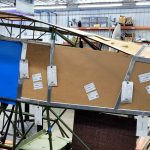
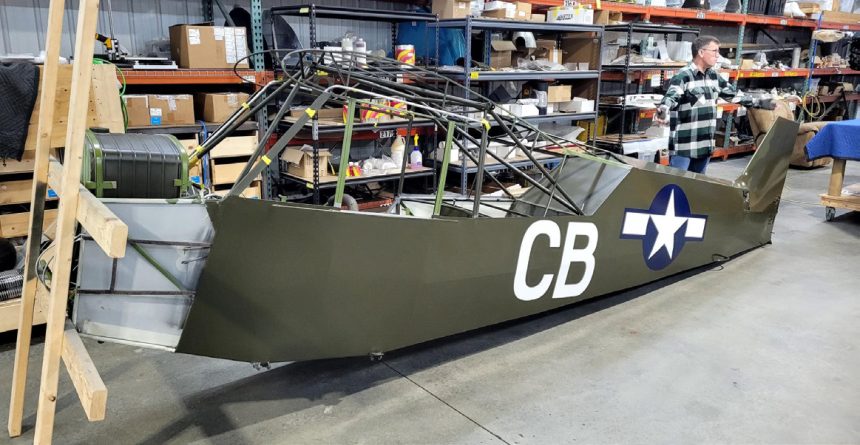
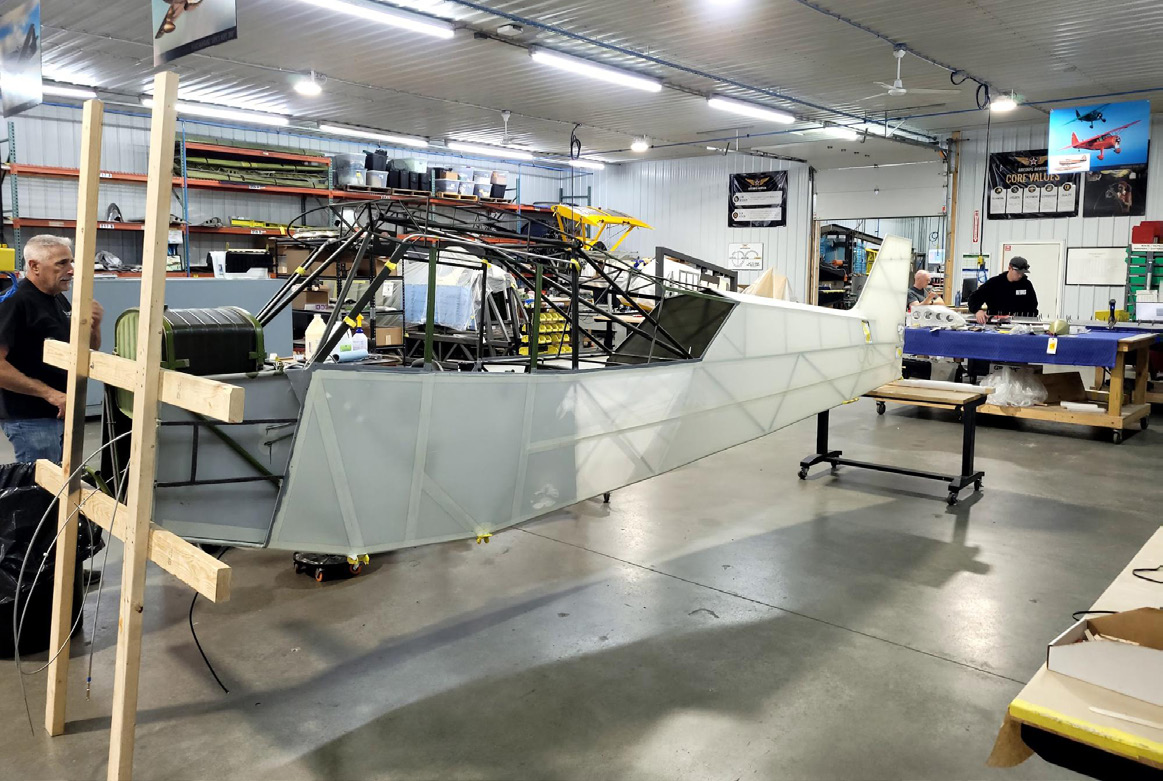
Most of the recent work on the Grasshopper has involved finishing up the fuselage covering and preparing the fabric and metal surfaces for painting. After completing this, the restoration team applied the main layer of olive drab paint along with medium green ‘splotches’.
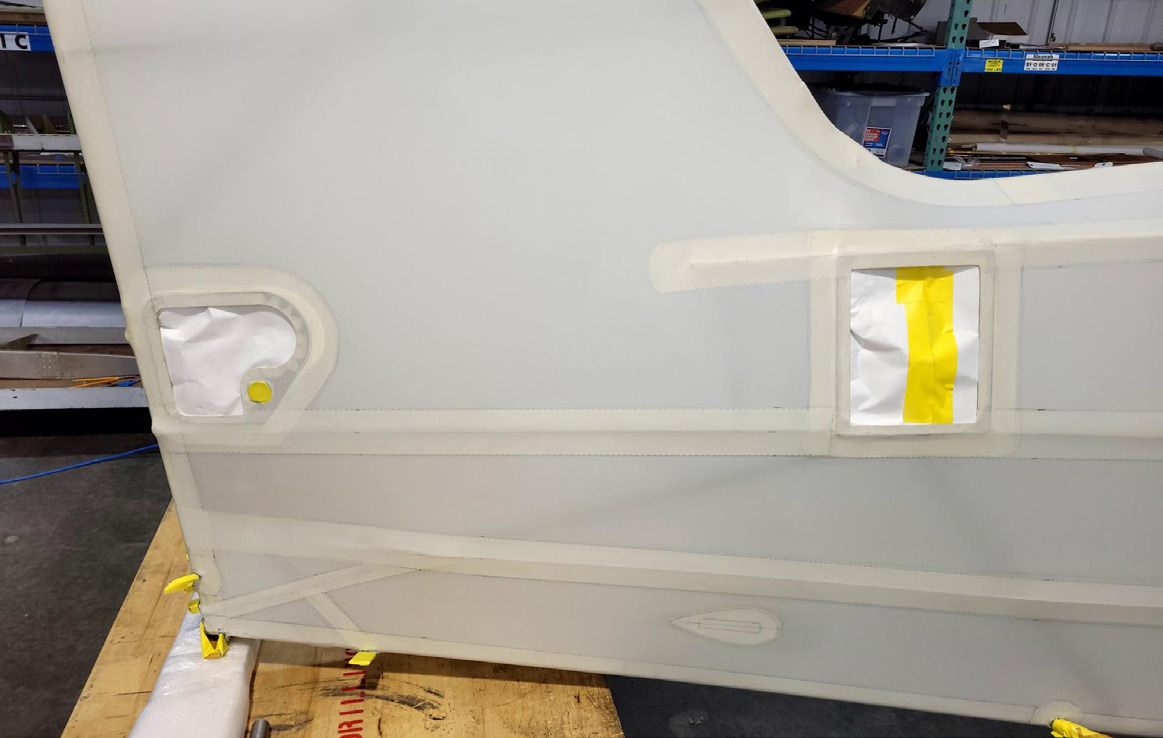
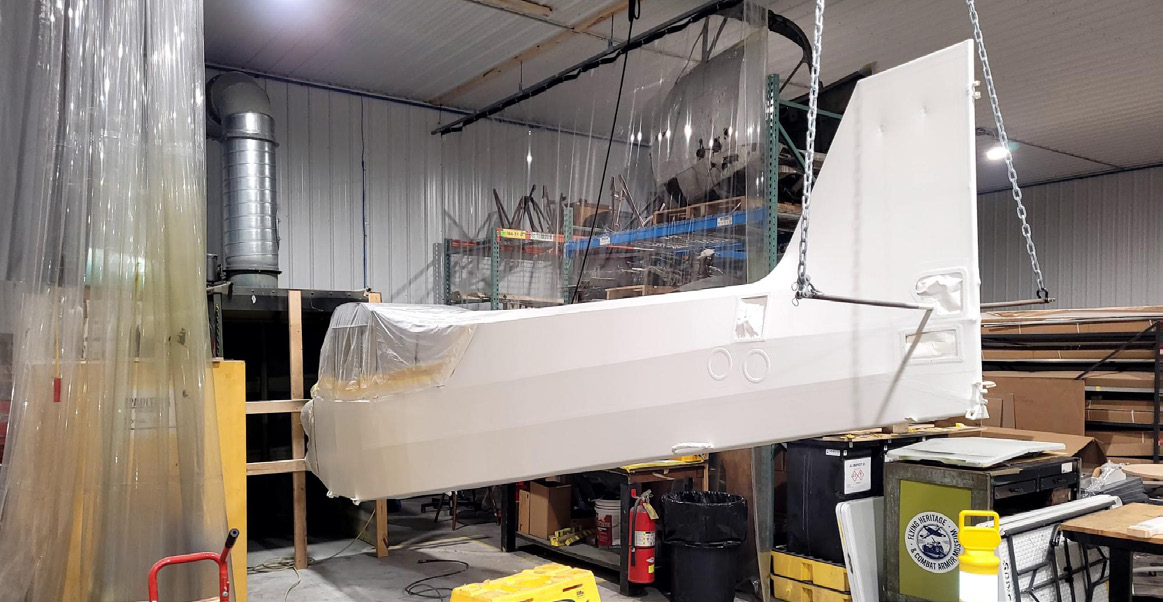
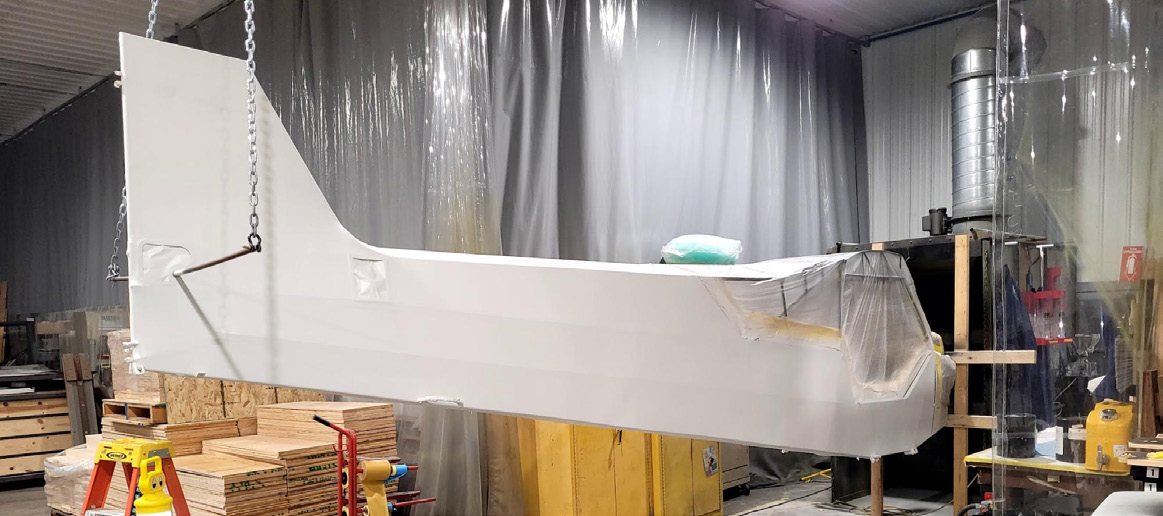
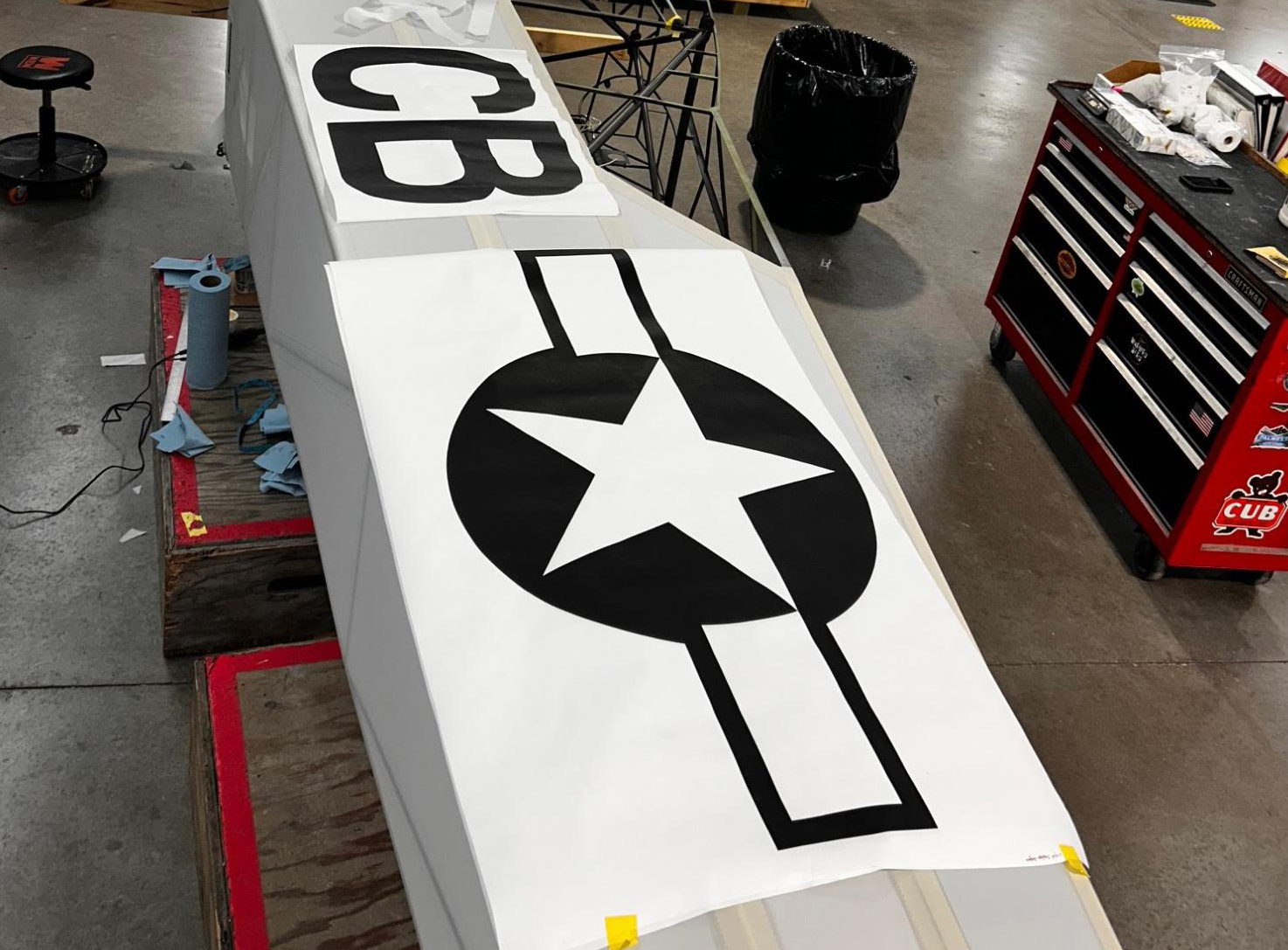
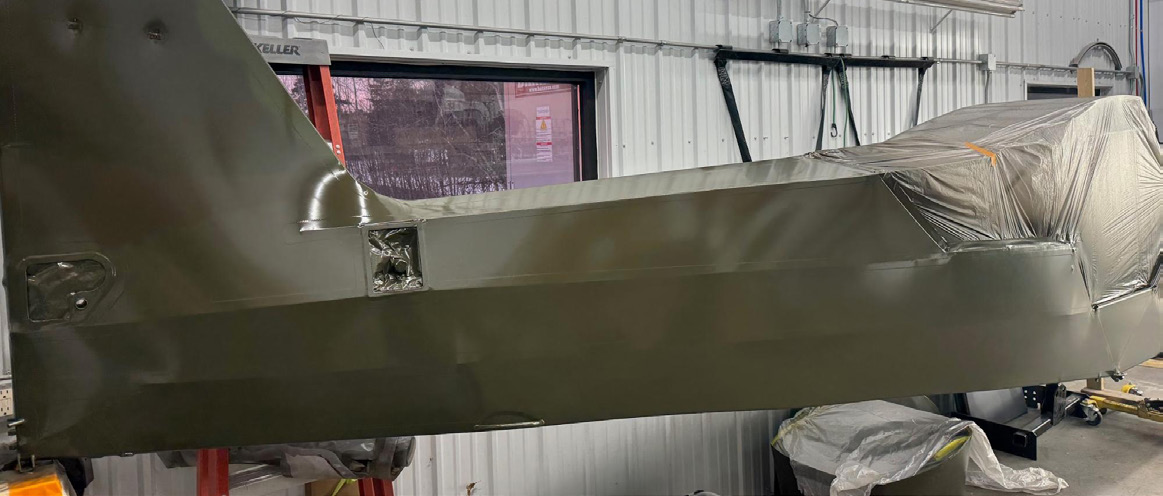
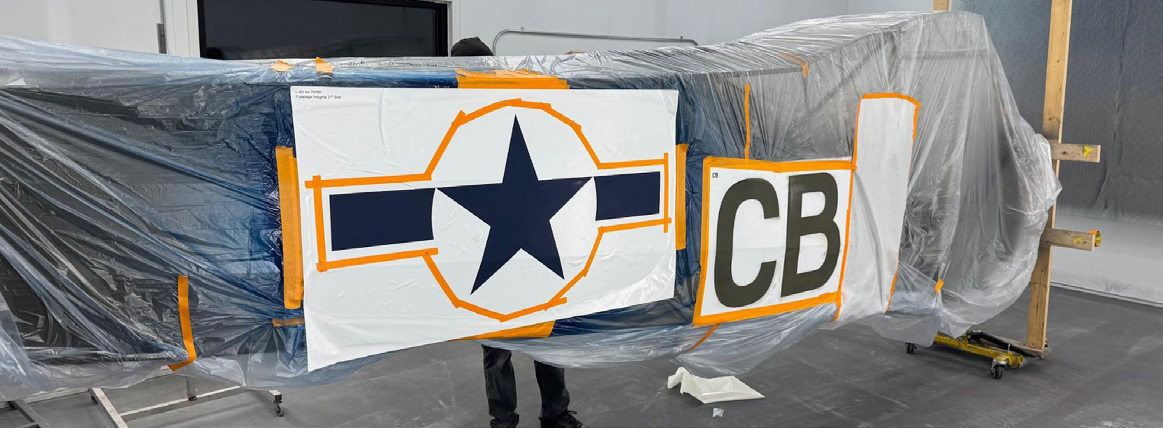
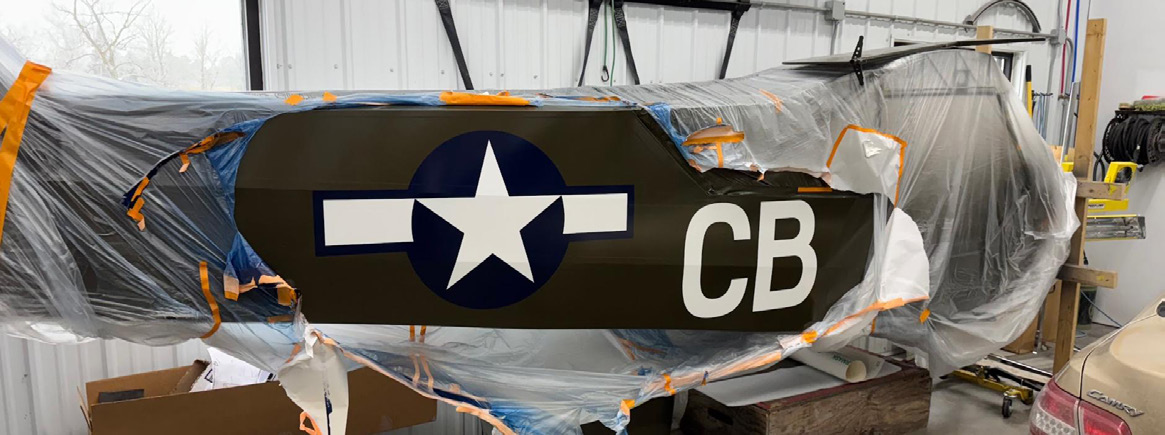
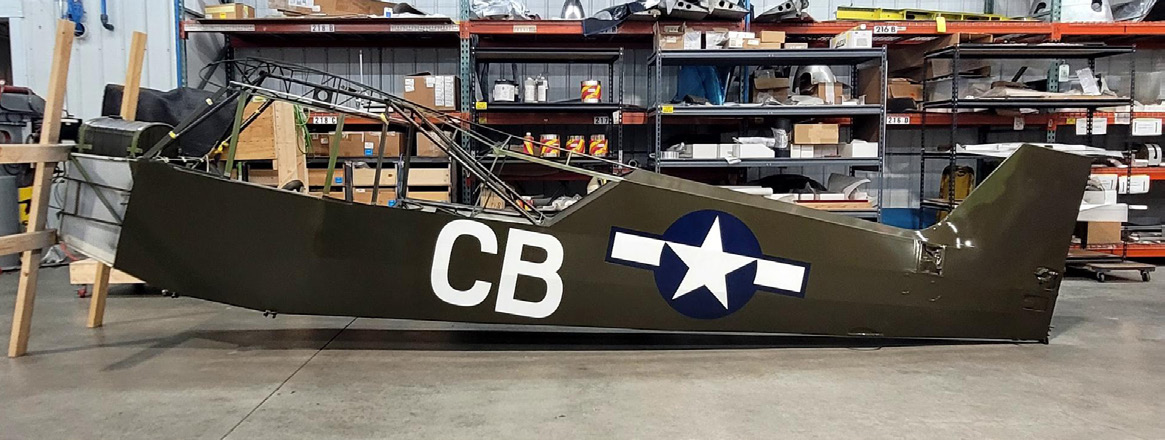
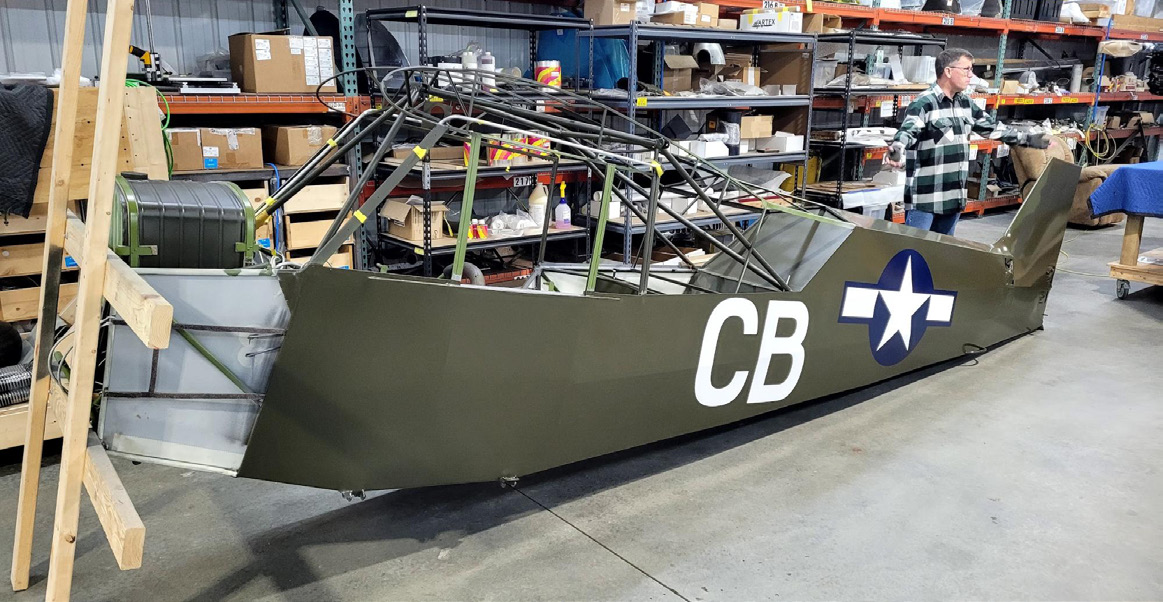
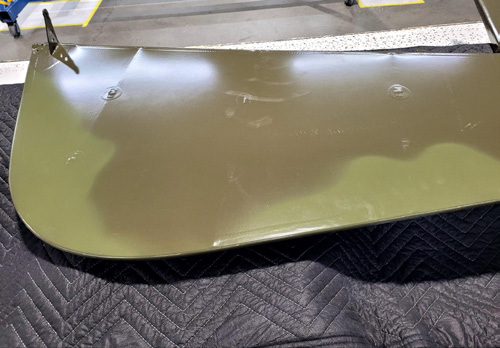
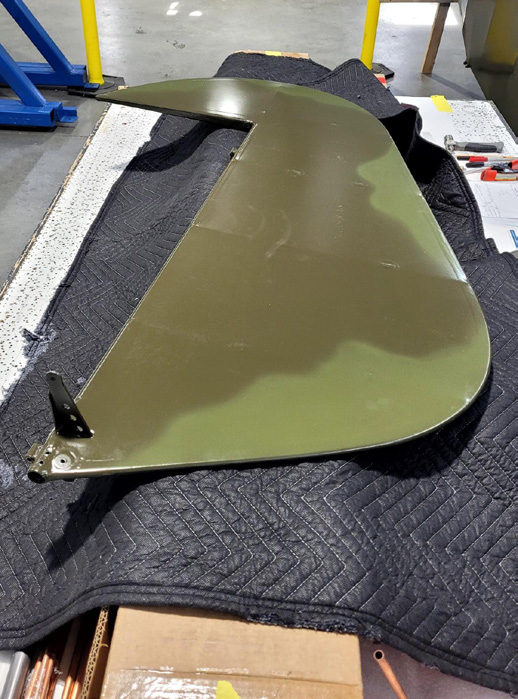
The rudder shows edge ‘splotches’ of medium green, shade no. 42 – as specified in the July 10, 1942 revision of Tech. Order 07-1-1. Interestingly, T.O. 07-1-1 (amended July 10, 1942) states: “Application should be made so that the continuity in appearance of the wing, stabilizer, and rudder outlines is broken.” –as delineated on pages 68 and 84 of Ronald and Victor Archer’s, ‘USAAF Aircraft Markings and Camouflage’, Schiffer Publishing, Atglen, PA, 1997. (image via AirCorps Aviation)
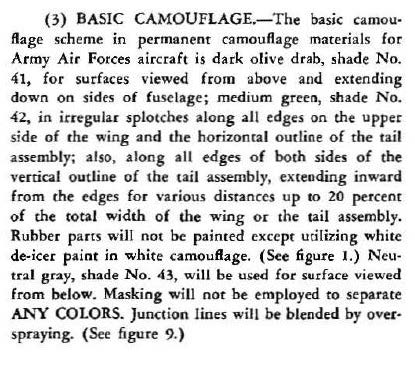
Interestingly, the original paint specifications (prior to the 1942 revision) stipulated an overall olive drab finish, so earlier O-59/L-4s did not feature the ‘splotches’ around flying surface edges.
Cockpit Cabin:
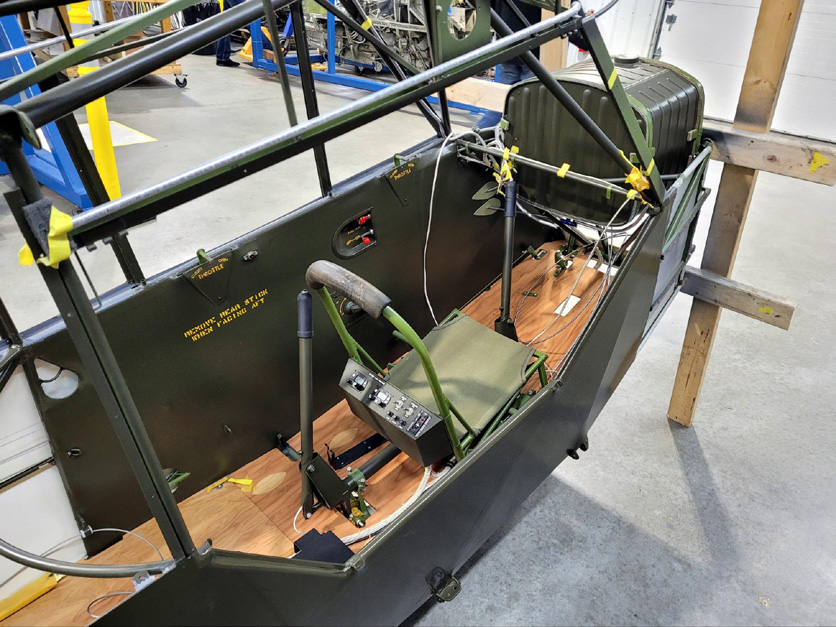
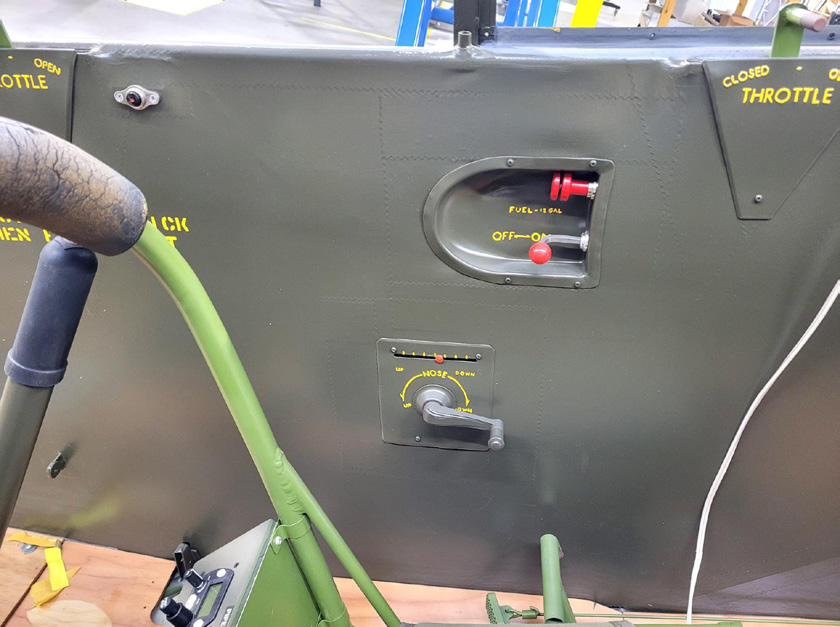
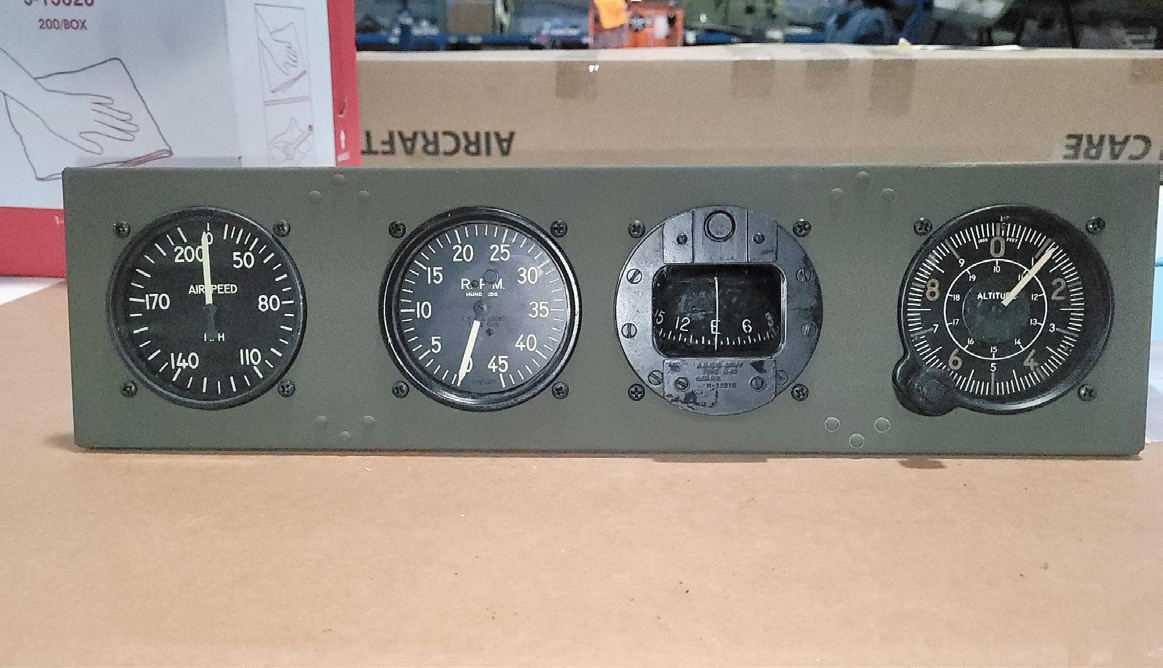
In addition to painting the L-4’s exterior surfaces in olive drab, AirCorps has done similarly for the interior as well.

Landing Gear Components:
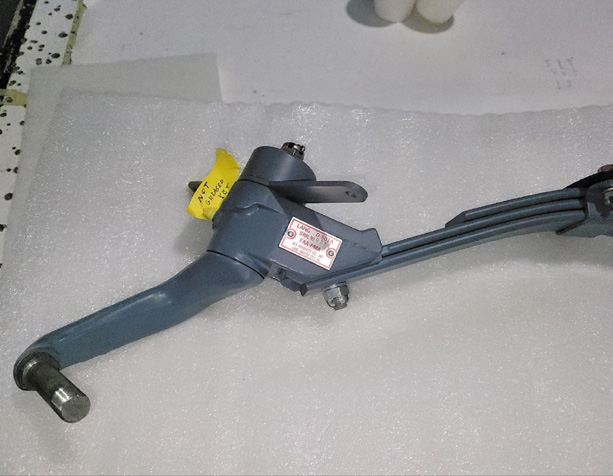
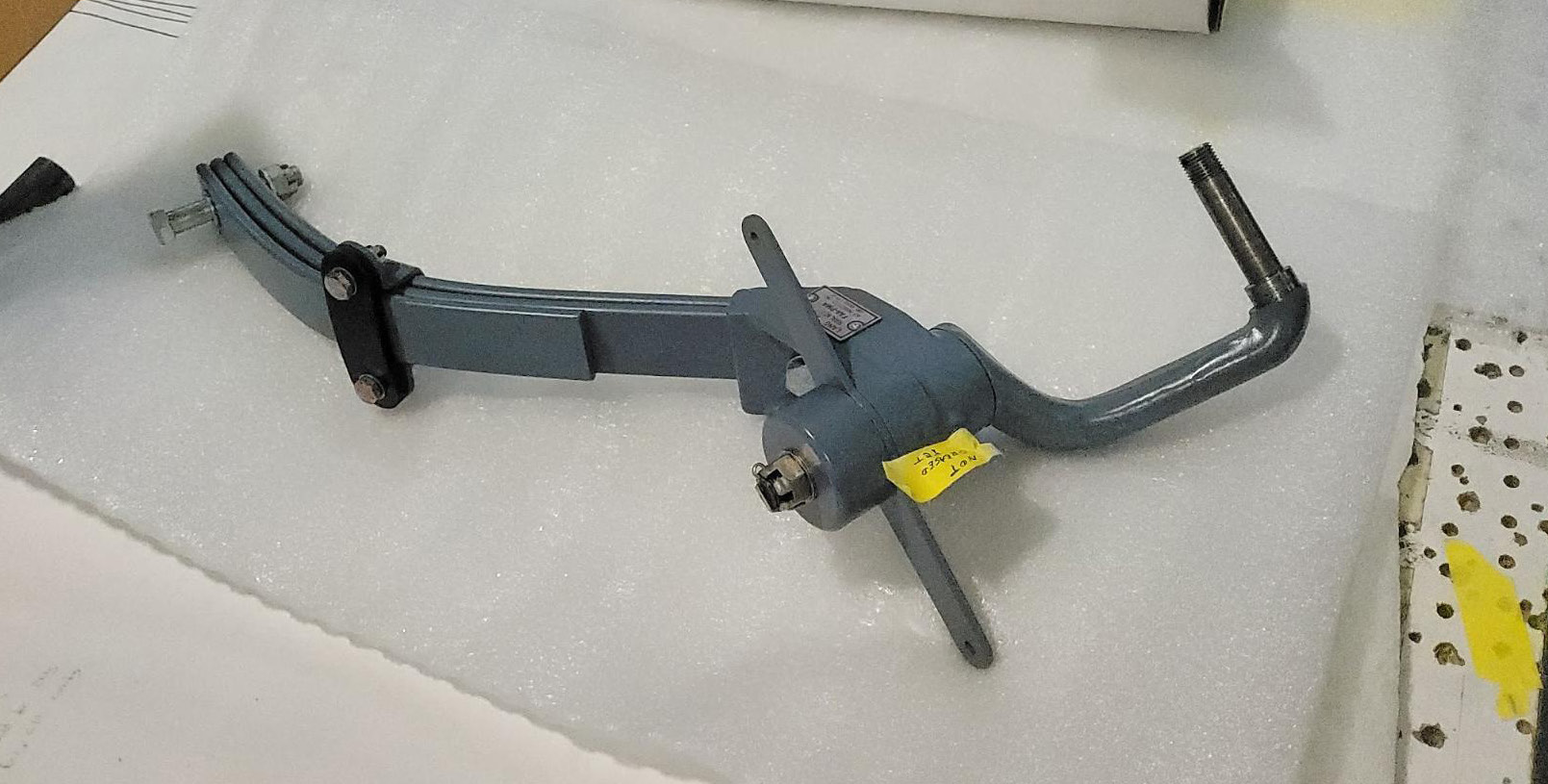
AirCorps Aviation has also begun getting the L-4 ready to receive its freshly-overhauled landing components.

Engine:
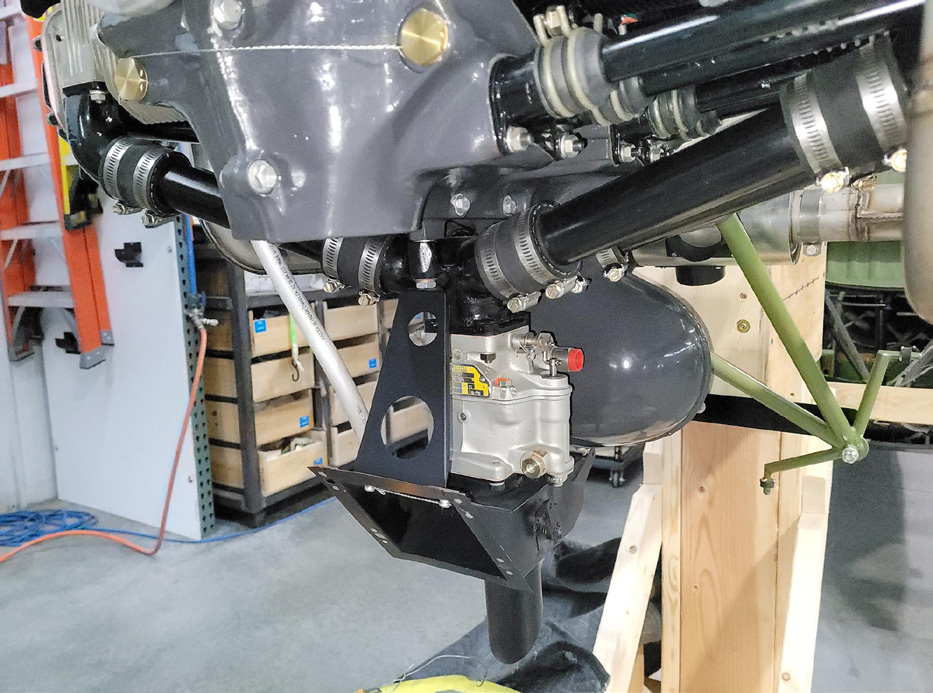
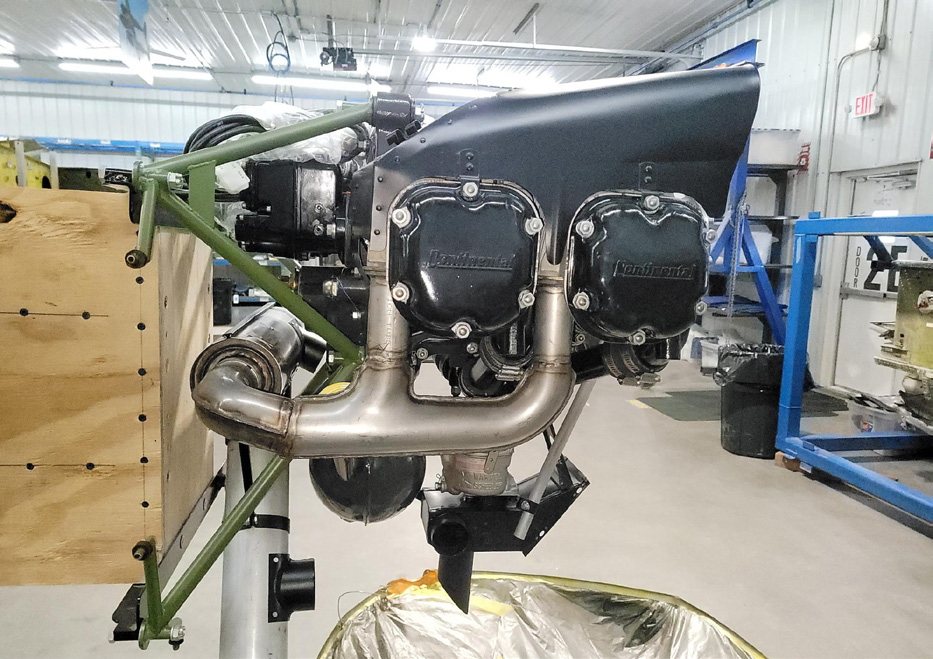
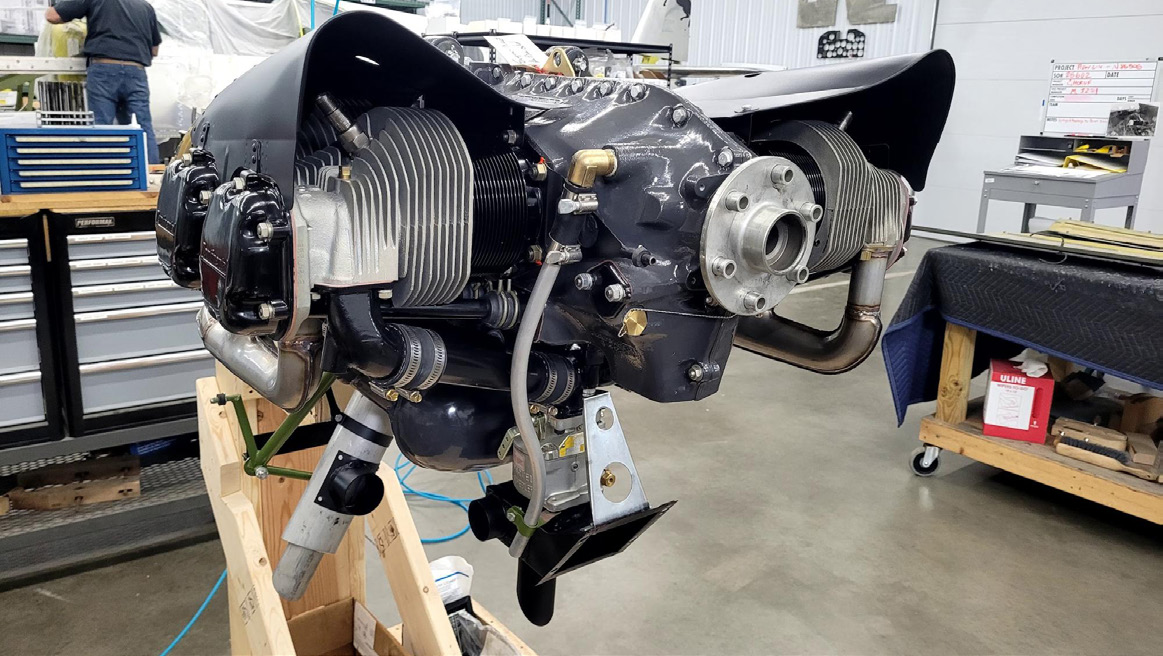
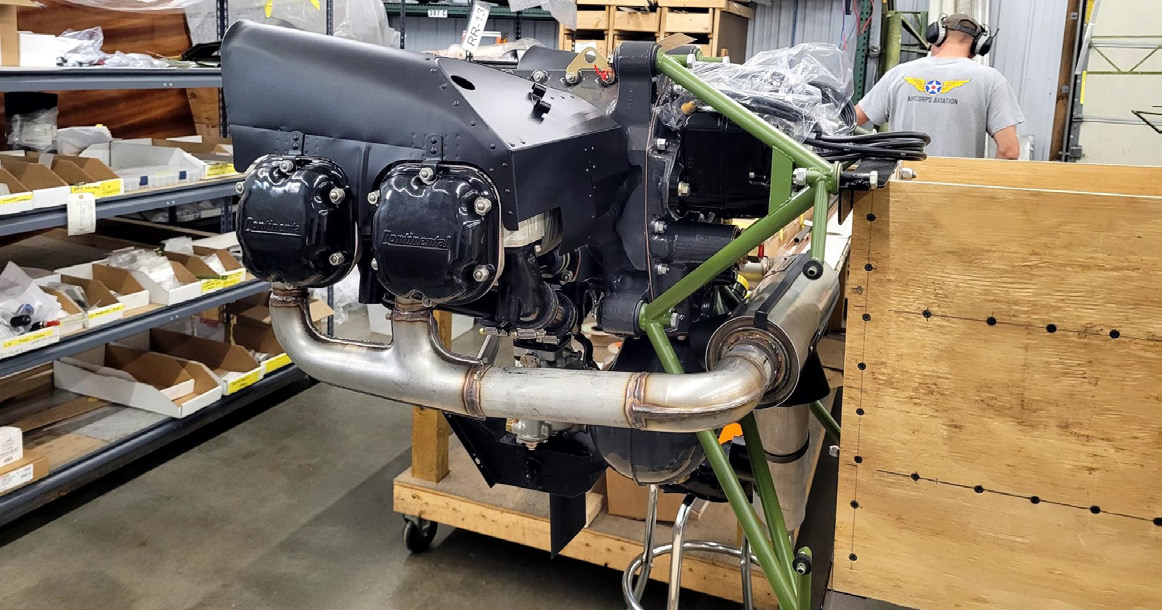
AirCorps Aviation chose to equip its Grasshopper with a Continental C-90-8F. While not original to this Grasshopper variant, AirCorps opted for this powerplant as it provides both more horsepower and torque than the C-65 engine which L-4Hs traditionally came with.
125th Field Artillery Battalion:
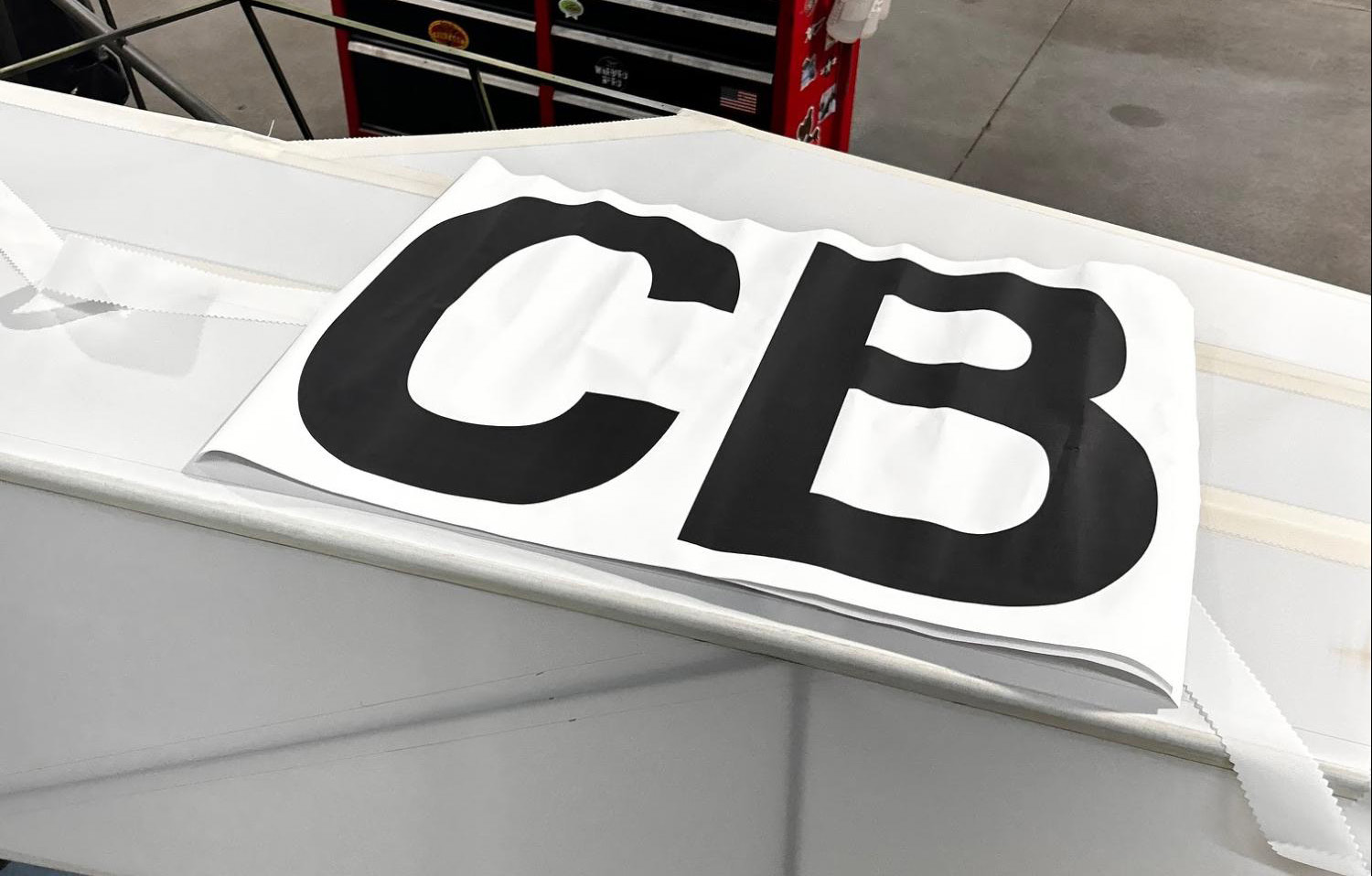
On July 25, 1944, Piper L-4 44-79780 was assigned to the jurisdiction of the U.S. Army Ground Forces in Italy. Ground Forces records specifying which individual liaison aircraft was assigned to which unit have not yet been located and, sadly, evidence suggests that they may have been destroyed. Without having definitive information regarding which unit the Grasshopper served with in Italy, AirCorps Aviation chose to honor the 125th Field Artillery Battalion of the 34th Infantry Division, Fifth United States Army, and painted their L-4H accordingly. The 34th Division comprised National Guardsmen from Iowa, Minnesota, and South Dakota. Since the L-4 will be based in Minnesota and because the 34th Red Bull Division is still based in central Minnesota at Fort Ripley, it seemed only natural to choose markings from one of their field artillery battalions! Our L-4 arrived in combat service a few weeks after the 125th helped liberate Rome. Near Rome on June 4, 1944, the 125th Field Artillery (FA) and 135th Infantry Regiment (IR)–moving with the 1st Armored Division–were the first Allied units to enter the city. On June 25, 1944, the 34th Infantry Division comprised four combat teams: the 133rd, 135th, 168th, and the 442nd (Nisei “Go For Broke”) Infantry Regimental Combat Teams. The Nisei, as readers should remember, were Japanese-American citizens–primarily from Hawaii and the US West Coast–who fought bravely for the nation even though many of them had families languishing within Internment Camps spread around bleak locations in the USA. The 34th Infantry Division faced a formidable opponent, the German 14th Army, composed of General von Senger’s XIV Panzer Corps. Whenever the 135th IR engaged the enemy, the 125th FA fired their howitzers in support. The 125th FA featured heavily in the drive to Ceceina, Leghorn, and Monte Adone.
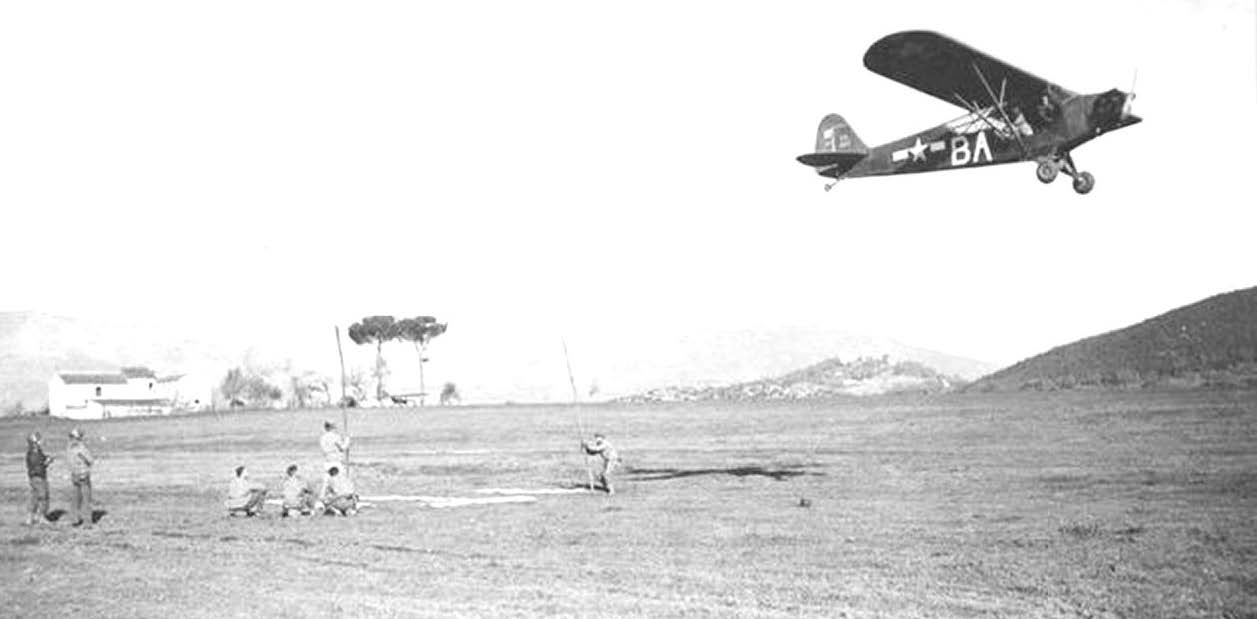
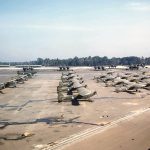
message “on the wing” in Italy. (US Army image via AirCorps Aviation)
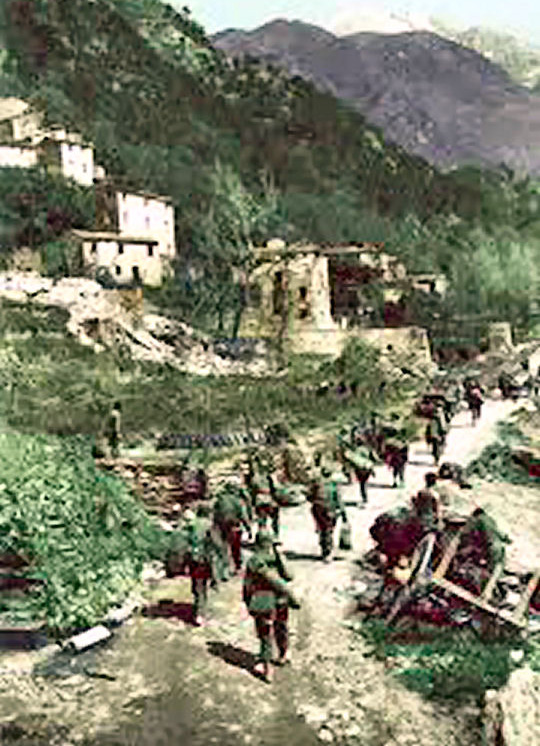
The unit took their artillery pieces up the mountain trails lying west of Highway 65 and the Futa Pass. The men crossed the Gothic Line in a wilderness route. During these movements through rough and mountainous terrain, liaison missions flown by L-4s and L-5s provided critical, real-time battle information. The German L1 Mountain Corps launched a counter-attack on December 26, 1944. Meanwhile, the 125th FA spent the night of December 27 moving the unit’s 105mm howitzers from their gun pits through the mud to a hard surface road; by 1300 hours, the 125th FA had reached Florence. They were then ordered to Italy’s west coast. The Germans had broken through the 92nd Division. The Battalion set up their howitzers behind the 135th Regiment and 92nd Division. The 4th Indian Division retook the land lost by the 92nd Division, however, reestablishing the front. In February 1945, the Division, as part of the 5th Army, launched a heavy attack against German forces. They reached Bologna and then moved through the Po Valley, part of the German Gothic Line. The 34th ID was tasked with moving north across the Po River and cutting off German escape routes into Austria. Thankfully, on May 1, the German LXXV Corps surrendered in Milan to the 34th ID’s commander, Maj. Gen. Charles L. Bolte. At 1200 hours on May 2, all hostilities ceased in Italy.2 The Po River valley campaign featured incredibly rugged and difficult terrain to traverse. Liaison aircraft, like the L-4, proved essential in this kind of conflict, because they didn’t need to follow roads–however, landing fields could be a problem. An interesting side note to this campaign from “The War Years: North Africa, Sicily and Italy,” The Army Aviation Story, by Richard K. Tierney with Fred Montgomery, describes a temporary airstrip for L-4s adapted to the difficult mountainous terrain. Unfortunately, we have yet to find images of this downhill strip, which must have required incredible bravery to fly from. 2) The 34th Red Bull Infantry Division, webpage of the 34th Red Bull Division: https://34id.org/, author unknown
Sky-Jumping Cubs:
The Fifth Army had advanced north of the Arno River by December 1944, occupying the mountains south of the Po Valley. The treacherous terrain presented a communications challenge for the unit’s commander, General Lucian Truscott, who addressed the issue by ordering one of his air officers, Captain Jack Marinelli, to build a landing strip close to the main Command Post in the mountains. The ground they selected for the runway, by its very nature, demanded imaginative engineering to negotiate. The 30′ wide by 735′ long strip sat on a mountainside, its upper end being 97′ above the cliff edge where it ended with a 2000′ plunge to the valley below! Pilots flew downhill for takeoff, as one might imagine, and uphill to land. “The interesting feature,” as Colonel Marinelli described in a September 2023 article for Army Aviation Magazine, “was that we had to use full throttle to taxi to the top of the strip and landing. But you could also take off down the strip without power.”
Many thanks to Chuck Cravens and AirCorps Aviation for providing this update on their L-4’s restoration progress. We look forward to hearing more in the near future! For more information about AirCorps Aviation’s restorations, click HERE.